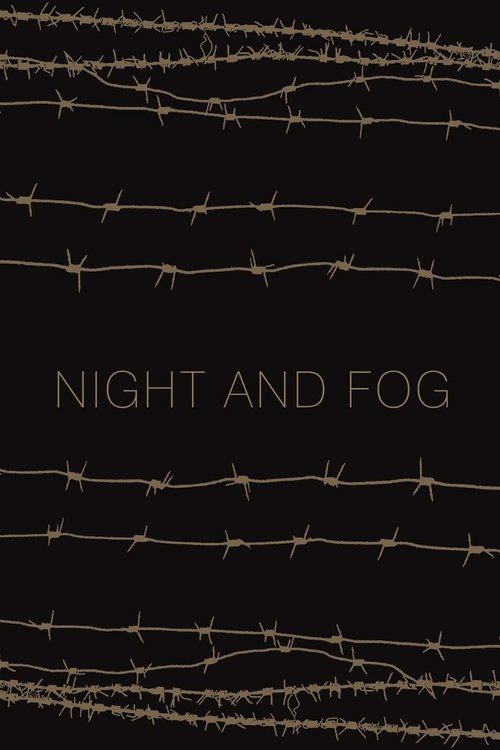
Night and Fog - Review
Night and Fog: A Haunting Lament for Humanity
Alain Resnais’s Night and Fog (Nuit et Brouillard), released in 1956 but often cited with the date of its wider release in 1959, is not merely a documentary; it is a visceral, poetic, and profoundly disturbing meditation on the horrors of the Holocaust. More than just a historical record, it is a timeless warning against the seductive allure of inhumanity and the chilling ease with which ordinary people can become complicit in unimaginable atrocities. This isn't a film you watch passively; it's a film you experience, one that burrows under your skin and leaves an indelible mark on your soul. Decades after its release, Night and Fog remains a crucial and devastating cinematic testament to one of the darkest chapters in human history.
Plot and Narrative Structure
The film eschews a traditional narrative structure, opting instead for a fragmented, almost dreamlike approach. It opens with serene, sun-drenched shots of the now-abandoned Auschwitz concentration camp. These idyllic images, however, are quickly juxtaposed with archival footage of the camp in its operational state, a jarring contrast that immediately establishes the film's central tension: the insidious gap between the banality of evil and the unimaginable suffering it inflicts. The narration, written by Jean Cayrol, a concentration camp survivor himself, is delivered in a calm, almost detached tone, which only amplifies the horror of the visuals. The film doesn't tell a story in the conventional sense; it presents a series of images and reflections, weaving together past and present, color and black-and-white, to create a powerful and unsettling tapestry of memory and trauma.
The narrative progresses through a series of thematic segments, exploring different aspects of the concentration camp system. We see the construction of the camps, the arrival of the prisoners, the brutal living conditions, the forced labor, the medical experiments, and, ultimately, the systematic extermination. The film doesn't shy away from the gruesome details, but it also doesn't sensationalize them. Instead, it focuses on the dehumanization of the victims and the normalization of violence, highlighting the insidious ways in which the Nazi regime transformed ordinary people into perpetrators of unspeakable crimes.
The film's ending is particularly powerful and unsettling. It returns to the present-day Auschwitz, highlighting the fact that the camp is now a tourist attraction. The narration questions whether we have truly learned from the past, suggesting that the seeds of hatred and violence still exist in the world, waiting to sprout again. This ambiguous ending leaves the viewer with a profound sense of unease, forcing them to confront the uncomfortable truth that the Holocaust was not an isolated event, but a symptom of a deeper, more persistent human failing.
Direction and Cinematography
Alain Resnais's direction is masterful. He uses a variety of cinematic techniques to create a film that is both visually stunning and emotionally devastating. The juxtaposition of color and black-and-white footage is particularly effective. The color shots of the present-day Auschwitz evoke a sense of peace and tranquility, while the black-and-white archival footage plunges us into the heart of darkness. This contrast highlights the chasm between the present and the past, reminding us of the horrors that once took place on this now seemingly innocuous site.
The cinematography, by Ghislain Cloquet and Sacha Vierny, is equally impressive. The camera moves slowly and deliberately, lingering on the faces of the victims and the landscapes of the camps. This slow pace allows us to absorb the full horror of the situation, forcing us to confront the reality of the Holocaust in all its stark and brutal detail. The use of tracking shots is particularly effective, as they allow us to experience the vastness of the camps and the sheer scale of the Nazi extermination program.
Resnais's use of editing is also noteworthy. He frequently cuts between different images and scenes, creating a sense of disorientation and fragmentation. This fragmented editing style mirrors the fragmented nature of memory and the difficulty of comprehending the Holocaust. It also reflects the chaotic and unpredictable nature of life in the concentration camps.
Themes and Messages
Night and Fog explores a number of important themes, including:
- The Banality of Evil: The film highlights the chilling ease with which ordinary people can become complicit in unimaginable atrocities. It shows how the Nazi regime transformed ordinary citizens into perpetrators of unspeakable crimes through propaganda, indoctrination, and the normalization of violence.
- Dehumanization: The film emphasizes the importance of dehumanization in the perpetration of genocide. The Nazis systematically stripped their victims of their humanity, treating them as mere objects to be exploited and exterminated. This dehumanization made it easier for the perpetrators to commit acts of violence without feeling remorse.
- Memory and Forgetting: The film explores the importance of remembering the Holocaust and the dangers of forgetting. It argues that we must never forget the atrocities that were committed in the concentration camps, lest we repeat them in the future.
- Complicity and Responsibility: The film raises difficult questions about complicity and responsibility. It asks who was responsible for the Holocaust: the Nazi leaders, the SS guards, the ordinary citizens who turned a blind eye? The film suggests that everyone who stood by and did nothing was complicit in the genocide.
- The Nature of Evil: The film grapples with the question of the nature of evil. It asks whether evil is an inherent human trait or whether it is a product of social and political circumstances. The film suggests that evil is a complex phenomenon that is both inherent and circumstantial.
The film's central message is a warning against the dangers of intolerance, hatred, and indifference. It urges us to be vigilant against the forces of darkness and to stand up for justice and equality. It reminds us that the Holocaust was not just a historical event, but a cautionary tale about the fragility of human civilization.
Performances and Narration
While Night and Fog doesn't feature actors in the traditional sense, the narration by Michel Bouquet is a crucial element of the film's power. Bouquet's voice is calm, measured, and almost detached, which only amplifies the horror of the images on screen. He doesn't preach or moralize, but simply presents the facts, allowing the viewer to draw their own conclusions. This understated approach is far more effective than any overt emotional manipulation.
The real "performances" come from the archival footage itself. The faces of the victims, the expressions of the guards, the landscapes of the camps – these all speak volumes about the horrors of the Holocaust. The film's power lies in its ability to bring these images to life and to force us to confront the reality of the past.
Comparison to Other Films and Resnais's Other Works
Night and Fog stands as a landmark achievement in documentary filmmaking, often compared to other powerful works dealing with the Holocaust and its aftermath. Claude Lanzmann's Shoah (1985) is another monumental documentary, but unlike Night and Fog's concise and poetic approach, Shoah is a sprawling, nine-hour oral history that relies solely on testimonies from survivors, perpetrators, and witnesses. While both films are essential viewing, Night and Fog offers a more immediate and visually arresting experience, particularly for those new to the subject matter.
Steven Spielberg's Schindler's List (1993), a fictionalized account of Oskar Schindler's efforts to save Jews during the Holocaust, is another significant film. However, its narrative focus on a "heroic" individual and its use of melodramatic elements differentiate it significantly from Night and Fog's more detached and analytical approach. Night and Fog avoids sentimentality, instead focusing on the systemic nature of the atrocities and the collective responsibility for preventing such events from happening again.
Within Resnais's own filmography, Night and Fog foreshadows his later explorations of memory, trauma, and the complexities of human experience. His subsequent films, such as Hiroshima Mon Amour (1959) and Last Year at Marienbad (1961), delve into the psychological impact of historical events and the subjective nature of perception, themes that are already present in Night and Fog. While those later films are more overtly experimental in their narrative structure and visual style, Night and Fog lays the groundwork for Resnais's distinctive cinematic voice, characterized by its intellectual rigor, emotional depth, and innovative use of cinematic techniques.
Positive Aspects
Night and Fog possesses numerous strengths:
- Powerful and Haunting Imagery: The film's use of archival footage and present-day shots of Auschwitz creates a visceral and unforgettable experience.
- Poetic and Evocative Narration: Jean Cayrol's narration is both informative and deeply moving, adding layers of meaning to the visuals.
- Masterful Direction and Cinematography: Alain Resnais's direction and the cinematography are exceptional, creating a film that is both visually stunning and emotionally resonant.
- Thought-Provoking Themes and Messages: The film explores important themes about the nature of evil, the importance of memory, and the dangers of intolerance.
- Historical Significance: Night and Fog is a crucial historical document that serves as a reminder of the horrors of the Holocaust and the importance of preventing such atrocities from happening again.
Constructive Criticism
Despite its many strengths, Night and Fog is not without its flaws:
- Limited Scope: The film focuses primarily on Auschwitz and doesn't delve into the experiences of other concentration camps or the broader context of the Holocaust. While this focus allows for a more concentrated and impactful experience, it also limits the film's overall scope.
- Lack of Individual Stories: The film focuses on the collective experience of the victims and doesn't tell the individual stories of specific survivors. While this approach emphasizes the systemic nature of the atrocities, it also makes it difficult to connect with the victims on a personal level. This can sometimes feel distancing, despite the horrors depicted.
- Potential for Desensitization: The film's graphic imagery, while necessary to convey the horrors of the Holocaust, could potentially desensitize some viewers. It is important to approach the film with sensitivity and awareness.
It's important to note that these criticisms are minor and do not detract significantly from the film's overall impact and importance. They primarily relate to the specific choices made by Resnais in terms of scope and focus, which were likely influenced by the constraints of the time and the available resources.
Conclusion
Night and Fog is a cinematic masterpiece, a haunting and unforgettable testament to the horrors of the Holocaust. It is a film that demands to be seen and remembered, a powerful reminder of the fragility of human civilization and the importance of fighting against intolerance and hatred. While its graphic imagery can be disturbing, it is essential viewing for anyone who wants to understand the depths of human depravity and the importance of never forgetting the past. It is a vital historical document and a profound artistic achievement that continues to resonate with audiences decades after its release.
Rating: 9.5/10