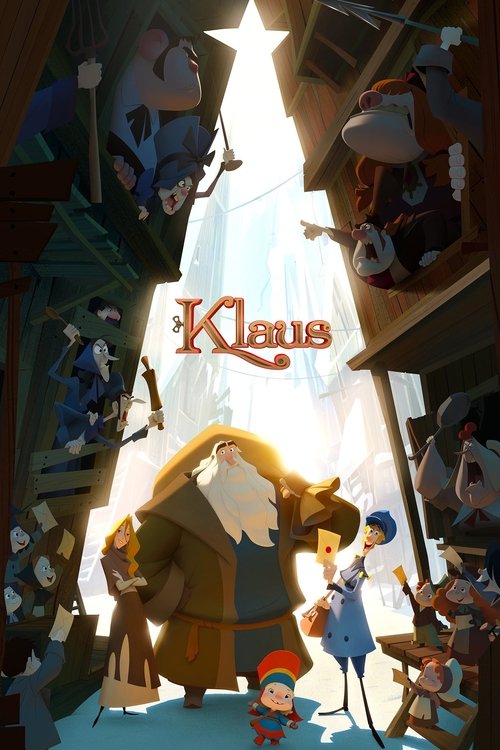
Klaus - Review
A Christmas Miracle in 2D: A Review of Klaus
In a landscape dominated by CGI-heavy animated features, Netflix's Klaus arrived in 2019 as a refreshing and visually stunning throwback, proving that traditional 2D animation still has the power to captivate and move audiences. More than just a charming origin story of Santa Claus, Klaus is a masterclass in character development, storytelling, and visual artistry. It tackles themes of prejudice, generosity, and the transformative power of kindness with a deftness and emotional resonance that resonates long after the credits roll. But does this animated gem truly live up to the hype? Let's delve into the snowy depths of Smeerensburg to find out.
Plot: A Tale of Letters, Toys, and Transformation
The narrative centers around Jesper Johansson, the pampered and perpetually failing son of the Royal Postmaster General. As punishment for his utter lack of ambition and competence, Jesper is exiled to Smeerensburg, a bleak and perpetually warring island settlement above the Arctic Circle. His mission: to establish a functioning postal service and process 6,000 letters within a year. Failure means permanent disinheritance. Smeerensburg, however, is far from an ideal postal hub. Two feuding families, the Ellingboes and the Krums, dominate the town, their animosity so deeply ingrained that communication is limited to insults and the occasional snowball fight. Jesper quickly finds himself overwhelmed and on the verge of giving up.
His fortunes begin to change when he stumbles upon Klaus, a reclusive and imposing carpenter living alone in a remote cabin, surrounded by meticulously crafted wooden toys. Desperate to meet his quota, Jesper convinces Klaus to secretly deliver a toy to a young boy who sent a letter (albeit one written by Jesper himself). This initial act of kindness sparks a chain reaction. More children write letters, hoping to receive a toy, and Jesper and Klaus find themselves inadvertently spreading joy and challenging the deeply ingrained negativity of Smeerensburg. The plot cleverly unfolds, weaving together Jesper's personal growth with the gradual transformation of the town. The conflict between the Ellingboes and Krums serves as a compelling backdrop, highlighting the destructive nature of prejudice and the power of simple acts of kindness to break down barriers.
The plot is not without its predictability. The "grumpy character softens with the help of a naive optimist" trope is well-worn. However, Klaus executes it with such sincerity and emotional depth that it feels fresh and engaging. The pacing is excellent, balancing moments of humor with genuine emotional weight. The film avoids the pitfalls of saccharine sentimentality, instead grounding its message in realistic portrayals of human flaws and the challenges of overcoming deeply rooted prejudices.
Characters: From Zero to Hero, and the Silent Giant
Klaus boasts a cast of memorable and well-developed characters, each contributing to the film's overall emotional impact.
Jesper Johansson
Jesper begins as a deeply flawed protagonist. He's lazy, entitled, and self-serving. His initial motivation for helping Klaus is purely selfish – to escape Smeerensburg and reclaim his privileged life. However, as he witnesses the joy he and Klaus bring to the children, he begins to genuinely care about their well-being and the transformation of the town. This character arc is expertly crafted, allowing the audience to empathize with Jesper's struggles and celebrate his eventual growth into a compassionate and selfless individual. His journey is not without its setbacks, making his ultimate triumph all the more rewarding.
Klaus
Klaus, the titular character, is a man of few words but immense presence. He is initially presented as a mysterious and intimidating figure, shrouded in grief and isolation. The film gradually reveals his tragic backstory – the loss of his wife and his unfulfilled desire to have children. This backstory provides a compelling explanation for his reclusive nature and his passion for creating toys. As he begins working with Jesper, Klaus rediscovers a sense of purpose and finds solace in bringing joy to others. His stoicism is perfectly balanced with moments of quiet tenderness, making him a deeply sympathetic and ultimately heroic figure.
Alva
Alva, the former schoolteacher turned fishmonger, is another key character in Smeerensburg. Initially cynical and disillusioned, she abandoned her teaching dreams due to the town's entrenched animosity. However, Jesper and Klaus's actions reignite her passion for education and her belief in the potential for good in people. She becomes a valuable ally, helping them organize the children and teach them how to write letters. Alva's character arc is less dramatic than Jesper's, but she provides a crucial voice of reason and practicality, grounding the film's more fantastical elements.
The Ellingboes and Krums
The leaders of the feuding families, Mrs. Ellingboe and Mr. Krum, are excellent antagonists. They represent the ingrained prejudice and stubbornness that plague Smeerensburg. Their relentless efforts to undermine Jesper and Klaus's efforts provide a constant source of conflict and highlight the difficulty of breaking down deeply rooted social divisions. While they are ultimately defeated, the film avoids painting them as purely evil. They are portrayed as products of their environment, trapped in a cycle of animosity that they struggle to break free from. This nuanced portrayal adds depth to the film's message about the importance of empathy and understanding.
Márgu
Márgu, a young Sami girl, adds a layer of cultural richness to the story. Initially unable to communicate with Jesper due to the language barrier, she becomes a key figure in bridging the gap between him and the Sami community. Her inclusion highlights the importance of diversity and the power of non-verbal communication. Her design and cultural representation are respectfully and thoughtfully done, adding authenticity to the film.
Direction and Cinematography: A Visual Feast
Sergio Pablos's direction is masterful, seamlessly blending traditional animation techniques with modern storytelling sensibilities. The film's visual style is a unique blend of 2D and CGI, creating a textured and visually rich world. The character designs are expressive and distinctive, perfectly capturing each character's personality and emotions. The animation is fluid and dynamic, bringing the characters to life with remarkable detail.
The cinematography is particularly noteworthy. The use of light and shadow is exceptional, creating a sense of depth and atmosphere that is rarely seen in 2D animation. The snowy landscapes of Smeerensburg are rendered with breathtaking detail, capturing the stark beauty and harshness of the Arctic environment. The film's color palette is carefully chosen to reflect the changing mood of the story, shifting from muted and somber tones in the beginning to vibrant and warm hues as the town transforms. The use of perspective and camera angles is also highly effective, creating a dynamic and engaging visual experience.
One of the most impressive aspects of the film's visual style is its use of "lighting key" animation, a technique that simulates the effects of light and shadow in a way that is typically only seen in 3D animation. This technique adds a remarkable level of depth and realism to the 2D animation, making it feel incredibly immersive. The attention to detail in the animation is truly remarkable, from the individual snowflakes falling from the sky to the intricate patterns on the characters' clothing.
Performances: Voice Acting Excellence
The voice acting in Klaus is uniformly excellent, with each actor perfectly embodying their respective character. Jason Schwartzman delivers a nuanced and engaging performance as Jesper, capturing his initial cynicism and his eventual transformation with remarkable skill. J.K. Simmons lends his gravitas and warmth to the role of Klaus, bringing depth and emotion to the character's stoic exterior. Rashida Jones provides a strong and grounded performance as Alva, conveying her initial disillusionment and her eventual rediscovery of hope. The supporting cast is equally strong, with each actor bringing their own unique talents to their roles.
The voice direction is also commendable. The actors are given the freedom to explore their characters' emotions and motivations, resulting in performances that feel authentic and believable. The dialogue is sharp and witty, with plenty of memorable lines that will resonate with audiences of all ages.
Themes and Messages: Kindness as a Catalyst
Klaus explores several important themes, including the transformative power of kindness, the importance of empathy and understanding, and the breaking down of prejudice and social divisions. The film's central message is that even the smallest act of kindness can have a profound impact on the world. Jesper and Klaus's initial act of delivering a toy to a child sparks a chain reaction, transforming the lives of everyone in Smeerensburg. The film also emphasizes the importance of empathy and understanding, showing how prejudice and animosity can be overcome by seeing the world through the eyes of others. The story shows how seeing the good in others can create positive change.
The film's message is particularly relevant in today's world, where division and animosity seem to be on the rise. Klaus reminds us that even in the darkest of times, there is always hope for a better future. It encourages us to be kind to one another, to empathize with those who are different from us, and to work together to build a more just and compassionate world. The film doesn't shy away from the difficulties of overcoming prejudice, but it ultimately offers a message of hope and optimism.
Another important theme is the re-imagining of tradition. The film cleverly deconstructs and then reconstructs the Santa Claus mythos, offering a fresh and original take on a familiar story. It shows how traditions can evolve and adapt to changing times, while still retaining their core values. The film also touches on the theme of grief and loss, exploring how individuals can cope with tragedy and find meaning in life. Klaus's backstory adds a layer of emotional depth to the film, reminding us that even the most seemingly stoic individuals can be carrying deep wounds.
Comparison to Other Films
Klaus can be compared to other animated films that explore similar themes of kindness and transformation, such as How the Grinch Stole Christmas and A Christmas Carol. However, Klaus distinguishes itself through its unique visual style, its nuanced character development, and its original take on the Santa Claus mythos. While How the Grinch Stole Christmas focuses on the Grinch's personal transformation, Klaus emphasizes the collective transformation of an entire community. A Christmas Carol is a more cautionary tale, while Klaus offers a more optimistic and uplifting message.
In terms of animation style, Klaus can be compared to films like Spider-Man: Into the Spider-Verse, which also experimented with innovative visual techniques to create a unique and engaging cinematic experience. Both films demonstrate the power of animation to push the boundaries of visual storytelling and create truly memorable cinematic moments.
Sergio Pablos's previous work includes character design and animation for films like Tarzan and The Hunchback of Notre Dame. Klaus represents a significant step forward in his directorial career, showcasing his talent for storytelling, character development, and visual innovation. The film's success has solidified his reputation as one of the most talented and innovative animators working today.
Positive Aspects
- Stunning Visuals: The blend of traditional 2D animation with modern techniques creates a unique and breathtaking visual experience.
- Compelling Story: The narrative is engaging, heartwarming, and thought-provoking, offering a fresh take on the Santa Claus origin story.
- Well-Developed Characters: The characters are complex, relatable, and undergo significant transformations throughout the film.
- Excellent Voice Acting: The voice cast delivers outstanding performances, bringing the characters to life with depth and emotion.
- Meaningful Themes: The film explores important themes of kindness, empathy, and the breaking down of prejudice.
Constructive Criticism
- Predictable Elements: While well-executed, the "grumpy character softens" trope is somewhat predictable.
- Limited Focus on the Sami Culture: While Márgu's character is a welcome addition, the film could have explored the Sami culture in greater depth.
- Slightly Rushed Ending: The resolution of the conflict between the Ellingboes and Krums feels somewhat rushed in the film's final act.
Conclusion
Klaus is a triumph of animation and storytelling. It's a visually stunning, emotionally resonant, and thematically rich film that will captivate audiences of all ages. While it may contain some predictable elements, its originality, heart, and technical brilliance more than compensate. It's a modern Christmas classic that deserves to be watched and re-watched for years to come. Klaus proves that 2D animation is far from obsolete and that stories of kindness and empathy are always relevant.
Rating: 9.5/10