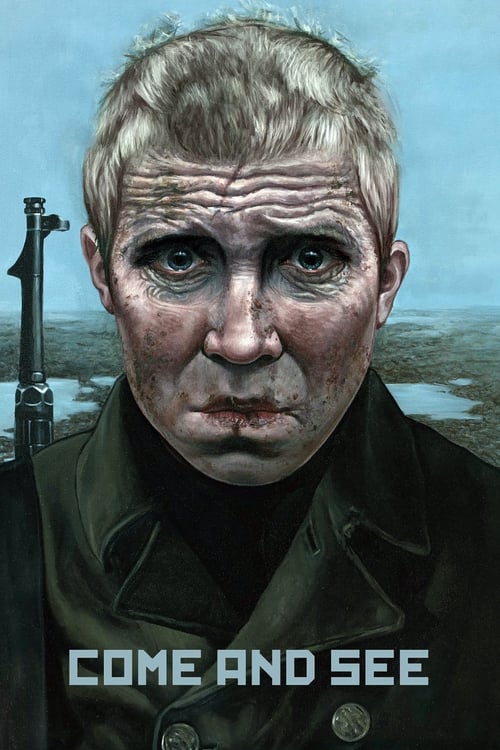
Come and See - Review
Come and See: A Descent into the Abyss of War
Come and See, Elem Klimov's harrowing 1985 masterpiece, isn't merely a war film; it's a visceral, unflinching plunge into the very heart of human suffering. More than just depicting the horrors of Nazi occupation in Belarus, it forces the viewer to confront the unimaginable, to witness the systematic dismantling of innocence and the utter devastation wrought by ideological hatred. This isn't a film you passively watch; it's a cinematic experience that burrows under your skin, leaving an indelible mark long after the credits roll. Prepare to be challenged, disturbed, and profoundly moved, because Come and See offers no easy answers, only the stark, brutal truth of a forgotten chapter of World War II.
Plot and Narrative Structure
The narrative, deceptively simple on the surface, follows Florya Gaishun (Aleksey Kravchenko), a young Belarusian boy eager to join the partisans fighting against the German invaders. Against the desperate pleas of his mother, he enthusiastically joins their ranks, fueled by youthful idealism and a naive understanding of war. This initial optimism is quickly shattered as Florya's journey becomes a descent into hell. He's initially relegated to menial tasks, quickly abandoned by the partisans, and forced to fend for himself in a landscape ravaged by violence. He meets Glasha (Olga Mironova), a young woman who becomes his temporary companion, but their fleeting moments of connection are constantly threatened by the encroaching brutality. The film meticulously charts Florya's physical and psychological transformation, stripping away his innocence layer by layer. He witnesses unspeakable atrocities, endures unimaginable suffering, and is ultimately reduced to a shell of his former self. The film's structure is deliberately disorienting, mirroring Florya's own confusion and trauma. Klimov avoids traditional war film tropes, opting instead for a more surreal and dreamlike quality, blurring the lines between reality and hallucination. This fragmented narrative serves to amplify the sense of chaos and the overwhelming horror of the situation.
Characters: The Erosion of Humanity
Come and See doesn't focus on heroic figures or grand strategic maneuvers. Instead, it centers on the ordinary people caught in the crossfire of war. Florya, the central character, is a compelling figure whose transformation is both heartbreaking and terrifying. Aleksey Kravchenko's performance is nothing short of phenomenal. He portrays Florya's initial enthusiasm with a wide-eyed innocence that makes his subsequent degradation all the more devastating. As Florya witnesses the atrocities around him, his face becomes a canvas of terror, etched with the permanent scars of war. He is not a hero, but a victim, a symbol of the countless innocent lives destroyed by conflict.
Glasha, while a smaller role, is equally significant. She represents a fragile hope amidst the despair, a brief flicker of humanity in a world gone mad. Her vulnerability and resilience offer a stark contrast to the brutality of the German soldiers. The German soldiers themselves are not portrayed as complex characters. They are largely faceless, dehumanized figures, embodying the cold, calculated cruelty of the Nazi regime. Their actions are presented without explanation or justification, highlighting the sheer senselessness of their violence.
Other characters, such as Florya's mother and the partisan commander, represent different aspects of the human condition in wartime. His mother's desperate attempts to protect her son highlight the primal instinct for survival, while the partisan commander embodies the harsh realities of resistance, the difficult choices that must be made in the face of overwhelming odds.
Direction and Cinematic Vision
Elem Klimov's direction in Come and See is nothing short of masterful. He creates a cinematic experience that is both visually stunning and emotionally devastating. Klimov's use of long takes, close-ups, and unconventional camera angles immerses the viewer in Florya's perspective, forcing them to confront the horrors of war alongside him. The film's pacing is deliberately slow and methodical, allowing the tension to build gradually, creating a sense of unease and dread. Klimov doesn't shy away from depicting the graphic violence of war, but he does so in a way that is both disturbing and deeply affecting. He avoids sensationalism, instead focusing on the human cost of conflict, the psychological toll it takes on individuals and communities.
The film's sound design is equally crucial to its overall impact. The constant barrage of gunfire, explosions, and screams creates a cacophony of terror that further amplifies the sense of chaos and disorientation. The use of silence is also particularly effective, creating moments of unbearable tension and highlighting the stark contrast between the beauty of the natural world and the brutality of human actions.
Cinematography: Painting a Portrait of Hell
The cinematography in Come and See, by Aleksey Rodionov, is breathtakingly beautiful and horrifying in equal measure. The film's visual style is characterized by its stark realism and its unflinching depiction of violence. Rodionov uses natural light and handheld cameras to create a sense of immediacy and authenticity, immersing the viewer in the world of the film. The landscapes of Belarus, once idyllic and peaceful, are transformed into a desolate wasteland, scarred by the ravages of war. The film's color palette is muted and desaturated, reflecting the bleakness and despair of the situation. Close-ups of Florya's face are particularly effective, capturing his growing terror and disillusionment. The film's visual language is both poetic and brutal, creating a powerful and unforgettable cinematic experience.
One particularly striking aspect of the cinematography is its use of perspective. The camera often adopts Florya's point of view, allowing the viewer to experience the events of the film through his eyes. This subjective perspective creates a strong sense of empathy and allows the viewer to connect with Florya on a deeply emotional level. The film also makes effective use of long takes, allowing the viewer to linger on scenes of violence and devastation, forcing them to confront the full horror of the situation.
Performances: A Triumph of Realism
The performances in Come and See are uniformly excellent. Aleksey Kravchenko's portrayal of Florya is a tour de force, capturing the character's transformation from naive youth to traumatized survivor with remarkable sensitivity and nuance. Olga Mironova is equally impressive as Glasha, conveying her character's vulnerability and resilience with quiet dignity. The supporting cast is also strong, delivering authentic and believable performances that enhance the film's overall realism.
One of the reasons why the performances in Come and See are so effective is that Klimov cast non-professional actors in many of the roles. This decision lends the film a sense of authenticity that would be difficult to achieve with professional actors. The actors' lack of experience allows them to inhabit their characters in a more natural and believable way, further immersing the viewer in the world of the film.
Themes and Messages: The Unflinching Examination of War's Impact
Come and See explores several important themes, including the dehumanizing effects of war, the loss of innocence, and the resilience of the human spirit. The film argues that war is not a glorious or heroic endeavor, but a brutal and senseless act of violence that destroys everything in its path. It exposes the lies and propaganda that are often used to justify war, revealing the true cost of conflict in terms of human lives and suffering. The film also examines the psychological toll that war takes on individuals, particularly children. Florya's transformation from naive youth to traumatized survivor is a powerful indictment of the destructive power of war.
Despite its bleak and disturbing subject matter, Come and See also offers a glimmer of hope. The film suggests that even in the darkest of times, the human spirit can endure. Florya's survival, despite the horrors he witnesses, is a testament to the resilience of the human will. The film also highlights the importance of remembering the victims of war, ensuring that their sacrifices are not forgotten. The final scene, in which Florya fires his rifle at a photograph of Hitler as a child, suggests that it is never too late to resist evil and to fight for a better world.
Comparison to Other War Films and Klimov's Oeuvre
Come and See stands apart from many other war films in its unflinching depiction of violence and its focus on the psychological impact of war. Unlike films that glorify combat or focus on heroic narratives, Come and See presents a more realistic and disturbing portrayal of the realities of war. It shares similarities with films like Apocalypse Now and Platoon in its exploration of the psychological toll of war, but it is arguably even more visceral and disturbing in its depiction of violence.
In comparison to other Soviet war films, Come and See is notable for its lack of propaganda and its willingness to confront the darker aspects of the Soviet experience during World War II. While many Soviet war films focus on the heroism of the Red Army, Come and See highlights the suffering of the civilian population and the brutality of the German occupation.
Within Klimov's own filmography, Come and See is considered his masterpiece. It represents the culmination of his artistic vision, a powerful and uncompromising statement about the horrors of war and the importance of remembering the past. His previous films, such as Agony and Sport, Sport, Sport, explored different aspects of Soviet life, but Come and See is his most ambitious and impactful work.
Positive Aspects
Come and See is a cinematic triumph on many levels. Its direction, cinematography, performances, and sound design are all exceptional. The film's unflinching depiction of violence and its exploration of the psychological impact of war are both powerful and thought-provoking. The film's message about the importance of remembering the past and resisting evil is particularly relevant in today's world.
The film's realism is also a major strength. Klimov's decision to cast non-professional actors and to shoot on location in Belarus lends the film a sense of authenticity that is rare in war films. The film's attention to detail, from the costumes to the sets, further enhances its realism.
Constructive Criticism
While Come and See is a masterpiece, it is not without its flaws. The film's slow pacing and its unrelenting depiction of violence may be off-putting to some viewers. The film's lack of narrative clarity can also be confusing at times. However, these flaws are ultimately minor compared to the film's overall strengths.
Some critics have argued that the film's graphic violence is gratuitous and unnecessary. However, Klimov has defended his decision to depict violence in such a graphic way, arguing that it is necessary to convey the true horror of war. While the violence in Come and See is certainly disturbing, it is not gratuitous. It serves a specific purpose in the film, forcing the viewer to confront the realities of war and to understand its devastating impact on human lives.
Conclusion and Rating
Come and See is not an easy film to watch. It is a harrowing and disturbing experience that will stay with you long after the credits roll. However, it is also a profoundly important film that deserves to be seen by as wide an audience as possible. It is a powerful reminder of the horrors of war and the importance of remembering the past. Come and See is a cinematic masterpiece that will challenge, disturb, and ultimately move you. It’s a film that demands to be seen, discussed, and remembered.
Rating: 10/10