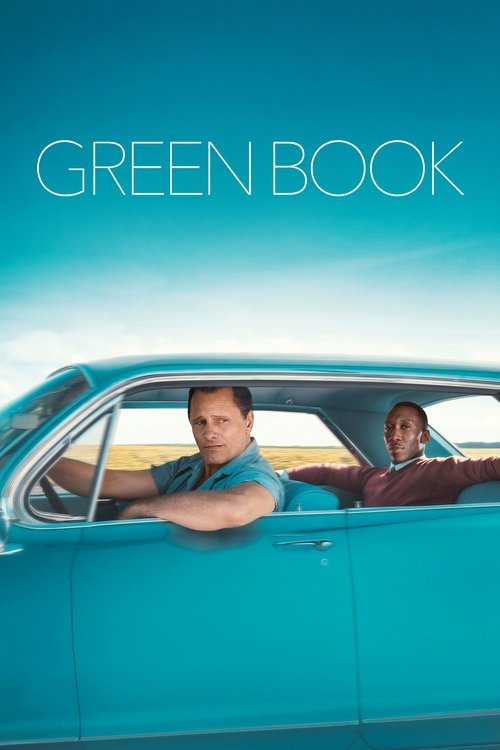
Green Book - Review
A Harmonious Road Trip: A Review of "Green Book"
In the cinematic landscape, stories exploring race relations often tread delicate ground, aiming for nuance and understanding while navigating the complexities of historical injustices. "Green Book," released in 2018, attempts to do just that, offering a glimpse into the segregated America of the 1960s through the unlikely friendship between a refined black pianist and his street-smart Italian-American driver. But does this feel-good narrative truly resonate, or does it fall short of its ambitious goals? Let's delve into the heart of "Green Book," examining its plot, characters, direction, and overall impact.
Plot: Navigating the Segregated South
The film centers on Tony "Lip" Vallelonga (Viggo Mortensen), an Italian-American bouncer working at the Copacabana in 1962 New York City. When the nightclub temporarily closes, Tony finds himself unemployed and in need of a job. He reluctantly accepts a position driving Dr. Don Shirley (Mahershala Ali), a highly educated and sophisticated African-American classical and jazz pianist, on an eight-week concert tour through the Deep South.
The premise is straightforward: Tony, a product of his rough-and-tumble environment, is initially prejudiced and uncultured, while Don Shirley embodies elegance and refinement but is isolated from both the white and black communities. As they journey south, they encounter blatant racism and discrimination, forcing Tony to confront his own biases and protect Shirley from the dangers of the segregated South. The "Green Book," a real-life guidebook for African-American travelers listing safe places to eat, sleep, and find services, becomes their essential companion, highlighting the stark reality of racial inequality.
The plot unfolds as a series of episodic encounters, each highlighting the pervasive racism and the growing bond between Tony and Don. From being denied service at restaurants to facing threats from local authorities, their journey is fraught with challenges that test their patience and resilience. The film attempts to balance these serious moments with lighter, comedic elements, often stemming from the cultural clashes between the two men. This blend of humor and drama, while intended to make the film more accessible, sometimes feels tonally inconsistent and undermines the gravity of the subject matter.
Characters: Contrasting Personalities, Evolving Dynamics
Tony Lip Vallelonga: The Transformation of a Bouncer
Viggo Mortensen delivers a transformative performance as Tony Lip. He physically embodies the character, gaining weight and adopting a thick New York accent. Initially portrayed as boorish and somewhat ignorant, Tony is a man of simple pleasures and strong family values. His casual racism, while not overtly malicious, is evident in his early interactions. However, as he witnesses the humiliation and discrimination faced by Don Shirley, he begins to question his own prejudices and develops a genuine respect for the pianist.
Tony's character arc is perhaps the most pronounced in the film. He evolves from a man who throws away black men's drinking glasses to one who stands up against racial injustice, even risking his own safety. While his transformation is commendable, it sometimes feels overly simplified, relying on broad stereotypes and convenient plot points to drive his change.
Dr. Don Shirley: The Burden of Genius
Mahershala Ali's portrayal of Dr. Don Shirley is nuanced and compelling. He embodies the pianist's intellect and sophistication, but also reveals his deep-seated loneliness and isolation. Shirley is a man caught between two worlds: too educated and refined for the black community, and too black for the white elite who appreciate his musical talent.
Shirley's internal struggles are palpable, and Ali masterfully conveys his character's vulnerability and quiet dignity. He is a man of immense talent and accomplishment, yet he is denied basic human rights and treated as a second-class citizen. While the film explores his loneliness, it arguably doesn't delve deep enough into the complexities of his identity and the unique challenges he faces as a black man in a predominantly white classical music world. Some critics have argued that Shirley's character is ultimately used to facilitate Tony's growth, rather than being fully explored in his own right.
Supporting Characters: Anchoring the Narrative
Linda Cardellini as Dolores Vallelonga, Tony's wife, provides a warm and grounding presence. Her unwavering support for Tony and her genuine curiosity about Don Shirley add a layer of humanity to the story. Other supporting characters, such as the racist police officers and the sympathetic restaurant owners, serve to highlight the stark contrast between prejudice and acceptance in the segregated South.
Direction and Cinematography: A Visual Journey Through Time
Directed by Peter Farrelly, known for his comedic films like "Dumb and Dumber" and "There's Something About Mary," "Green Book" marks a departure from his previous work. While Farrelly handles the dramatic elements with competence, the film occasionally suffers from a lack of subtlety and a tendency towards sentimentality.
The cinematography, by Sean Porter, is visually appealing, capturing the beauty of the Southern landscapes and the period-specific details of the 1960s. The use of color is particularly effective, with warm tones used to depict the close-knit Italian-American community in New York and cooler tones used to convey the isolation and alienation experienced by Don Shirley. The camera work is generally unobtrusive, allowing the performances and the story to take center stage. However, some critics have argued that the visual style is somewhat conventional and lacks a distinct artistic vision.
Performances: Oscar-Worthy Chemistry
The heart of "Green Book" lies in the performances of Viggo Mortensen and Mahershala Ali. Their on-screen chemistry is undeniable, and they bring depth and authenticity to their respective roles. Mortensen's physical transformation and his portrayal of Tony's evolving worldview are particularly impressive. Ali, as always, delivers a nuanced and emotionally resonant performance, capturing the complexities of Don Shirley's character with grace and dignity. Their performances earned them both Academy Award nominations, with Ali ultimately winning the Oscar for Best Supporting Actor.
Themes and Messages: Bridging the Divide
"Green Book" explores several important themes, including race relations, prejudice, friendship, and the power of music to transcend cultural barriers. The film highlights the pervasive racism and discrimination faced by African-Americans in the 1960s, forcing viewers to confront the uncomfortable realities of the past. It also emphasizes the importance of empathy and understanding in overcoming prejudice.
The film's central message is one of hope and reconciliation, suggesting that even in the face of deep-seated divisions, genuine friendship and mutual respect are possible. However, some critics have argued that the film's message is overly simplistic and that it relies on a "white savior" narrative, where Tony Lip is ultimately responsible for helping Don Shirley overcome his challenges. This criticism highlights the film's potential to perpetuate harmful stereotypes and to minimize the agency of black characters in their own stories.
The film also touches upon the theme of identity and belonging. Don Shirley, a man of immense talent and accomplishment, struggles to find his place in a society that refuses to accept him fully. His loneliness and isolation are a direct result of the racism and prejudice he faces, highlighting the psychological toll of discrimination.
Comparison to Other Films: A Familiar Narrative?
"Green Book" shares similarities with other films that explore race relations and unlikely friendships, such as "Driving Miss Daisy" and "The Help." Like these films, "Green Book" focuses on the relationship between a white and a black character, using their interactions to highlight the complexities of race in America. However, "Green Book" distinguishes itself through its emphasis on the "Green Book" itself, a tangible reminder of the segregated reality of the era.
Compared to Peter Farrelly's previous work, "Green Book" represents a significant departure. While his earlier films were primarily comedies, "Green Book" tackles serious social issues with a more dramatic approach. However, his comedic sensibilities are still evident in the film's lighter moments, which occasionally feel out of place given the gravity of the subject matter.
Positive Aspects: Heartfelt Performances and Important Themes
Despite its flaws, "Green Book" has several positive aspects. The performances of Viggo Mortensen and Mahershala Ali are undoubtedly the film's strongest asset. Their chemistry is captivating, and they bring depth and authenticity to their respective roles. The film also effectively highlights the pervasive racism and discrimination faced by African-Americans in the 1960s, raising awareness of a dark chapter in American history. The use of the "Green Book" as a central symbol is particularly powerful, reminding viewers of the challenges and dangers faced by black travelers in the segregated South. The film's message of hope and reconciliation, while perhaps overly simplistic, is ultimately uplifting and inspiring.
Constructive Criticism: Simplification and the "White Savior" Trope
Despite its good intentions, "Green Book" has faced criticism for its handling of race relations. Some critics have argued that the film relies on a "white savior" narrative, where Tony Lip is ultimately responsible for helping Don Shirley overcome his challenges. This criticism stems from the film's focus on Tony's transformation and its tendency to portray Don Shirley as a somewhat passive character. The film also simplifies the complexities of race and class, glossing over the nuances of Don Shirley's identity and the systemic nature of racism. Furthermore, some of Don Shirley's relatives publicly criticized the film, describing it as a "symphony of lies" and disputing its portrayal of Shirley's life and relationships.
Conclusion: A Well-Intentioned but Imperfect Journey
"Green Book" is a well-intentioned film that attempts to address important issues of race and prejudice. The performances of Viggo Mortensen and Mahershala Ali are exceptional, and the film's message of hope and reconciliation is ultimately uplifting. However, the film's reliance on a "white savior" narrative, its simplification of complex issues, and the controversy surrounding its historical accuracy detract from its overall impact. While it offers a glimpse into a painful chapter of American history, it does so through a lens that is arguably too simplistic and sanitized. It's a film that sparks conversation, but perhaps not always in the most nuanced or productive way.
Rating: 7/10