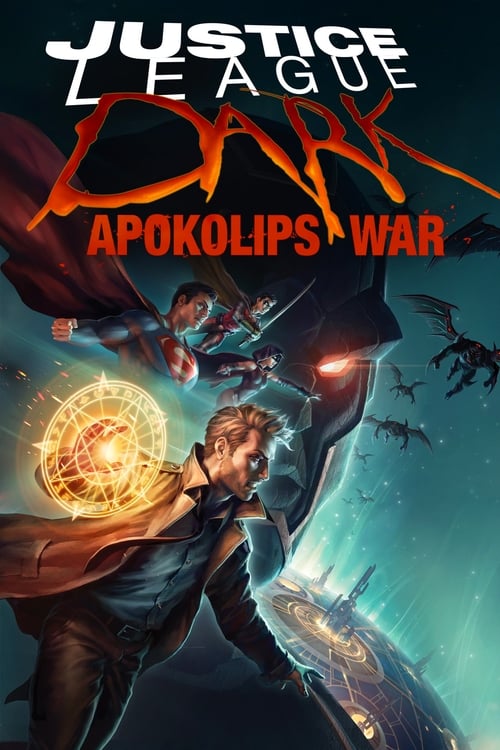
Justice League Dark: Apokolips War - Review
Justice League Dark: Apokolips War - A Grim Spectacle of Heroic Sacrifice and Cosmic Horror
Justice League Dark: Apokolips War isn't just another animated superhero film; it's a brutal, uncompromising, and ultimately cathartic culmination of the DC Animated Movie Universe (DCAMU). Released in 2020, this film throws viewers headfirst into a dystopian nightmare where Darkseid has not only conquered Earth but has broken the spirit of its mightiest heroes. Forget the lighthearted adventures and quips of previous DC animated outings; this is a war story, a tragedy, and a testament to the enduring power of hope in the face of utter annihilation. Prepare to witness the fall of legends, the rise of unlikely alliances, and a sacrifice that redefines heroism. But is this bleak vision a masterpiece or a misstep? Let's delve into the heart of Apokolips War and dissect its strengths and weaknesses.
Plot: A Descent into Darkness and a Glimmer of Hope
The plot is a direct continuation of the seeds planted in previous DCAMU films, particularly Justice League Dark and Justice League vs. Teen Titans. The film opens with a devastating flashback to the Justice League's failed preemptive strike against Apokolips. The heroes, overconfident and unprepared, are decimated by Darkseid's forces. Superman is brainwashed and transformed into a weapon of destruction, Batman is forced into a horrifying symbiotic relationship with Apokoliptian technology, and many other heroes are either killed or enslaved.
Two years later, Earth is a wasteland. Darkseid's Parademons patrol the skies, and the remaining heroes are scattered and broken. Superman, now a horrifying cyborg, serves as Darkseid's enforcer. Batman, twisted and tormented, is forced to use his intellect to further Darkseid's plans. Constantine, ravaged by guilt and addiction, struggles to hold onto his humanity. Raven, burdened by her demonic heritage, fights to protect the remnants of the Teen Titans.
The plot then follows a desperate plan devised by Constantine and a resurrected Superman (thanks to Raven's intervention). They must gather the remaining heroes – including the Suicide Squad, who have been surprisingly effective in guerrilla warfare – and launch a final, suicidal assault on Apokolips. The plan is fraught with peril, betrayal, and heartbreaking sacrifices. The journey to Apokolips is a gauntlet of horrors, forcing the heroes to confront their deepest fears and make impossible choices.
The final confrontation with Darkseid is a spectacle of epic proportions. The heroes, outnumbered and outmatched, fight with a ferocity born of desperation. The battle is brutal and bloody, with many beloved characters meeting their end in shocking and emotional ways. The climax involves a complex and paradoxical plan involving Flash's speed force and Constantine's magical abilities, ultimately resetting the timeline and offering a chance for a new beginning.
Strengths: The plot is relentlessly engaging, driven by high stakes and emotional resonance. The pacing is excellent, constantly ratcheting up the tension and delivering impactful moments of action and character development. The film doesn't shy away from depicting the horrors of war and the consequences of failure, creating a truly immersive and believable dystopian setting.
Weaknesses: The sheer number of characters can sometimes feel overwhelming, and some characters receive less development than others. The time travel/reset element, while providing a sense of closure, can feel a bit convenient and undermines the impact of some of the sacrifices made throughout the film. Some plot points, particularly regarding Lex Luthor's motivations, feel somewhat underdeveloped.
Characters: Broken Heroes and Unexpected Alliances
Apokolips War excels in its character portrayals, showcasing the psychological toll of war and the resilience of the human spirit. The heroes are not invincible; they are flawed, vulnerable, and deeply affected by the horrors they have witnessed.
- Superman: Voiced by Jerry O'Connell, Superman's transformation into a brainwashed cyborg is one of the film's most disturbing and effective elements. He is a symbol of hope corrupted, a terrifying reminder of Darkseid's power. His eventual redemption, fueled by Raven's influence and his own buried goodness, is a powerful moment of catharsis.
- Batman: Jason O'Mara delivers a chilling performance as a Batman trapped in a living nightmare. His mind is intact, but his body is a prisoner of Apokoliptian technology. He is forced to witness and contribute to Darkseid's atrocities, adding a layer of psychological torment to his physical suffering. His ultimate sacrifice is both tragic and heroic.
- Constantine: Matt Ryan's portrayal of Constantine is a standout. He is cynical, self-destructive, and haunted by his past mistakes. Yet, beneath his hardened exterior lies a deep-seated desire to do good. He is the architect of the final plan, using his cunning and magical abilities to orchestrate the impossible.
- Raven: Taissa Farmiga continues to deliver a compelling performance as Raven. Her empathy and connection to the emotional plane make her a crucial element in Superman's redemption. She also serves as a bridge between the Justice League and the Teen Titans, highlighting the importance of unity in the face of overwhelming odds.
- Darkseid: Tony Todd's voice acting perfectly captures Darkseid's terrifying presence and unwavering ambition. He is not just a villain; he is a force of nature, a cosmic tyrant who sees all beings as pawns in his quest for domination.
- Lex Luthor: Rainn Wilson's portrayal of Lex Luthor is intriguing, though perhaps underdeveloped. He is opportunistic and self-serving, but his motivations are not always clear. He seems to be driven by a desire to prove his superiority over Superman, even in the face of global annihilation.
- The Suicide Squad: Characters like Harley Quinn, King Shark, and Captain Boomerang provide moments of dark humor and unexpected heroism. Their inclusion highlights the desperate nature of the situation and the willingness to use any means necessary to fight back against Darkseid.
Strengths: The character development is nuanced and believable, particularly in the cases of Superman, Batman, and Constantine. The voice acting is exceptional across the board, bringing depth and emotion to each character. The film effectively explores the psychological impact of trauma and the challenges of maintaining hope in the face of despair.
Weaknesses: Some characters, particularly those in the Suicide Squad, feel somewhat underdeveloped and serve primarily as cannon fodder. Lex Luthor's motivations could have been explored in more detail. The sheer number of characters means that some receive less screen time than others.
Direction and Cinematography: A Visual Symphony of Destruction
Matt Peters and Christina Sotta, the directors of Apokolips War, deliver a visually stunning and emotionally impactful film. The direction is confident and assured, seamlessly blending action sequences with moments of character development and emotional resonance. The film's visual style is dark and gritty, reflecting the bleakness of the setting and the brutality of the conflict.
The cinematography is particularly noteworthy. The film utilizes dynamic camera angles and creative visual effects to create a sense of scale and scope. The battle sequences are chaotic and visceral, conveying the intensity of the fighting and the devastating power of Darkseid's forces. The use of color is also effective, with muted tones dominating the landscape and brighter colors reserved for moments of hope or defiance.
Strengths: The direction is confident and assured, creating a cohesive and engaging cinematic experience. The cinematography is visually stunning, effectively conveying the scope and intensity of the conflict. The animation is fluid and detailed, bringing the characters and the world to life.
Weaknesses: Some of the character designs, particularly those of the Apokoliptian soldiers, can feel somewhat generic. The reliance on CGI in some of the action sequences can occasionally detract from the overall visual impact.
Performances: Voice Acting Excellence
The voice acting in Justice League Dark: Apokolips War is nothing short of exceptional. The cast delivers nuanced and emotionally resonant performances that bring the characters to life. As mentioned previously:
- Jerry O'Connell's portrayal of Superman, both before and after his corruption, is compelling.
- Jason O'Mara's Batman is haunting.
- Matt Ryan's Constantine is a scene-stealer.
- Taissa Farmiga's Raven is empathetic and powerful.
- Tony Todd's Darkseid is terrifyingly authoritative.
Rainn Wilson as Lex Luthor adds a layer of complexity to the character, while the rest of the supporting cast delivers solid performances that enhance the overall impact of the film.
Strengths: The voice acting is consistently excellent, with each actor bringing depth and emotion to their respective characters. The cast is well-chosen, with each actor perfectly suited to their role. The performances elevate the film beyond a simple action movie, adding layers of emotional complexity and character development.
Weaknesses: None to speak of. The voice acting is a significant strength of the film.
Themes and Messages: Hope in the Face of Despair
Justice League Dark: Apokolips War explores several complex themes, including the nature of heroism, the cost of war, and the importance of hope in the face of despair.
- Heroism: The film challenges the traditional notion of heroism, showcasing the vulnerability and fallibility of even the most powerful heroes. It emphasizes that true heroism is not about invincibility, but about courage, sacrifice, and the willingness to fight for what is right, even when the odds are stacked against you.
- The Cost of War: The film unflinchingly depicts the horrors of war, showcasing the physical and psychological toll it takes on individuals and societies. It highlights the importance of diplomacy and prevention, suggesting that sometimes the greatest victory is avoiding conflict altogether.
- Hope in the Face of Despair: Despite its bleak setting and tragic events, Apokolips War ultimately offers a message of hope. It suggests that even in the darkest of times, the human spirit can endure, and that even the smallest act of defiance can make a difference. The film emphasizes the importance of unity, resilience, and the belief in a better future.
- Sacrifice: The film is rife with sacrifice, both large and small. Characters willingly give up their lives, their freedom, and their sanity to protect others and fight for a better world. The film suggests that sacrifice is an essential element of heroism and that sometimes the greatest good requires the greatest cost.
Strengths: The film tackles complex themes with depth and nuance, prompting viewers to consider the meaning of heroism and the consequences of war. The message of hope is powerful and inspiring, offering a sense of catharsis amidst the darkness. The film avoids simplistic moralizing, presenting a nuanced and believable portrayal of good and evil.
Weaknesses: The film's bleakness may be off-putting to some viewers who prefer more lighthearted superhero fare. The themes, while complex, are not always subtly presented and can occasionally feel heavy-handed.
Comparison to Other Films and Works
Justice League Dark: Apokolips War stands out from other DC animated films due to its darker tone and more mature themes. It is more akin to films like The Dark Knight Returns or Batman: Under the Red Hood, which explore the darker aspects of the superhero genre.
Compared to other animated superhero films, Apokolips War is unique in its willingness to kill off major characters and depict the devastating consequences of failure. It is less concerned with providing simple entertainment and more interested in exploring complex themes and challenging viewers' expectations.
In terms of the DCAMU, Apokolips War serves as a fitting conclusion to the overarching narrative that began with Justice League: War. It brings closure to many of the character arcs and resolves the conflicts that have been brewing throughout the series. However, the timeline reset also serves as a soft reboot, opening the door for new stories and possibilities.
Strengths: The film distinguishes itself from other superhero films by its darker tone, mature themes, and willingness to take risks. It serves as a satisfying conclusion to the DCAMU, while also leaving room for future stories. The film draws inspiration from classic DC comics, such as The Dark Knight Returns and Crisis on Infinite Earths, while also forging its own unique path.
Weaknesses: The film's bleakness may alienate some viewers who are accustomed to more lighthearted superhero fare. The timeline reset, while providing closure, can feel like a cop-out and undermines the impact of some of the sacrifices made throughout the film.
Positive Aspects
- Compelling and engaging plot
- Nuanced character development
- Exceptional voice acting
- Visually stunning cinematography
- Exploration of complex themes
- Satisfying conclusion to the DCAMU
Constructive Criticism
- Overabundance of characters
- Underdeveloped subplots (Lex Luthor)
- Convenient timeline reset
- Bleakness may not appeal to all viewers
Conclusion
Justice League Dark: Apokolips War is a powerful and unforgettable animated film that pushes the boundaries of the superhero genre. It is a dark, brutal, and ultimately cathartic experience that will leave viewers emotionally drained but ultimately satisfied. While its bleakness and controversial ending may not appeal to everyone, its compelling plot, nuanced character development, exceptional voice acting, and visually stunning cinematography make it a must-watch for fans of DC comics and animated films. Despite its flaws, it is a bold and ambitious film that deserves to be recognized as one of the best animated superhero films ever made.
Final Rating: 9/10