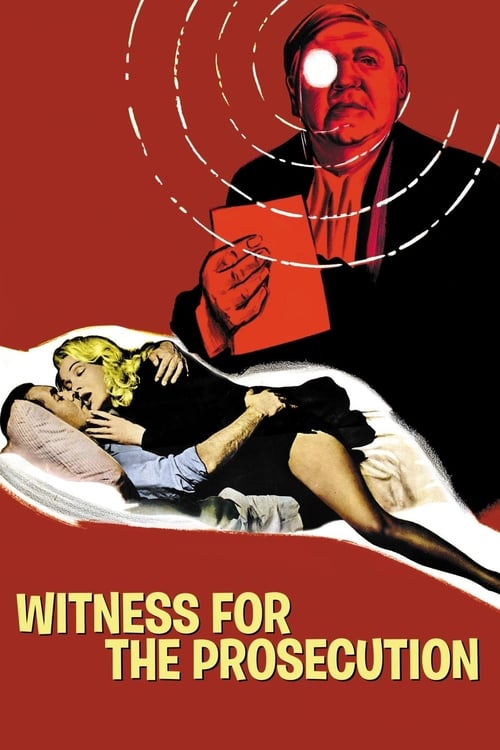
Witness for the Prosecution - Review
Witness for the Prosecution: A Masterclass in Suspense and Legal Intrigue
Alfred Hitchcock may be the undisputed master of suspense, but Billy Wilder's Witness for the Prosecution (1957) proves that Hitchcock wasn't the only one who could keep audiences on the edge of their seats. A courtroom drama that twists and turns with the precision of a finely crafted clock, this adaptation of Agatha Christie's play is a testament to Wilder's directorial prowess and the power of a well-constructed narrative. Forget everything you think you know about legal thrillers; Witness for the Prosecution is a game of smoke and mirrors, where truth is a slippery eel and appearances are devastatingly deceptive. From its stellar performances to its razor-sharp dialogue, the film is a cinematic experience that lingers long after the credits roll, leaving you questioning the very nature of justice and perception.
Plot: A Labyrinth of Lies and Deceit
The film centers around Sir Wilfrid Robarts (Charles Laughton), a brilliant but ailing barrister recovering from a heart attack. Despite his doctor's strict orders to avoid stressful cases, Sir Wilfrid is drawn to the defense of Leonard Vole (Tyrone Power), a charming but somewhat naive man accused of murdering a wealthy widow, Emily French. The prosecution's case seems airtight: Vole was the last person seen with the victim, he stood to inherit a substantial sum of money from her, and damningly, his own wife, Christine Vole (Marlene Dietrich), is set to testify against him.
As Sir Wilfrid delves deeper into the case, aided by his ever-watchful nurse, Miss Plimsoll (Elsa Lanchester), he uncovers a web of inconsistencies and hidden motives. Christine's cold and calculating demeanor raises suspicions, and her testimony proves to be a crucial, yet baffling, piece of the puzzle. The courtroom becomes a battleground of wits, where Sir Wilfrid must navigate the treacherous waters of circumstantial evidence, unreliable witnesses, and the ever-present specter of Christine's seemingly unwavering condemnation of her husband.
The plot's brilliance lies not just in its twists and turns, but in the way it manipulates the audience's perception. Each revelation, each new piece of evidence, shifts our allegiances and forces us to re-evaluate everything we thought we knew. Wilder masterfully controls the flow of information, withholding key details until the precise moment to maximize their impact. The film culminates in a shocking twist that completely upends the established narrative, leaving the audience breathless and questioning the very nature of truth and justice.
Characters: Driven by Hidden Agendas and Complex Motivations
Witness for the Prosecution boasts a cast of characters that are as compelling as they are complex. Each individual is driven by their own hidden agendas and motivations, making it difficult to discern who is telling the truth and who is merely playing a role.
Sir Wilfrid Robarts (Charles Laughton)
Laughton's portrayal of Sir Wilfrid is nothing short of iconic. He embodies the character with a perfect blend of wit, intelligence, and world-weariness. Despite his failing health, Sir Wilfrid remains a formidable legal mind, driven by a deep sense of justice and a stubborn refusal to be defeated. He's not afraid to bend the rules or use unconventional tactics to achieve his goals, but his ultimate aim is always to uncover the truth. Laughton's performance is a masterclass in subtle acting, conveying a wealth of emotion and intention with a mere glance or a carefully chosen word.
Christine Vole (Marlene Dietrich)
Dietrich delivers a mesmerizing performance as Christine Vole, a woman shrouded in mystery and ambiguity. Her cold, calculating demeanor and unwavering testimony against her husband make her a seemingly heartless and untrustworthy figure. However, as the film progresses, glimpses of vulnerability and hidden depths begin to emerge, hinting at a more complex and nuanced character beneath the surface. Dietrich's ability to convey both strength and fragility with equal measure is crucial to the film's success, keeping the audience guessing about her true motives until the very end.
Leonard Vole (Tyrone Power)
Power's portrayal of Leonard Vole is deceptively simple. He initially appears as a naive and somewhat hapless individual, easily manipulated and overwhelmed by the legal proceedings. However, as the film unfolds, doubts begin to creep in about his innocence. Is he truly the victim of circumstance, or is he a cunning manipulator hiding behind a facade of innocence? Power's performance is carefully calibrated to keep the audience guessing, making it difficult to determine his true nature until the final moments.
Miss Plimsoll (Elsa Lanchester)
Lanchester provides much-needed comic relief as Miss Plimsoll, Sir Wilfrid's overbearing but ultimately loyal nurse. Her constant nagging and obsessive attention to his health provide a humorous counterpoint to the intense legal drama unfolding in the courtroom. However, Miss Plimsoll is more than just a comedic foil; she also serves as Sir Wilfrid's confidante and moral compass, offering him valuable insights and support throughout the case. Lanchester's performance is a delightful blend of humor and heart, adding a touch of warmth to the otherwise cold and calculating world of the courtroom.
Direction: Wilder's Masterful Control of Suspense
Billy Wilder's direction is a key factor in the film's success. He masterfully controls the pacing and suspense, gradually ratcheting up the tension as the plot unfolds. Wilder's use of close-ups and reaction shots allows the audience to connect with the characters on a deeper level, while his sharp, witty dialogue keeps the narrative engaging and entertaining. He also expertly utilizes the courtroom setting to create a sense of claustrophobia and confinement, trapping both the characters and the audience within the confines of the legal proceedings.
Wilder's attention to detail is evident in every aspect of the film, from the meticulously crafted sets to the carefully chosen costumes. He creates a believable and immersive world that draws the audience in and keeps them captivated from beginning to end. His ability to blend humor, suspense, and drama seamlessly is a hallmark of his directorial style, and Witness for the Prosecution is a prime example of his genius.
Cinematography: Shadows and Light in the Pursuit of Truth
The black and white cinematography, primarily by Russell Harlan, contributes significantly to the film's atmosphere of suspense and intrigue. The use of shadows and light creates a sense of mystery and uncertainty, reflecting the ambiguity of the truth within the courtroom. The stark contrast between light and dark emphasizes the moral complexities of the characters and the case, highlighting the blurred lines between innocence and guilt.
The camera angles are carefully chosen to create a sense of intimacy and tension, drawing the audience into the heart of the drama. Close-ups are used sparingly but effectively to reveal the characters' emotions and intentions, while wide shots capture the grandeur and formality of the courtroom setting. The cinematography is not merely decorative; it is an integral part of the storytelling process, enhancing the film's overall impact and effectiveness.
Performances: A Showcase of Acting Excellence
The performances in Witness for the Prosecution are uniformly excellent, showcasing the talents of a stellar cast. Charles Laughton's portrayal of Sir Wilfrid Robarts is a career-defining performance, earning him an Academy Award nomination. Marlene Dietrich delivers a captivating and enigmatic performance as Christine Vole, leaving the audience guessing about her true motives until the very end. Tyrone Power shines as Leonard Vole, skillfully portraying the character's innocence and vulnerability. Elsa Lanchester provides much-needed comic relief as Miss Plimsoll, adding a touch of warmth and humor to the otherwise serious proceedings. The supporting cast is equally impressive, with each actor bringing their own unique talents to the table.
The chemistry between the actors is palpable, creating a dynamic and engaging ensemble. Laughton and Lanchester's bantering relationship is a highlight of the film, providing moments of levity and affection amidst the tense legal drama. Dietrich and Power's interactions are fraught with tension and ambiguity, leaving the audience wondering about the true nature of their relationship.
Themes and Messages: Justice, Deception, and the Fragility of Truth
Witness for the Prosecution explores several key themes, including justice, deception, and the fragility of truth. The film raises questions about the nature of justice and the reliability of the legal system. Can justice truly be served when the truth is so easily manipulated and obscured? The film suggests that the pursuit of justice is a complex and often messy process, fraught with uncertainty and moral compromises.
Deception is another central theme of the film. Each character is, in some way, deceptive, hiding their true motives and intentions from others. The film highlights the power of deception to influence perceptions and manipulate outcomes. It also suggests that deception is often a necessary tool for survival in a world where truth is a valuable but often elusive commodity.
The fragility of truth is perhaps the most profound theme of the film. The truth is not a fixed and immutable entity but rather a fluid and subjective concept that is easily distorted by bias, perception, and self-interest. The film suggests that the pursuit of truth is a never-ending quest, one that requires constant vigilance and a willingness to question one's own assumptions.
Comparison to Other Films and Works
Witness for the Prosecution stands out as a particularly strong adaptation of Agatha Christie's work, surpassing many other attempts to bring her intricate plots to the screen. While films like "Murder on the Orient Express" (both the 1974 and more recent versions) offer visual spectacle and star-studded casts, they often lack the tightly wound suspense and character-driven drama that defines Wilder's film. The focus in "Witness" is less on the elaborate puzzle and more on the psychological complexities of the individuals involved, making it a more compelling and ultimately more satisfying experience.
Comparing it to other courtroom dramas, such as "12 Angry Men" (1957), reveals a key difference in approach. "12 Angry Men" is a more straightforward exploration of reasonable doubt and the power of collective deliberation. "Witness for the Prosecution," on the other hand, is a more cynical and morally ambiguous film, suggesting that the truth is often elusive and that justice is not always guaranteed.
Within Billy Wilder's own filmography, Witness for the Prosecution shares thematic elements with films like "Sunset Boulevard" (1950) and "Ace in the Hole" (1951), particularly the exploration of moral corruption and the exploitation of human weakness. However, "Witness" distinguishes itself through its intricate plot and its focus on the legal system, making it a unique and compelling addition to Wilder's body of work.
Positive Aspects: A Masterpiece of Suspense and Intrigue
Witness for the Prosecution is a film that excels on multiple levels. Its strengths include:
- A meticulously crafted plot that keeps the audience guessing until the very end.
- Stellar performances from a talented cast, particularly Charles Laughton and Marlene Dietrich.
- Sharp, witty dialogue that is both entertaining and insightful.
- Masterful direction by Billy Wilder, who expertly controls the pacing and suspense.
- Evocative black and white cinematography that enhances the film's atmosphere of mystery and intrigue.
- Thought-provoking themes that explore the nature of justice, deception, and truth.
Constructive Criticism: Minor Imperfections in a Near-Perfect Film
While Witness for the Prosecution is a near-perfect film, there are a few minor imperfections that are worth noting:
- Tyrone Power's performance, while solid, is perhaps the least memorable of the main cast. He sometimes lacks the charisma and intensity needed to fully convince the audience of his innocence or guilt.
- The film's pacing can be slightly uneven at times, with certain scenes feeling a bit too drawn out.
- The ending, while shocking and satisfying, may feel somewhat contrived to some viewers.
However, these minor flaws are easily overlooked in light of the film's overall brilliance. They do not detract significantly from the viewing experience and should not deter anyone from watching this classic courtroom drama.
Conclusion: A Timeless Classic That Demands to Be Seen
Witness for the Prosecution is a timeless classic that continues to captivate audiences with its intricate plot, stellar performances, and thought-provoking themes. Billy Wilder's masterful direction and the film's sharp, witty dialogue make it a truly unforgettable cinematic experience. Despite its age, the film remains remarkably relevant, raising questions about justice, deception, and the fragility of truth that are as pertinent today as they were in 1957. It's a film that demands to be seen and discussed, a testament to the power of storytelling and the enduring appeal of a well-crafted mystery.
Rating: 9.5/10