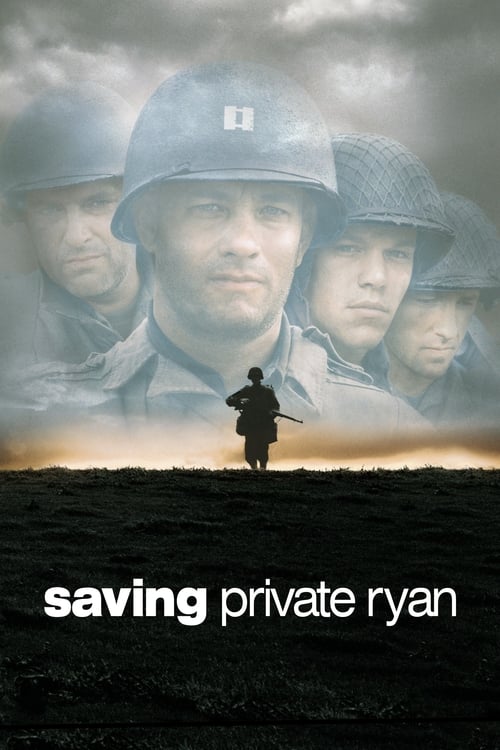
Saving Private Ryan - Review
Saving Private Ryan: A Masterpiece of War Cinema
Few films have impacted the cinematic landscape as profoundly as Steven Spielberg's Saving Private Ryan. Released in 1998, it wasn't just another war movie; it was a visceral, unflinching, and deeply human portrayal of the D-Day landings and the horrors that followed. More than two decades later, it remains a benchmark for war films, influencing countless subsequent productions and sparking ongoing debates about its realism, its patriotism, and its enduring power. This review delves into the film's narrative, characters, technical brilliance, and thematic depth, exploring why Saving Private Ryan continues to resonate with audiences worldwide.
Plot Analysis: A Mission Born of Compassion and Loss
The film's narrative is deceptively simple: Captain John Miller (Tom Hanks) and a squad of eight U.S. soldiers are tasked with finding Private James Francis Ryan (Matt Damon), whose three brothers have been killed in action. The mission is initiated after the War Department, learning of the tragic loss, decides to send Ryan home, deeming the cost of one life worth the potential solace for his grieving mother. This premise, seemingly straightforward, unfolds into a complex and morally ambiguous journey through the ravaged landscapes of post-D-Day France.
The initial D-Day sequence, lasting nearly thirty minutes, is a brutal and unforgettable immersion into the chaos of Omaha Beach. This extended opening serves not only as a visual shock but also as a crucial foundation for understanding the psychological toll of war. The audience is immediately thrust into the disorienting and terrifying experience of the soldiers, making the subsequent mission to find Ryan all the more poignant. The contrast between the relentless violence of the landing and the seemingly "humanitarian" objective of the mission highlights the inherent contradictions of war.
As Miller and his men venture deeper into enemy territory, they encounter resistance at every turn. Each encounter, from the skirmish in the French village to the climactic defense of the bridge in Ramelle, presents moral dilemmas and tests the resolve of the soldiers. The plot cleverly weaves together action sequences with moments of introspection and character development, allowing the audience to connect with the men on a personal level. The seemingly simple objective of finding Ryan becomes secondary to the exploration of duty, sacrifice, and the value of human life in the face of overwhelming brutality.
Character Development: Beyond the Battlefield
Saving Private Ryan boasts a cast of richly developed characters, each with their own motivations, fears, and moral compass. Captain John Miller, portrayed with quiet intensity by Tom Hanks, is the heart and soul of the film. He is a reluctant leader, a schoolteacher thrust into the horrors of war, who carries the weight of his responsibilities with stoicism and quiet desperation. His shaking hand, a physical manifestation of the trauma he endures, serves as a constant reminder of the psychological toll of command.
The squad members are equally compelling. Sergeant Michael Horvath (Tom Sizemore), Miller's right-hand man, provides unwavering support and a grounded perspective. Irwin Wade (Giovanni Ribisi), the medic, embodies compassion and empathy amidst the carnage. Daniel Jackson (Barry Pepper), the sharpshooter, finds solace in prayer and his deadly accuracy. Richard Reiben (Edward Burns), the cynical and rebellious soldier, challenges Miller's authority and represents the disillusionment that can arise from the constant exposure to violence. Stanley Mellish (Adam Goldberg), the Jewish soldier, faces the unique threat of Nazi ideology. Timothy Upham (Jeremy Davies), the interpreter, represents the naiveté and inexperience of those thrust into the horrors of war. And Adrian Caparzo (Vin Diesel), while having less screen time, makes a memorable impression and highlights the personal cost of the mission.
Private Ryan, while appearing later in the film, is not merely a MacGuffin. He represents the human cost of war and the potential for redemption. His initial reluctance to leave his post, despite the sacrifices made to find him, forces Miller and his men to confront the ethical implications of their mission. Ryan’s dedication to his comrades reinforces the idea that loyalty and duty extend beyond familial ties.
The film avoids simplistic portrayals of good versus evil. Even the German soldiers are depicted as human beings, albeit enemies, caught in the same brutal conflict. This nuanced approach to character development elevates Saving Private Ryan beyond a mere action film and into a complex exploration of the human condition.
Direction and Cinematography: Immersing the Viewer in Hell
Steven Spielberg's direction is nothing short of masterful. He eschews the romanticized depictions of war prevalent in earlier films, opting instead for a gritty, realistic, and unflinching portrayal of the D-Day landings and the subsequent battles. His decision to use handheld cameras, desaturated colors, and realistic sound design creates a sense of immediacy and immersion that is both shocking and profoundly moving.
The cinematography, by Janusz Kamiński, is equally groundbreaking. The use of shallow depth of field, shaky camera movements, and close-ups intensifies the feeling of chaos and disorientation. The desaturated color palette, with its muted tones and washed-out hues, further enhances the film's realism and underscores the bleakness of the battlefield. The film's visual style is not merely aesthetic; it is integral to conveying the emotional and psychological impact of war on the soldiers.
The opening D-Day sequence is a tour de force of filmmaking. The graphic depiction of violence, the disorienting camera angles, and the cacophony of sounds create a visceral and unforgettable experience. Spielberg does not shy away from the brutality of war, showing the audience the blood, the guts, and the sheer terror of combat. This unflinching realism is what sets Saving Private Ryan apart from other war films and makes it such a powerful and impactful experience.
Beyond the action sequences, Spielberg's direction is equally effective in the quieter moments. The scenes of Miller and his men talking around the campfire, sharing stories and fears, are poignant and deeply human. These moments of introspection provide a respite from the violence and allow the audience to connect with the characters on a personal level.
Performances: A Cast at the Top of Their Game
The performances in Saving Private Ryan are uniformly excellent. Tom Hanks delivers a career-defining performance as Captain John Miller. He embodies the character's stoicism, his inner turmoil, and his quiet heroism with remarkable authenticity. His performance is understated and nuanced, allowing the audience to feel his pain and his burden without resorting to melodrama.
The supporting cast is equally impressive. Tom Sizemore, Barry Pepper, Giovanni Ribisi, Edward Burns, Adam Goldberg, and Jeremy Davies all deliver memorable performances as Miller's squad members. Each actor brings a unique perspective and personality to their role, creating a diverse and believable group of soldiers. Matt Damon, while appearing later in the film, delivers a compelling performance as Private Ryan, conveying his character's resilience and his sense of duty.
The ensemble cast works seamlessly together, creating a sense of camaraderie and shared experience. The actors clearly immersed themselves in their roles, undergoing rigorous training and research to prepare for the film. Their dedication and commitment are evident in every scene, contributing to the film's overall realism and impact.
Themes and Messages: Duty, Sacrifice, and the Value of Life
Saving Private Ryan is a film rich in themes and messages. At its core, it explores the concepts of duty, sacrifice, and the value of human life. The mission to find Private Ryan raises profound questions about the cost of war and the ethical implications of prioritizing one life over others.
The film also examines the psychological toll of war on soldiers. The characters are haunted by their experiences, struggling to cope with the violence and the loss of their comrades. The film does not glorify war; instead, it portrays it as a brutal and dehumanizing experience that leaves lasting scars on those who participate.
Furthermore, Saving Private Ryan explores the theme of leadership. Captain John Miller is a reluctant leader, forced to make difficult decisions that have life-or-death consequences. He grapples with his own doubts and fears, questioning the morality of his actions. His leadership is not based on bravado or aggression but on compassion, empathy, and a deep sense of responsibility.
The film also touches on the theme of redemption. Private Ryan, having lost his brothers, is given a second chance at life. His survival is not just a personal victory but a symbol of hope and renewal amidst the devastation of war. The final scene, with an elderly Ryan visiting Miller's grave, reinforces the idea that the sacrifices made during the war were not in vain.
Comparison to Other War Films and Spielberg's Oeuvre
Saving Private Ryan stands apart from many other war films due to its unflinching realism and its focus on the human cost of conflict. While earlier war films often romanticized or glorified war, Saving Private Ryan presents a more brutal and honest portrayal of combat. Films like The Longest Day (1962) and A Bridge Too Far (1977), while epic in scope, lacked the visceral intensity and emotional depth of Spielberg's film.
In terms of Spielberg's own filmography, Saving Private Ryan represents a departure from his earlier, more fantastical works. While he had previously directed films with war themes, such as Empire of the Sun (1987), Saving Private Ryan was his first foray into depicting the raw and unfiltered reality of combat. The film shares thematic similarities with Schindler's List (1993), another of Spielberg's historical dramas, in its exploration of the horrors of war and the importance of human compassion.
More recent war films, such as Band of Brothers (2001) and The Pacific (2010), have been heavily influenced by Saving Private Ryan. These films adopted Spielberg's realistic approach to depicting combat and focused on the experiences of individual soldiers. Saving Private Ryan set a new standard for war films, raising the bar for realism, emotional depth, and historical accuracy.
Positive Aspects and Constructive Criticism
Saving Private Ryan is a cinematic masterpiece, praised for its groundbreaking realism, its compelling characters, its powerful performances, and its thought-provoking themes. The film's technical achievements, particularly its cinematography and sound design, are exceptional. Spielberg's direction is masterful, creating a visceral and unforgettable experience for the audience.
However, the film is not without its critics. Some have argued that the film is overly patriotic or sentimental, particularly in its depiction of American soldiers. Others have criticized the film's historical inaccuracies, pointing out discrepancies in the portrayal of the D-Day landings and the subsequent battles.
One common criticism is the portrayal of the German soldiers. While the film avoids simplistic depictions of good versus evil, some argue that the German soldiers are still largely portrayed as faceless enemies, lacking the same level of character development as the American soldiers. This criticism is somewhat valid, as the film's focus is primarily on the experiences of the American soldiers. However, the film does offer glimpses of the German perspective, suggesting that they are also victims of war.
Another point of contention is the film's ending. Some viewers find the final scene, with an elderly Ryan visiting Miller's grave, to be overly sentimental and emotionally manipulative. While the scene is undeniably moving, it can be interpreted as a somewhat simplistic resolution to the complex moral questions raised by the film.
Despite these criticisms, Saving Private Ryan remains a remarkable achievement in filmmaking. Its strengths far outweigh its weaknesses, and its impact on the cinematic landscape is undeniable.
Conclusion and Rating
Saving Private Ryan is a powerful and unforgettable film that explores the horrors of war with unflinching realism and profound emotional depth. Steven Spielberg's direction is masterful, the performances are uniformly excellent, and the film's themes resonate long after the credits roll. While the film is not without its critics, its strengths far outweigh its weaknesses. Saving Private Ryan is a cinematic masterpiece that deserves to be seen and appreciated by all film enthusiasts.
Rating: 9.5/10