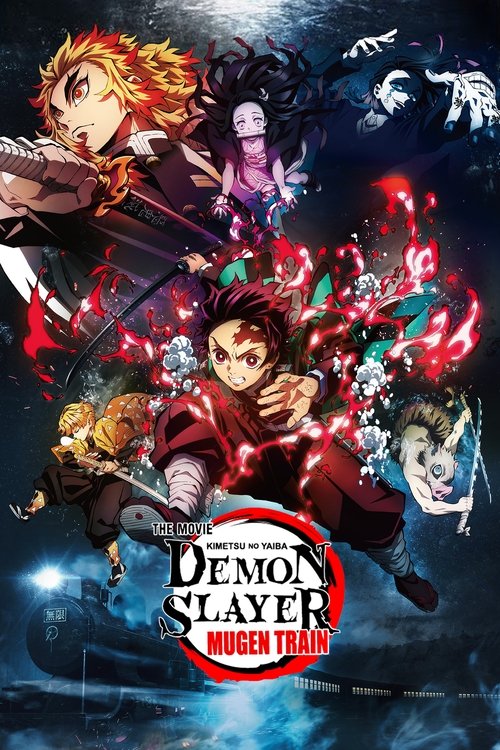
Demon Slayer -Kimetsu no Yaiba- The Movie: Mugen Train - Review
Demon Slayer: Mugen Train - A Fiery Spectacle of Loss and Hope
Demon Slayer -Kimetsu no Yaiba- The Movie: Mugen Train, released in 2020, wasn't just a film; it was a cultural phenomenon. Surpassing even Hayao Miyazaki's Spirited Away to become the highest-grossing film in Japanese history, Mugen Train proved that anime could break box office records and capture the hearts of audiences worldwide. But beyond the hype and accolades, does the film live up to its reputation? Is it simply a visually stunning action spectacle, or does it offer something deeper? This review dives into the fiery depths of Mugen Train, exploring its plot, characters, themes, and overall impact, to determine if it truly deserves its place in anime history.
Plot: A Dream within a Nightmare
The film picks up directly after the events of the first season of the Demon Slayer anime. Tanjiro Kamado, along with his companions Inosuke Hashibira and Zenitsu Agatsuma, are tasked with investigating mysterious disappearances aboard the Mugen Train. They are joined by Kyojuro Rengoku, the Flame Hashira, one of the most powerful swordsmen in the Demon Slayer Corps. Their mission: to eliminate a demon responsible for the train's troubles and the vanishing passengers.
The initial setup is straightforward enough – a monster-of-the-week scenario amplified by the inherent claustrophobia of a speeding train. However, the film quickly subverts expectations. The demon, Enmu, Lower Rank One of the Twelve Kizuki, doesn't rely on brute force. Instead, he employs a sophisticated dream manipulation technique, lulling the Demon Slayers into a deep slumber where they experience idyllic, personalized fantasies. This allows him to attack their spiritual core while they are vulnerable, rendering them incapable of fighting back. This dream sequence is not mere filler; it provides valuable insight into the characters' desires and insecurities. Tanjiro yearns for his deceased family, Zenitsu dreams of Nezuko's affection, and Inosuke envisions himself as the leader of a powerful cave exploration team.
The core conflict arises when Tanjiro, through sheer willpower and the memory of his tragic past, manages to break free from Enmu's control. He then awakens his comrades and, together, they begin the arduous task of locating and defeating the demon. The film's narrative structure is cleverly divided between the dream world and the harsh reality, creating a sense of urgency and disorientation. The stakes are constantly raised as the Demon Slayers struggle to differentiate between illusion and truth, all while battling Enmu's increasingly powerful attacks.
The second half of the film takes a dramatic turn with the arrival of Akaza, Upper Rank Three of the Twelve Kizuki. Akaza's appearance transforms the film from a tense thriller into a full-blown action spectacle. The fight between Rengoku and Akaza is the emotional and visual centerpiece of the film, showcasing breathtaking animation and devastating consequences. The climax is not just about defeating a powerful demon; it's about the clash of ideologies, the value of human life, and the enduring power of hope in the face of despair.
Characters: Beyond the Swords
While the action is undeniably captivating, the strength of Mugen Train lies in its characters and their emotional journeys. Tanjiro, as the protagonist, remains the unwavering beacon of compassion and determination. His struggle to break free from the dream world highlights his deep love for his family and his unwavering commitment to protecting his sister, Nezuko. His empathy for others, even demons, shines through, making him a truly compelling and relatable hero.
Zenitsu and Inosuke, while initially presented as comic relief, undergo significant development throughout the film. Zenitsu's fear and insecurity are contrasted with his incredible power when he sleeps, showcasing the potential that lies dormant within him. Inosuke's boisterous personality and competitive spirit mask a deep-seated loneliness and a desire to belong. The dream sequences allow us to glimpse their vulnerabilities, making them more than just caricatures. Their growth as demon slayers and as individuals is evident in their willingness to fight alongside Tanjiro and Rengoku, despite their fears.
However, the true heart of Mugen Train is Kyojuro Rengoku. Introduced as a boisterous and eccentric Hashira, Rengoku quickly establishes himself as a mentor and role model for Tanjiro and his companions. His unwavering optimism, his dedication to protecting the weak, and his belief in the potential of others make him an instantly likable and inspiring character. Rengoku's backstory, revealed through his dream sequence, provides context for his unwavering commitment to his duty and his unwavering belief in the power of the human spirit. His final battle against Akaza is not just a fight for survival; it's a testament to his character and his unwavering commitment to protecting those he cares about. Rengoku's death is arguably one of the most impactful and emotionally resonant moments in the entire Demon Slayer franchise. It serves as a catalyst for Tanjiro's growth and reinforces the central themes of the film.
Even the demons, Enmu and Akaza, are more than just one-dimensional villains. Enmu's obsession with dreams and his desire to inflict despair on others stem from a deep-seated insecurity and a twisted sense of power. Akaza, while undeniably brutal and ruthless, has his own tragic backstory that explains his nihilistic worldview and his disdain for weakness. These glimpses into the demons' pasts add a layer of complexity to their characters and prevent them from being simply monsters to be defeated.
Direction and Cinematography: A Visual Masterpiece
Haruo Sotozaki's direction in Mugen Train is nothing short of masterful. He expertly balances the film's action sequences with its quieter, more introspective moments, creating a dynamic and engaging viewing experience. The pacing is impeccable, keeping the audience on the edge of their seats from beginning to end. Sotozaki understands the source material intimately and translates it to the screen with a level of fidelity and passion that is evident in every frame.
The animation, produced by Ufotable, is simply breathtaking. The studio's signature blend of traditional animation and CGI creates a visually stunning and immersive world. The character designs are faithful to the original manga, while the backgrounds are richly detailed and evocative. The action sequences are fluid and dynamic, with each sword stroke and each demonic attack rendered with stunning precision. The use of color is particularly noteworthy, with vibrant hues used to depict the dream world and darker, more muted tones used to create a sense of tension and dread in the real world. The visual effects are seamlessly integrated into the animation, enhancing the overall impact of the film.
The cinematography is equally impressive. The camera angles are dynamic and varied, capturing the intensity of the action and the emotion of the characters. The use of lighting is particularly effective, creating a sense of mood and atmosphere. The film's visual style is a perfect blend of traditional anime aesthetics and modern cinematic techniques, resulting in a truly unforgettable visual experience.
Performances: Bringing the Characters to Life
The voice acting in Mugen Train is exceptional, both in the original Japanese and in the English dub. Natsuki Hanae delivers a nuanced and emotionally resonant performance as Tanjiro, capturing his unwavering determination and his deep empathy for others. Akari Kitō's portrayal of Nezuko is equally impressive, conveying her vulnerability and her fierce protectiveness of her brother. Hiro Shimono and Yoshitsugu Matsuoka bring Zenitsu and Inosuke to life with their comedic timing and their ability to capture the characters' unique personalities.
However, the standout performance in the film is undoubtedly Satoshi Hino as Kyojuro Rengoku. Hino's voice acting is powerful and inspiring, perfectly capturing Rengoku's unwavering optimism and his unwavering commitment to his duty. His performance during Rengoku's final battle against Akaza is particularly moving, conveying the character's strength, his courage, and his ultimate sacrifice. Mark Whitten's English dub performance as Rengoku is also commendable, capturing the same energy and emotion as Hino's original performance.
Akira Ishida delivers a chilling and menacing performance as Akaza, capturing the character's nihilistic worldview and his disdain for weakness. The voice acting in Mugen Train elevates the film to another level, bringing the characters to life and making their emotional journeys even more impactful.
Themes and Messages: Loss, Hope, and the Power of the Human Spirit
Mugen Train is not just a visually stunning action film; it's a story about loss, hope, and the power of the human spirit. The film explores the themes of grief and trauma through the characters' dream sequences, revealing their deepest desires and insecurities. Tanjiro's yearning for his deceased family, Zenitsu's fear of inadequacy, and Inosuke's loneliness all speak to the universal human experience of loss and the struggle to cope with trauma.
However, the film also offers a message of hope. Despite the tragic events that have befallen them, Tanjiro and his companions refuse to give up. They continue to fight for what they believe in, even in the face of overwhelming odds. Rengoku's unwavering optimism and his belief in the potential of others serve as a beacon of hope for Tanjiro and his companions, inspiring them to overcome their fears and to become stronger demon slayers.
The film also explores the theme of sacrifice. Rengoku's ultimate sacrifice is a testament to his character and his unwavering commitment to protecting those he cares about. His death serves as a catalyst for Tanjiro's growth and reinforces the idea that even in the face of despair, hope can still prevail.
Ultimately, Mugen Train is a story about the power of the human spirit. It's a reminder that even in the darkest of times, we can find strength and hope within ourselves and in our connections with others. The film's message of hope and resilience resonates deeply with audiences, making it a truly inspiring and unforgettable experience.
Comparison to Other Films and Works
Mugen Train draws comparisons to other anime films and series that explore similar themes of loss, hope, and the battle against supernatural forces. Its blend of action, drama, and comedy is reminiscent of Fullmetal Alchemist: Brotherhood, while its focus on family and the struggle against fate is similar to Attack on Titan. The dream manipulation aspect of the plot echoes elements of Inception, although with a distinctly anime twist.
Compared to the first season of the Demon Slayer anime, Mugen Train elevates the visual spectacle and emotional stakes to a new level. The animation is significantly improved, and the action sequences are more dynamic and engaging. The film also delves deeper into the characters' backstories and motivations, making them more relatable and sympathetic. While the first season focused on establishing the world and the characters, Mugen Train takes the story to a new level, exploring more complex themes and delivering a more emotionally resonant experience.
Haruo Sotozaki's direction in Mugen Train surpasses his previous work on the Demon Slayer anime series. He demonstrates a greater understanding of the source material and a more refined cinematic vision. The pacing is tighter, the action sequences are more impactful, and the emotional moments are more poignant. Mugen Train is a testament to Sotozaki's growth as a director and his ability to bring the world of Demon Slayer to life in a truly unforgettable way.
Positive Aspects and Constructive Criticism
Positive Aspects:
- Stunning Animation: Ufotable's animation is a visual masterpiece, seamlessly blending traditional animation with CGI to create a breathtaking and immersive world.
- Compelling Characters: The characters are well-developed and relatable, with complex motivations and emotional journeys.
- Masterful Direction: Haruo Sotozaki's direction is impeccable, balancing the film's action sequences with its quieter, more introspective moments.
- Exceptional Voice Acting: The voice acting, both in the original Japanese and in the English dub, is outstanding, bringing the characters to life and making their emotional journeys even more impactful.
- Resonant Themes: The film explores themes of loss, hope, and the power of the human spirit in a meaningful and impactful way.
- Kyojuro Rengoku: Arguably one of the best characters in the entire Demon Slayer franchise, Rengoku provides an emotional core and a character arc that is both inspiring and heartbreaking.
Constructive Criticism:
- Pacing Issues (Minor): While the pacing is generally excellent, the film's first act, focusing on the dream sequences, can feel slightly slow at times. While necessary for character development, a more streamlined approach could have improved the overall flow of the film.
- Over-Reliance on Shonen Tropes: At times, the film relies heavily on established shonen anime tropes, such as characters powering up through sheer willpower and yelling out attack names. While these tropes are not inherently bad, they can feel somewhat predictable and detract from the film's overall originality.
- Underdeveloped Antagonists: While Enmu and Akaza are visually impressive and menacing, their motivations could have been explored in greater depth. A more nuanced understanding of their backstories and ideologies would have made them even more compelling villains.
Conclusion and Rating
Demon Slayer -Kimetsu no Yaiba- The Movie: Mugen Train is a cinematic triumph. It's a visually stunning, emotionally resonant, and action-packed film that transcends its genre. While it may rely on some familiar shonen tropes, its compelling characters, masterful direction, and resonant themes make it a truly unforgettable experience. The film's impact on the anime industry and its box office success are a testament to its quality and its ability to connect with audiences on a deep emotional level. Mugen Train is not just a great anime film; it's a great film, period.
Rating: 9.5/10