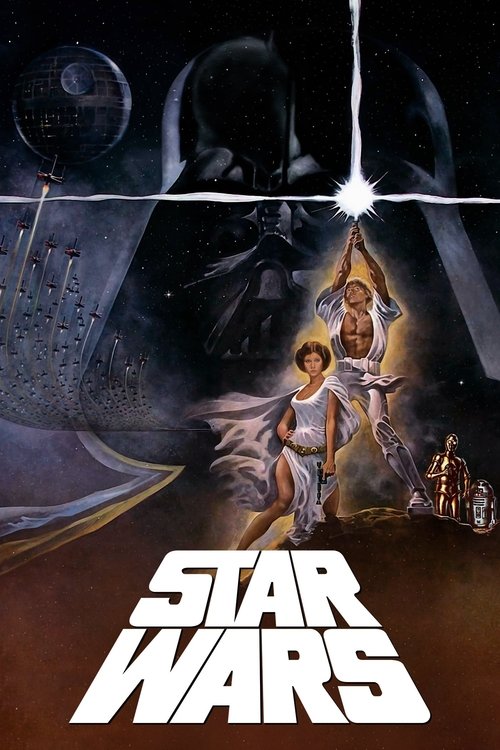
Star Wars - Review
A Long Time Ago, In a Galaxy Far, Far Away... A Retrospective Review of Star Wars (1977)
Before CGI dominated our screens and franchises became the norm, there was Star Wars. Officially titled Star Wars: Episode IV – A New Hope in later releases, the film that premiered on May 25, 1977, wasn't just a movie; it was a cultural phenomenon. It ignited the imaginations of millions, redefined the science fiction genre, and left an indelible mark on cinema history. But does this groundbreaking film still hold up after decades of technological advancements and countless imitators? Let's delve into the galaxy far, far away and explore the magic, the flaws, and the enduring legacy of Star Wars.
Plot: A Timeless Tale of Good vs. Evil
The plot of Star Wars is deceptively simple, a classic hero's journey wrapped in a science fiction shell. Princess Leia, a leader of the Rebel Alliance, is captured by the tyrannical Galactic Empire and its menacing enforcer, Darth Vader. She hides the plans for the Empire's ultimate weapon, the Death Star, within the memory banks of astromech droid R2-D2. The droid, along with protocol droid C-3PO, escapes and crash-lands on the desert planet Tatooine. There, they encounter young Luke Skywalker, a farm boy yearning for adventure. Luke, guided by the Force (a mystical energy field), joins forces with the roguish smuggler Han Solo and his Wookiee co-pilot Chewbacca to rescue Leia and deliver the Death Star plans to the Rebellion.
The narrative structure is straightforward and borrows heavily from classic adventure stories and Westerns. We have the damsel in distress, the reluctant hero, the charming rogue, and the looming threat of overwhelming evil. This simplicity, however, is part of the film's charm. It allows the audience to easily connect with the characters and become invested in their struggle. The pacing is generally well-managed, with a clear progression of events and a satisfying climax in the form of the Death Star assault.
However, the plot isn't without its minor flaws. The coincidences that drive the story, such as R2-D2 and C-3PO landing on Tatooine and being purchased by Luke's uncle, can feel somewhat contrived. The exposition, particularly regarding the Force and the Jedi, is delivered in a somewhat clunky manner. Despite these minor issues, the core narrative is compelling and effectively drives the film forward.
Characters: Archetypes That Resonate
The characters in Star Wars are archetypal, but they are brought to life by strong performances and memorable personalities. Luke Skywalker, played by Mark Hamill, is the naive farm boy who discovers his destiny. He embodies the classic hero's journey, evolving from a somewhat whiny teenager into a confident and capable fighter. Hamill's portrayal captures Luke's innocence and his growing sense of responsibility.
Han Solo, portrayed by Harrison Ford, is the cynical smuggler with a heart of gold. He's the reluctant hero, initially motivated by money but ultimately swayed by his conscience and his growing affection for Leia. Ford's performance is charismatic and effortlessly cool, making Han Solo one of the most iconic characters in cinematic history.
Princess Leia, played by Carrie Fisher, is a strong and independent leader. She's intelligent, resourceful, and unafraid to stand up to the Empire. Fisher's performance is both regal and vulnerable, making Leia a compelling and relatable character. She's not just a damsel in distress; she's a fighter who actively participates in her own rescue.
Darth Vader, voiced by James Earl Jones and physically portrayed by David Prowse, is the embodiment of evil. His imposing presence, his menacing voice, and his unwavering commitment to the dark side make him one of the most iconic villains of all time. While his backstory is not fully explored in this film, his sheer presence is enough to instill fear and dread.
R2-D2 and C-3PO, the droid duo, provide comic relief and serve as important plot devices. R2-D2, with his beeps and whistles, is a surprisingly expressive character. C-3PO, with his fussy personality and constant worrying, is a perfect foil to R2-D2's bravery. Their interactions are often humorous and add a lighthearted touch to the film.
The supporting characters, such as Obi-Wan Kenobi (played by Alec Guinness) and Grand Moff Tarkin (played by Peter Cushing), are also well-developed and contribute to the overall richness of the film. Obi-Wan serves as Luke's mentor, guiding him on his journey and teaching him about the Force. Tarkin, the commander of the Death Star, is a cold and calculating villain who represents the ruthlessness of the Empire.
One minor criticism is that the female characters, while strong, are relatively limited in number. Leia is the only significant female character, and her role, while important, is somewhat constrained by the plot. This is a common issue in films of this era, and it's something that has been addressed in later installments of the franchise.
Direction: George Lucas's Vision
George Lucas's direction of Star Wars is both ambitious and innovative. He created a visually stunning and immersive world, filled with exotic creatures, futuristic technology, and breathtaking landscapes. His use of special effects, while groundbreaking for the time, is now somewhat dated, but the film's visual impact remains undeniable.
Lucas's storytelling is clear and concise. He effectively introduces the characters, establishes the conflict, and builds suspense throughout the film. His use of visual storytelling, such as the opening shot of the massive Star Destroyer pursuing the Rebel blockade runner, immediately establishes the scale of the conflict and the power of the Empire.
Lucas's direction of the actors is generally strong. He elicits memorable performances from the entire cast, and he effectively balances the serious and comedic elements of the film. His use of practical effects, such as the elaborate costumes and sets, adds to the film's sense of realism.
However, Lucas's dialogue can sometimes be clunky and exposition-heavy. Some of the lines feel unnatural and detract from the overall flow of the film. This is a common criticism of Lucas's writing, and it's something that he has struggled with throughout his career.
Cinematography: A Galaxy of Visual Delights
The cinematography of Star Wars, overseen by Gilbert Taylor, is visually striking and contributes significantly to the film's immersive atmosphere. The use of wide shots effectively captures the vastness of space and the desolate beauty of Tatooine. The close-ups allow the audience to connect with the characters and experience their emotions.
The lighting is used effectively to create mood and atmosphere. The stark, sterile lighting of the Death Star contrasts sharply with the warm, earthy tones of Tatooine. The use of shadows and silhouettes adds to the film's sense of mystery and danger.
The special effects, while dated by modern standards, were groundbreaking for their time. The dogfights in space, the explosions, and the lightsaber duels were all visually stunning and contributed to the film's sense of excitement and adventure. The use of miniatures and matte paintings was particularly impressive, creating a sense of scale and realism that was unmatched in previous science fiction films.
One minor criticism is that some of the special effects shots are not entirely seamless. The edges of the matte paintings are sometimes visible, and the movements of the spaceships can sometimes appear jerky. However, these imperfections are forgivable given the limitations of the technology at the time.
Performances: A Cast of Stars
The performances in Star Wars are uniformly strong, with each actor bringing their own unique talents to their respective roles. Mark Hamill, as Luke Skywalker, delivers a convincing portrayal of a young man coming of age. Harrison Ford, as Han Solo, is effortlessly charismatic and steals every scene he's in. Carrie Fisher, as Princess Leia, is both regal and vulnerable, making her a compelling and relatable character.
Alec Guinness, as Obi-Wan Kenobi, brings a sense of gravitas and wisdom to his role. Peter Cushing, as Grand Moff Tarkin, is chillingly effective as the cold and calculating villain. James Earl Jones, as the voice of Darth Vader, delivers a performance that is both terrifying and iconic.
Anthony Daniels, as C-3PO, and Kenny Baker, as R2-D2, bring their droid characters to life with their physical performances and vocalizations. Their interactions are often humorous and add a lighthearted touch to the film.
Overall, the cast of Star Wars is perfectly suited to their roles. They bring the characters to life with their performances, and they contribute significantly to the film's enduring appeal.
Themes and Messages: Good vs. Evil, Hope, and Redemption
Star Wars explores several universal themes, including the battle between good and evil, the importance of hope, and the possibility of redemption. The film presents a clear dichotomy between the forces of light and darkness, with the Rebel Alliance representing the former and the Galactic Empire representing the latter. This simple moral framework allows the audience to easily identify with the heroes and root for their success.
The film also emphasizes the importance of hope in the face of adversity. The Rebel Alliance is vastly outnumbered and outgunned by the Empire, but they never give up hope. They believe that they can defeat the Empire and restore peace and justice to the galaxy. This message of hope is particularly relevant in today's world, where many people feel overwhelmed by the challenges they face.
While not explicitly explored in this first installment, the seeds of redemption are sown. The implication that Darth Vader was once a Jedi Knight (Anakin Skywalker) hints at the possibility of his return to the light side. This theme of redemption is fully explored in later installments of the franchise.
The film also touches on themes of friendship, loyalty, and self-discovery. Luke's journey is one of self-discovery, as he learns about the Force and his own potential. His friendships with Han Solo, Leia, and the droids are crucial to his success, and they demonstrate the importance of loyalty and teamwork.
Comparison to Other Films and Works
Star Wars draws inspiration from a variety of sources, including classic adventure stories, Westerns, and science fiction films. The film's plot is reminiscent of Akira Kurosawa's The Hidden Fortress, which Lucas has acknowledged as a major influence. The film's visual style is influenced by the works of Frank Frazetta and other fantasy artists.
Star Wars also shares similarities with other science fiction films of the era, such as 2001: A Space Odyssey and Planet of the Apes. However, Star Wars distinguishes itself with its focus on adventure, its optimistic tone, and its emphasis on character development.
Compared to Lucas's previous film, American Graffiti, Star Wars represents a significant departure in terms of genre and scope. While American Graffiti is a nostalgic coming-of-age story set in the 1960s, Star Wars is an epic space opera set in a galaxy far, far away. However, both films share Lucas's attention to detail and his ability to create memorable characters.
The success of Star Wars spawned countless imitators, but few have been able to capture the magic and originality of the original. Films such as Battlestar Galactica and Flash Gordon owe a clear debt to Star Wars, but they lack the depth and complexity of Lucas's vision.
Positive Aspects: A Timeless Masterpiece
Star Wars boasts numerous positive aspects that contribute to its enduring appeal. The film's compelling plot, memorable characters, stunning visuals, and universal themes make it a timeless masterpiece. The film's groundbreaking special effects, while dated by modern standards, were revolutionary for their time and helped to redefine the science fiction genre.
The film's score, composed by John Williams, is iconic and instantly recognizable. The music perfectly complements the action and adds to the film's emotional impact. The score has become synonymous with the Star Wars franchise and is considered one of the greatest film scores of all time.
The film's cultural impact is undeniable. Star Wars has inspired countless books, comics, video games, and other forms of media. The film has also influenced fashion, art, and even politics. Star Wars is more than just a movie; it's a cultural phenomenon that has shaped the world we live in.
Constructive Criticism: Flaws and Limitations
Despite its many positive aspects, Star Wars is not without its flaws. The film's plot, while compelling, can feel somewhat simplistic and contrived. The dialogue can sometimes be clunky and exposition-heavy. The special effects, while groundbreaking for their time, are now somewhat dated.
The film's representation of female characters is also somewhat limited. Leia, while a strong and independent character, is the only significant female character in the film. Her role, while important, is somewhat constrained by the plot.
The film's pacing can also be uneven at times. The early scenes on Tatooine can feel somewhat slow, while the final battle sequence can feel rushed. A more balanced pacing would have improved the overall flow of the film.
Finally, the film's reliance on coincidences can be distracting. The fact that R2-D2 and C-3PO land on Tatooine and are purchased by Luke's uncle feels somewhat contrived. A more plausible explanation for these events would have strengthened the plot.
Conclusion: An Enduring Legacy
Despite its minor flaws, Star Wars remains a cinematic triumph. Its groundbreaking special effects, memorable characters, and universal themes have captivated audiences for generations. The film's enduring legacy is a testament to its quality and its impact on popular culture.
While technology has advanced and filmmaking techniques have evolved, the core elements that made Star Wars so special in 1977 still resonate today. It's a story about good versus evil, hope versus despair, and the power of friendship and courage. These are timeless themes that will continue to appeal to audiences for years to come.
Star Wars is not just a movie; it's an experience. It's a journey to a galaxy far, far away, where anything is possible. It's a reminder that even in the darkest of times, there is always hope.
Rating: 9.5/10