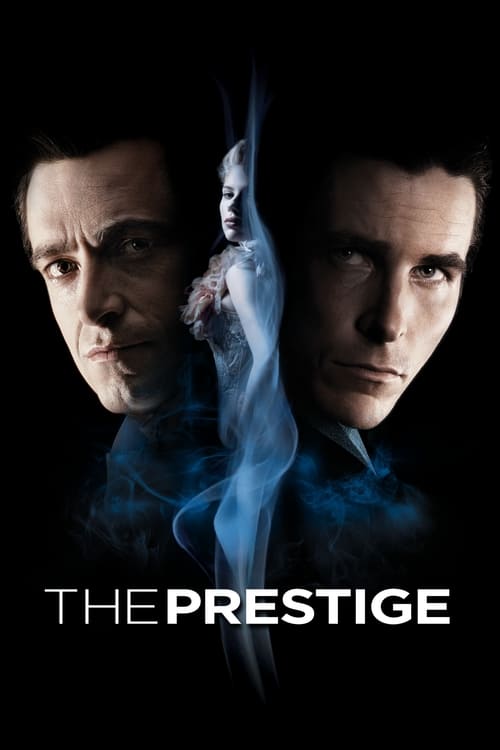
The Prestige - Review
The Prestige: A Masterpiece of Illusion and Obsession
Christopher Nolan's The Prestige, released in 2006, is not just a film about magic; it's a meticulously crafted illusion in itself. A dark, twisting tale of rivalry, obsession, and the devastating consequences of ambition, it burrows deep under the skin and lingers long after the final curtain call. More than a simple mystery, it's a profound exploration of what men will sacrifice for their art, their pride, and the fleeting validation of an audience. Prepare to be deceived, captivated, and ultimately, deeply disturbed.
Plot: A Deadly Game of One-Upmanship
The story unfolds in turn-of-the-century London, a city steeped in Victorian mystique and the burgeoning world of stage magic. We are introduced to Robert Angier (Hugh Jackman), a charismatic showman, and Alfred Borden (Christian Bale), a brilliant but volatile innovator. Initially colleagues and friends, their relationship is irrevocably shattered by a tragic accident during a performance. This event ignites a bitter feud, transforming them into ruthless competitors, each determined to outdo and ultimately destroy the other.
The central mystery revolves around Borden's seemingly impossible trick, "The Transported Man," where he instantaneously appears on the opposite side of the stage. Angier becomes consumed with unraveling the secret, resorting to increasingly desperate and ethically questionable measures. His quest leads him to Nikola Tesla (David Bowie), a real-life eccentric genius, in the hopes of acquiring a technology that can replicate Borden's illusion. The film cleverly utilizes a non-linear narrative structure, interweaving scenes from different points in the rivalry, creating a sense of disorientation and mirroring the deceptive nature of magic itself. This fractured timeline keeps the audience guessing, constantly re-evaluating their understanding of the events unfolding.
As Angier delves deeper into the secrets of Borden’s trick, the stakes escalate dramatically. The rivalry ceases to be a mere competition and evolves into a relentless, destructive force that consumes their lives and the lives of those around them. The film masterfully portrays the corrosive effects of obsession, demonstrating how the pursuit of perfection can lead to moral compromise and ultimately, self-destruction. The plot is a complex tapestry of secrets, misdirection, and carefully planted clues, rewarding attentive viewers and encouraging multiple viewings to fully appreciate its intricacies.
Characters: Driven by Obsession and Shaped by Tragedy
The strength of The Prestige lies not only in its intricate plot but also in its richly drawn and morally ambiguous characters.
Robert Angier (Hugh Jackman): The Showman
Angier is the quintessential showman, blessed with charisma and a natural ability to captivate an audience. However, beneath the polished veneer lies a deep-seated insecurity and a burning desire for validation. The tragic loss of his wife fuels his obsession with Borden, transforming him from a grieving husband into a vengeful adversary. Jackman delivers a powerful performance, portraying Angier's descent into darkness with chilling conviction. He expertly captures the character's vanity, his vulnerability, and his increasing desperation as he sacrifices everything in pursuit of the ultimate illusion.
Alfred Borden (Christian Bale): The Enigma
Borden, in contrast to Angier, is a man of raw talent and unwavering dedication to his craft. He lacks Angier's natural charm but possesses an unparalleled understanding of magic and a willingness to push the boundaries of what is possible. Bale embodies Borden's intensity and his enigmatic nature, leaving the audience constantly questioning his true motivations. He is a complex and contradictory figure, capable of both breathtaking brilliance and shocking brutality. His commitment to the illusion is absolute, even at the cost of his own happiness and the well-being of those he loves.
Sarah Borden (Rebecca Hall): The Collateral Damage
Sarah, Borden's wife, is a tragic figure caught in the crossfire of the magicians' rivalry. She represents the human cost of their obsession, a casualty of their relentless pursuit of perfection. Hall delivers a nuanced and heartbreaking performance, portraying Sarah's confusion, her love for Borden, and her ultimate despair as she realizes the devastating consequences of his choices.
Olivia Wenscombe (Scarlett Johansson): The Double Agent
Olivia, Angier's assistant and later Borden's lover, is a key player in the unfolding drama. She is a skilled performer in her own right, but ultimately serves as a pawn in the magicians' game. Johansson brings a sense of vulnerability and cunning to the role, highlighting Olivia's own struggles with loyalty and her desire for a better life. She represents the moral ambiguity that permeates the film, demonstrating how even those on the periphery are affected by the destructive nature of the rivalry.
Nikola Tesla (David Bowie): The Mad Scientist
Bowie's portrayal of Nikola Tesla is arguably one of the film's most memorable aspects. He embodies the eccentric genius with a quiet intensity and a touch of otherworldly mystique. Tesla represents the intersection of science and magic, suggesting that the line between the two is often blurred. His invention, the cloning machine, becomes the ultimate tool in Angier's quest for the perfect illusion, but also the catalyst for his ultimate downfall.
Direction and Cinematography: Crafting the Illusion
Christopher Nolan's direction is masterful, weaving together the complex narrative threads with precision and skill. He creates a palpable sense of tension and suspense, keeping the audience constantly on edge. The film's pacing is deliberate, allowing the story to unfold gradually, revealing its secrets layer by layer. Nolan's use of flashbacks and flash-forwards adds to the sense of disorientation, mirroring the deceptive nature of magic itself.
Wally Pfister's cinematography is equally impressive, capturing the dark and atmospheric world of Victorian London with stunning visual clarity. The film's color palette is muted, reflecting the somber tone of the story. The use of light and shadow is particularly effective, creating a sense of mystery and intrigue. The camera work is fluid and dynamic, drawing the viewer into the heart of the action. The film's visual style perfectly complements the narrative, enhancing the overall sense of suspense and unease.
The production design is meticulous, recreating the world of turn-of-the-century London with remarkable detail. The costumes, the sets, and the props all contribute to the film's authentic and immersive atmosphere. The attention to detail is particularly evident in the scenes depicting the magic performances, which are both visually stunning and technically impressive.
Themes and Messages: The Price of Perfection
The Prestige explores a number of complex and thought-provoking themes.
Obsession and Sacrifice
The film is primarily a study of obsession, demonstrating how the relentless pursuit of a single goal can consume a person's life and lead to their ultimate destruction. Both Angier and Borden are driven by an insatiable desire to be the best, and they are willing to sacrifice everything – their relationships, their morals, and ultimately their lives – in pursuit of this goal. The film suggests that the price of perfection is often too high, and that the pursuit of greatness can lead to moral compromise and self-destruction.
The Nature of Illusion
The film explores the nature of illusion, both in the context of stage magic and in the broader context of life. It suggests that reality is often a construct, and that we are all susceptible to being deceived. The magicians in the film are masters of deception, creating illusions that entertain and amaze their audiences. However, the film also suggests that they are deceiving themselves, living in a world of their own making, divorced from reality.
Identity and Duality
The theme of identity is central to the film, particularly in the character of Alfred Borden. The revelation of Borden's secret – that he is actually two identical twins sharing a single life – raises profound questions about the nature of identity and the possibility of living a double life. The film suggests that identity is not fixed, but rather fluid and malleable, and that we are all capable of presenting different versions of ourselves to the world.
The Human Cost of Ambition
The Prestige highlights the human cost of ambition, demonstrating how the pursuit of success can have devastating consequences for those around us. The film is filled with characters who are caught in the crossfire of the magicians' rivalry, and who suffer as a result of their relentless pursuit of perfection. The film suggests that ambition, unchecked by morality, can lead to tragedy and destruction.
Comparison to Other Works
The Prestige shares thematic similarities with other works exploring rivalry and obsession, such as Amadeus, which examines the complex relationship between Mozart and Salieri. Both films delve into the destructive power of envy and the lengths to which individuals will go to achieve greatness. In terms of Nolan's own filmography, The Prestige can be seen as a precursor to his later work, Inception, in its exploration of layered realities and the manipulation of perception. Like Inception, The Prestige requires close attention and rewards multiple viewings to fully grasp its complexities. The film also draws inspiration from the real-life rivalry between magicians John Nevil Maskelyne and David Devant, adding a layer of historical authenticity to the narrative.
Compared to other films about magic, such as Now You See Me, The Illusionist (2006), and Houdini (2014), The Prestige stands apart due to its darker tone, its complex narrative structure, and its focus on the psychological toll of obsession. While other films may emphasize the spectacle and wonder of magic, The Prestige delves into the darker side of the art, exploring the deception, the sacrifice, and the human cost involved.
Positive Aspects
- Intricate Plot: The film's non-linear narrative and carefully planted clues create a captivating and rewarding viewing experience.
- Strong Performances: Hugh Jackman and Christian Bale deliver tour-de-force performances, embodying the complex and morally ambiguous characters with chilling conviction.
- Masterful Direction: Christopher Nolan's direction is precise and skillful, weaving together the complex narrative threads with ease.
- Atmospheric Cinematography: Wally Pfister's cinematography creates a dark and immersive world, perfectly complementing the film's tone.
- Thought-Provoking Themes: The film explores a number of complex and thought-provoking themes, including obsession, identity, and the human cost of ambition.
Constructive Criticism
- Pacing: The film's deliberate pacing may not appeal to all viewers, particularly those accustomed to faster-paced action films.
- Moral Ambiguity: The film's morally ambiguous characters may be difficult for some viewers to connect with. There are no clear "good guys" or "bad guys," which can be unsettling.
- Complexity: The film's complex narrative structure can be confusing for some viewers, requiring close attention and multiple viewings to fully grasp its intricacies.
- Emotional Distance: While the performances are strong, the film can feel emotionally distant at times, focusing more on the intellectual puzzle than on the characters' emotional journeys.
Conclusion
The Prestige is a truly remarkable film, a masterpiece of illusion and storytelling. Christopher Nolan has crafted a dark, complex, and ultimately tragic tale of rivalry, obsession, and the devastating consequences of ambition. The film is not just a mystery; it's a profound exploration of what men will sacrifice for their art, their pride, and the fleeting validation of an audience. While its deliberate pacing and moral ambiguity may not appeal to all viewers, those who appreciate intricate plots, strong performances, and thought-provoking themes will find The Prestige to be a truly unforgettable cinematic experience. Prepare to be deceived, captivated, and ultimately, deeply disturbed.