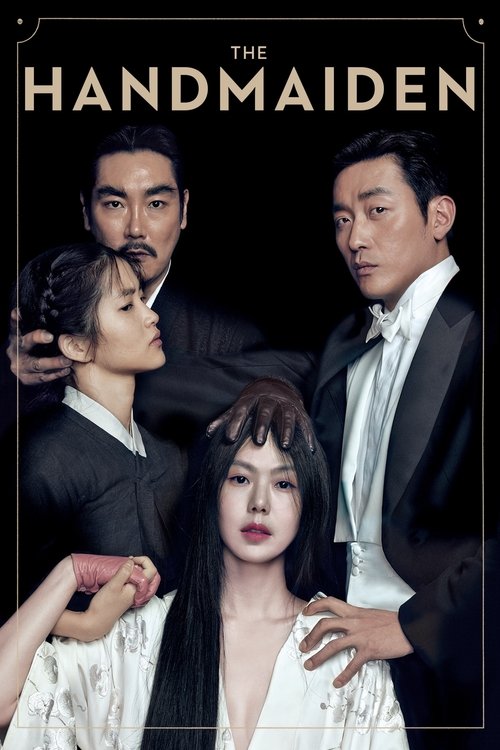
The Handmaiden - Review
The Handmaiden: A Masterpiece of Subversion and Sensuality
Park Chan-wook's The Handmaiden, released in 2016, isn't just a film; it's an experience. A meticulously crafted tapestry of deceit, desire, and liberation, set against the backdrop of 1930s Korea under Japanese occupation, it's a visual and narrative feast that lingers long after the credits roll. This isn't a simple period drama; it's a thrilling subversion of expectations, a masterclass in storytelling, and a potent exploration of power, manipulation, and the intoxicating allure of freedom. Get ready to be seduced, betrayed, and utterly captivated.
Plot: Twists, Turns, and Tremendous Tension
The film unfolds in three distinct acts, each shifting perspective and revealing new layers of truth and deception. The initial setup is seemingly straightforward: Sookee, a young pickpocket, is recruited by a conman posing as a Japanese Count (Fujiwara) to infiltrate the household of Lady Hideko, a wealthy Japanese heiress living under the oppressive watch of her Uncle Kouzuki. Sookee's mission is to act as Hideko's handmaiden, subtly influencing her to fall in love with Fujiwara, marry him, and then be committed to an asylum, leaving Fujiwara to claim her vast fortune.
However, Park Chan-wook immediately begins to play with our expectations. The seemingly simple plan is riddled with complexities, and the characters are far more nuanced than they initially appear. As Sookee gets closer to Hideko, an unexpected connection blossoms between them, blurring the lines of their respective roles. The first act culminates in a seemingly successful execution of the plan, with Hideko and Fujiwara marrying.
The second act rewinds the story, offering Hideko's perspective. This shift is crucial, as it reveals the intricate web of manipulation she has been subjected to throughout her life, primarily by her Uncle Kouzuki. We learn of the perverse and controlling nature of Kouzuki, who has raised Hideko to read aloud erotic novels to wealthy, aging men in his library. Hideko's apparent naiveté is revealed to be a carefully constructed facade, a survival mechanism in a world determined to control her. More importantly, we see the burgeoning feelings Hideko develops for Sookee, feelings that are reciprocated.
The third act brings the two women together, exposing Fujiwara's own deceptions and revealing their carefully orchestrated plan to outwit him and Kouzuki. This final act is a thrilling culmination of the previous two, filled with suspense, betrayal, and a cathartic sense of liberation as the women reclaim their agency. The plot, initially seeming like a simple con artist scheme, evolves into a complex and emotionally resonant exploration of female empowerment and the power of love to overcome oppression.
Characters: Deception and Depth
The Handmaiden boasts a cast of compelling and intricately drawn characters, each harboring secrets and motivations that are gradually revealed throughout the film.
Sookee (Kim Tae-ri)
Sookee begins as a seemingly naive and opportunistic young woman, eager to escape her life of poverty and crime. However, as she spends more time with Hideko, she begins to question her role in Fujiwara's scheme. Kim Tae-ri delivers a breakout performance, portraying Sookee's transformation from a cunning pickpocket to a fiercely loyal and loving partner with remarkable nuance. Her vulnerability and genuine affection for Hideko are palpable, making her a deeply sympathetic character.
Hideko (Kim Min-hee)
Kim Min-hee is mesmerizing as Lady Hideko. Initially appearing fragile and easily manipulated, she slowly reveals a hidden strength and a yearning for freedom. Her portrayal is both delicate and powerful, showcasing the resilience of a woman who has been controlled and objectified her entire life. The subtle shifts in her demeanor, the flicker of desire in her eyes, all contribute to a captivating and multifaceted performance.
Count Fujiwara (Ha Jung-woo)
Ha Jung-woo embodies the charming yet ultimately pathetic Count Fujiwara with a perfect blend of arrogance and desperation. He is a master manipulator, but his own greed and vanity ultimately lead to his downfall. He serves as a foil to the genuine connection between Sookee and Hideko, highlighting the superficiality of his affections and the hollowness of his ambitions.
Kouzuki (Cho Jin-woong)
Cho Jin-woong is chilling as Kouzuki, the oppressive Uncle who has controlled Hideko's life. He represents the patriarchal forces seeking to dominate and exploit women. His obsession with erotic literature and his controlling behavior are deeply unsettling, making him a truly repulsive and formidable antagonist. He is a symbol of the suffocating societal expectations and the perversion of power.
Direction: A Masterclass in Visual Storytelling
Park Chan-wook's direction is nothing short of masterful. He creates a visually stunning and emotionally resonant world, using every element of filmmaking – from cinematography to production design to music – to enhance the narrative and deepen our understanding of the characters. His signature style, characterized by meticulous composition, vibrant colors, and moments of shocking violence, is on full display in The Handmaiden.
The film's pacing is deliberate, allowing the story to unfold gradually and building suspense with each scene. He expertly uses flashbacks and shifting perspectives to keep the audience guessing, constantly challenging our assumptions and revealing new layers of complexity. He doesn't shy away from the erotic aspects of the story, but he handles them with sensitivity and artistry, using them to explore themes of desire, intimacy, and female empowerment.
Cinematography: A Feast for the Eyes
Chung Chung-hoon's cinematography is breathtaking. The film is visually stunning, with its lush landscapes, opulent interiors, and meticulously crafted compositions. The use of color is particularly striking, with vibrant reds and greens contrasting with muted tones to create a sense of both beauty and unease. The camera movements are fluid and graceful, drawing the viewer into the world of the film and enhancing the emotional impact of each scene.
The use of light and shadow is also masterful, creating a sense of mystery and intrigue. The camera often lingers on details, capturing the subtle nuances of the characters' expressions and the intricate beauty of the surroundings. The cinematography perfectly complements Park Chan-wook's direction, creating a visually captivating and emotionally resonant experience.
Performances: A Stellar Ensemble
The entire cast delivers outstanding performances, bringing depth and nuance to their respective roles. Kim Tae-ri and Kim Min-hee are particularly brilliant, their chemistry palpable and their individual performances captivating. They embody their characters with remarkable grace and vulnerability, making their connection feel both authentic and deeply moving. Ha Jung-woo and Cho Jin-woong also deliver memorable performances, adding layers of complexity to their roles as the manipulative Count and the oppressive Uncle.
The supporting cast is equally strong, contributing to the overall richness and depth of the film. The performances are uniformly excellent, creating a believable and compelling world.
Themes and Messages: Power, Manipulation, and Liberation
The Handmaiden explores a range of complex and thought-provoking themes, including:
- Power and Control: The film examines the ways in which power is used to manipulate and control others, particularly women. Kouzuki's control over Hideko, Fujiwara's manipulation of both women, and the societal expectations that limit women's freedom are all explored in detail.
- Deception and Betrayal: The film is filled with twists and turns, as characters constantly deceive and betray each other. This highlights the fragility of trust and the lengths to which people will go to achieve their goals.
- Female Empowerment: Ultimately, The Handmaiden is a story of female empowerment. Sookee and Hideko reclaim their agency and break free from the oppressive forces that have sought to control them. Their love for each other is a source of strength and liberation.
- Desire and Intimacy: The film explores the complexities of desire and intimacy, particularly between women. The relationship between Sookee and Hideko is both sensual and deeply emotional, challenging societal norms and celebrating the beauty of female love.
- Colonialism and Identity: Set against the backdrop of Japanese occupation, the film also touches on themes of colonialism and identity. The characters grapple with their cultural heritage and the impact of foreign influence on their lives.
The film's message is ultimately one of hope and resilience. Despite the challenges they face, Sookee and Hideko find strength in each other and create a new life for themselves, free from the constraints of the past.
Comparison to Other Films and Works
Park Chan-wook's previous works, such as Oldboy and Thirst, are known for their stylized violence, complex characters, and exploration of dark themes. The Handmaiden shares these characteristics, but it also represents a departure in some ways. While it still contains moments of violence and suspense, it is ultimately a more romantic and optimistic film than some of his earlier works.
The film has also been compared to other period dramas that explore themes of female empowerment and forbidden love, such as Carol and Portrait of a Lady on Fire. However, The Handmaiden stands out for its unique blend of genres, its intricate plot, and its visually stunning aesthetic.
Loosely based on the novel "Fingersmith" by Sarah Waters, Park Chan-wook transposes the Victorian England setting to 1930s Korea, adding layers of cultural and historical context to the story. While both works explore similar themes of deception and female relationships, Park Chan-wook's adaptation adds his signature visual flair and a heightened sense of eroticism and suspense.
Positive Aspects
- Stunning Visuals: The cinematography and production design are exceptional, creating a visually captivating world.
- Complex Characters: The characters are richly drawn and multi-layered, with compelling motivations and hidden depths.
- Intricate Plot: The plot is full of twists and turns, keeping the audience guessing until the very end.
- Powerful Performances: The cast delivers outstanding performances, particularly Kim Tae-ri and Kim Min-hee.
- Thought-Provoking Themes: The film explores a range of complex and relevant themes, including power, manipulation, and female empowerment.
Constructive Criticism
- Pacing: The deliberate pacing may not appeal to all viewers, as it can feel slow at times. While it allows for deeper character development, some might find the initial acts a bit drawn out.
- Erotic Content: While handled with artistry, the explicit scenes may be uncomfortable for some viewers.
- Complexity: The intricate plot and shifting perspectives can be confusing at times, requiring close attention to detail. A second viewing is almost necessary to fully grasp all the nuances.
Conclusion
The Handmaiden is a cinematic triumph. It's a visually stunning, emotionally resonant, and intellectually stimulating film that will stay with you long after you've seen it. Park Chan-wook has crafted a masterpiece of subversion and sensuality, exploring themes of power, manipulation, and liberation with remarkable depth and artistry. While its deliberate pacing and explicit content may not appeal to all viewers, those who appreciate complex characters, intricate plots, and breathtaking visuals will find this film to be a truly unforgettable experience.