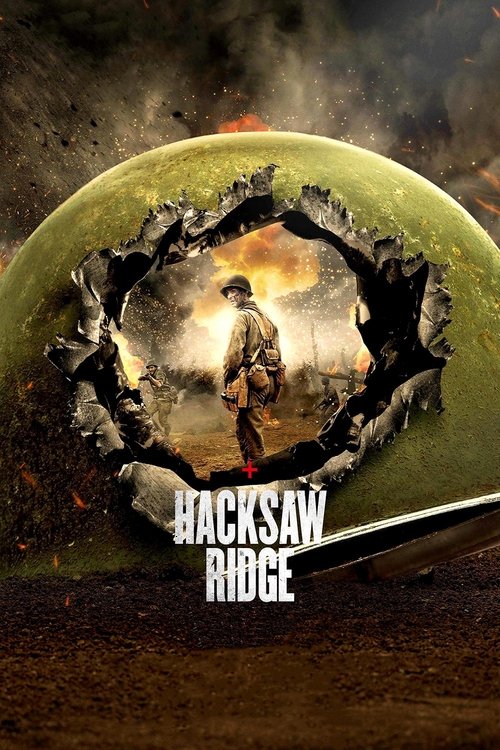
Hacksaw Ridge - Review
Hacksaw Ridge: A Brutal Ballet of Faith and Flesh
Mel Gibson's Hacksaw Ridge, released in 2016, isn't just another war movie; it's a visceral, unflinching, and deeply moving exploration of faith, conviction, and the paradoxical nature of heroism in the face of unimaginable carnage. It tells the true story of Desmond T. Doss, a World War II American Army medic who refused to bear arms due to his devout Seventh-day Adventist beliefs, yet ultimately became the first conscientious objector to receive the Congressional Medal of Honor. The film is a stark dichotomy, juxtaposing idyllic scenes of Doss's upbringing and courtship with the hellish landscape of the Battle of Okinawa. It's a difficult watch, undeniably, but also a profoundly rewarding one, forcing audiences to confront uncomfortable truths about war, religion, and the strength of the human spirit. But does the film's unwavering commitment to its message ultimately serve its narrative, or does it occasionally veer into the territory of sensationalism and simplistic portrayals? Let's delve into the trenches and dissect this complex and compelling film.
Plot: From Virginia to Okinawa, a Journey of Unwavering Belief
The film is structured in two distinct acts. The first act meticulously establishes Desmond Doss's character, tracing his life from his turbulent childhood in rural Virginia. We witness his abusive, alcoholic father, Tom Doss (played with simmering intensity by Hugo Weaving), a WWI veteran haunted by the horrors he experienced. This early trauma, coupled with a near-fatal incident involving his brother, plants the seeds of Desmond's pacifism and unwavering faith. The film doesn't shy away from portraying Doss's religious convictions, depicting his genuine connection to his faith and his unwavering commitment to the Seventh-day Adventist principles. It's in this act that we meet Dorothy Schutte (Teresa Palmer), the woman who captures Desmond's heart and becomes the anchor of his unwavering belief system. Their courtship is portrayed with a charming simplicity, highlighting the genuine affection and shared values that bind them together. This initial act is crucial, providing the necessary context for understanding Doss's seemingly impossible decision to enlist as a medic, refusing to carry a weapon.
The second act plunges the viewer into the brutal reality of the Battle of Okinawa. This is where Gibson's directorial prowess truly shines, or perhaps, more accurately, assaults the senses. The battle scenes are relentlessly graphic, depicting the sheer chaos and brutality of war with an almost documentary-like realism. Limbs are severed, bodies are torn apart, and the air is thick with the stench of death and gunpowder. It's within this inferno that Doss's unwavering faith is put to the ultimate test. He braves the relentless Japanese fire, tirelessly tending to the wounded, pulling them to safety, and offering comfort amidst the carnage. His fellow soldiers, initially skeptical and even hostile towards his pacifism, gradually come to respect his courage and selflessness. The film meticulously chronicles Doss's heroic actions, showcasing his unwavering commitment to saving lives, even at the risk of his own. The climax of the film sees Doss single-handedly rescuing dozens of wounded soldiers, lowering them down a cliff face to safety, all while reciting prayers and reaffirming his faith. This sequence, while undeniably heroic, borders on the miraculous, pushing the boundaries of believability for some viewers. However, the film maintains that these events are based on documented accounts and eyewitness testimonies.
Characters: A Symphony of Faith, Fear, and Redemption
Hacksaw Ridge boasts a compelling cast of characters, each contributing to the film's exploration of faith, courage, and the human cost of war.
- Desmond T. Doss (Andrew Garfield): Garfield delivers a career-defining performance as Doss, embodying his unwavering faith with a quiet strength and genuine vulnerability. He avoids caricature, portraying Doss as a flawed but ultimately virtuous individual. Garfield captures the essence of Doss's humility, his unwavering belief in the power of prayer, and his deep-seated conviction that he can serve his country without compromising his moral principles.
- Tom Doss (Hugo Weaving): Weaving delivers a powerful and nuanced performance as Desmond's father, a WWI veteran haunted by PTSD and struggling with alcoholism. He initially opposes Desmond's decision to enlist, fearing that his son will suffer the same fate he did. However, as the film progresses, Tom becomes a crucial ally, using his own military experience to help Desmond defend his right to serve as a conscientious objector. Weaving's portrayal is complex, showcasing both the harshness and the vulnerability of a man scarred by war.
- Dorothy Schutte (Teresa Palmer): Palmer brings a warmth and sincerity to the role of Dorothy, Desmond's girlfriend and later wife. She serves as Desmond's emotional anchor, providing unwavering support and understanding, even when his convictions seem incomprehensible to others. Dorothy is not simply a passive love interest; she is a strong and independent woman who shares Desmond's values and beliefs.
- Sergeant Howell (Vince Vaughn): Vaughn provides much-needed comic relief as Sergeant Howell, the gruff but ultimately fair drill instructor who initially doubts Doss's commitment. He initially views Doss as a nuisance, but gradually comes to respect his courage and dedication. Vaughn's performance is surprisingly effective, balancing humor with a genuine sense of camaraderie.
- Captain Glover (Sam Worthington): Worthington portrays Captain Glover, the commanding officer who initially struggles to understand Doss's pacifism but eventually recognizes his value to the unit. Glover represents the pragmatic side of warfare, constantly weighing the needs of his men against the demands of the mission. He provides a counterpoint to Doss's idealism, forcing the audience to consider the complexities of leadership in wartime.
Direction: Gibson's Unflinching Vision
Mel Gibson's direction in Hacksaw Ridge is both masterful and controversial. He crafts a visually stunning and emotionally powerful film, but his approach is undeniably visceral and at times, gratuitously violent. The battle scenes are particularly noteworthy, showcasing Gibson's ability to create a sense of chaos and realism. He utilizes a combination of practical effects, CGI, and handheld camera work to immerse the audience in the horrors of war. The sound design is equally effective, amplifying the sounds of gunfire, explosions, and screams to create a truly harrowing experience.
However, Gibson's directorial choices have also drawn criticism. Some viewers have accused him of sensationalizing the violence and glorifying war. The film's depiction of the Japanese soldiers has also been criticized as being stereotypical and dehumanizing. While the film does portray the Japanese as formidable adversaries, it arguably lacks the nuanced character development afforded to the American soldiers. This imbalance can be interpreted as a reflection of the inherent biases of war narratives, but it's a point worth considering. Furthermore, the film's unwavering focus on Doss's faith has been interpreted by some as being overly preachy and proselytizing. While the film does not shy away from Doss's religious beliefs, it ultimately presents his faith as a source of strength and inspiration, rather than a vehicle for religious indoctrination. Whether or not this portrayal is successful is ultimately a matter of personal interpretation.
Cinematography: Painting a Landscape of Beauty and Brutality
Simon Duggan's cinematography in Hacksaw Ridge is nothing short of breathtaking. He masterfully captures the stark contrast between the idyllic beauty of Doss's Virginia home and the desolate, war-torn landscape of Okinawa. The film's opening scenes are bathed in warm, golden light, evoking a sense of nostalgia and innocence. In contrast, the battle scenes are characterized by a harsh, desaturated color palette, emphasizing the grime, blood, and decay of war. Duggan's use of wide shots and close-ups is particularly effective, allowing the audience to appreciate the scale of the battle while also focusing on the individual stories of the soldiers. The aerial shots of Hacksaw Ridge itself are particularly striking, showcasing the sheer verticality and treacherousness of the terrain. The cinematography effectively underscores the film's themes of faith, courage, and the human cost of war.
Performances: A Stellar Ensemble Cast
The performances in Hacksaw Ridge are uniformly excellent. Andrew Garfield delivers a career-defining performance as Desmond Doss, embodying his unwavering faith and quiet heroism. Hugo Weaving is equally impressive as Tom Doss, portraying a man haunted by his past but ultimately redeemed by his love for his son. Teresa Palmer brings a warmth and sincerity to the role of Dorothy, providing a crucial emotional anchor for Desmond. Vince Vaughn provides much-needed comic relief as Sergeant Howell, while Sam Worthington delivers a solid performance as Captain Glover. The supporting cast is equally strong, contributing to the film's overall sense of realism and authenticity. The ensemble cast works seamlessly together to bring the story of Desmond Doss to life.
Themes and Messages: Faith, Courage, and the Cost of War
Hacksaw Ridge is a film rich in themes and messages. At its core, it is a story about faith, courage, and the power of conviction. Desmond Doss's unwavering belief in his principles, even in the face of intense pressure and ridicule, is an inspiration. The film also explores the theme of pacifism, challenging the traditional notion of heroism and suggesting that true courage lies not in taking lives, but in saving them. The film also offers a powerful critique of war, depicting its brutal reality and its devastating impact on both soldiers and civilians. The film doesn't shy away from showing the physical and psychological toll that war takes on individuals, highlighting the long-lasting consequences of trauma and loss. Ultimately, Hacksaw Ridge is a film about the triumph of the human spirit, showcasing the extraordinary capacity for compassion and selflessness even in the darkest of times.
One of the central messages is the importance of individual conscience. Doss's refusal to compromise his beliefs, even when faced with court-martial and ostracism, highlights the power of individual moral conviction. The film suggests that true heroism lies not in blindly following orders, but in standing up for what one believes is right, even when it's unpopular or dangerous. This message resonates particularly strongly in today's world, where individuals are often pressured to conform to societal norms and expectations.
Comparison to Other Films and Works
Hacksaw Ridge can be compared to other war films that explore themes of faith and pacifism, such as The Mission (1986) and The Thin Red Line (1998). Like these films, Hacksaw Ridge challenges the glorification of violence and offers a more nuanced perspective on the complexities of war. However, Hacksaw Ridge is unique in its focus on a true story and its unwavering commitment to depicting the reality of Desmond Doss's experiences. In terms of Mel Gibson's previous work, Hacksaw Ridge shares some similarities with Braveheart (1995) and Apocalypto (2006) in its depiction of graphic violence and its focus on individual heroism. However, Hacksaw Ridge is arguably more restrained in its approach to violence and more focused on the psychological and emotional impact of war. The film also avoids the historical inaccuracies that plagued some of Gibson's earlier works.
Compared to other biopics, Hacksaw Ridge stands out for its unflinching portrayal of its subject's convictions. Many biopics shy away from fully embracing the complexities and contradictions of their subjects, often opting for a more sanitized and palatable narrative. Hacksaw Ridge, however, fully embraces Doss's faith and pacifism, presenting them as integral to his character and his heroic actions. This commitment to authenticity is one of the film's greatest strengths.
Positive Aspects
- Powerful and Moving Story: The true story of Desmond Doss is inherently compelling and inspiring.
- Excellent Performances: Andrew Garfield, Hugo Weaving, and Teresa Palmer deliver outstanding performances.
- Visually Stunning Cinematography: The film's cinematography is both beautiful and harrowing, capturing the stark contrast between peace and war.
- Effective Direction: Mel Gibson's direction is visceral and immersive, creating a truly unforgettable cinematic experience.
- Thought-Provoking Themes: The film explores important themes of faith, courage, and the cost of war.
Constructive Criticism
- Excessive Violence: The film's depiction of violence may be too graphic for some viewers.
- Stereotypical Portrayal of Japanese Soldiers: The film could have benefited from a more nuanced portrayal of the Japanese soldiers.
- Potential for Overly Simplistic Interpretation: The film's unwavering focus on Doss's faith could be interpreted as being overly preachy or simplistic by some viewers.
- Pacing Issues: The first act, while necessary for character development, can feel somewhat slow-paced compared to the intensity of the second act.
Conclusion
Hacksaw Ridge is a powerful and unforgettable film that explores the extraordinary story of Desmond Doss with unflinching honesty and emotional depth. While the film's graphic violence and potentially simplistic portrayal of the Japanese soldiers may be off-putting to some viewers, its excellent performances, stunning cinematography, and thought-provoking themes make it a must-see for fans of war films and biopics alike. It's a film that stays with you long after the credits roll, prompting reflection on the nature of heroism, the power of faith, and the enduring cost of war. Despite its flaws, Hacksaw Ridge is a triumph of filmmaking, showcasing Mel Gibson's talent for crafting visually stunning and emotionally resonant stories.
Rating: 9/10