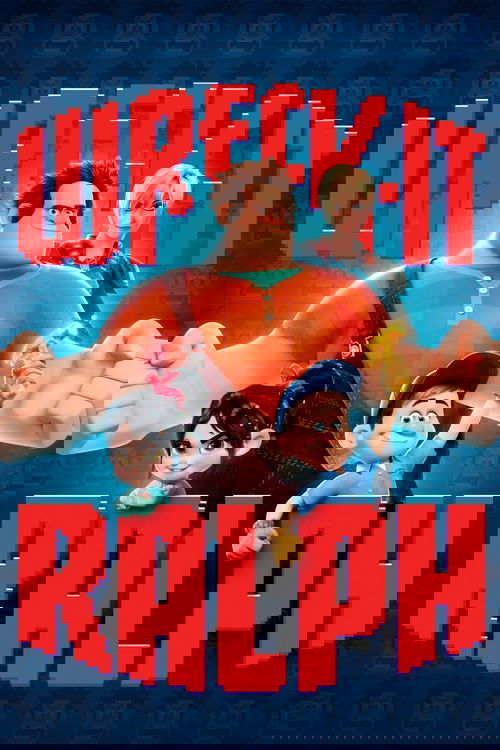
Wreck-It Ralph - Review
Wreck-It Ralph: A Pixel-Perfect Adventure Review
Ever felt like you were typecast? Trapped in a role you didn't choose, destined to play the villain even though you yearned to be the hero? Disney's Wreck-It Ralph, released in 2012, tackles this very human dilemma within the vibrant and imaginative world of a retro arcade. More than just a visually stunning animation, it's a heartfelt story about self-acceptance, breaking free from expectations, and the surprising places where friendship can blossom. So, grab your joystick and prepare to dive deep into this pixel-perfect adventure as we dissect everything that makes Wreck-It Ralph a modern animated classic.
Plot: From Bad Guy to Good Intentions (and Beyond)
The film centers around Ralph, the 9-foot-tall, 643-pound antagonist of the classic arcade game Fix-It Felix Jr. For 30 years, Ralph has dutifully wrecked the apartment building so that Felix can come along and fix it, earning the praise and medals that Ralph desperately craves. Tired of being ostracized and treated as a second-class citizen by the Nicelanders (the residents of the apartment building), Ralph crashes their 30th-anniversary party, demanding the respect he believes he deserves. His outburst leads to a wager: if he can win a medal, he'll finally be accepted.
This sets Ralph on a quest that takes him beyond the familiar confines of his game. He first ventures into Hero's Duty, a gritty, hyper-realistic first-person shooter, hoping to snag a medal. He succeeds (sort of), but inadvertently unleashes a Cy-Bug, a deadly, game-eating virus, into the arcade. His journey then leads him to Sugar Rush, a saccharine kart racing game populated by adorable (and often ruthless) racers. There, he meets Vanellope von Schweetz, a glitchy outcast who dreams of racing but is forbidden by the tyrannical King Candy.
The plot is cleverly constructed, seamlessly blending elements of classic video game tropes with a compelling character-driven narrative. The initial goal – Ralph seeking a medal – is a simple yet effective catalyst, propelling him into increasingly complex situations. The introduction of the Cy-Bugs adds a layer of urgency and danger, while the mystery surrounding King Candy's true identity keeps the audience guessing. The story masterfully balances humor, action, and heart, ensuring that viewers of all ages remain engaged.
Characters: A Glitch, A Fixer, and a Wrecker with a Heart of Gold
Ralph: The Reluctant Villain
Ralph is the heart and soul of the film. Voiced with gruff tenderness by John C. Reilly, Ralph is a complex and sympathetic character. He's not inherently evil; he's simply tired of being defined by his role. His desire for acceptance and recognition is relatable, even if his methods are sometimes misguided. We see him struggle with his identity, questioning whether he's truly destined to be the bad guy. His journey is one of self-discovery, learning that true heroism isn't about winning medals but about doing what's right, even when it's difficult.
Vanellope von Schweetz: The Glitch with a Dream
Sarah Silverman delivers a brilliant performance as Vanellope, the feisty and determined glitch. Initially presented as a mischievous troublemaker, Vanellope quickly reveals her vulnerability and her unwavering desire to race. She's ostracized and bullied by the other racers because of her glitch, but she refuses to give up on her dream. Her relationship with Ralph is the emotional core of the film, a testament to the power of unlikely friendships. They challenge each other, support each other, and ultimately help each other become better versions of themselves.
Fix-It Felix Jr.: The Golden Hammer Hero
Jack McBrayer lends his signature charm to Felix, the perpetually optimistic and well-meaning hero of his game. Felix is the embodiment of goodness and righteousness, always ready to fix what's broken. While initially appearing one-dimensional, Felix undergoes his own character arc, learning that sometimes, things can't be fixed with a hammer. His partnership with Sergeant Calhoun is a delightful subplot, showcasing the humorous clash between their contrasting personalities.
Sergeant Calhoun: The Tough-as-Nails Soldier
Jane Lynch provides the voice for Calhoun, the hardened leader of Hero's Duty. Calhoun is a no-nonsense soldier, driven by a tragic backstory that fuels her relentless fight against the Cy-Bugs. Her tough exterior hides a deep vulnerability, which Felix gradually chips away at. Her character adds a welcome dose of action and intensity to the film, while also providing some surprisingly tender moments.
King Candy/Turbo: The Twisted Antagonist
Alan Tudyk delivers a masterful performance as King Candy, the ruler of Sugar Rush. Initially presented as a quirky and eccentric character, King Candy is revealed to be Turbo, a jealous racing game character who "went Turbo" (destroyed his own game and others) when he couldn't handle being overshadowed. Turbo's motivation is rooted in ego and a desperate need for attention, making him a compelling and ultimately tragic villain. His manipulation and control over Sugar Rush create a palpable sense of danger and injustice.
Direction and Cinematography: A Visual Feast
Directed by Rich Moore, Wreck-It Ralph is a visual masterpiece. The film seamlessly blends different animation styles to reflect the distinct worlds of each game. Fix-It Felix Jr. is rendered in a classic 8-bit style, with blocky characters and simple backgrounds, evoking a sense of nostalgia for retro gaming. Hero's Duty, on the other hand, is hyper-realistic, with detailed textures and dynamic lighting, creating a sense of immersion and danger. Sugar Rush is a vibrant and colorful world, filled with candy-coated landscapes and whimsical character designs.
The film's use of color is particularly striking. The muted tones of Fix-It Felix Jr. contrast sharply with the bright, saturated colors of Sugar Rush, highlighting the differences between the two worlds. The lighting is also carefully crafted to create different moods and atmospheres. The dark and ominous lighting of Hero's Duty creates a sense of foreboding, while the warm and inviting lighting of Sugar Rush creates a sense of whimsy and fun.
The camera work is dynamic and engaging, constantly moving and shifting to keep the audience immersed in the action. The action sequences are particularly well-choreographed, with fast-paced camera movements and creative use of visual effects. The film's visual style is not only aesthetically pleasing but also serves to enhance the storytelling, creating a truly immersive and unforgettable experience.
Performances: Voice Acting at its Finest
The voice acting in Wreck-It Ralph is exceptional across the board. John C. Reilly brings a depth and vulnerability to Ralph that makes him a truly relatable character. Sarah Silverman's portrayal of Vanellope is both hilarious and heartwarming, capturing the character's feistiness and vulnerability with equal skill. Jack McBrayer's performance as Felix is perfectly charming and optimistic, while Jane Lynch brings a tough-as-nails edge to Calhoun. Alan Tudyk's voice work as King Candy/Turbo is truly remarkable, capturing the character's eccentricity and his underlying darkness with chilling precision.
The chemistry between the voice actors is palpable, particularly between Reilly and Silverman. Their banter feels natural and authentic, making their on-screen relationship all the more believable. The voice acting is not only technically proficient but also emotionally resonant, bringing the characters to life in a way that is both engaging and memorable.
Themes and Messages: Beyond the Game Screen
Wreck-It Ralph explores several important themes, including:
- Self-Acceptance: Ralph's journey is ultimately about learning to accept himself for who he is, flaws and all. He realizes that he doesn't need to change to be worthy of love and respect.
- Breaking Free from Expectations: The film challenges the idea that people are defined by their roles or stereotypes. Ralph proves that he can be more than just the bad guy, and Vanellope proves that she can be more than just a glitch.
- The Power of Friendship: The film highlights the importance of friendship and the transformative power of human connection. Ralph and Vanellope's unlikely friendship helps them both overcome their challenges and become better versions of themselves.
- The Dangers of Jealousy and Obsession: Turbo's story serves as a cautionary tale about the destructive nature of jealousy and obsession. His desire for attention and control ultimately leads to his downfall.
- What Defines a Hero?: The movie plays with the traditional definition of a hero. Is it the one who wins the medal? Or the one who sacrifices for others? Ralph redefines heroism throughout the film, making it about actions rather than titles.
These themes are presented in a way that is both accessible and thought-provoking, making Wreck-It Ralph a film that resonates with audiences of all ages.
Comparison to Similar Films and Previous Works
Wreck-It Ralph shares thematic similarities with other animated films that explore the idea of finding your place in the world, such as Toy Story and Monsters, Inc. Like those films, Wreck-It Ralph creates a rich and imaginative world with its own set of rules and characters.
Rich Moore, the director, previously worked on animated television shows like The Simpsons and Futurama, and his comedic sensibilities are evident throughout Wreck-It Ralph. The film's humor is sharp, witty, and often self-referential, appealing to both children and adults.
The film's concept of characters from different video games interacting is reminiscent of the Who Framed Roger Rabbit, though Wreck-It Ralph focuses specifically on video game characters and their unique challenges.
Positive Aspects: A Winning Combination
- Imaginative World-Building: The film's depiction of the arcade as a living, breathing world is incredibly creative and engaging.
- Compelling Characters: Ralph, Vanellope, Felix, and Calhoun are all well-developed and relatable characters with their own unique motivations and flaws.
- Excellent Voice Acting: The voice cast delivers outstanding performances, bringing the characters to life in a way that is both believable and entertaining.
- Humorous and Heartwarming: The film strikes a perfect balance between humor and heart, making it a genuinely enjoyable experience for viewers of all ages.
- Important Themes: The film explores important themes of self-acceptance, friendship, and breaking free from expectations.
- Stunning Visuals: The animation is visually stunning, with a distinct style for each game world.
Constructive Criticism: Minor Glitches in the System
- Pacing Issues: The second act of the film, particularly Ralph's time in Hero's Duty, feels slightly rushed and could have been developed further.
- King Candy's Motivations: While Alan Tudyk's performance is excellent, King Candy/Turbo's motivations, while explained, could have been explored with more depth to make him an even more compelling villain.
- Underdeveloped Side Characters: Some of the side characters, particularly in Sugar Rush, could have been given more screen time and development.
Conclusion: A High Score for Disney
Wreck-It Ralph is a triumph of animation, storytelling, and voice acting. It's a film that is both entertaining and thought-provoking, with a message that resonates long after the credits roll. While it may have a few minor flaws, its strengths far outweigh its weaknesses. It’s a film that celebrates the underdog, the power of friendship, and the importance of accepting yourself for who you are. It's a must-see for animation fans and gamers alike.
Rating: 9.5/10