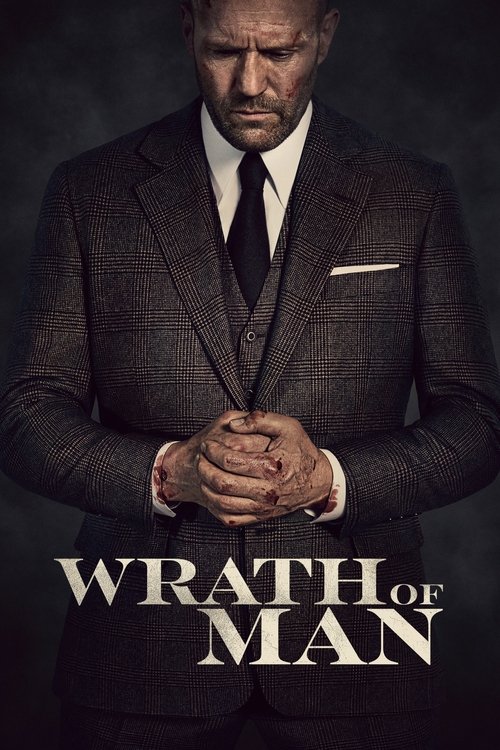
Wrath of Man - Review
Wrath of Man: A Brutal Symphony of Revenge and Redemption
Guy Ritchie, the director synonymous with stylized crime capers like Lock, Stock and Two Smoking Barrels and Snatch, takes a decidedly darker turn in Wrath of Man. Gone are the witty banter and quirky characters, replaced by a grim, relentless pursuit of vengeance fueled by grief and executed with chilling precision. This isn't Ritchie playing it safe; it's Ritchie stripped bare, showcasing a raw, visceral talent for crafting tension and delivering impactful action. While the film might not reach the comedic heights of his earlier work, it carves its own niche as a compelling and unforgiving thriller that leaves a lasting impression. Prepare to be immersed in a world of calculated violence, moral ambiguity, and the devastating consequences of loss.
Plot: A Labyrinth of Grief and Vengeance
Wrath of Man unfolds in a non-linear fashion, a deliberate choice that heightens the suspense and gradually reveals the intricate layers of its narrative. The film initially introduces us to Patrick Hill, or "H" (Jason Statham), a stoic and enigmatic new security guard at Fortico Security, a cash truck company in Los Angeles. H's seemingly unremarkable demeanor belies a deadly skillset that is quickly revealed during an attempted robbery. His uncanny accuracy and unflinching resolve raise suspicions among his colleagues, including Bullet (Holt McCallany), a seasoned veteran, and Dave (Josh Hartnett), an eager but somewhat inept recruit.
The narrative then shifts back in time, revealing the tragic event that sets H on his path of vengeance: the murder of his son during a cash truck robbery. This event transforms H, a former criminal kingpin, into a force of nature, driven by an insatiable desire to find and punish those responsible. We learn that H isn't just a security guard; he's infiltrated Fortico Security as part of a meticulously planned operation to uncover the truth behind his son's death.
As H delves deeper into the investigation, the film introduces us to a group of former soldiers, led by Jackson (Jeffrey Donovan), who are planning increasingly daring heists. Their motivations are complex, driven by a sense of disillusionment and a desperate need for financial security. The film masterfully weaves together the narratives of H and the robbers, gradually revealing their connection and setting the stage for a brutal and inevitable confrontation.
The fragmented storytelling, while initially disorienting, ultimately serves to enhance the film's impact. It allows Ritchie to build suspense gradually, withholding crucial information and forcing the audience to piece together the puzzle alongside H. The flashbacks are strategically placed to reveal character motivations and provide context to the present-day events. This non-linear approach also allows for multiple perspectives, showcasing the perspectives of both the pursuer and the pursued.
However, the complex narrative structure also presents a potential drawback. Some viewers might find the constant shifts in time and perspective confusing or distracting, particularly in the first half of the film. The sheer number of characters and their interwoven relationships can also be challenging to keep track of. While the film eventually clarifies all the plot threads, it requires close attention and a willingness to engage with its unconventional storytelling.
Characters: Driven by Grief, Greed, and Desperation
Jason Statham delivers a commanding performance as H, embodying the character's stoicism and simmering rage. He is a man consumed by grief, his every action driven by a relentless desire for revenge. Statham excels at portraying H's cold and calculating demeanor, conveying a sense of danger that permeates every scene he's in. He speaks sparingly, letting his actions speak louder than words. His physical presence is imposing, and his fighting skills are as brutal as they are efficient.
The supporting cast is equally strong. Holt McCallany provides a welcome dose of levity as Bullet, the cynical and world-weary security guard. His character serves as a foil to H's intensity, offering moments of dark humor amidst the grim proceedings. Jeffrey Donovan delivers a nuanced performance as Jackson, the leader of the robbers. He portrays Jackson as a complex and conflicted character, torn between his loyalty to his comrades and his growing unease with their increasingly reckless behavior. Josh Hartnett, in a smaller role, adds a touch of vulnerability as Dave, the inexperienced recruit who is thrust into a world of violence and betrayal.
The characters in Wrath of Man are not simply good guys and bad guys. They are flawed individuals, driven by complex motivations and forced to make difficult choices in a morally ambiguous world. The film explores the themes of grief, desperation, and the corrupting influence of power. It examines the lengths to which people will go to protect their loved ones or to achieve their goals, even if it means crossing the line into violence and criminality.
One criticism that could be leveled against the character development is that some of the supporting characters, particularly the robbers, feel somewhat underdeveloped. While their motivations are hinted at, they lack the depth and complexity of H and Jackson. This makes it difficult to fully empathize with them, even as they face dire circumstances. More exploration of their backstories and personal struggles would have added greater emotional resonance to the film.
Direction: Ritchie's Darker Palette
Guy Ritchie's direction in Wrath of Man is a departure from his signature style, but it's a welcome evolution. While his trademark visual flair is still evident, he tones down the comedic elements and embraces a more somber and gritty aesthetic. The film is visually striking, with its stark color palette, deliberate pacing, and expertly choreographed action sequences. Ritchie creates a palpable sense of tension and unease, immersing the audience in H's world of violence and vengeance.
The action sequences in Wrath of Man are brutal and realistic, eschewing the over-the-top spectacle of many action films. They are grounded in reality, emphasizing the consequences of violence and the toll it takes on both the perpetrators and the victims. The film doesn't shy away from depicting the graphic nature of violence, but it does so in a way that feels necessary and impactful, rather than gratuitous.
Ritchie's use of music is also noteworthy. The score, composed by Chris Benstead, is haunting and atmospheric, perfectly complementing the film's dark and brooding tone. The music is used sparingly, but effectively, to heighten the emotional impact of key scenes. The use of silence is also particularly effective, creating moments of intense suspense and anticipation.
While Ritchie's direction is generally strong, there are moments where the pacing feels uneven. The film's non-linear structure can sometimes disrupt the flow of the narrative, and some scenes feel unnecessarily drawn out. A tighter edit could have streamlined the storytelling and maintained a more consistent level of tension throughout.
Cinematography: A Study in Shadows and Steel
Alan Stewart's cinematography is a crucial element in establishing the film's dark and gritty atmosphere. The film is visually stunning, with its stark color palette, evocative use of shadows, and carefully composed shots. The cinematography emphasizes the bleakness and desolation of the urban landscape, reflecting the characters' inner turmoil and the moral decay of their world.
The use of long takes is particularly effective in building tension and immersing the audience in the action. These extended shots allow the viewer to fully appreciate the choreography of the action sequences and to experience the chaos and brutality of the violence firsthand. The camera movements are deliberate and purposeful, guiding the viewer's eye and enhancing the emotional impact of each scene.
The cinematography also plays a key role in establishing the characters' personalities and motivations. H is often shot in shadows, emphasizing his mysterious and enigmatic nature. Jackson, on the other hand, is often framed in close-up, revealing his inner conflict and vulnerability. The visual language of the film is carefully crafted to convey meaning and to enhance the overall storytelling.
There are no significant criticisms to be made regarding the cinematography. It is consistently excellent throughout the film, contributing significantly to its overall impact and visual appeal.
Performances: Statham's Silent Fury
Jason Statham delivers arguably one of his best performances to date in Wrath of Man. He transcends his usual action hero persona, imbuing H with a depth of emotion and a sense of gravitas that is both compelling and unsettling. Statham's performance is understated but powerful, conveying H's inner turmoil through subtle gestures and piercing glances. He is a man of few words, but his actions speak volumes. He embodies the character's stoicism and unwavering determination, making him a force to be reckoned with.
The supporting cast is equally strong, with Holt McCallany providing a welcome dose of humor and Jeffrey Donovan delivering a nuanced portrayal of a conflicted leader. Josh Hartnett, Scott Eastwood, and Andy Garcia also deliver memorable performances, adding depth and complexity to the ensemble cast.
The performances in Wrath of Man are uniformly excellent, contributing significantly to the film's overall impact and emotional resonance. The actors bring their characters to life with authenticity and conviction, making them believable and relatable, even in the most extreme circumstances.
Themes and Messages: The Cycle of Violence and the Price of Revenge
Wrath of Man explores several complex themes, including the cycle of violence, the price of revenge, and the corrupting influence of power. The film suggests that violence begets violence, and that revenge is a destructive force that ultimately consumes those who seek it. H's quest for vengeance leads him down a dark and dangerous path, ultimately blurring the line between justice and retribution.
The film also examines the themes of grief, loss, and the search for meaning in the face of tragedy. H's son's death leaves him emotionally shattered, and his pursuit of vengeance is driven by a desperate need to find closure and to make sense of the senseless act. The film suggests that grief can be a powerful motivator, but it can also lead to self-destruction.
Furthermore, Wrath of Man delves into the moral ambiguities of the criminal underworld. The film presents a world where the lines between right and wrong are blurred, and where individuals are forced to make difficult choices in order to survive. The characters in the film are not simply good guys and bad guys; they are flawed individuals who are grappling with their own demons and trying to navigate a complex and often brutal world.
The film's message is ultimately a cautionary one. It suggests that violence is never the answer, and that revenge is a dangerous and ultimately self-destructive path. The film also highlights the importance of empathy and compassion, even in the face of unimaginable loss.
Comparison to Other Films and Ritchie's Previous Work
Wrath of Man shares thematic similarities with other revenge thrillers such as Death Wish and Man on Fire. However, it distinguishes itself through its non-linear narrative structure, its morally ambiguous characters, and its gritty, realistic portrayal of violence. Unlike many revenge films, Wrath of Man doesn't offer easy answers or a sense of catharsis. It leaves the audience with a lingering sense of unease and a profound understanding of the devastating consequences of violence.
Compared to Guy Ritchie's previous work, Wrath of Man represents a significant departure in tone and style. While Ritchie is known for his stylized crime comedies, Wrath of Man is a much darker and more serious film. It lacks the witty banter and quirky characters that are characteristic of Ritchie's earlier work. However, it retains his visual flair and his ability to create compelling action sequences. Wrath of Man demonstrates Ritchie's versatility as a director and his willingness to experiment with different genres and styles.
Some might compare this film to Michael Mann's Heat, due to its focus on meticulously planned heists and the cat-and-mouse game between law enforcement (or in this case, a man acting as law enforcement) and criminals. However, Wrath of Man is far more personal and driven by emotion than Heat, which is more of a procedural crime drama. The focus is squarely on H's internal struggle and his relentless pursuit of justice, making it a more intimate and visceral experience.
Positive Aspects
- Compelling and suspenseful plot
- Strong performances from Jason Statham and the supporting cast
- Visually stunning cinematography
- Expertly choreographed action sequences
- Thought-provoking themes and messages
- Effective use of music and sound design
Constructive Criticism
- The non-linear narrative structure can be confusing at times
- Some of the supporting characters could be more developed
- The pacing is uneven in places
- The film's dark and violent tone may not appeal to all viewers
Conclusion
Wrath of Man is a gripping and thought-provoking thriller that showcases Guy Ritchie's versatility as a director and Jason Statham's range as an actor. While its dark tone and non-linear narrative may not appeal to all viewers, it is a compelling and ultimately rewarding film that explores complex themes of grief, revenge, and the corrupting influence of power. It's a brutal symphony of violence and redemption, expertly crafted and powerfully performed. This is Ritchie at his most raw and unforgiving, and it's a testament to his talent that he can deliver such a impactful and visceral experience.
Rating: 8.5/10