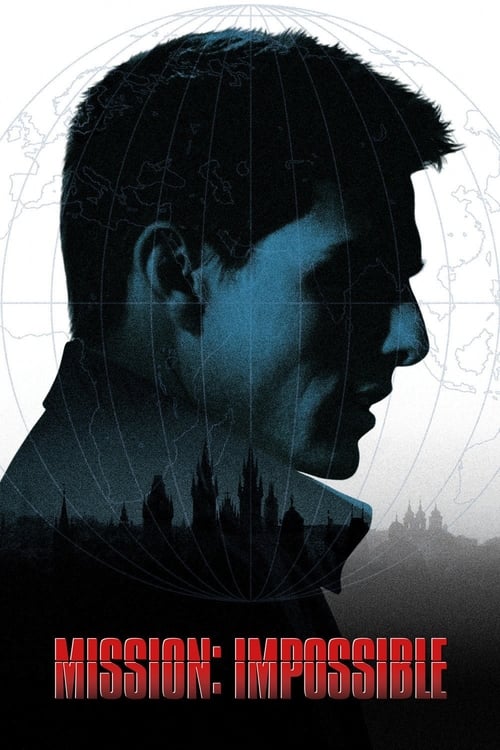
Mission: Impossible - Review
Mission: Impossible (1996) - A Legacy of Espionage Begins
Before gravity-defying stunts became the series' hallmark and before Tom Cruise turned Ethan Hunt into a practically immortal action figure, there was Brian De Palma's Mission: Impossible. Released in 1996, this initial installment of the now-iconic franchise opted for a more cerebral, suspenseful approach, prioritizing intricate plotting and character intrigue over sheer spectacle. While it may lack the bombastic set pieces of its successors, this film remains a masterclass in tension building and a compelling spy thriller in its own right, laying the groundwork for the enduring legacy of Ethan Hunt and the Impossible Missions Force (IMF).
Plot: A Web of Deceit and Double-Crossing
The film's narrative, penned by David Koepp and Robert Towne (with uncredited contributions from Steven Zaillian), is a tightly woven tapestry of deception and betrayal. We are immediately thrown into the deep end with an IMF team, led by Jim Phelps (Jon Voight), undertaking a mission in Prague to intercept a list of undercover agents. The operation goes horribly wrong, resulting in the apparent deaths of the entire team, save for Ethan Hunt (Tom Cruise). Hunt quickly finds himself the prime suspect, framed as a mole who betrayed his colleagues for personal gain.
What follows is a desperate race against time as Hunt attempts to clear his name, uncover the true mole, and prevent the stolen list from falling into the wrong hands. He allies himself with disavowed IMF agent Luther Stickell (Ving Rhames) and the enigmatic Claire Phelps (Emmanuelle Béart), Jim's widow. The trio embarks on a series of increasingly daring and perilous missions, culminating in the now-iconic Langley heist, a sequence that remains one of the most suspenseful and meticulously crafted in action cinema history.
The plot's strength lies in its complexity and constant twists. Just when you think you have a handle on the situation, another layer of deception is revealed, forcing you to question everything you thought you knew. This intricate plotting keeps the audience engaged and on the edge of their seats throughout the film's runtime. However, this complexity can also be a slight drawback. At times, the narrative can feel convoluted, requiring close attention to follow all the nuances and double-crosses. Some viewers might find the plot a bit too dense, especially compared to the more straightforward action-oriented sequels.
Characters: Shadows of Doubt and Moral Ambiguity
Mission: Impossible distinguishes itself from many action films by presenting characters who are not always what they seem. Ethan Hunt, in this initial portrayal, is not the superhuman operative he would later become. He's intelligent, resourceful, and determined, but also vulnerable and prone to making mistakes. Cruise delivers a compelling performance, capturing the character's initial shock and disbelief at being framed, as well as his growing resolve to clear his name and expose the true betrayer.
Jim Phelps, the revered leader of the IMF team, is a particularly interesting character. Jon Voight's portrayal is nuanced, hinting at a hidden darkness beneath the surface of the experienced and respected operative. The film cleverly uses our pre-existing expectations of Phelps as a mentor figure to create a sense of unease and suspicion. The eventual revelation of his betrayal is a genuinely shocking and impactful moment.
Claire Phelps, portrayed by Emmanuelle Béart, is perhaps the most enigmatic character of the film. Her motivations are constantly shifting, and her loyalties remain ambiguous until the very end. Béart's performance is subtle and captivating, adding to the film's overall sense of paranoia and mistrust. Luther Stickell, played by Ving Rhames, provides a much-needed element of stability and loyalty. He's a skilled hacker and a valuable ally to Hunt, offering technical expertise and unwavering support. His presence adds a sense of camaraderie and humanity to the otherwise morally ambiguous world of espionage.
While the characters are generally well-developed, some might argue that they lack the depth and emotional resonance found in other spy thrillers. The focus is primarily on their actions and motivations within the context of the plot, rather than on exploring their personal lives or inner struggles. This is not necessarily a flaw, but it does contribute to the film's overall tone, which is more focused on suspense and intrigue than on character-driven drama.
Direction: De Palma's Masterful Hand
Brian De Palma's direction is arguably the film's greatest strength. Known for his Hitchcockian sensibilities and masterful use of suspense, De Palma creates a world of paranoia and uncertainty. He employs a variety of techniques, including split diopter shots, long takes, and Dutch angles, to heighten the tension and create a sense of unease.
The Langley heist sequence is a prime example of De Palma's directorial prowess. The scene is meticulously planned and executed, building suspense through careful pacing, close-ups, and the use of silence. The iconic image of Hunt dangling from the ceiling, sweat dripping onto the pressure-sensitive floor, is a testament to De Palma's ability to create unforgettable moments of cinematic tension. He masterfully uses visual storytelling to communicate the stakes and challenges faced by Hunt, without relying on excessive dialogue or exposition.
De Palma's direction also contributes to the film's overall visual style. The film is shot in a sleek and stylish manner, with a focus on capturing the atmosphere of each location. From the grand architecture of Prague to the sterile environment of the CIA headquarters, De Palma creates a visually compelling world that enhances the film's sense of realism and intrigue.
One potential criticism of De Palma's direction is his tendency to rely on certain stylistic tropes, such as split screens and slow-motion sequences. While these techniques can be effective in creating suspense, they can also feel somewhat dated and self-conscious at times. However, these moments are relatively infrequent and do not detract significantly from the film's overall impact.
Cinematography: Visual Suspense and Shadowy Intrigue
Stephen H. Burum's cinematography plays a crucial role in creating the film's atmosphere of suspense and paranoia. The use of shadows and low-key lighting adds to the sense of mystery and uncertainty, while the carefully composed shots enhance the film's visual storytelling. The Prague sequences are particularly striking, with the city's gothic architecture providing a visually stunning backdrop for the film's opening act.
The film's color palette is generally muted, with a focus on grays, blacks, and blues. This contributes to the film's overall tone, which is serious and understated. However, there are also moments of vibrant color, such as the red laser beams in the Langley heist scene, which serve to heighten the tension and create a sense of danger.
Burum's cinematography is also notable for its use of unconventional camera angles and movements. The Dutch angles, in particular, contribute to the film's sense of unease and disorientation. The camera often moves in unexpected ways, adding to the feeling that anything can happen at any time.
Overall, the cinematography is a key element of the film's success. It enhances the suspense, creates a visually compelling world, and contributes to the film's overall sense of style and sophistication.
Performances: A Cast of Intrigue and Deception
The cast of Mission: Impossible delivers strong performances across the board. Tom Cruise is convincing as Ethan Hunt, portraying him as a resourceful and determined agent who is forced to rely on his wits and skills to survive. Jon Voight is excellent as Jim Phelps, conveying a sense of authority and experience while subtly hinting at the character's hidden agenda. Emmanuelle Béart is captivating as Claire Phelps, adding to the film's sense of mystery and intrigue. Ving Rhames provides a solid performance as Luther Stickell, offering technical expertise and unwavering support to Hunt.
The supporting cast is also strong, with Kristin Scott Thomas delivering a memorable performance as Sarah Davies, one of the IMF agents who is seemingly killed in Prague. Jean Reno is effective as Franz Krieger, a former IMF agent who is now working as a mercenary. Emilio Estevez makes a brief but impactful appearance as Jack Harmon, another IMF agent who meets a gruesome end.
One minor criticism of the performances is that some of the characters are somewhat underdeveloped. However, this is primarily due to the film's focus on plot and suspense, rather than on character-driven drama. The actors do a good job of conveying the essential aspects of their characters, even if they are not given a lot of screen time or backstory.
Themes and Messages: Trust, Betrayal, and the Price of Truth
Mission: Impossible explores several important themes, including trust, betrayal, and the price of truth. The film highlights the fragility of trust in the world of espionage, where agents are constantly forced to question the motives and loyalties of those around them. The betrayal of Jim Phelps is a particularly shocking example of this, demonstrating that even the most trusted individuals can be capable of deception.
The film also examines the lengths to which people will go to protect their secrets and maintain their power. The mole within the CIA is willing to sacrifice innocent lives to prevent the stolen list from being exposed. This highlights the corrupting influence of power and the dangers of unchecked authority.
Ultimately, Mission: Impossible is a story about the importance of truth and justice. Ethan Hunt is willing to risk his life to clear his name and expose the true betrayer. His commitment to the truth is what ultimately allows him to overcome the obstacles he faces and bring the perpetrators to justice.
Comparison to Other Films and Works
Mission: Impossible can be compared to other spy thrillers such as the James Bond films and the Jason Bourne series. However, it distinguishes itself from these films in several key ways. Unlike the Bond films, which often rely on gadgets and over-the-top action sequences, Mission: Impossible is more grounded in reality, focusing on suspense and intrigue. Unlike the Bourne films, which are characterized by their gritty realism and hand-to-hand combat, Mission: Impossible is more stylized and visually driven.
The film also shares some similarities with Brian De Palma's earlier works, such as Dressed to Kill and Blow Out. These films also explore themes of paranoia, deception, and the dangers of unchecked power. De Palma's signature directorial style, characterized by suspenseful pacing, visual storytelling, and unconventional camera angles, is also evident in Mission: Impossible.
Compared to later installments in the Mission: Impossible franchise, the 1996 film is significantly more restrained in its action sequences and more focused on plot and character development. While the later films are undeniably entertaining, they often sacrifice subtlety and nuance in favor of spectacle. The original Mission: Impossible remains a more cerebral and suspenseful thriller, appealing to viewers who appreciate intricate plotting and character intrigue.
Positive Aspects
- Intricate and suspenseful plot
- Strong performances from the cast
- Masterful direction by Brian De Palma
- Stylish cinematography and visual design
- Exploration of complex themes such as trust and betrayal
- Iconic Langley heist sequence
Constructive Criticism
- The plot can be convoluted at times
- Some of the characters are somewhat underdeveloped
- De Palma's stylistic tropes can feel dated
- Lacks the over-the-top action of later installments
Conclusion
Mission: Impossible (1996) is a compelling and suspenseful spy thriller that remains a classic of the genre. Brian De Palma's masterful direction, combined with strong performances from the cast and an intricate plot, creates a world of paranoia and uncertainty that keeps viewers on the edge of their seats. While it may lack the bombastic action of its sequels, this film is a more cerebral and sophisticated take on the espionage genre. It's a testament to the power of suspenseful storytelling and a reminder that sometimes, the most effective weapons are not guns and gadgets, but intelligence and deception. It successfully launched a franchise that continues to captivate audiences worldwide.