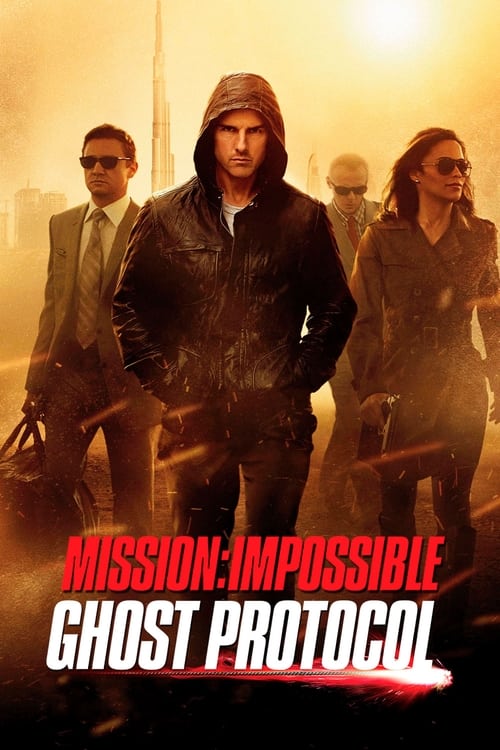
Mission: Impossible - Ghost Protocol - Review
Mission: Impossible - Ghost Protocol: A Thrilling Dance on the Edge of Disaster
The Mission: Impossible franchise, a cornerstone of action cinema, has always been a reliable source of adrenaline-pumping thrills. But with 2011's Ghost Protocol, the series reached a new zenith, delivering a film that is not only a masterclass in action choreography but also a surprisingly clever and character-driven experience. Brad Bird, known for his animated triumphs like The Iron Giant and Ratatouille, took the reins and injected a fresh, dynamic energy into the franchise, resulting in a film that feels both familiar and refreshingly innovative. Prepare to have your breath taken away as we delve into the heart of Ghost Protocol, a mission that truly redefines the impossible.
Plot: A Cascade of Catastrophic Events
The plot of Ghost Protocol is a tightly wound spring, constantly threatening to unleash chaos. It begins with Ethan Hunt (Tom Cruise) imprisoned in a Russian prison, a seemingly impossible situation even for the IMF's top agent. His daring escape, orchestrated by Jane Carter (Paula Patton) and Benji Dunn (Simon Pegg), sets the stage for a mission that goes horribly wrong. Their attempt to infiltrate the Kremlin and prevent a terrorist, Kurt Hendricks (Michael Nyqvist), from acquiring nuclear launch codes ends in a devastating explosion that levels a significant portion of the iconic landmark. The IMF is framed for the attack, forcing the President to invoke "Ghost Protocol," disavowing the entire agency.
Stripped of their resources and official support, Ethan and his team – now including the enigmatic William Brandt (Jeremy Renner) – must clear their names and prevent Hendricks from triggering a nuclear war. The globe-trotting adventure takes them from Moscow to Dubai and finally to Mumbai, each location presenting unique challenges and breathtaking set pieces. The narrative is relentless, with twists and turns that keep the audience guessing until the very end. The stakes are astronomically high, the clock is ticking, and the fate of the world hangs in the balance, making for a truly gripping cinematic experience.
Characters: A Symphony of Strengths and Vulnerabilities
Ghost Protocol excels in its character development, giving each member of Ethan's team distinct personalities and compelling arcs.
Ethan Hunt (Tom Cruise)
Tom Cruise embodies Ethan Hunt with unwavering dedication. He's not just an action hero; he's a strategist, a leader, and a man driven by a deep sense of duty. In Ghost Protocol, we see a more vulnerable side of Ethan, particularly in his interactions with Brandt, whose past is intertwined with Ethan's own. Cruise's commitment to performing his own stunts adds a layer of authenticity to the character, making his feats of daring all the more impressive.
Jane Carter (Paula Patton)
Jane Carter is a force to be reckoned with. Haunted by the death of her lover, which she blames on Hendricks, Jane is fueled by a desire for revenge. Patton brings a fierce intensity to the role, balancing her emotional vulnerability with her formidable combat skills. Her character arc is compelling, as she grapples with her grief and ultimately finds redemption through her commitment to the mission.
Benji Dunn (Simon Pegg)
Benji Dunn provides much-needed comic relief, but he's far more than just the team's tech expert. He's a loyal friend and a surprisingly capable field agent. Pegg's comedic timing is impeccable, and he brings a genuine warmth and relatability to the character. His evolution from a desk-bound analyst to a seasoned operative is one of the film's most satisfying aspects.
William Brandt (Jeremy Renner)
William Brandt is the most enigmatic member of the team. His past is shrouded in mystery, and his true abilities are initially unclear. Renner delivers a nuanced performance, portraying Brandt as a man burdened by guilt and self-doubt. As the story unfolds, we learn the truth about his connection to Ethan and his reasons for joining the IMF, adding depth and complexity to his character.
Kurt Hendricks (Michael Nyqvist)
Kurt Hendricks, the film's antagonist, is a cold and calculating terrorist with a warped vision of the world. Nyqvist portrays Hendricks with chilling effectiveness, conveying his intellectual superiority and unwavering commitment to his destructive ideology. He's not just a generic villain; he's a complex character with a clear motivation, making him a formidable adversary for Ethan and his team.
Direction: Brad Bird's Masterful Touch
Brad Bird's direction is the secret weapon of Ghost Protocol. He seamlessly blends the action and espionage elements of the franchise with his signature visual flair and storytelling prowess. Bird's background in animation is evident in the film's meticulously crafted set pieces, which are both visually stunning and narratively driven. He understands how to build suspense, create tension, and deliver exhilarating moments of action that leave the audience on the edge of their seats.
Bird's attention to detail is remarkable. Every shot is carefully composed, every movement is precisely choreographed, and every scene is meticulously planned to maximize its impact. He also excels at balancing the film's serious themes with moments of levity, creating a tone that is both thrilling and entertaining. Ghost Protocol is a testament to Bird's versatility as a director and his ability to elevate even the most established franchises to new heights.
Cinematography: Visual Spectacle on a Global Scale
The cinematography in Ghost Protocol is nothing short of breathtaking. Robert Elswit, the film's director of photography, captures the beauty and grandeur of each location with stunning clarity and precision. From the imposing architecture of Moscow to the shimmering skyline of Dubai and the vibrant streets of Mumbai, Elswit's camera work transforms these locations into integral parts of the story.
The film's visual style is characterized by its dynamic camera movements, dramatic lighting, and expansive wide shots. Elswit expertly uses these techniques to create a sense of scale and scope, immersing the audience in the film's global adventure. The use of practical effects and real-world locations adds a layer of authenticity to the film's visuals, making the action sequences feel all the more visceral and impactful. The Burj Khalifa sequence, in particular, is a masterclass in cinematography, capturing the dizzying heights and sheer terror of Ethan's climb with stunning realism.
Performances: A Cast Firing on All Cylinders
The performances in Ghost Protocol are uniformly excellent. Tom Cruise delivers another stellar performance as Ethan Hunt, showcasing his charisma, athleticism, and dramatic range. Paula Patton shines as Jane Carter, bringing a fierce intensity and emotional depth to the role. Simon Pegg provides comic relief without sacrificing the character's intelligence and loyalty. Jeremy Renner adds a layer of mystery and intrigue as William Brandt, keeping the audience guessing about his true motives. And Michael Nyqvist delivers a chilling performance as the film's antagonist, Kurt Hendricks. The chemistry between the cast members is palpable, creating a believable and engaging team dynamic.
Themes and Messages: Beyond the Explosions
While Ghost Protocol is undeniably an action-packed thrill ride, it also explores deeper themes and messages. The film examines the nature of trust, loyalty, and sacrifice. Ethan and his team are forced to rely on each other in the face of overwhelming odds, forging bonds that are tested and strengthened throughout the mission. The film also explores the consequences of unchecked power and the dangers of extremism. Hendricks's plan to destabilize the world through nuclear war serves as a cautionary tale about the destructive potential of ideology. Ultimately, Ghost Protocol is a story about hope, resilience, and the power of human connection in the face of adversity.
Comparison to Other Films and Previous Works
Ghost Protocol stands out as one of the best installments in the Mission: Impossible franchise. It surpasses its predecessors in terms of its visual spectacle, character development, and overall narrative coherence. Brad Bird's direction elevates the film beyond the typical action movie fare, injecting a sense of wit and intelligence that is often lacking in the genre. Compared to other action films of the era, Ghost Protocol is a standout for its use of practical effects, its globe-trotting locations, and its commitment to character-driven storytelling.
Bird's previous work, particularly his animated films, showcases his ability to create compelling characters and visually stunning worlds. His experience in animation translates seamlessly to live-action filmmaking, allowing him to craft action sequences that are both thrilling and visually inventive. Cruise's dedication to performing his own stunts is reminiscent of his work in other action films, such as the Top Gun franchise, but in Ghost Protocol, his physical performance is elevated by the film's strong narrative and character development.
Positive Aspects: A Symphony of Success
Ghost Protocol is a triumph on multiple levels. Its strengths include:
- Thrilling Action Sequences: The film is packed with breathtaking action set pieces that are both visually stunning and narratively driven.
- Compelling Characters: Each member of Ethan's team is well-developed and engaging, with distinct personalities and compelling arcs.
- Brad Bird's Direction: Bird's masterful direction elevates the film beyond the typical action movie fare, injecting a sense of wit and intelligence.
- Stunning Cinematography: The film's visuals are breathtaking, capturing the beauty and grandeur of each location.
- Excellent Performances: The cast delivers uniformly excellent performances, with strong chemistry and believable character dynamics.
- Intriguing Plot: The plot is complex and engaging, with twists and turns that keep the audience guessing.
- Use of Practical Effects: The reliance on practical effects adds a layer of authenticity to the film's action sequences.
Constructive Criticism: Minor Imperfections
While Ghost Protocol is a near-perfect action film, it does have a few minor imperfections:
- Villain's Motivation: While Hendricks is a compelling villain, his ultimate motivation could have been explored in greater depth.
- Pacing in the Middle Act: The pacing in the middle act could have been slightly tighter, with a few scenes feeling slightly drawn out.
- Some Plot Contrivances: Like most films in the genre, it asks for a degree of suspension of disbelief, and a couple of plot points require a bit of a stretch.
These minor flaws are easily overlooked in the face of the film's many strengths, and they do not detract significantly from the overall viewing experience.
Conclusion: A Mission Accomplished, and Then Some
Mission: Impossible - Ghost Protocol is a masterclass in action filmmaking. It's a thrilling, visually stunning, and surprisingly intelligent film that elevates the franchise to new heights. Brad Bird's direction is impeccable, the performances are excellent, and the action sequences are unforgettable. While it has a few minor flaws, they are easily overshadowed by its many strengths. Ghost Protocol is a must-see for fans of action films and a testament to the enduring power of the Mission: Impossible franchise.
Rating: 9.5/10