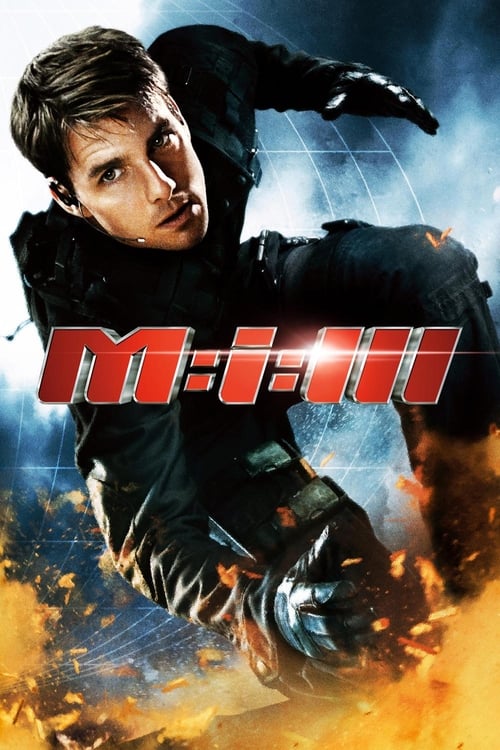
Mission: Impossible III - Review
Mission: Impossible III - A Rollercoaster of Emotion and Explosions
The Mission: Impossible franchise, known for its death-defying stunts and intricate plots, reached a pivotal moment with the release of Mission: Impossible III in 2006. Directed by J.J. Abrams, fresh off his success with television's "Alias" and "Lost," this installment injected a dose of emotional vulnerability into the usually stoic world of Ethan Hunt. While maintaining the series' signature action spectacle, Mission: Impossible III dared to explore the personal costs of a life lived in the shadows, raising the stakes for both the protagonist and the audience. But did this shift in focus ultimately elevate the film, or did it dilute the franchise's core appeal? Let's delve into the heart of the matter.
Plot: A Race Against Time, Driven by Love
The plot of Mission: Impossible III revolves around Ethan Hunt, now seemingly retired from active field work and training new IMF recruits. He's found happiness with Julia Meade, a compassionate nurse unaware of his dangerous past. However, his peaceful existence is shattered when he's called back into action to rescue Lindsey Farris, one of his proteges, who has been captured while investigating Owen Davian, a ruthless arms dealer portrayed with chilling effectiveness by Philip Seymour Hoffman. The rescue mission goes horribly wrong, leaving Lindsey dead and Ethan entangled in a web of deceit and danger.
Davian, a master manipulator, threatens to expose Julia's identity and harm her if Ethan doesn't retrieve a mysterious object known only as "The Rabbit's Foot." This sets off a frantic race against time, spanning continents and involving elaborate disguises, daring heists, and explosive confrontations. Ethan, aided by his loyal team – Luther Stickell (Ving Rhames), Benji Dunn (Simon Pegg), and Declan Gormley (Jonathan Rhys Meyers) – must outwit Davian and his henchmen while protecting Julia from harm. The plot is a tightly woven tapestry of suspense, intrigue, and relentless action, keeping the audience on the edge of their seats from beginning to end.
One of the plot's strengths is its focus on the personal stakes for Ethan. Unlike previous installments, where the mission was paramount, Mission: Impossible III makes Julia's safety the driving force behind Ethan's actions. This adds a layer of emotional depth that resonates with the audience. However, the reliance on a MacGuffin like "The Rabbit's Foot" can feel somewhat generic, a common trope in the spy thriller genre. While the mystery surrounding it fuels the plot, its ultimate purpose remains vague and ultimately less impactful than the personal drama unfolding around it.
Characters: Vulnerability and Loyalty in a World of Deceit
The characters in Mission: Impossible III are more fleshed out than in previous entries, particularly Ethan Hunt himself. Tom Cruise portrays Ethan with a newfound vulnerability, showcasing the emotional toll that his dangerous profession takes on him. His love for Julia is palpable, and his desperation to protect her is what truly motivates his actions. This humanizes Ethan, making him more relatable and sympathetic to the audience.
Julia Meade, played by Michelle Monaghan, is more than just a damsel in distress. While she is initially unaware of Ethan's true identity, she proves to be intelligent, resourceful, and resilient when faced with danger. Her relationship with Ethan is believable and heartwarming, providing a much-needed emotional anchor to the film's high-octane action.
Owen Davian, the antagonist, is arguably one of the most compelling villains in the entire Mission: Impossible franchise. Philip Seymour Hoffman delivers a masterful performance, portraying Davian as a cold, calculating, and utterly ruthless individual. He is not driven by ideology or grand schemes, but simply by profit and a desire for power. His chilling demeanor and unsettling calmness make him a truly terrifying adversary for Ethan Hunt.
The supporting characters, Luther Stickell, Benji Dunn, and Declan Gormley, provide valuable assistance to Ethan throughout the mission. Luther, played by Ving Rhames, remains a steadfast and loyal friend, offering technical expertise and unwavering support. Benji, played by Simon Pegg, adds a touch of humor and levity to the proceedings, while also proving to be a skilled hacker and strategist. Declan, portrayed by Jonathan Rhys Meyers, brings a sense of intensity and determination to the team.
John Musgrave, played by Billy Crudup, adds a layer of intrigue and suspicion to the story. As Ethan's superior officer, Musgrave's motivations remain ambiguous throughout the film, leaving the audience to question his loyalty and trustworthiness. This adds an element of paranoia and uncertainty to the narrative.
Direction: J.J. Abrams' Signature Style
J.J. Abrams' direction in Mission: Impossible III is characterized by his signature style of fast-paced action, suspenseful storytelling, and character-driven drama. He brings a fresh perspective to the franchise, injecting a sense of urgency and emotional depth that was previously lacking. Abrams' experience in television is evident in his ability to create compelling characters and build suspenseful narratives.
Abrams utilizes a variety of techniques to enhance the film's visual impact, including dynamic camera angles, rapid editing, and innovative special effects. The action sequences are meticulously choreographed and expertly executed, providing a thrilling and visceral experience for the audience. He also incorporates elements of humor and wit into the film, balancing the intense action with moments of levity.
One of Abrams' strengths as a director is his ability to create a sense of realism and authenticity in his films. He avoids relying on excessive CGI and instead focuses on practical effects and stunt work. This gives the action sequences a greater sense of weight and impact. He also pays close attention to the details of the world, creating a believable and immersive environment for the characters to inhabit.
However, some critics have argued that Abrams' direction in Mission: Impossible III is too derivative of his previous work, particularly his television series "Alias." The film's visual style and narrative structure bear a striking resemblance to "Alias," which may disappoint some viewers who were hoping for a more original and innovative approach.
Cinematography: A Visual Feast of Action and Intrigue
The cinematography in Mission: Impossible III, helmed by Daniel Mindel, is visually stunning and expertly crafted. Mindel utilizes a variety of techniques to enhance the film's atmosphere and create a sense of suspense. The use of shadows and lighting is particularly effective, creating a sense of mystery and intrigue.
The film's action sequences are captured with a sense of dynamism and energy, using fluid camera movements and innovative angles. The cinematography also effectively conveys the scale and scope of the film's global settings, showcasing the diverse landscapes and cultures that Ethan Hunt encounters on his mission.
Mindel's use of color is also noteworthy. The film's color palette is generally dark and muted, reflecting the somber tone of the story. However, bursts of vibrant color are used strategically to highlight key moments and create a sense of visual contrast. This adds to the film's overall aesthetic appeal and enhances the emotional impact of the scenes.
The cinematography also effectively utilizes visual effects, seamlessly blending them with practical effects to create a believable and immersive world. The visual effects are not used gratuitously, but rather to enhance the storytelling and create a sense of realism.
Performances: A Stellar Cast Delivers
The performances in Mission: Impossible III are uniformly excellent, with the cast delivering compelling and believable portrayals of their respective characters. Tom Cruise shines as Ethan Hunt, showcasing both his physical prowess and his emotional range. He convincingly portrays Ethan's vulnerability and determination, making him a relatable and sympathetic protagonist.
Michelle Monaghan delivers a strong performance as Julia Meade, portraying her as an intelligent and resourceful woman who is not afraid to stand up for herself. Her chemistry with Tom Cruise is palpable, making their relationship believable and heartwarming.
Philip Seymour Hoffman steals the show as Owen Davian, delivering a chilling and unforgettable performance. He embodies the character's coldness, ruthlessness, and intelligence, making him a truly terrifying villain. Hoffman's performance is a masterclass in understated menace, and he elevates the film to a higher level.
The supporting cast also delivers strong performances, with Ving Rhames, Simon Pegg, and Jonathan Rhys Meyers providing valuable assistance to Ethan Hunt. Billy Crudup adds a layer of intrigue and suspicion to the story, while Laurence Fishburne delivers a commanding performance as IMF Director Theodore Brassel.
Themes and Messages: The Cost of Duty, The Power of Love
Mission: Impossible III explores several important themes and messages, including the cost of duty, the power of love, and the importance of loyalty. The film highlights the sacrifices that Ethan Hunt and his team make in order to protect the world from danger. It shows the emotional toll that their dangerous profession takes on them, and the impact it has on their personal lives.
The film also emphasizes the power of love as a motivating force. Ethan's love for Julia drives him to take extraordinary risks and overcome seemingly insurmountable obstacles. The film suggests that love can be a source of strength and resilience, even in the face of adversity.
Loyalty is another key theme in Mission: Impossible III. Ethan relies on his team for support and assistance throughout the mission, and they remain steadfastly loyal to him, even when faced with danger. The film shows the importance of trust and camaraderie in achieving common goals.
However, the film also touches upon the ethical complexities of espionage and the potential for abuse of power. The ambiguity surrounding John Musgrave's motivations raises questions about the true nature of the IMF and the extent to which it is willing to go to achieve its objectives.
Comparison: Evolving the Formula, Maintaining the Core
Mission: Impossible III represents a significant evolution in the franchise, shifting the focus from purely action-driven spectacle to character-driven drama. While previous installments emphasized the elaborate missions and death-defying stunts, Mission: Impossible III delves deeper into the personal lives of the characters, exploring their motivations and relationships.
Compared to the first two films, Mission: Impossible III is more emotionally resonant and character-focused. Brian De Palma's original Mission: Impossible was a stylish and suspenseful thriller, while John Woo's Mission: Impossible II was a more over-the-top action extravaganza. Mission: Impossible III strikes a balance between these two approaches, combining thrilling action sequences with compelling character development.
In comparison to J.J. Abrams' other works, Mission: Impossible III shares similarities with his television series "Alias" in terms of its fast-paced action, suspenseful storytelling, and character-driven drama. However, Mission: Impossible III is a more mature and sophisticated work, showcasing Abrams' growth as a director.
Compared to other spy thrillers, Mission: Impossible III stands out for its emphasis on practical effects and stunt work, as well as its compelling characters and intricate plot. While some may criticize the film's reliance on a MacGuffin like "The Rabbit's Foot," the overall quality of the film's execution and the strength of its performances make it a standout in the genre.
Positive Aspects: Action, Emotion, and a Terrifying Villain
Mission: Impossible III excels in several key areas. The action sequences are thrilling and expertly choreographed, providing a visceral and engaging experience for the audience. The film's emotional depth is a welcome addition to the franchise, adding a layer of complexity and resonance that was previously lacking. Philip Seymour Hoffman's performance as Owen Davian is a standout, making him one of the most memorable villains in the entire series. The supporting cast also delivers strong performances, and the film's cinematography and visual effects are top-notch.
Constructive Criticism: The MacGuffin and Potential Overfamiliarity
While Mission: Impossible III is a highly entertaining and well-made film, it is not without its flaws. The reliance on a MacGuffin like "The Rabbit's Foot" can feel somewhat generic and uninspired. The mystery surrounding it fuels the plot, but its ultimate purpose is not as impactful as it could have been. Some viewers may also find Abrams' direction to be too derivative of his previous work, particularly his television series "Alias." While his signature style is effective, it may not appeal to those who were hoping for a more original and innovative approach.
Conclusion and Rating
Mission: Impossible III is a thrilling and emotionally resonant addition to the franchise. J.J. Abrams successfully injects a dose of vulnerability into Ethan Hunt's world, raising the stakes and making the action sequences even more impactful. Philip Seymour Hoffman delivers a chilling performance as Owen Davian, solidifying his place as one of the most memorable villains in the series. While the film's reliance on a MacGuffin and potential overfamiliarity with Abrams' style hold it back from perfection, it remains a highly entertaining and well-made spy thriller. For its blend of action, emotion, and stellar performances, Mission: Impossible III earns a solid:
Rating: 8.5/10