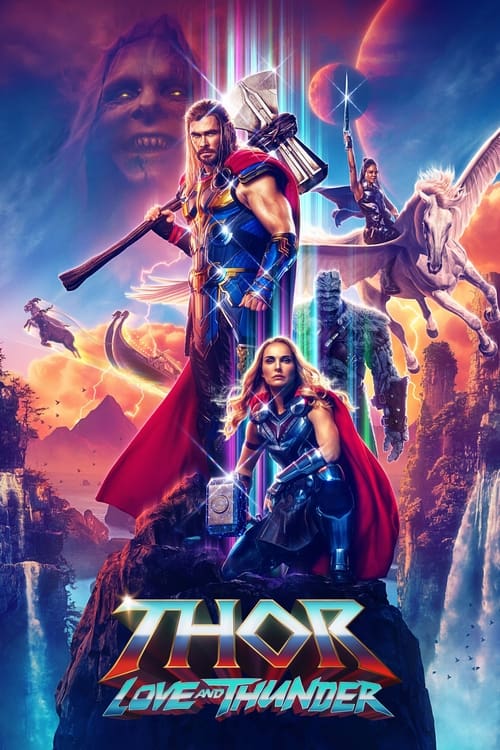
Thor: Love and Thunder - Review
Thor: Love and Thunder - A Godly Romp or a Thunderous Disappointment?
Taika Waititi’s return to the Thor franchise with Thor: Love and Thunder arrived amidst immense anticipation. Following the refreshing and hilarious Thor: Ragnarok, expectations were sky-high. The promise of Natalie Portman's return as Jane Foster, now wielding Mjolnir as the Mighty Thor, alongside Christian Bale's chilling portrayal of Gorr the God Butcher, further fueled the excitement. But does Love and Thunder live up to the hype, or does it fall victim to its own ambition and comedic excess? Let's delve into the thunderous details.
Plot: A Cosmic Quest with a Heart of Gold (and a Few Cracks)
The plot revolves around Thor (Chris Hemsworth) coming out of his self-imposed retirement, shedding his "Lebowski Thor" persona and rediscovering his purpose. He’s thrust back into action when Gorr the God Butcher (Christian Bale), driven by the loss of his daughter and disillusioned by the callousness of the gods, embarks on a quest to eliminate all deities. Thor, accompanied by King Valkyrie (Tessa Thompson), Korg (Taika Waititi), and, surprisingly, his ex-girlfriend Jane Foster (Natalie Portman), who now possesses the powers of Thor after Mjolnir calls to her, must stop Gorr before he reaches Eternity and achieves his ultimate goal.
The narrative structure is fairly straightforward: a series of quests leading to the final confrontation. However, the film's pacing feels uneven. The opening act, introducing Gorr and establishing Jane's transformation, is strong and sets a serious tone. The middle act, filled with comedic detours and a trip to Omnipotence City (a gathering of the gods), feels tonally jarring and slows down the momentum considerably. The final act, while emotionally resonant, suffers from a sense of rushed resolution. The transitions between serious moments and comedic bits sometimes feel forced, detracting from the overall impact.
One of the plot's strengths is its exploration of loss and grief. Both Thor and Gorr are driven by the loss of loved ones, and their journeys are shaped by their respective responses to this trauma. Thor initially attempts to cope with his past losses through humor and avoidance, while Gorr channels his grief into a vengeful crusade. This thematic parallelism adds depth to their conflict.
However, the plot also suffers from some significant weaknesses. The motivations of some characters, particularly Zeus (Russell Crowe), feel underdeveloped. The stakes, while seemingly high (the extinction of all gods), don't always translate into a tangible sense of urgency. The use of the Eternity wish also feels somewhat convenient and undermines the character development leading up to it. The children subplot, while emotionally affecting, feels shoehorned in and slightly underdeveloped, existing more as a plot device than a fully realized narrative element.
Characters: Gods, Mortals, and Talking Rocks
Thor Odinson (Chris Hemsworth): Hemsworth continues to excel in the role, showcasing both his comedic timing and his dramatic range. He portrays Thor as a character struggling with his past, searching for purpose, and grappling with the complexities of love and loss. While the film leans heavily into Thor's comedic side, it also allows him moments of vulnerability and emotional depth. However, some argue that the comedic portrayal sometimes veers too far into self-parody, diminishing the character's gravitas.
Jane Foster/Mighty Thor (Natalie Portman): Portman's return to the MCU is a welcome one. She portrays Jane with strength, intelligence, and a touch of vulnerability. The film effectively explores her struggle with cancer while simultaneously embracing her newfound powers. Her dynamic with Thor is a highlight, rekindling their past romance while navigating the challenges of their present circumstances. The Mighty Thor's powers are visually impressive, and Portman convincingly portrays the character's physical prowess.
Gorr the God Butcher (Christian Bale): Bale delivers a chilling and captivating performance as Gorr. His portrayal is nuanced and sympathetic, showcasing the character's pain and disillusionment. Gorr's motivations are understandable, even if his methods are extreme. Bale's physicality and his ability to convey menace through his eyes and voice create a truly terrifying villain. However, some feel that Gorr's screen time is limited, and his character arc could have been explored more deeply.
King Valkyrie (Tessa Thompson): Thompson continues to shine as King Valkyrie, bringing her signature wit and strength to the role. She acts as a grounding force for Thor, offering him guidance and support. While her role is somewhat smaller than in Ragnarok, she still makes a significant contribution to the team dynamic.
Korg (Taika Waititi): While Korg provides plenty of comic relief, his role feels somewhat repetitive and less impactful than in Ragnarok. His narration can be amusing, but it sometimes detracts from the seriousness of the story. Some argue that Korg's character has become overly reliant on comedic tropes and lacks the depth he displayed in previous appearances.
Zeus (Russell Crowe): Crowe's portrayal of Zeus is… divisive. While he commits to the over-the-top, arrogant god persona, his performance feels more like a caricature than a compelling character. Zeus's motivations are unclear, and his inclusion in the story feels largely unnecessary. The design of Omnipotence City and the depiction of the other gods are similarly underwhelming.
Direction and Cinematography: A Visual Spectacle with a Quirky Touch
Taika Waititi's directorial style is evident throughout Love and Thunder. His signature blend of humor, heart, and visual flair is on full display. The film is visually vibrant and energetic, with a distinct 1980s rock aesthetic. The action sequences are well-choreographed and visually impressive, particularly those involving Thor and the Mighty Thor wielding Mjolnir.
The cinematography, by Barry Idoine, is striking and imaginative. The use of color is bold and expressive, creating a visually dynamic experience. The shadow realm sequences, featuring a stark black and white palette, are particularly effective in conveying the darkness and despair of Gorr's world. The camera work is dynamic and engaging, capturing the energy of the action and the emotion of the characters.
However, Waititi's reliance on improvisation and ad-libbing can be a double-edged sword. While it often leads to hilarious moments, it can also result in scenes that feel disjointed and tonally inconsistent. The film's overall tone is considerably lighter than Ragnarok, sometimes to its detriment. The balance between humor and drama feels less refined, and the serious moments can be undermined by the constant stream of jokes.
The visual effects are generally impressive, particularly the depiction of Thor and the Mighty Thor's powers. However, some of the CGI, particularly in the Omnipotence City sequence, feels unfinished and detracts from the overall visual quality. The design of some of the creatures and environments also feels somewhat generic and uninspired.
Themes and Messages: Love, Loss, and Finding Purpose
Thor: Love and Thunder explores several key themes, including love, loss, grief, and finding purpose. The film examines the different ways in which characters cope with loss, from Thor's initial avoidance and humor to Gorr's vengeful crusade. It also explores the power of love and connection, both romantic and familial, as a source of strength and healing.
The film also touches on the idea of questioning authority and challenging the status quo. Gorr's rebellion against the gods is a direct challenge to their perceived infallibility and their lack of concern for the mortals they are supposed to protect. The film suggests that even gods can be flawed and that it is important to hold them accountable.
However, the film's thematic exploration sometimes feels superficial. The messages about love and loss are present, but they are not always explored with the depth and nuance they deserve. The film's focus on humor can sometimes overshadow its more serious themes, preventing them from fully resonating with the audience.
Comparison to Other Films and Previous Works
Thor: Love and Thunder is inevitably compared to Thor: Ragnarok, Taika Waititi's previous contribution to the franchise. While both films share a similar comedic sensibility, Love and Thunder is arguably more reliant on humor and less successful in balancing it with drama. Ragnarok felt like a genuine reinvention of the Thor character and universe, while Love and Thunder feels more like a continuation of that reinvention with diminishing returns.
The film also shares similarities with other MCU films, particularly those that blend action and comedy, such as Guardians of the Galaxy and Ant-Man. However, Love and Thunder's humor is often more self-aware and meta, sometimes at the expense of the story's emotional impact.
Christian Bale's performance as Gorr can be compared to his previous roles as villains, such as Patrick Bateman in American Psycho. Both characters are driven by a sense of moral outrage and a desire to punish those they perceive as being corrupt. However, Gorr is ultimately a more sympathetic and tragic figure than Bateman.
Positive Aspects
- Chris Hemsworth's performance as Thor continues to be a highlight.
- Natalie Portman's return as the Mighty Thor is a welcome addition.
- Christian Bale delivers a chilling and captivating performance as Gorr.
- The film is visually vibrant and energetic.
- The action sequences are well-choreographed and visually impressive.
- The film explores themes of love, loss, and finding purpose.
Constructive Criticism
- The plot feels uneven and the pacing is inconsistent.
- The tonal balance is off, with too much emphasis on humor.
- Some characters, particularly Zeus, feel underdeveloped.
- The visual effects are inconsistent in quality.
- The thematic exploration sometimes feels superficial.
- The reliance on improvisation can be distracting.
Conclusion
Thor: Love and Thunder is a visually entertaining and often hilarious film, but it ultimately falls short of its potential. While the performances are strong and the action is exciting, the film's uneven plot, inconsistent tone, and superficial thematic exploration prevent it from being a truly great addition to the MCU. It's a fun ride, but one that ultimately feels somewhat hollow. It tries to be a heartfelt exploration of love and loss while simultaneously delivering a barrage of jokes, and the result is a film that feels tonally disjointed and emotionally unfulfilling.
While it's not a terrible film by any means, it's a disappointing one considering the talent involved and the high expectations set by Ragnarok. Thor: Love and Thunder is a fun, visually appealing, but ultimately forgettable entry in the MCU.
Rating: 6.5/10