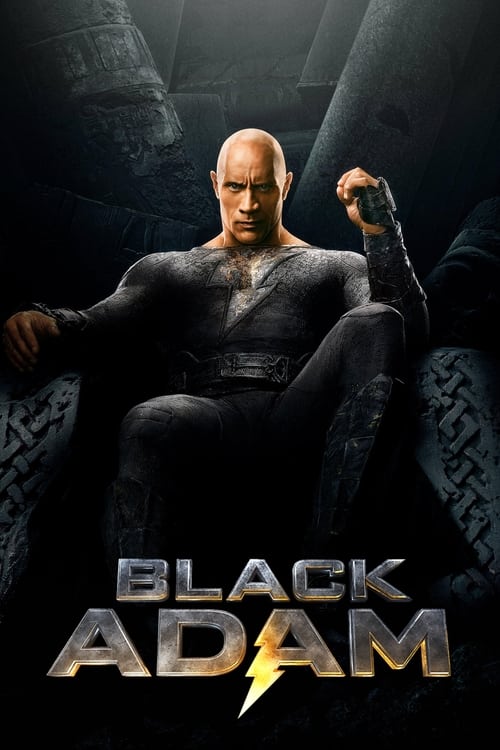
Black Adam - Review
Black Adam: A Jolt of Electrifying Justice (and Some Stumbles)
For years, Dwayne "The Rock" Johnson teased his arrival as Black Adam, promising a seismic shift in the DC Extended Universe (DCEU). The anticipation was palpable. Would this be the anti-hero the franchise desperately needed? Would it inject a much-needed dose of grit and moral ambiguity? Released in October 2022, Black Adam finally arrived, not with a whisper, but with a thunderous roar. While the film delivers on its promise of action-packed spectacle and introduces a compellingly flawed protagonist, it also suffers from a muddled plot, underdeveloped characters, and a reliance on familiar superhero tropes that ultimately prevent it from reaching its full potential.
Plot: Ancient Power Meets Modern Morality
Black Adam throws us into Kahndaq, a fictional Middle Eastern nation oppressed by the Intergang, a global criminal organization mining a powerful mineral called Eternium. We learn of Teth-Adam (Dwayne Johnson), a Kahndaqi slave who, 5,000 years ago, received the powers of the Egyptian gods to liberate his people. He used these powers with brutal force, earning him imprisonment by the wizard Shazam. In the present day, Adrianna Tomaz (Sarah Shahi), a resourceful archaeologist, inadvertently awakens Teth-Adam while searching for the Crown of Sabbac, an artifact that grants immense power.
Adam, now free, unleashes his unique brand of justice on Intergang, leaving a trail of destruction in his wake. His actions draw the attention of the Justice Society of America (JSA): Hawkman (Aldis Hodge), Doctor Fate (Pierce Brosnan), Atom Smasher (Noah Centineo), and Cyclone (Quintessa Swindell). The JSA, believing Adam's methods are too extreme and destabilizing, arrive in Kahndaq to contain him. A conflict ensues, forcing both Adam and the JSA to confront their ideologies and ultimately unite against a greater threat: Sabbac (Marwan Kenzari), possessed by a powerful demon, seeking to claim the Crown of Sabbac and plunge the world into darkness.
The plot, while straightforward in its core conflict, is burdened by exposition and a rushed third act. The backstory of Kahndaq and Teth-Adam is presented in a series of flashbacks, which, while visually striking, feel clunky and interrupt the narrative flow. The introduction of the JSA feels somewhat forced, their presence serving more as a setup for future DCEU projects than a natural progression of the story. The final battle against Sabbac, while visually impressive, feels predictable and lacks emotional resonance.
Characters: The Rock Solid Adam and a Society of Potential
Dwayne Johnson's portrayal of Black Adam is undoubtedly the film's greatest strength. He embodies the character's imposing physicality and brooding intensity. Johnson delivers a nuanced performance, conveying Adam's internal conflict between his desire to protect Kahndaq and his ruthless methods. He isn't simply a hero or a villain; he's a force of nature, a product of his tragic past, struggling to navigate the complexities of the modern world.
The JSA, while a welcome addition to the DCEU, are unfortunately underdeveloped. Hawkman, played with stoic determination by Aldis Hodge, possesses a compelling backstory but is given limited screen time to explore it. Pierce Brosnan shines as Doctor Fate, bringing a gravitas and wisdom to the role that elevates the character. His internal struggle with his powers and his premonitions of the future add a layer of depth to the film. However, Atom Smasher and Cyclone feel more like sidekicks than fully realized characters. Their powers are visually impressive, but their personalities are underdeveloped, leaving them feeling somewhat generic.
Adrianna Tomaz, played by Sarah Shahi, serves as the film's moral compass, challenging Adam's methods and urging him to find a more compassionate path. She is a strong and independent character, but her motivations are not always clearly defined. Her son, Amon (Bodhi Sabongui), provides comic relief and serves as a surrogate for the Kahndaqi people, reminding Adam of the importance of protecting the innocent.
Marwan Kenzari's Sabbac, while visually imposing, is a disappointingly generic villain. He lacks the depth and complexity to be a truly compelling antagonist. His motivations are simplistic, and his dialogue is forgettable. He serves primarily as a physical threat, providing a convenient target for Adam and the JSA to unite against.
Direction: Visual Spectacle Over Subtlety
Jaume Collet-Serra, known for his action thrillers like Non-Stop and The Shallows, directs Black Adam with a focus on visual spectacle and high-octane action sequences. The film is visually impressive, with stunning CGI and dynamic camera work. The action sequences are well-choreographed and exciting, showcasing Adam's immense power and the unique abilities of the JSA.
However, Collet-Serra's direction often prioritizes spectacle over substance. The film is filled with slow-motion shots and gratuitous explosions, which, while visually appealing, can feel repetitive and detract from the emotional impact of the story. The pacing is uneven, with long stretches of exposition followed by frenetic action sequences. The film also suffers from a lack of subtlety, relying on heavy-handed symbolism and predictable plot points.
Cinematography: A Dark and Gritty Aesthetic
The cinematography, helmed by Lawrence Sher (Joker, Godzilla: King of the Monsters), contributes to the film's dark and gritty aesthetic. Kahndaq is depicted as a war-torn nation, shrouded in shadows and dust. The color palette is muted, emphasizing the oppression and despair of the Kahndaqi people. The visual effects are impressive, particularly in the depiction of Adam's powers and the abilities of the JSA.
However, the overuse of dark lighting can make it difficult to follow the action in some scenes. The visual effects, while generally well-executed, occasionally suffer from a lack of polish, particularly in the depiction of Sabbac's demonic form.
Performances: Johnson Anchors a Mixed Bag
As mentioned earlier, Dwayne Johnson delivers a commanding performance as Black Adam, anchoring the film with his charisma and intensity. Pierce Brosnan is a standout as Doctor Fate, bringing a much-needed gravitas and emotional depth to the role. Aldis Hodge is solid as Hawkman, but his character is underdeveloped. Noah Centineo and Quintessa Swindell are adequate as Atom Smasher and Cyclone, but their performances are hindered by the lack of character development. Sarah Shahi delivers a competent performance as Adrianna Tomaz, but her character's motivations are not always clear. Marwan Kenzari is underwhelming as Sabbac, failing to create a truly memorable villain.
Themes and Messages: Justice, Vengeance, and the Cost of Power
Black Adam explores several complex themes, including the nature of justice, the consequences of vengeance, and the corrupting influence of power. The film questions the traditional superhero narrative, presenting a protagonist who is willing to use extreme force to achieve his goals. Adam's methods challenge the JSA's more idealistic approach to justice, forcing them to confront the limitations of their own beliefs.
The film also explores the theme of oppression and the struggle for liberation. Kahndaq is depicted as a nation exploited and abused by foreign powers, mirroring real-world conflicts in the Middle East. Adam's desire to protect his people from oppression resonates with audiences who have experienced similar struggles.
However, the film's exploration of these themes is often superficial. The moral complexities of Adam's actions are not fully explored, and the film ultimately defaults to a more conventional superhero narrative in the third act.
Comparisons: A Step Forward, But Still Following the Formula
Black Adam attempts to distinguish itself from other superhero films by presenting a morally ambiguous protagonist and exploring darker themes. In this regard, it shares similarities with films like Watchmen and The Dark Knight, which also challenged the traditional superhero archetype. However, Black Adam lacks the depth and sophistication of those films.
Compared to previous DCEU films, Black Adam represents a step forward in terms of visual spectacle and action choreography. However, it suffers from many of the same problems that have plagued the DCEU, including a muddled plot, underdeveloped characters, and a lack of tonal consistency. The film's reliance on CGI and its predictable plot points also make it feel somewhat generic compared to more innovative superhero films like Spider-Man: Into the Spider-Verse or The Batman.
Interestingly, Jaume Collet-Serra directed Dwayne Johnson in Disney's "Jungle Cruise" before "Black Adam." While "Jungle Cruise" was a lighter, more family-friendly adventure, it showcased Collet-Serra's ability to craft visually engaging action sequences and manage a charismatic lead. "Black Adam" attempts to leverage these strengths but struggles to balance them with a more complex and morally ambiguous narrative.
Positive Aspects
- Dwayne Johnson's performance as Black Adam is a standout.
- The action sequences are visually impressive and well-choreographed.
- Pierce Brosnan delivers a compelling performance as Doctor Fate.
- The film introduces the Justice Society of America to the DCEU.
Constructive Criticism
- The plot is muddled and predictable.
- The characters, particularly Atom Smasher, Cyclone, and Sabbac, are underdeveloped.
- The direction prioritizes spectacle over substance.
- The film's exploration of its themes is often superficial.
- The overuse of dark lighting can make it difficult to follow the action in some scenes.
Conclusion
Black Adam is a visually impressive and action-packed superhero film that delivers on its promise of spectacle. Dwayne Johnson shines as Black Adam, and the introduction of the Justice Society of America is a welcome addition to the DCEU. However, the film suffers from a muddled plot, underdeveloped characters, and a reliance on familiar superhero tropes. While it represents a step forward for the DCEU in some respects, it ultimately falls short of its full potential. Black Adam is an enjoyable popcorn flick, but it lacks the depth and sophistication to be a truly memorable superhero film.
Rating: 6.5/10