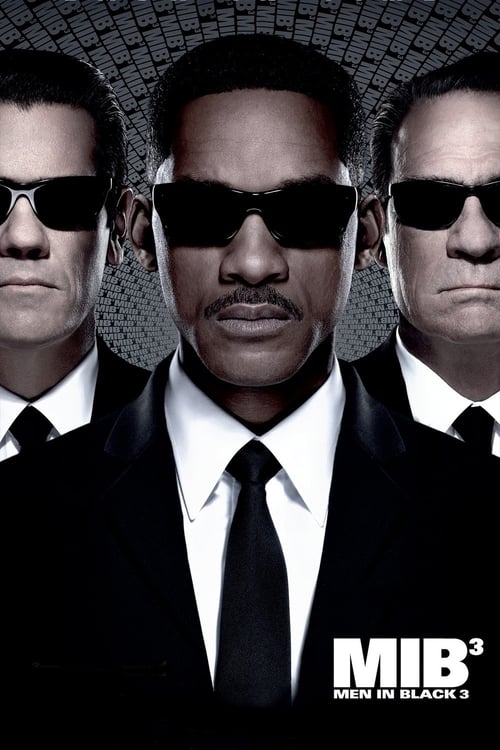
Men in Black 3 - Review
Men in Black 3: A Time-Traveling Nostalgia Trip with a Heart
Fifteen years after the original Men in Black burst onto the scene, and a decade after its less-than-stellar sequel, Men in Black 3 arrived in 2012, promising a return to form. Could it recapture the magic of the first film while forging its own identity? The answer, while not a resounding yes, is a surprisingly heartwarming and entertaining journey that successfully blends action, comedy, and a touch of genuine emotion, all while embracing its time-travel premise with gusto. Let's dive into the good, the bad, and the tentacled of this nostalgic yet forward-looking entry in the MIB franchise.
Plot: Back to the Future, Men in Black Style
The plot of Men in Black 3 is undoubtedly its most ambitious and arguably its strongest asset. The film kicks off with the escape of Boris the Animal (Jemaine Clement), a Boglodite – a particularly nasty alien species – from a lunar prison. Boris, seeking revenge on Agent K (Tommy Lee Jones) for his capture and the loss of his arm in 1969, travels back in time to assassinate the younger Agent K (Josh Brolin) and alter history. This act has immediate repercussions in Agent J's (Will Smith) present: K simply disappears, and the Earth is left vulnerable to a Boglodite invasion.
Realizing the catastrophic consequences, J must travel back to 1969 himself to prevent Boris from succeeding. The time jump sequence, achieved through a thrilling plunge from the Chrysler Building, is a visual highlight, showcasing the film's commitment to spectacle. Once in 1969, J teams up with the younger Agent K, an uncanny impersonation by Josh Brolin, to stop Boris and unravel the mysteries surrounding K's past.
The plot is intricate, weaving together elements of revenge, fate, and the importance of seemingly insignificant moments. The time travel mechanics, while not rigorously scientific, are internally consistent and serve the narrative well. The stakes are high, not just for K's life but for the entire planet, giving the film a sense of urgency that was somewhat lacking in the second installment.
However, the plot isn't without its flaws. The initial setup, particularly Boris's escape, feels somewhat rushed and lacks the meticulous world-building of the first film. Certain plot points, like the ease with which J adapts to 1969, are glossed over. While the time travel element adds a fresh dynamic, it also introduces potential plot holes and inconsistencies that require some suspension of disbelief.
Characters: Old Faces, New Dimensions
The strength of Men in Black 3 lies significantly in its characters, particularly the dynamic between J and K. Will Smith effortlessly reprises his role as the witty and street-smart Agent J, providing the film with its comedic heart. His reactions to the bizarre and often dangerous situations he encounters are consistently entertaining.
Tommy Lee Jones, while appearing less frequently than in previous films, delivers his signature stoic performance as the older Agent K. His gruff demeanor and taciturn nature provide a perfect foil for J's exuberance. However, it's Josh Brolin's portrayal of the younger Agent K that truly steals the show. Brolin doesn't just imitate Tommy Lee Jones; he embodies the character, capturing his mannerisms, voice, and even his subtle expressions with uncanny accuracy. His performance is a masterful tribute and a significant contributing factor to the film's success.
Jemaine Clement's Boris the Animal is a memorable villain, even if he doesn't quite reach the iconic status of Vincent D'Onofrio's Edgar the Bug. Clement brings a menacing yet darkly humorous quality to the role, making Boris a formidable and entertaining antagonist. His design, with his spiky appearance and penchant for violence, is suitably grotesque.
Another standout character is Griffin (Michael Stuhlbarg), a clairvoyant alien who can see multiple possible futures. Griffin's quirky personality and his ability to provide glimpses into the various outcomes of J and K's actions add a layer of intrigue and humor to the film. He serves as a narrative device, highlighting the importance of choice and the butterfly effect of time travel.
While the core characters are well-developed, some of the supporting characters feel underdeveloped. For example, the MIB agents of 1969, while visually interesting, are largely relegated to background roles. The romantic subplot hinted at between J and Agent O (Emma Thompson in the present, Alice Eve in 1969) feels underdeveloped and ultimately unnecessary.
Direction: Barry Sonnenfeld's Familiar Touch
Barry Sonnenfeld returns to direct Men in Black 3, bringing his signature visual style and comedic sensibilities to the franchise. Sonnenfeld excels at creating a world that is both grounded and fantastical, blending realistic settings with outlandish alien creatures and technology. His direction is confident and assured, maintaining a brisk pace and ensuring that the film remains consistently engaging.
Sonnenfeld's strength lies in his ability to balance the film's various elements: action, comedy, and science fiction. He seamlessly integrates the special effects into the narrative, making them feel organic and believable. The action sequences are well-choreographed and visually exciting, while the comedic moments are perfectly timed and delivered.
However, Sonnenfeld's direction, while competent, doesn't necessarily break new ground. He relies heavily on the established visual language of the franchise, which, while familiar and comforting, can also feel somewhat predictable. The film lacks the visual inventiveness and stylistic flair of some of his earlier works, such as The Addams Family.
Cinematography: A Blast from the Past
The cinematography of Men in Black 3, helmed by Bill Pope, is visually appealing and effectively captures the contrasting aesthetics of the present and the past. The scenes set in the present are sleek and modern, with a focus on clean lines and futuristic technology. The scenes set in 1969 are richly detailed and evoke the era's vibrant colors and distinctive fashion.
The film makes excellent use of practical effects, particularly in the creature design and the set pieces. The aliens are visually striking and feel tangible, thanks to the combination of prosthetics, animatronics, and CGI. The 1969 New York City is meticulously recreated, providing a convincing and immersive backdrop for the film's time-travel narrative.
The lighting is effectively used to create mood and atmosphere. The darker scenes, such as those in the lunar prison, are shrouded in shadows, creating a sense of unease and foreboding. The brighter scenes, such as those in Coney Island, are vibrant and energetic, reflecting the era's optimistic spirit.
One of the visual highlights of the film is the time jump sequence, which is both visually stunning and narratively significant. The descent from the Chrysler Building is captured with a sense of vertigo and excitement, effectively conveying the disorienting experience of time travel.
Performances: Brolin's Triumph
The performances in Men in Black 3 are uniformly strong, but Josh Brolin's portrayal of the younger Agent K deserves special recognition. As mentioned earlier, Brolin doesn't simply mimic Tommy Lee Jones; he embodies the character, capturing his essence with remarkable accuracy. His performance is a testament to his skill as an actor and a crucial element in the film's success.
Will Smith delivers another charismatic performance as Agent J, bringing his signature wit and charm to the role. He effectively portrays J's growing respect and understanding of K, adding a layer of emotional depth to the character. His comedic timing is impeccable, and his interactions with Brolin are consistently entertaining.
Tommy Lee Jones, while appearing in a limited role, delivers his usual understated performance as the older Agent K. His presence provides a sense of continuity and gravitas to the film. Jemaine Clement is delightfully menacing as Boris the Animal, bringing a unique blend of humor and menace to the villainous role.
Michael Stuhlbarg is a standout as Griffin, the clairvoyant alien. His quirky performance adds a layer of whimsy and intrigue to the film. Alice Eve effectively captures the essence of a younger Agent O, providing a glimpse into the character's past. Emma Thompson's brief appearance as the older Agent O is also memorable.
Themes and Messages: Family, Sacrifice, and the Weight of Secrets
Beneath its comedic exterior and action-packed sequences, Men in Black 3 explores several deeper themes. One of the most prominent themes is the importance of family, both biological and chosen. The film reveals a surprising connection between J and K, adding a layer of emotional depth to their relationship. J's journey back in time is not just about saving the world; it's also about understanding and appreciating his partner.
The film also explores the theme of sacrifice. K's actions in 1969, particularly his decision to erase Boris's arm and imprison him on the moon, are revealed to be motivated by a desire to protect the Earth, even at great personal cost. His stoicism and reticence are shown to be a consequence of the burden he carries.
Another key theme is the weight of secrets. K's past is shrouded in mystery, and his reluctance to share his experiences with J creates a sense of distance between them. The film suggests that keeping secrets can be damaging to relationships and that open communication is essential for building trust.
The film also touches on the theme of fate versus free will. Griffin's ability to see multiple possible futures raises questions about whether our choices truly matter or whether everything is predetermined. The film ultimately suggests that while the future may be uncertain, our actions have consequences and that we have the power to shape our own destiny.
Comparison to Other Films: Echoes of the Past, Glimpses of the Future
Men in Black 3 inevitably draws comparisons to its predecessors, Men in Black (1997) and Men in Black II (2002). While it doesn't quite reach the iconic status of the original, it surpasses the sequel in terms of plot, character development, and overall entertainment value.
The film's time-travel premise also invites comparisons to other time-travel films, such as Back to the Future and Terminator. While Men in Black 3 doesn't delve as deeply into the scientific aspects of time travel as some of these films, it effectively uses the concept to explore themes of fate, choice, and the importance of the past.
The film's blend of action, comedy, and science fiction also aligns it with other genre-bending films, such as Guardians of the Galaxy and Thor: Ragnarok. Like these films, Men in Black 3 successfully balances its various elements, creating a fun and engaging cinematic experience.
Positive Aspects: A Nostalgic and Heartfelt Return
Men in Black 3 boasts several positive aspects that contribute to its overall success. The plot is engaging and well-paced, with a compelling time-travel narrative. The characters are well-developed, particularly the dynamic between J and K. Josh Brolin's performance as the younger Agent K is a standout, capturing the essence of Tommy Lee Jones's character with remarkable accuracy. The film is visually appealing, with excellent use of practical effects and a convincing recreation of 1969 New York City. The film also explores deeper themes, such as family, sacrifice, and the weight of secrets, adding a layer of emotional depth to the story.
Constructive Criticism: Room for Improvement
Despite its strengths, Men in Black 3 also has some weaknesses. The initial setup feels somewhat rushed, and certain plot points are glossed over. Some of the supporting characters are underdeveloped, and the romantic subplot feels unnecessary. The direction, while competent, doesn't necessarily break new ground. The film relies heavily on the established visual language of the franchise, which can feel somewhat predictable.
Conclusion: A Worthy Addition to the MIB Legacy
Men in Black 3 is a surprisingly satisfying and entertaining addition to the MIB franchise. While it may not reach the heights of the original, it surpasses the sequel and offers a compelling time-travel narrative, strong character performances, and a touch of genuine emotion. Josh Brolin's portrayal of the younger Agent K is a particular highlight, and the film's exploration of themes such as family and sacrifice adds a layer of depth to the story. Despite some minor flaws, Men in Black 3 is a worthy addition to the MIB legacy and a fun and engaging cinematic experience for fans of the franchise and newcomers alike.