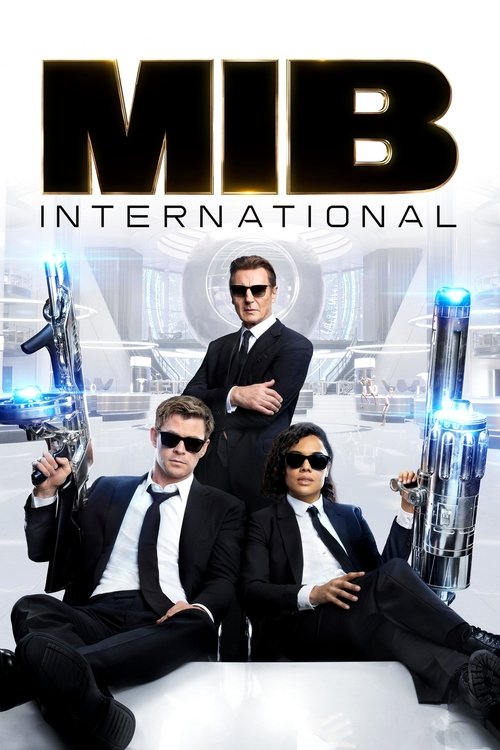
Men in Black: International - Review
Men in Black: International: A Forgettable Mission?
The Men in Black franchise, once a beacon of witty sci-fi action-comedy, returned in 2019 with Men in Black: International, promising a fresh take on the alien-fighting organization. Stepping away from the iconic duo of Will Smith and Tommy Lee Jones, this installment introduced a new pair of agents played by Tessa Thompson and Chris Hemsworth. But does this global expansion live up to the legacy of its predecessors, or does it succumb to the pitfalls of franchise fatigue? Let's dive in and dissect this intergalactic adventure.
Plot: A Global Conspiracy with Predictable Twists
Men in Black: International centers around Molly Wright (Tessa Thompson), a determined young woman who, after witnessing an alien encounter as a child, dedicates her life to finding the elusive Men in Black. Her persistence pays off when she successfully infiltrates the New York headquarters and earns a probationary spot as Agent M. She's quickly partnered with Agent H (Chris Hemsworth), a charming but reckless veteran agent stationed in London, known for his past heroics and questionable work ethic.
Their first mission together involves protecting a Vungus, a friendly alien dignitary, who is assassinated. This event throws Agent M and Agent H into a global conspiracy, forcing them to investigate a mole within the MIB organization. Their investigation leads them from London to Marrakech to Italy, encountering various alien species and uncovering a threat far greater than they initially anticipated: a weapon capable of wiping out all life on Earth.
The plot, while featuring some interesting set pieces and exotic locations, suffers from several significant weaknesses. The central mystery of the mole feels predictable, and the film telegraphs its twists well in advance. The pacing is uneven, with some action sequences feeling rushed and others dragging on unnecessarily. Furthermore, the MacGuffin – the doomsday weapon – feels generic and lacks the originality that characterized the earlier MIB films. The original films had a quirky charm that this sequel struggles to recapture.
The film attempts to raise the stakes by introducing a more significant global threat, but the execution feels hollow. The emotional investment in the characters and their mission is minimal, leaving the audience disconnected from the unfolding events. While the core concept of a mole within the organization holds promise, the film fails to explore the ramifications of this betrayal in a meaningful way. The resolution feels rushed and unsatisfying, leaving many questions unanswered and failing to deliver a truly impactful conclusion.
Characters: Chemistry, But Lacking Depth
The success of any buddy-cop movie hinges on the chemistry between its leads, and Tessa Thompson and Chris Hemsworth, having previously demonstrated their on-screen rapport in the Marvel Cinematic Universe, initially seem like a promising pairing. Thompson's Agent M brings a much-needed sense of determination and intelligence to the franchise, providing a refreshing contrast to the more seasoned and jaded agents. Her relentless pursuit of the MIB and her unwavering belief in the existence of aliens make her a relatable and engaging protagonist.
Hemsworth's Agent H, on the other hand, embodies a more stereotypical action-hero archetype. He's charming, handsome, and skilled in combat, but his character lacks the depth and complexity that made Agent K so compelling. Agent H's recklessness and disregard for rules often feel contrived and serve primarily as a source of comedic relief. While Hemsworth delivers a charismatic performance, his character ultimately feels underdeveloped and fails to leave a lasting impression.
The supporting characters are largely forgettable. Liam Neeson as High T, the head of MIB's London branch, delivers a solid performance, but his character is ultimately relegated to a supporting role and lacks the gravitas of Zed from the original films. Kumail Nanjiani voices Pawny, a small, chess-piece-like alien who becomes Agent M and Agent H's sidekick. Pawny provides some of the film's funniest moments, but his character feels more like a comedic prop than a fully realized individual.
The film's failure to develop its characters beyond superficial traits is a significant weakness. The audience never truly connects with Agent M or Agent H on an emotional level, making it difficult to invest in their journey. The lack of compelling supporting characters further diminishes the film's overall impact. The original MIB films excelled at creating memorable and eccentric characters, but Men in Black: International falls short in this regard.
Direction: A Safe and Uninspired Approach
Directed by F. Gary Gray, known for his action-packed films like Straight Outta Compton and The Fate of the Furious, Men in Black: International suffers from a lack of directorial vision. Gray's approach feels safe and uninspired, failing to capture the quirky and imaginative spirit of the original MIB films. The action sequences are competently executed but lack the creativity and visual flair that distinguished Barry Sonnenfeld's direction in the earlier installments.
Gray's direction relies heavily on CGI and special effects, often at the expense of practical effects and innovative creature designs. The aliens in Men in Black: International feel generic and lack the distinctiveness that made the aliens in the original films so memorable. The film's visual style is also less vibrant and colorful than its predecessors, contributing to a sense of blandness and visual monotony.
The film's comedic timing also feels off at times. While there are some genuinely funny moments, many of the jokes fall flat or feel forced. Gray's direction fails to strike the right balance between action and comedy, resulting in a film that feels tonally inconsistent. The original MIB films were masters of deadpan humor and absurdist situations, but Men in Black: International struggles to replicate this comedic sensibility.
Ultimately, Gray's direction lacks the personality and vision that would have elevated Men in Black: International beyond a generic action-comedy. His approach feels more like a studio-mandated attempt to reboot the franchise than a genuine artistic endeavor. The film suffers from a lack of originality and a failure to capture the unique spirit of the original MIB films.
Cinematography: Visually Competent, But Lacking Flair
The cinematography, helmed by Stuart Dryburgh, is technically competent but lacks the visual flair and distinctive style that could have elevated the film. The shots are well-composed and the camera movements are smooth, but the overall visual aesthetic feels generic and uninspired. The lighting is often flat and uninteresting, failing to create a sense of atmosphere or mood.
The film's color palette is muted and lacks the vibrancy that characterized the original MIB films. The use of CGI and visual effects often overshadows the cinematography, creating a sense of artificiality and detachment. The exotic locations, while visually appealing, are not utilized to their full potential. The cinematography fails to capture the unique beauty and character of these locations, reducing them to mere backdrops for the action.
The film's visual style lacks the originality and creativity that would have distinguished it from other science fiction action films. The cinematography feels more functional than artistic, serving primarily to convey the plot without adding any significant visual interest. The original MIB films were visually innovative and groundbreaking, but Men in Black: International fails to live up to this legacy.
Performances: Thompson Shines, Hemsworth Underwhelming
Tessa Thompson delivers the strongest performance in Men in Black: International. She embodies Agent M with a combination of intelligence, determination, and vulnerability, making her a relatable and engaging protagonist. Thompson's performance elevates the material and provides a much-needed spark of energy to the film. She successfully portrays Agent M's unwavering belief in the existence of aliens and her relentless pursuit of the MIB, making her a compelling and sympathetic character.
Chris Hemsworth, while charismatic and physically capable, delivers a less memorable performance as Agent H. His portrayal of the reckless and charming agent feels somewhat generic and lacks the depth and complexity that would have made his character more compelling. Hemsworth's performance is not necessarily bad, but it fails to leave a lasting impression. He relies too heavily on his natural charm and physical presence, neglecting to explore the emotional nuances of his character.
Liam Neeson delivers a solid but ultimately unremarkable performance as High T. His character is underdeveloped and lacks the gravitas that would have made him a more memorable mentor figure. Kumail Nanjiani provides some comedic relief as Pawny, but his performance feels more like a voice-over than a fully realized character. The supporting cast, in general, fails to make a significant impact, overshadowed by Thompson and Hemsworth's presence.
Overall, the performances in Men in Black: International are a mixed bag. Thompson shines as Agent M, but Hemsworth's performance as Agent H feels somewhat underwhelming. The supporting cast fails to make a significant impact, leaving the film reliant on the chemistry between its two leads.
Themes and Messages: Lost in Translation
Men in Black: International attempts to explore themes of trust, betrayal, and the importance of teamwork, but these themes are largely underdeveloped and fail to resonate with the audience. The film's central conflict revolves around a mole within the MIB organization, but the ramifications of this betrayal are not explored in a meaningful way. The characters' motivations are often unclear, and their actions feel driven more by plot convenience than by genuine emotional investment.
The film also touches upon the idea of global cooperation and the need for international collaboration in the face of a common threat. However, this message feels superficial and lacks the depth and nuance that would have made it truly impactful. The film's portrayal of international agents and locations feels more like a marketing ploy than a genuine attempt to explore the complexities of global relations.
Ultimately, Men in Black: International lacks a clear and compelling message. The film's themes feel underdeveloped and its attempts at social commentary fall flat. The original MIB films explored themes of identity, memory, and the nature of reality in a thought-provoking and engaging way, but Men in Black: International fails to reach the same level of intellectual depth.
Comparison to Other Films/Works
Compared to the original Men in Black trilogy, Men in Black: International pales in comparison. The original films were characterized by their witty humor, imaginative creature designs, and compelling characters. Men in Black: International lacks the originality and charm of its predecessors, feeling more like a generic action-comedy than a true continuation of the franchise.
The film also suffers in comparison to other buddy-cop movies like Lethal Weapon and Bad Boys. These films excel at creating memorable and dynamic partnerships between their leads, while Men in Black: International struggles to establish a truly compelling relationship between Agent M and Agent H. The chemistry between Thompson and Hemsworth is undeniable, but their characters lack the depth and complexity that would have made their partnership more engaging.
F. Gary Gray's direction in Men in Black: International also falls short of his previous work. His films like Straight Outta Compton and The Fate of the Furious are characterized by their dynamic action sequences and strong character development, while Men in Black: International feels more generic and uninspired. Gray's direction lacks the personality and vision that would have elevated the film beyond a formulaic action-comedy.
Positive Aspects
Despite its shortcomings, Men in Black: International does have some redeeming qualities. Tessa Thompson's performance as Agent M is a standout, bringing intelligence and determination to the role. The chemistry between Thompson and Hemsworth is undeniable, providing some moments of genuine comedic enjoyment. Kumail Nanjiani's voice acting as Pawny is also a highlight, adding some much-needed levity to the film.
The film's exotic locations provide some visual appeal, showcasing the global reach of the MIB organization. The action sequences are competently executed, providing some moments of excitement and spectacle. The film's attempts to expand the MIB universe and introduce new alien species are also commendable, even if the execution is not always successful.
Constructive Criticism
However, the film's positive aspects are ultimately overshadowed by its numerous flaws. The plot is predictable and lacks originality, the characters are underdeveloped, the direction is uninspired, and the themes are underdeveloped. The film fails to capture the quirky and imaginative spirit of the original MIB films, feeling more like a generic action-comedy than a true continuation of the franchise.
The film's over-reliance on CGI and special effects detracts from its visual appeal, creating a sense of artificiality and detachment. The comedic timing is often off, and many of the jokes fall flat. The film's attempts at social commentary feel superficial and lack depth.
Ultimately, Men in Black: International fails to live up to the legacy of its predecessors. The film lacks the originality, charm, and wit that made the original MIB films so memorable. While Thompson and Hemsworth deliver competent performances, the film's numerous flaws ultimately outweigh its positive aspects.
Conclusion and Rating
Men in Black: International is a forgettable entry in the MIB franchise. While it boasts a charismatic cast and some visually appealing locations, it ultimately fails to recapture the magic of the original films. The predictable plot, underdeveloped characters, and uninspired direction leave the audience feeling underwhelmed. It's a serviceable action-comedy, but lacks the spark that made the Men in Black such a cultural phenomenon. The film aims for the stars but only manages to reach the lower atmosphere.
Rating: 5/10