Kill Bill: Vol. 1 - Review
Kill Bill: Vol. 1 - A Symphony of Vengeance in Crimson
Quentin Tarantino's Kill Bill: Vol. 1 isn't just a film; it's an experience. Released in 2003, it's a visceral, stylish, and undeniably entertaining explosion of cinematic influences, all filtered through Tarantino's unique lens. It’s a love letter to martial arts flicks, spaghetti westerns, and Japanese samurai films, meticulously crafted and gloriously over-the-top. But beneath the geysers of blood and expertly choreographed fight sequences lies a story of betrayal, resilience, and the unwavering pursuit of justice. Prepare to be captivated, shocked, and thoroughly entertained, because Kill Bill: Vol. 1 is a wild ride from start to finish.
Plot: A Bride Scorned, A Vengeance Born
The plot, while seemingly straightforward, is a masterclass in delayed gratification. We begin in medias res, with Uma Thurman's character, simply known as "The Bride," lying bloodied and broken in a chapel, the victim of a massacre orchestrated by her former employer and lover, Bill (David Carradine), and his Deadly Viper Assassination Squad. The opening scene, a close-up of Thurman's face, whispering "Bill," sets the stage for the ensuing carnage. We quickly learn that The Bride was pregnant and about to start a new life, a life violently ripped away from her.
After four years in a coma, The Bride awakens, fueled by an insatiable hunger for revenge. She embarks on a meticulously planned mission to eliminate each member of the Deadly Viper Assassination Squad, starting with Vernita Green (Vivica A. Fox) and O-Ren Ishii (Lucy Liu). The narrative unfolds in a non-linear fashion, a signature Tarantino move, jumping between past and present, revealing snippets of The Bride's history and the events leading up to the chapel massacre. This fragmented storytelling keeps the audience engaged and adds layers of intrigue to the already compelling plot.
The film culminates in a breathtaking showdown in the House of Blue Leaves, a Japanese restaurant-turned-battleground, where The Bride confronts O-Ren Ishii and her army of Crazy 88. This extended sequence is a symphony of violence, a ballet of blades and blood, showcasing Tarantino's mastery of action choreography and his unapologetic embrace of the absurd.
Characters: Icons of Vengeance and Villainy
The characters in Kill Bill: Vol. 1 are larger than life, archetypal figures imbued with Tarantino's signature wit and flair.
The Bride (Uma Thurman): More than just a vengeful assassin, The Bride is a force of nature. Thurman's performance is both physically demanding and emotionally resonant. She portrays The Bride's unwavering determination, her simmering rage, and her vulnerability with equal skill. We witness her transformation from a dazed, broken woman to a lethal killing machine, driven by an unshakeable desire for retribution. The Bride is a modern-day samurai, a warrior forged in the fires of betrayal and loss.
O-Ren Ishii (Lucy Liu): A complex and compelling antagonist, O-Ren is the leader of the Tokyo Yakuza and a former member of the Deadly Viper Assassination Squad. Liu delivers a captivating performance, portraying O-Ren as a cold, calculating, and fiercely independent woman. Her backstory, revealed through an animated sequence, adds depth to her character and explains her ruthless ambition. The Bride and O-Ren's final confrontation is a clash of two formidable warriors, a battle of skill and will.
Vernita Green (Vivica A. Fox): Vernita, now living under the guise of a suburban housewife, represents the possibility of escaping the life of an assassin. However, her past catches up to her, leading to a brutal and surprisingly intimate fight with The Bride in her own home. Fox brings a sense of vulnerability and desperation to Vernita, making her a more sympathetic character than one might expect.
Bill (David Carradine): Although Carradine's Bill is only heard and briefly seen in this volume, his presence looms large throughout the film. He is the puppet master, the orchestrator of the Bride's suffering, and the ultimate target of her wrath. His voice, calm and menacing, establishes him as a formidable and enigmatic figure.
Gogo Yubari (Chiaki Kuriyama): O-Ren's psychotic teenage bodyguard, Gogo is a memorable and terrifying presence. Kuriyama's portrayal of Gogo is chilling, capturing her childlike appearance and her brutal efficiency with a meteor hammer.
Direction: Tarantino's Signature Style
Tarantino's direction in Kill Bill: Vol. 1 is nothing short of masterful. He seamlessly blends genres, paying homage to his cinematic influences while creating something entirely unique. His use of non-linear storytelling, extended dialogue scenes, and sudden bursts of extreme violence has become his trademark, and it's all on full display here. He expertly controls the pacing, building tension and releasing it in explosive bursts of action.
Tarantino's attention to detail is meticulous, from the carefully chosen soundtrack to the iconic costumes. The film is visually stunning, with each shot meticulously composed and framed. He uses a variety of cinematic techniques, including split screens, slow motion, and extreme close-ups, to enhance the impact of the story and the action.
One of Tarantino's greatest strengths is his ability to create memorable and quotable dialogue. The conversations in Kill Bill: Vol. 1 are sharp, witty, and often darkly humorous. Even in the midst of intense violence, the characters find time to engage in witty banter, adding a layer of levity to the proceedings.
Cinematography: A Visual Feast
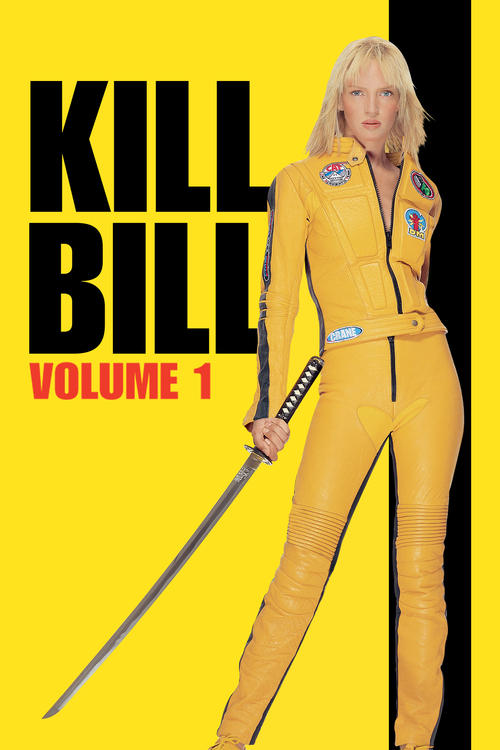
Robert Richardson's cinematography is a crucial element of Kill Bill: Vol. 1's visual impact. He uses a vibrant color palette, contrasting bright, saturated hues with stark blacks and whites. The use of yellow, particularly in The Bride's iconic jumpsuit, is striking and instantly recognizable. The film is filled with memorable images, from the blood-soaked snow of the House of Blue Leaves to the sun-drenched landscape of Vernita Green's suburban home.
Richardson's camera work is dynamic and inventive, using a variety of angles and movements to create a sense of energy and excitement. The fight sequences are particularly impressive, with the camera following the action closely, immersing the viewer in the brutal choreography. He also effectively uses slow motion to emphasize the impact of key moments, creating a sense of heightened reality.
The use of different film stocks and aspect ratios adds to the film's unique visual style. The animated sequence, for example, is rendered in a stark, black-and-white style, contrasting sharply with the vibrant colors of the live-action scenes. This visual contrast helps to emphasize the different layers of the story and the characters' backstories.
Performances: A Cast at the Top of Their Game
The performances in Kill Bill: Vol. 1 are uniformly excellent. Uma Thurman delivers a career-defining performance as The Bride, embodying both the character's physical strength and her emotional vulnerability. Lucy Liu is equally impressive as O-Ren Ishii, portraying her as a formidable and complex antagonist. Vivica A. Fox brings a sense of realism to Vernita Green, making her a more relatable and sympathetic character than one might expect.
The supporting cast is also outstanding. Chiaki Kuriyama is terrifying as Gogo Yubari, Michael Madsen is menacing as Budd, and Daryl Hannah is memorable as Elle Driver (though her role is more prominent in Vol. 2). David Carradine, despite his limited screen time, makes a lasting impression as Bill, his voice dripping with menace and charisma.
Each actor fully embodies their character, bringing Tarantino's vision to life with passion and skill. The chemistry between the actors is palpable, particularly in the fight sequences, where the performances are both physically demanding and emotionally charged.
Themes and Messages: Beyond the Bloodshed
While Kill Bill: Vol. 1 is primarily a revenge film, it also explores deeper themes of betrayal, loss, and the power of resilience. The Bride's quest for vengeance is not simply about killing those who wronged her; it's about reclaiming her identity and her agency after having them stolen from her.
The film also examines the nature of violence and its consequences. While the violence in Kill Bill: Vol. 1 is highly stylized and often cartoonish, it also has a visceral impact. The film doesn't shy away from showing the brutality of violence, but it also explores the psychological toll it takes on the characters.
Another recurring theme is the power of female empowerment. The Bride is a strong, independent woman who refuses to be defined by her past. She takes control of her own destiny and fights for what she believes in, inspiring other female characters in the film, such as O-Ren Ishii, who has risen to power in a male-dominated world.
Ultimately, Kill Bill: Vol. 1 is a story about survival and the enduring human spirit. The Bride's journey is one of overcoming adversity and finding strength in the face of unimaginable loss. It's a testament to the power of hope and the unwavering pursuit of justice.
Comparisons: A Tarantino Tapestry
Kill Bill: Vol. 1 is undeniably a Tarantino film, bearing all the hallmarks of his signature style. It shares similarities with his previous works, such as Reservoir Dogs and Pulp Fiction, in its use of non-linear storytelling, extended dialogue scenes, and sudden bursts of violence. However, Kill Bill is also a departure for Tarantino, pushing the boundaries of genre and style even further.
The film draws heavily from martial arts films, particularly those of Bruce Lee and Sonny Chiba. The fight choreography is reminiscent of classic Hong Kong action films, and the film's visual style is influenced by Japanese samurai films. Tarantino also pays homage to spaghetti westerns, particularly those of Sergio Leone, in his use of widescreen cinematography and Ennio Morricone-esque musical cues.
Compared to other revenge films, Kill Bill: Vol. 1 stands out for its stylized violence and its focus on female empowerment. While many revenge films are dark and gritty, Kill Bill is more playful and energetic. The Bride is a more proactive and resourceful protagonist than many other revenge heroes, taking control of her own destiny and fighting for what she believes in.
Positive Aspects: A Cinematic Masterpiece
Kill Bill: Vol. 1 is a triumph of filmmaking. Tarantino's direction is masterful, the performances are outstanding, the cinematography is stunning, and the soundtrack is unforgettable. The film is a visual and auditory feast, a thrilling and engaging experience from start to finish. The action sequences are expertly choreographed and visually impressive, pushing the boundaries of what is possible in cinema. The characters are memorable and complex, and the story is both gripping and thought-provoking.
The film's unique blend of genres and styles is one of its greatest strengths. Tarantino seamlessly blends martial arts films, spaghetti westerns, and Japanese samurai films, creating something entirely new and original. He pays homage to his cinematic influences while also putting his own unique stamp on the material.
The film's female characters are also a major positive. The Bride, O-Ren Ishii, and Vernita Green are all strong, independent women who defy traditional gender roles. They are complex and multifaceted characters, and their stories are both inspiring and empowering.
Constructive Criticism: Minor Quibbles
While Kill Bill: Vol. 1 is a near-perfect film, it's not without its minor flaws. Some critics have argued that the violence is excessive and gratuitous, and that it detracts from the film's overall message. While the violence is certainly stylized and over-the-top, it's also an integral part of the film's aesthetic and its exploration of the consequences of violence.
Another criticism is that the film's non-linear storytelling can be confusing at times. While the fragmented narrative adds to the film's intrigue, it can also be difficult to follow, particularly for viewers who are not familiar with Tarantino's style.
Finally, some viewers may find the film's length to be excessive. At nearly two hours long, Kill Bill: Vol. 1 is a substantial investment of time. However, the film is so engaging and entertaining that the length is rarely an issue.
Conclusion: A Must-See Cinematic Experience
Kill Bill: Vol. 1 is a cinematic masterpiece, a thrilling and visually stunning revenge film that showcases Quentin Tarantino's unique talents. It's a must-see for fans of action films, martial arts films, and Tarantino's work in general. While the violence may be excessive for some viewers, it's an integral part of the film's aesthetic and its exploration of the consequences of violence. The performances are outstanding, the cinematography is stunning, and the soundtrack is unforgettable. Kill Bill: Vol. 1 is a wild ride from start to finish, and it's an experience that you won't soon forget.
Rating: 9.5/10