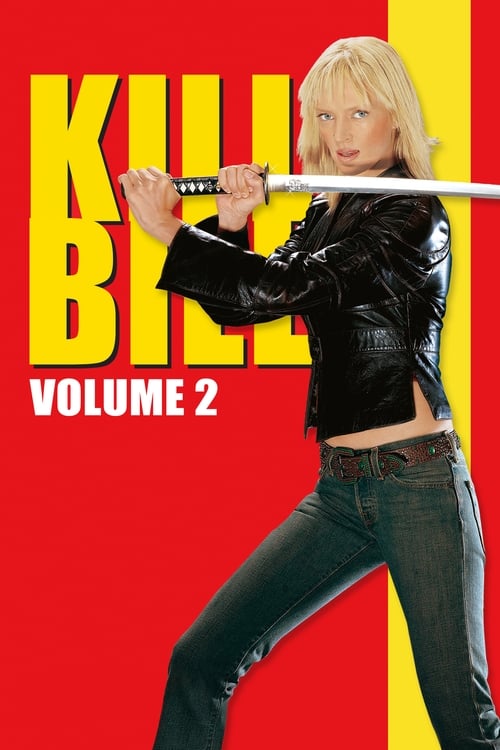
Kill Bill: Vol. 2 - Review
Kill Bill: Vol. 2 - A Masterclass in Revenge and Redemption
Quentin Tarantino's Kill Bill: Vol. 2, released in 2004, is not just a sequel; it's a profound expansion of the world and characters introduced in its predecessor. Where Vol. 1 was a visceral, high-octane explosion of action and stylized violence, Vol. 2 delves deeper into the emotional core of the Bride (Uma Thurman), exploring her motivations, her past, and the complex relationships that fuel her relentless quest for vengeance. It's a film that trades adrenaline-pumping fight sequences for extended dialogues, character development, and a more nuanced understanding of the individuals on her Death List Five. But does this shift in tone diminish the impact of the overall narrative? Or does it elevate Kill Bill to a truly unforgettable cinematic experience? Let's dissect this bloody ballet of revenge and find out.
Plot: The Long Road to Bill
Vol. 2 picks up where Vol. 1 left off, with the Bride continuing her journey to assassinate Bill (David Carradine). However, the narrative structure diverges significantly. While Vol. 1 was largely linear, focusing on the immediate present and the thrill of the hunt, Vol. 2 utilizes flashbacks to flesh out the Bride's backstory and her relationship with Bill. We see her training with the legendary Pai Mei (Gordon Liu), enduring his brutal methods and learning the deadly Five-Point Palm Exploding Heart Technique. These flashbacks offer crucial context, revealing the Bride's transformation from a naive young woman into a formidable warrior.
The present-day narrative focuses on the Bride's encounters with Budd (Michael Madsen) and Elle Driver (Daryl Hannah). Her confrontation with Budd is a tense and claustrophobic affair, highlighting the vulnerability of even the most skilled assassin. The fight is less about elaborate choreography and more about raw, brutal survival. Elle Driver, on the other hand, is a more formidable adversary, representing a mirror image of the Bride – equally skilled, equally ruthless, but driven by different motivations. Their showdown is a classic Tarantino face-off, filled with witty banter and escalating tension.
Ultimately, the film culminates in the long-awaited confrontation between the Bride and Bill. This scene is not the explosive, action-packed climax one might expect. Instead, it's a surprisingly intimate and emotional exchange. The dialogue is sharp, the performances are nuanced, and the underlying themes of love, betrayal, and redemption come to the forefront. The resolution is both satisfying and bittersweet, leaving the audience to contemplate the true cost of vengeance.
Characters: Beyond the Death List
Kill Bill: Vol. 2 truly shines in its character development. The Bride, initially presented as a force of nature in Vol. 1, is given depth and vulnerability. We see her not just as a killing machine but as a woman grappling with the loss of her unborn child and the betrayal of her former lover. Uma Thurman's performance is masterful, conveying both the Bride's unwavering determination and her underlying pain.
Bill, initially a shadowy figure, is revealed to be a complex and multi-layered character. David Carradine delivers a captivating performance, portraying Bill as both a charming and charismatic leader and a ruthless and manipulative killer. His relationship with the Bride is portrayed as a twisted love story, filled with passion, betrayal, and ultimately, tragic consequences.
The supporting characters are equally well-developed. Budd, portrayed with a world-weary cynicism by Michael Madsen, is a washed-up assassin haunted by his past. Elle Driver, played with venomous intensity by Daryl Hannah, is a psychopathic killer driven by jealousy and a desire for power. Pai Mei, though appearing only in flashbacks, is a memorable character – a cruel and demanding martial arts master who shapes the Bride into the warrior she becomes. Each character contributes to the rich tapestry of the Kill Bill universe.
Direction and Cinematography: A Tarantino Signature
Quentin Tarantino's directorial style is on full display in Kill Bill: Vol. 2. His signature blend of stylized violence, witty dialogue, and eclectic soundtrack is evident throughout the film. However, Vol. 2 showcases a different side of Tarantino's directing – a more contemplative and character-driven approach. The pacing is slower, the scenes are longer, and the focus is on building tension and exploring the emotional complexities of the characters.
The cinematography, once again handled by Robert Richardson, is stunning. The film seamlessly blends different visual styles, from the vibrant colors of the desert landscapes to the stark black and white of the flashbacks. The use of close-ups and slow-motion shots is particularly effective in creating a sense of intimacy and highlighting the emotional impact of key moments. The visual language perfectly complements the narrative, enhancing the overall cinematic experience.
Performances: A Cast at the Top of Their Game
The cast of Kill Bill: Vol. 2 delivers exceptional performances across the board. Uma Thurman embodies the Bride with a fierce intensity and a subtle vulnerability. Her physical prowess is undeniable, but it's her ability to convey the character's emotional journey that truly elevates the performance.
David Carradine is equally impressive as Bill. He brings a charismatic charm and a chilling menace to the role, making Bill a complex and compelling villain. Michael Madsen delivers a nuanced performance as Budd, portraying a character who is both pathetic and dangerous. Daryl Hannah is deliciously evil as Elle Driver, embodying the character's psychopathic tendencies with relish.
Gordon Liu's portrayal of Pai Mei, despite his limited screen time, is unforgettable. He perfectly captures the character's arrogance, cruelty, and unparalleled martial arts skill. The supporting cast, including actors like Michael Parks and Samuel L. Jackson (in a voice cameo), also contribute to the film's overall success.
Themes and Messages: Beyond Revenge
While the surface narrative of Kill Bill: Vol. 2 revolves around revenge, the film explores deeper themes and messages. Love, betrayal, redemption, and the cycle of violence are all prominent themes. The film questions the morality of revenge, suggesting that it may ultimately be a hollow and unsatisfying pursuit. The Bride's journey is not just about killing those who wronged her; it's about finding peace and reclaiming her identity.
The film also explores the complexities of relationships, particularly the relationship between the Bride and Bill. Their love story is portrayed as a twisted and destructive force, ultimately leading to betrayal and violence. However, the film also suggests that there is still a deep connection between them, a bond that transcends their differences.
Ultimately, Kill Bill: Vol. 2 is a story about forgiveness and moving on. The Bride's final act of killing Bill is not an act of vengeance but an act of closure. It allows her to finally break free from the cycle of violence and embrace a new life.
Comparison to Other Films and Works
Kill Bill: Vol. 2, like all of Tarantino's films, is heavily influenced by various genres and cinematic traditions. Spaghetti Westerns, samurai films, and kung fu movies are all prominent influences. The film's visual style, dialogue, and soundtrack are all heavily indebted to these genres.
Compared to Kill Bill: Vol. 1, Vol. 2 is a much more character-driven and dialogue-heavy film. While Vol. 1 was primarily focused on action and spectacle, Vol. 2 delves deeper into the emotional complexities of the characters and their relationships. This shift in tone may not appeal to all viewers, but it ultimately enriches the overall narrative.
Tarantino's other films, such as Pulp Fiction and Reservoir Dogs, also share similar themes and stylistic elements. His penchant for stylized violence, witty dialogue, and non-linear storytelling is evident in all of his works. However, Kill Bill is arguably his most ambitious and visually stunning film, showcasing his evolution as a filmmaker.
Positive Aspects
- Exceptional Performances: The cast delivers stellar performances, particularly Uma Thurman and David Carradine.
- Compelling Character Development: The film delves deeper into the characters' motivations and backstories, making them more relatable and complex.
- Stunning Cinematography: The film is visually stunning, with a seamless blend of different visual styles.
- Thought-Provoking Themes: The film explores deeper themes such as love, betrayal, redemption, and the cycle of violence.
- Classic Tarantino Dialogue: The dialogue is sharp, witty, and memorable.
Constructive Criticism
- Pacing: The slower pace may not appeal to all viewers, particularly those who enjoyed the high-octane action of Vol. 1.
- Flashbacks: While the flashbacks provide crucial context, some viewers may find them disruptive to the flow of the narrative.
- Lack of Action: Compared to Vol. 1, Vol. 2 features less action, which may disappoint some viewers.
- Ending: The ending, while satisfying, may feel anticlimactic to some viewers who were expecting a more explosive confrontation between the Bride and Bill.
Conclusion
Kill Bill: Vol. 2 is a masterful conclusion to Quentin Tarantino's epic revenge saga. While it may not be as action-packed as its predecessor, it more than makes up for it with its compelling character development, stunning cinematography, and thought-provoking themes. The performances are exceptional, the dialogue is sharp, and the overall cinematic experience is unforgettable. While the slower pace and lack of action may not appeal to all viewers, Kill Bill: Vol. 2 is a must-see for fans of Tarantino and anyone who appreciates intelligent and visually stunning filmmaking. It's a testament to Tarantino's unique vision and his ability to blend genres and create truly original and unforgettable cinematic experiences.
Rating: 9.5/10