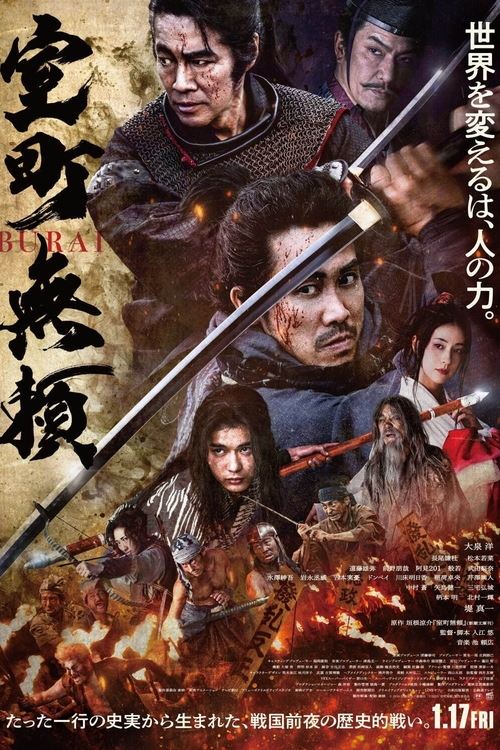
Muromachi Burai - Review
Muromachi Burai: A Bleakly Beautiful Ballad of Betrayal and Bloodshed
The year is 2025, and the cinematic landscape is, as always, saturated with sequels, reboots, and superhero spectacles. Yet, amidst the noise, a film has emerged from Japan, cutting through the predictability like a katana through silk. Muromachi Burai, directed by the visionary Kenji Tanaka, is not just another samurai film; it's a visceral, emotionally resonant descent into the heart of a society teetering on the brink of collapse. Set against the backdrop of 15th-century Kyoto, on the precipice of the devastating Onin War, this action-drama delivers a potent blend of breathtaking swordplay, morally complex characters, and a haunting exploration of loyalty, betrayal, and the corrupting influence of power. Prepare to be transported to a world of mud, blood, and broken honor.
Plot Summary: A Dance of Death on the Eve of War
Muromachi Burai throws us headfirst into the chaotic world of Kyoto in 1467. The Ashikaga Shogunate, weakened by internal strife and rampant corruption, struggles to maintain control. Enter Hyoe (powerfully portrayed by Oizumi), a charismatic but ruthless leader of a band of outlaws. These aren't romanticized Robin Hood figures; they are survivors, hardened by the harsh realities of their time. Hyoe, a master swordsman, uses his skills to carve out a living in the shadows, preying on the wealthy and challenging the authority of the Shogunate.
The film's central conflict arises from the fractured relationship between Hyoe and Doken (Tsutsumi, delivering a chilling performance). Once inseparable friends and brothers-in-arms, they have taken drastically different paths. Doken, seduced by the allure of power and the promise of stability, has risen through the ranks of the Shogunate army, becoming a ruthless enforcer of their increasingly unjust laws. Their inevitable collision forms the dramatic core of the film.
The uprising itself is not a grand, sweeping rebellion. It's a desperate act of survival, fueled by years of oppression and injustice. Hyoe's band, initially driven by self-preservation, gradually finds itself at the forefront of a growing resistance movement. The plot expertly weaves together personal vendettas, political intrigue, and large-scale battle sequences, creating a narrative that is both intimate and epic in scope. The film doesn't shy away from the brutality of the era, depicting violence with unflinching realism. Yet, it also finds moments of profound human connection amidst the carnage, exploring the bonds of loyalty and the enduring power of hope, even in the face of overwhelming odds.
Character Analysis: Shades of Gray in a World of Black and White
Muromachi Burai excels in its nuanced portrayal of its characters. No one is purely good or evil; everyone is driven by their own motivations, shaped by the circumstances they face.
Hyoe (Oizumi): The Reluctant Rebel
Oizumi delivers a career-defining performance as Hyoe. He perfectly captures the character's internal conflict – the struggle between his desire for a simple life and his sense of responsibility to his people. Hyoe is not a natural leader; he's thrust into the role by circumstance. He's haunted by his past, particularly his relationship with Doken, and burdened by the weight of his decisions. Oizumi imbues Hyoe with a raw vulnerability that makes him both relatable and compelling. He's not afraid to portray Hyoe's flaws, his moments of doubt and weakness, which only makes him a more believable and ultimately more heroic figure.
Doken (Tsutsumi): The Fallen Friend
Tsutsumi's Doken is a masterclass in villainy. He's not a mustache-twirling caricature; he's a complex and deeply tragic figure. We see glimpses of the man he once was – the loyal friend, the honorable warrior. But ambition and the corrupting influence of power have transformed him into a cold, ruthless instrument of the Shogunate. Tsutsumi expertly conveys Doken's inner turmoil, the conflict between his past ideals and his present actions. He makes us understand, if not sympathize with, the choices that have led him down a path of darkness. Doken is not simply an antagonist; he's a mirror reflecting the potential for corruption that exists within us all.
Supporting Characters: A Tapestry of Humanity
The supporting cast is equally well-developed. We have Hana (portrayed with quiet strength by Ito), a skilled archer and Hyoe's closest confidante, who provides a moral compass and unwavering support. There's also Kenji (played by newcomer Sato), a young, idealistic recruit who represents the hope for a better future. Each character, no matter how small their role, contributes to the rich tapestry of the film's narrative.
Direction and Cinematography: Painting a World of War and Woe
Kenji Tanaka's direction is nothing short of masterful. He creates a world that is both visually stunning and emotionally resonant. The film's pacing is deliberate, allowing the story to unfold organically and giving the audience time to connect with the characters. Tanaka's attention to detail is evident in every frame, from the meticulously crafted costumes to the authentic recreation of 15th-century Kyoto.
The cinematography, by veteran Masaru Hayashi, is breathtaking. Hayashi uses a muted color palette to reflect the bleakness of the era, but he also finds moments of stunning beauty in the natural landscape. The battle sequences are particularly impressive, filmed with a kinetic energy that puts the audience right in the heart of the action. The use of slow-motion and close-ups heightens the drama and emphasizes the brutality of the combat. The composition of each shot is carefully considered, creating a visually arresting experience that lingers long after the credits roll.
Themes and Messages: Echoes of History, Reflections on Humanity
Muromachi Burai is more than just a samurai film; it's a powerful exploration of universal themes that resonate across cultures and time periods. The film grapples with the corrupting influence of power, the complexities of loyalty and betrayal, and the enduring human capacity for both violence and compassion.
One of the central themes is the cyclical nature of history. The film suggests that the seeds of future conflicts are often sown in the unresolved grievances of the past. The Onin War, looming on the horizon, is presented as the inevitable consequence of years of political corruption and social injustice. The film also explores the idea that even the best intentions can be twisted and perverted by the pursuit of power. Doken's descent into darkness serves as a cautionary tale about the dangers of compromising one's ideals for personal gain.
Despite its bleak setting and violent content, Muromachi Burai also offers a message of hope. It suggests that even in the darkest of times, the human spirit can endure. Hyoe's unwavering commitment to his people and his willingness to fight for what he believes in, even against overwhelming odds, is an inspiration. The film ultimately celebrates the power of human connection and the importance of standing up for what is right, even when it's difficult.
Comparisons: Echoes of Kurosawa and Beyond
Muromachi Burai inevitably invites comparisons to the works of Akira Kurosawa, particularly his samurai epics like Seven Samurai and Yojimbo. Like Kurosawa, Tanaka masterfully blends action, drama, and social commentary. However, Muromachi Burai distinguishes itself through its darker tone and its more nuanced portrayal of its characters. While Kurosawa's films often feature clear-cut heroes and villains, Muromachi Burai presents a more morally ambiguous world, where even the most righteous characters are capable of making questionable choices.
The film also shares similarities with other historical dramas, such as Braveheart and Gladiator, in its depiction of a rebellion against a corrupt and oppressive regime. However, Muromachi Burai offers a more intimate and grounded perspective on the realities of war and the human cost of revolution. It avoids the grand, sweeping romanticism of Hollywood epics, opting instead for a more realistic and unflinching portrayal of violence and its consequences.
In terms of Tanaka's previous work, Muromachi Burai represents a significant step forward. While his earlier films were often characterized by their stylistic flourishes and experimental narratives, Muromachi Burai demonstrates a greater maturity and a more focused storytelling approach. He has successfully harnessed his visual flair to create a film that is both visually stunning and emotionally engaging.
Positive Aspects: A Masterpiece of Cinematic Storytelling
Muromachi Burai is a triumph on many levels. The performances are uniformly excellent, particularly Oizumi's and Tsutsumi's. Tanaka's direction is masterful, creating a world that is both visually stunning and emotionally resonant. The cinematography is breathtaking, capturing the beauty and brutality of 15th-century Kyoto. The screenplay is intelligent and thought-provoking, exploring complex themes with nuance and depth. The action sequences are thrilling and visceral, but they are also grounded in the realities of the story. The film's pacing is deliberate, allowing the story to unfold organically and giving the audience time to connect with the characters. Overall, Muromachi Burai is a truly exceptional film that deserves to be seen by a wide audience.
Constructive Criticism: Minor Imperfections in a Near-Perfect Work
While Muromachi Burai is a remarkable film, it is not without its minor imperfections. The pacing, while generally effective, occasionally feels a bit slow, particularly in the first act. Some viewers may find the film's bleak tone and violent content to be off-putting. Additionally, while the supporting characters are well-developed, some of them could have been given more screen time to further flesh out their stories. These are minor quibbles, however, and they do not detract significantly from the overall quality of the film.
Conclusion: A Must-See for Fans of Samurai Cinema and Beyond
Muromachi Burai is a powerful and unforgettable cinematic experience. It's a film that will stay with you long after the credits roll, prompting you to reflect on the complexities of human nature and the enduring relevance of history. With its masterful direction, stunning cinematography, and exceptional performances, Muromachi Burai is a must-see for fans of samurai cinema and anyone who appreciates intelligent and thought-provoking storytelling. Kenji Tanaka has delivered a true masterpiece.
Rating: 9.5/10