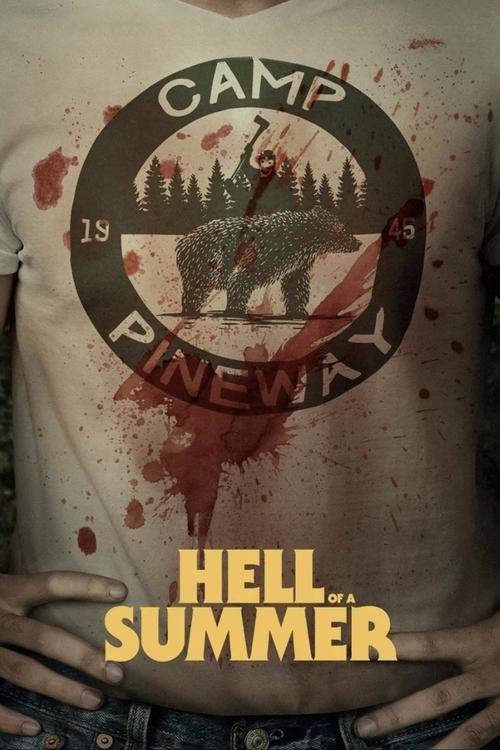
Hell of a Summer - Review
Hell of a Summer: A Campy, Bloody, and Surprisingly Thoughtful Slasher
Remember the thrill of summer camp? The awkward icebreakers, the campfire stories, the questionable cafeteria food? Now, imagine all that, but with a masked killer picking off counselors one by one. That's the premise of "Hell of a Summer," the latest horror-comedy offering, and it delivers a surprisingly fresh take on a well-worn genre. Released on April 3rd, 2025, the film promises a bloody good time, and for the most part, it delivers. But beneath the surface of the gore and gags lies a surprisingly insightful exploration of generational divides, the anxieties of aging, and the enduring power of nostalgia. Buckle up, because this summer camp vacation is about to get very deadly.
Plot: A Familiar Setup with Unexpected Twists
The plot of "Hell of a Summer" is deceptively simple. Jason Hochberg, played with endearing awkwardness by Ethan Klein (known for his role in "The Suburban Nightmare"), is a 24-year-old returning counselor to Camp Pineway. He's feeling the weight of his age, acutely aware of the chasm that separates him from the Gen Z counselors. His attempts to connect with them are often met with eye rolls and sarcastic quips, highlighting a central theme of the film. The idyllic setting of Camp Pineway is shattered when the camp owners, John and Kathy, are found brutally murdered. A masked killer, wielding a variety of camp-related implements (think axes, paddles, and even a rogue s'more fork), begins to stalk the remaining counselors.
While the "masked killer at summer camp" trope is hardly groundbreaking, the film injects originality through its characters and the killer's motivation, which is revealed in a surprisingly poignant third act. The pacing is well-managed, alternating between tense stalk-and-chase sequences and comedic interactions between the counselors. The mystery surrounding the killer's identity keeps the audience guessing, with red herrings and clever misdirection sprinkled throughout. However, the film occasionally suffers from predictable jump scares and some plot contrivances that strain credulity. For instance, the counselors' initial reluctance to report the murders to the police feels forced, even within the context of a horror movie.
Characters: More Than Just Slasher Fodder
One of the film's greatest strengths lies in its well-developed characters. Jason Hochberg is a relatable protagonist, struggling to maintain his relevance in a world that seems to be moving on without him. Ethan Klein imbues Jason with a genuine sense of vulnerability and humor, making him easy to root for. The supporting cast is equally strong, each counselor embodying a distinct personality. There's Maya, the sarcastic and tech-savvy Gen Z counselor who initially clashes with Jason but eventually forms an unlikely bond with him. Played by newcomer Olivia Chen, Maya is a refreshing departure from the stereotypical "final girl" archetype. Then there's Ben, the overly enthusiastic and slightly clueless counselor, whose comedic relief provides much-needed levity amidst the bloodshed. The ensemble cast works well together, creating a believable and engaging dynamic.
Even the killer, once unmasked, is given a compelling backstory that adds depth to their actions. While I won't spoil the identity, the film avoids the trap of portraying them as a purely evil, one-dimensional villain. Instead, the killer's motivations are rooted in past trauma and a sense of injustice, making them a more complex and ultimately tragic figure. This humanization of the killer elevates "Hell of a Summer" beyond a simple slasher flick, adding a layer of psychological depth to the proceedings.
Direction: A Steady Hand with a Keen Eye for Tone
Director Sarah Miller, known for her previous work on the indie horror film "Whispers in the Woods," demonstrates a steady hand and a keen eye for tone in "Hell of a Summer." She expertly balances the horror and comedy elements, creating a film that is both genuinely scary and laugh-out-loud funny. Miller's direction is particularly effective in the suspenseful sequences, building tension through clever camera angles, atmospheric lighting, and a haunting musical score. She also knows when to let the comedy shine, allowing the actors to improvise and play off each other's energy. The pacing is generally well-managed, although there are moments where the film could have benefited from tighter editing.
Miller's directorial style draws inspiration from classic slasher films like "Friday the 13th" and "Sleepaway Camp," but she also incorporates modern sensibilities and a self-aware meta-commentary on the genre. The film acknowledges its own tropes and clichés, often poking fun at them in a playful way. This self-awareness adds another layer of enjoyment for horror fans who are familiar with the genre's conventions.
Cinematography: Capturing the Beauty and Terror of Summer Camp
The cinematography in "Hell of a Summer," helmed by veteran cinematographer David Chen, is visually stunning. Chen captures the beauty and serenity of the summer camp setting, using vibrant colors and lush landscapes to create a sense of idyllic tranquility. However, he also knows how to use darkness and shadow to create a sense of unease and dread. The nighttime scenes are particularly effective, with the flickering campfire light and the rustling leaves creating a palpable atmosphere of suspense. The camera work is dynamic and engaging, using a variety of shots and angles to keep the audience on the edge of their seats. The gore effects are well-executed, visceral, and surprisingly creative, adding to the film's overall sense of fun and mayhem.
One notable aspect of the cinematography is Chen's use of practical effects. While CGI is employed sparingly, the majority of the gore and violence is achieved through practical effects, giving the film a more grounded and realistic feel. This commitment to practical effects is a welcome departure from the over-reliance on CGI in many modern horror films, and it contributes to the film's overall sense of authenticity.
Performances: A Strong Ensemble Cast Shines
The performances in "Hell of a Summer" are uniformly strong, with the ensemble cast delivering believable and engaging portrayals of their respective characters. Ethan Klein shines as Jason Hochberg, bringing a relatable vulnerability and humor to the role. Olivia Chen is a standout as Maya, the sarcastic and tech-savvy Gen Z counselor. Her chemistry with Klein is particularly strong, and their unlikely friendship forms the emotional core of the film. The supporting cast, including Ben Miller as the overly enthusiastic Ben and Sarah Jones as the no-nonsense camp director, also deliver memorable performances. Even the actors playing the victims bring a level of depth and nuance to their roles, making their deaths feel more impactful.
The actor portraying the masked killer deserves special mention. While their identity is kept hidden for most of the film, their physical performance is both menacing and unsettling. Their movements are deliberate and calculated, and their presence is always felt, even when they are not on screen. When the killer is finally unmasked, the actor delivers a powerful and emotional performance that adds depth and complexity to the character.
Themes and Messages: Beyond the Bloodshed
While "Hell of a Summer" is primarily a horror-comedy, it also explores several thought-provoking themes and messages. One of the central themes is the generational divide and the anxieties of aging. Jason Hochberg's struggle to connect with the younger counselors reflects a common fear of becoming irrelevant and out of touch. The film also explores the power of nostalgia and the allure of the past. Camp Pineway represents a simpler time, a place where memories are made and friendships are forged. However, the film also acknowledges the darker side of nostalgia, suggesting that clinging too tightly to the past can be detrimental to personal growth.
Another important theme is the exploration of trauma and its lasting impact. The killer's motivations are rooted in past trauma, highlighting the importance of addressing mental health issues and providing support for those who have experienced hardship. The film also touches upon the themes of revenge, justice, and the cyclical nature of violence. By exploring these themes, "Hell of a Summer" elevates itself beyond a simple slasher flick, offering a more nuanced and thought-provoking experience.
Comparisons: A Fresh Take on a Familiar Genre
"Hell of a Summer" inevitably draws comparisons to other slasher films set at summer camps, such as "Friday the 13th" and "Sleepaway Camp." However, the film distinguishes itself through its self-aware humor, its well-developed characters, and its exploration of deeper themes. While "Friday the 13th" is primarily a straightforward slasher film focused on gore and suspense, "Hell of a Summer" incorporates comedic elements and a more complex narrative. "Sleepaway Camp," known for its shocking twist ending, is more focused on psychological horror, while "Hell of a Summer" balances horror with humor and social commentary.
Sarah Miller's previous work, "Whispers in the Woods," shares some thematic similarities with "Hell of a Summer," particularly in its exploration of trauma and its use of atmospheric horror. However, "Hell of a Summer" is a more polished and ambitious film, with a larger budget and a more experienced cast. Ethan Klein's performance in "Hell of a Summer" is a departure from his previous roles in more comedic films, showcasing his versatility as an actor. His performance here is reminiscent of Jamie Kennedy's Randy Meeks in "Scream," providing meta-commentary and audience awareness to the story.
Positive Aspects: A Bloody Good Time
"Hell of a Summer" boasts several positive aspects that make it a worthwhile viewing experience. The well-developed characters, the balanced tone of horror and comedy, the visually stunning cinematography, and the strong performances all contribute to the film's overall success. The film's self-aware humor and its exploration of deeper themes elevate it beyond a simple slasher flick. The practical effects are impressive, adding to the film's sense of authenticity. The pacing is generally well-managed, keeping the audience engaged from beginning to end. The killer's motivation is surprisingly poignant, adding depth to their character.
Constructive Criticism: Room for Improvement
Despite its many strengths, "Hell of a Summer" is not without its flaws. The film occasionally suffers from predictable jump scares and some plot contrivances that strain credulity. The counselors' initial reluctance to report the murders to the police feels forced. The film could have benefited from tighter editing in certain scenes. While the killer's motivation is well-developed, the reveal could have been handled with more subtlety. Some of the comedic moments feel forced or out of place. The film's ending, while satisfying, feels somewhat predictable.
Conclusion: A Refreshing Slasher with a Heart
"Hell of a Summer" is a surprisingly fresh and entertaining take on the slasher genre. While it may not break new ground, it executes its familiar tropes with skill and style. The well-developed characters, the balanced tone of horror and comedy, and the exploration of deeper themes make it a worthwhile viewing experience for horror fans and casual viewers alike. Despite some minor flaws, "Hell of a Summer" is a bloody good time that will leave you laughing, screaming, and perhaps even contemplating your own mortality. It's a film that manages to be both genuinely scary and surprisingly heartwarming, a rare feat in the world of horror.