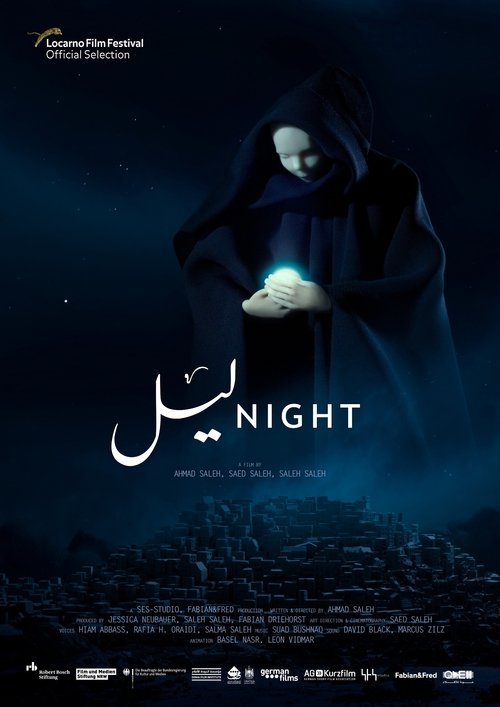
Night - Review
A Dream Weaver's Burden: A Review of "Night" (2024)
The clock strikes midnight. Shadows lengthen. Fear takes hold. But what if the greatest darkness wasn't lurking in the physical world, but within the soul itself? "Night," the animated feature released on September 7th, 2024, dares to explore this terrifying premise, plunging viewers into a world where sleep is not a respite, but a battleground. This isn't your typical bedtime story; it's a visually stunning and emotionally resonant journey into the heart of grief and the desperate measures one might take to save a soul from utter despair. But does "Night" successfully navigate the complexities of its ambitious narrative, or does it get lost in the shadows?
Plot: A Descent into Dreamland
The core of "Night" revolves around the enigmatic figure of, well, Night herself (voiced with captivating vulnerability by Anya Taylor-Joy). Night isn't a malevolent creature of darkness, but a benevolent entity tasked with guiding souls to peaceful slumber. However, she faces her greatest challenge yet in the form of Evelyn (Olivia Colman), a grieving mother whose child, Lily, has mysteriously disappeared. Evelyn's grief is so profound, so all-consuming, that it has manifested as a tangible darkness, corrupting her dreams and threatening to shatter her soul. Night discovers that Evelyn’s subconscious is a twisted reflection of her pain, a labyrinth of guilt and despair where Lily’s essence is slowly fading.
Night's mission is clear: she must trick Evelyn into falling into a deep, restorative sleep, allowing her to confront her grief and, hopefully, find a way to release Lily's soul. The catch? Evelyn, understandably distrustful and fiercely protective of her memories of Lily, resists sleep at all costs. What follows is a delicate dance between Night and Evelyn, a cat-and-mouse game played out within the surreal landscape of Evelyn's dreams. Night must use her powers to subtly influence Evelyn's subconscious, guiding her through fragmented memories and confronting her with the raw, unfiltered emotions she has been desperately trying to suppress.
The plot unfolds non-linearly, weaving between Evelyn's waking reality and the increasingly fractured dream world. This structure effectively mirrors Evelyn's mental state, disoriented and struggling to grasp reality. We see glimpses of Evelyn's life before Lily's disappearance – happy family moments, playful interactions, and the mundane routines that now seem like a distant dream. These flashbacks are juxtaposed with the nightmarish visions plaguing her sleep, showcasing the stark contrast between what was and what is.
However, the film occasionally suffers from pacing issues. The middle act, while visually impressive, sometimes feels bogged down by overly symbolic imagery and lengthy dream sequences that don't always contribute significantly to the overall narrative. While the intention is clearly to immerse the audience in Evelyn's emotional turmoil, some scenes could have been trimmed to maintain a tighter narrative focus.
Characters: Grief Embodied
The strength of "Night" lies in its compelling characters, particularly the nuanced portrayal of Evelyn and the empathetic depiction of Night. Evelyn, brought to life by Olivia Colman's masterful performance, is not simply a grieving mother; she is a woman consumed by guilt, regret, and a desperate longing to rewind time. Colman perfectly captures the character's fragility and resilience, conveying the immense weight of her sorrow through subtle gestures and heartbreaking expressions. She is a force of nature, fueled by grief, and her determination to hold onto the memory of Lily is both admirable and tragic.
Anya Taylor-Joy's Night is equally captivating. She is not a cold, detached entity, but a compassionate being who genuinely empathizes with Evelyn's pain. Taylor-Joy infuses Night with a sense of quiet strength and unwavering determination, making her a compelling protagonist. Her voice acting is particularly noteworthy, conveying both the character's ethereal nature and her profound sense of responsibility.
The supporting characters, while less developed, serve their purpose effectively. We see glimpses of Evelyn's husband, Thomas (voiced by Ewan McGregor), who is struggling to cope with his own grief and desperately trying to reach out to Evelyn. His scenes are brief but poignant, highlighting the devastating impact of Lily's disappearance on the entire family. There is also a mysterious figure known as the Dream Weaver (voiced by Benedict Cumberbatch), an ancient entity who oversees the realm of dreams and offers guidance to Night. While his role is somewhat limited, Cumberbatch's performance adds a layer of intrigue and gravitas to the film.
One minor criticism is the lack of development for Lily herself. While she is the catalyst for the entire story, we only see her through fragmented memories and dreamlike visions. Giving her a more distinct personality and backstory could have further amplified the emotional impact of her disappearance.
Direction and Cinematography: A Visual Masterpiece
Director Elara Fischer, known for her previous work on visually stunning animated shorts, elevates "Night" to a new level of artistic achievement. The film is a visual feast, seamlessly blending traditional animation techniques with cutting-edge CGI to create a dreamlike world that is both beautiful and unsettling. The color palette is particularly striking, shifting from vibrant hues in the flashbacks to muted, desaturated tones in Evelyn's present reality and the nightmarish dream sequences. The use of light and shadow is masterful, creating a sense of depth and atmosphere that enhances the emotional impact of each scene.
The cinematography is equally impressive, with dynamic camera angles and fluid transitions that immerse the viewer in Evelyn's subjective experience. The dream sequences are particularly inventive, featuring surreal imagery and mind-bending perspectives that perfectly capture the disorienting nature of grief and trauma. There are moments that feel like they were pulled straight from a Salvador Dalí painting, distorted and dreamlike.
Fischer's direction is confident and assured, guiding the audience through the complex narrative with clarity and precision. She skillfully balances the emotional weight of the story with the visual spectacle, creating a film that is both intellectually stimulating and emotionally resonant.
While the visual style is undeniably impressive, there are a few instances where the animation feels slightly inconsistent. Some character movements appear a bit stiff, and the lip-syncing is not always perfect. However, these are minor flaws that do not detract significantly from the overall visual impact of the film.
Themes and Messages: Confronting the Darkness Within
At its core, "Night" is a film about grief, loss, and the power of hope. It explores the profound impact of trauma on the human psyche, highlighting the ways in which grief can warp our perceptions of reality and distort our memories. The film suggests that confronting our darkest emotions, however painful, is essential for healing and finding a path forward.
The film also touches upon the themes of forgiveness and acceptance. Evelyn must ultimately forgive herself for any perceived shortcomings as a mother and accept the reality of Lily's disappearance in order to find peace. Night's role as a guide and protector underscores the importance of empathy and compassion in helping others navigate their own emotional turmoil.
Furthermore, "Night" subtly explores the nature of reality and the power of the subconscious mind. The dream world serves as a metaphor for the inner landscape of the human psyche, suggesting that our thoughts and emotions can shape our reality in profound ways. The film implies that by confronting our inner demons, we can ultimately reclaim control of our own lives.
The film's message is ultimately one of hope. Even in the face of unimaginable loss, "Night" suggests that healing is possible. By confronting our grief, forgiving ourselves, and embracing the power of hope, we can find a way to move forward and rebuild our lives.
Comparisons: Echoes of the Past
"Night" draws inspiration from a variety of sources, including classic fairy tales, psychological thrillers, and animated masterpieces. Its exploration of grief and the subconscious mind echoes films like "Eternal Sunshine of the Spotless Mind" and "What Dreams May Come," both of which delve into the complexities of memory and loss. The film's visual style is reminiscent of Studio Ghibli's dreamlike animation, particularly "Spirited Away" and "Princess Mononoke."
Elara Fischer's previous work on animated shorts, such as "The Weaver's Tale" and "Shadows of the Heart," demonstrates her talent for creating visually stunning and emotionally resonant narratives. "Night" represents a significant step forward in her career, showcasing her ability to translate her unique artistic vision to a larger scale.
Anya Taylor-Joy's performance as Night can be compared to her previous roles in films like "The Witch" and "Split," where she demonstrated her ability to portray complex and emotionally vulnerable characters. Olivia Colman's portrayal of Evelyn is reminiscent of her Oscar-winning performance in "The Favourite," where she captured the fragility and strength of a woman struggling with grief and loss.
While "Night" shares thematic similarities with other films, it ultimately stands on its own as a unique and original work of art. Its distinctive visual style, compelling characters, and thought-provoking themes set it apart from its contemporaries.
Positive Aspects: A Triumph of Animation and Emotion
"Night" is a triumph of animation, showcasing the incredible potential of the medium to tell complex and emotionally resonant stories. The film's visual style is breathtaking, creating a dreamlike world that is both beautiful and unsettling. The voice acting is superb, with Anya Taylor-Joy and Olivia Colman delivering particularly captivating performances. The film's themes of grief, loss, and hope are explored with sensitivity and intelligence, offering a profound meditation on the human condition.
The direction is confident and assured, guiding the audience through the complex narrative with clarity and precision. The film's non-linear structure effectively mirrors Evelyn's mental state, immersing the viewer in her subjective experience. The use of symbolism and metaphor is masterful, adding layers of meaning to the story.
Constructive Criticism: Areas for Improvement
While "Night" is a remarkable achievement, there are a few areas where it could have been improved. The pacing of the middle act could have been tightened, and some of the dream sequences could have been trimmed to maintain a tighter narrative focus. The character of Lily could have been given more development, and the animation could have been slightly more consistent in certain scenes.
Additionally, the film's ending, while emotionally satisfying, feels somewhat rushed. A more extended resolution could have allowed for a deeper exploration of Evelyn's healing process.
Conclusion: A Soulful Journey into the Darkness
"Night" is a captivating and emotionally resonant animated film that explores the depths of grief and the power of hope. With its stunning visuals, compelling characters, and thought-provoking themes, it is a film that will stay with you long after the credits roll. While it has a few minor flaws, its strengths far outweigh its weaknesses. Elara Fischer has crafted a truly special film that cements her place as a visionary director in the animation world.
Rating: 9/10