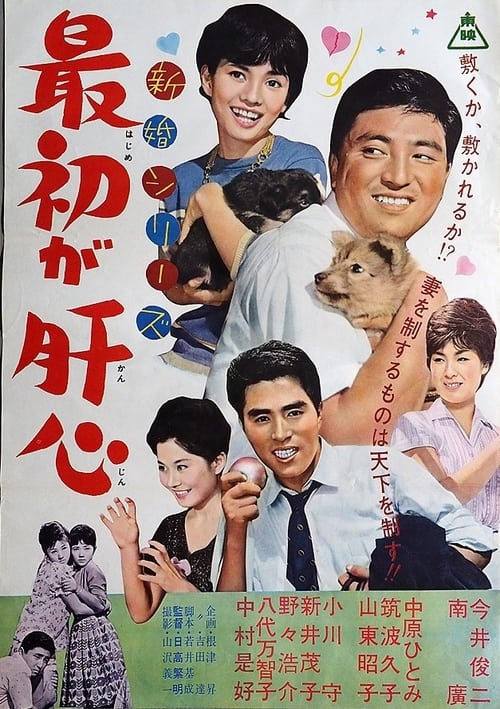
新婚シリーズ 最初が肝心 - Review
A Hilarious Honeymoon Hiccup: A Review of "新婚シリーズ 最初が肝心" (The Newlywed Series: The First is Crucial)
Ever wondered what happens when the rosy glow of newlywed bliss encounters the harsh realities of shared living? "新婚シリーズ 最初が肝心" (The Newlywed Series: The First is Crucial), a 1962 Japanese comedy, dives headfirst into this very question, offering a lighthearted yet insightful look at the trials and tribulations of a young couple navigating their first steps into married life. Forget the fairytale – this film is about the messy, awkward, and often hilarious reality of building a life together. But does it hold up after all these years? Let's unravel the secrets of this classic Japanese comedy.
Plot: A Comedy of Errors in a Cramped Apartment
The film centers around the newly married couple, Kenji and Akiko. They are young, hopelessly in love, and completely unprepared for the challenges of cohabitation. Kenji, a salaryman with a penchant for daydreaming and a surprising lack of domestic skills, dreams of a peaceful married life. Akiko, a sweet but somewhat naive young woman, is eager to be a good wife but quickly discovers that her romantic ideals clash with the practicalities of running a household. Their tiny apartment, provided by Kenji's company, becomes the battleground for their conflicting expectations and burgeoning frustrations.
The plot unfolds as a series of comedic vignettes, each highlighting a different aspect of their early marital struggles. We see them grappling with limited space, noisy neighbors, and interfering relatives. Akiko tries her best to cook, resulting in culinary disasters and smoky kitchens. Kenji attempts to be helpful but often makes things worse with his well-intentioned but clumsy efforts. Their arguments, though frequent, are never truly malicious, fueled more by misunderstandings and exhaustion than genuine animosity.
A recurring theme revolves around the interference of their families. Kenji's overbearing mother constantly offers unsolicited advice, while Akiko's younger brother, a mischievous and energetic student, becomes a permanent fixture in their already crowded apartment. These external pressures further exacerbate the couple's existing problems, leading to a cascade of comical situations.
The climax arrives when a major misunderstanding threatens to tear them apart. A series of miscommunications and assumptions leads Akiko to believe that Kenji is having an affair. The situation escalates, culminating in a dramatic confrontation that forces them to confront their unspoken fears and insecurities. Ultimately, they realize the importance of communication and compromise, reaffirming their love and commitment to each other. The film concludes with a sense of hope and optimism, suggesting that while marriage may be challenging, it is also a rewarding journey worth embarking on.
Characters: Endearing Imperfections
The strength of "新婚シリーズ 最初が肝心" lies in its relatable and endearing characters. Kenji and Akiko are not perfect; they are flawed individuals struggling to navigate the complexities of married life. This imperfection is what makes them so compelling.
Kenji
Kenji, played with charming awkwardness, embodies the typical salaryman of the era. He is hardworking, responsible, and deeply devoted to Akiko. However, he is also hopelessly inept at household chores and tends to retreat into his own world when faced with conflict. His passivity and inability to express his feelings often lead to misunderstandings with Akiko. Despite his flaws, Kenji's genuine love for Akiko shines through, making him a sympathetic and relatable character.
Akiko
Akiko, portrayed with youthful energy and naive optimism, represents the ideal of a traditional Japanese wife. She is eager to please Kenji and create a comfortable home for them. However, she is also inexperienced and easily overwhelmed by the demands of married life. Her expectations are often unrealistic, leading to frustration and disappointment. Despite her naiveté, Akiko is strong-willed and determined to make her marriage work. Her growing maturity and willingness to compromise are essential to the couple's eventual reconciliation.
Supporting Characters
The supporting characters add further depth and humor to the film. Kenji's overbearing mother, with her constant stream of unsolicited advice, serves as a source of both comedic relief and frustration. Akiko's mischievous younger brother provides a youthful energy and adds to the chaotic atmosphere of the apartment. The nosy neighbors, with their gossip and eavesdropping, offer a glimpse into the close-knit community of post-war Japan.
Direction and Cinematography: A Simple Yet Effective Approach
The direction of "新婚シリーズ 最初が肝心" is straightforward and unpretentious, focusing on capturing the everyday realities of the characters' lives. The director employs a simple yet effective visual style, using static shots and minimal camera movement to emphasize the claustrophobic atmosphere of the small apartment. The film relies more on the performances of the actors and the witty dialogue than on elaborate visual effects or dramatic camerawork.
The cinematography is equally understated, utilizing natural lighting and a muted color palette to create a realistic and relatable environment. The film's visual simplicity allows the audience to focus on the characters' emotions and the comedic situations that unfold. While not visually stunning, the cinematography effectively conveys the atmosphere of post-war Japan and the challenges faced by young couples starting their lives together.
Performances: Comedic Timing and Relatability
The performances in "新婚シリーズ 最初が肝心" are uniformly excellent, with the actors delivering nuanced and believable portrayals of their characters. The comedic timing of the actors is particularly noteworthy, enhancing the humor of the situations and making the characters even more endearing.
The chemistry between the actors playing Kenji and Akiko is palpable, creating a believable and engaging portrayal of a young couple in love. Their performances capture the awkwardness, tenderness, and frustration of early married life with remarkable authenticity. The supporting actors also deliver strong performances, adding depth and humor to the film.
Themes and Messages: Love, Compromise, and the Reality of Marriage
"新婚シリーズ 最初が肝心" explores several important themes related to love, marriage, and the challenges of building a life together. The film emphasizes the importance of communication and compromise in a successful marriage. Kenji and Akiko's struggles stem primarily from their inability to effectively communicate their needs and expectations. They learn that listening to each other and being willing to compromise are essential for resolving conflicts and maintaining a strong relationship.
The film also challenges the idealized image of marriage often portrayed in popular culture. It acknowledges that marriage is not always easy and that it requires hard work, patience, and a willingness to accept each other's imperfections. The film's realistic portrayal of the challenges faced by young couples resonates with audiences and offers a refreshing alternative to the often-romanticized depictions of married life.
Furthermore, the film subtly critiques the societal expectations placed on women in post-war Japan. Akiko is expected to be a perfect wife, responsible for all the household chores and catering to her husband's needs. The film suggests that these expectations can be unrealistic and unfair, placing undue pressure on women and hindering their personal growth.
Comparison to Similar Films and Previous Works
"新婚シリーズ 最初が肝心" can be compared to other Japanese comedies of the era that explored similar themes of family life and societal expectations. Films like Yasujiro Ozu's "Good Morning" (1959) and Mikio Naruse's "When a Woman Ascends the Stairs" (1960) offer different perspectives on the challenges faced by individuals navigating the complexities of post-war Japanese society. While "Good Morning" focuses on the generation gap and the changing dynamics within a family, "When a Woman Ascends the Stairs" explores the struggles of a woman trying to make a living in a male-dominated society.
Compared to these films, "新婚シリーズ 最初が肝心" adopts a lighter and more comedic approach. While it touches on serious themes, its primary goal is to entertain and amuse audiences. Its focus on the everyday struggles of a young couple makes it relatable and accessible, appealing to a broad audience.
Positive Aspects and Constructive Criticism
Positive Aspects:
- Relatable characters and situations
- Excellent comedic timing and performances
- Insightful exploration of themes related to love, marriage, and societal expectations
- Charming and engaging storytelling
- Effective use of humor to address serious issues
Constructive Criticism:
- The plot can feel somewhat episodic and lacking in overall narrative drive.
- The film's visual style is relatively simple and lacks artistic flair.
- Some of the comedic situations may feel dated or culturally specific to modern audiences.
- The film's portrayal of gender roles can be seen as somewhat stereotypical.
Conclusion and Rating
"新婚シリーズ 最初が肝心" is a charming and entertaining comedy that offers a relatable glimpse into the challenges of early married life. While it may not be a groundbreaking cinematic masterpiece, its endearing characters, witty dialogue, and insightful exploration of themes related to love and compromise make it a worthwhile watch. Despite its age, the film's themes remain relevant and its humor still resonates with audiences today. While the plot can feel somewhat episodic and the visual style is relatively simple, the excellent performances and the film's overall charm outweigh its shortcomings.
Rating: 7.5/10