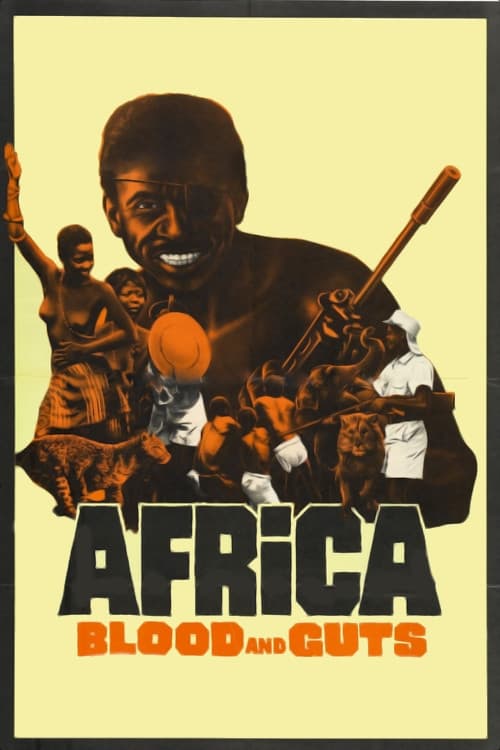
Africa Blood and Guts - Review
Africa Blood and Guts: A Gruesome Glimpse into a Continent's Turmoil
Prepare to be disturbed. Africa Blood and Guts, released in 1966, is not for the faint of heart. This isn't a nature documentary in the serene vein of David Attenborough. It's a raw, unfiltered, and often horrifying exploration of violence, both human and animal, that plagued Africa during its transition from colonial rule. It’s a cinematic time capsule, a brutal reminder of a tumultuous era, and a film that continues to spark debate and discomfort even today. Is it exploitation? Is it a vital historical record? The answer, as with the film itself, is complex and unsettling.
Plot: A Descent into Chaos
The film doesn't adhere to a traditional narrative structure. Instead, it presents a series of vignettes, loosely connected by the overarching theme of violence. The first part focuses on the political upheavals sweeping across the continent. We witness footage of the Zanzibar Revolution, a bloody coup that resulted in the overthrow of the Sultan and the deaths of thousands. The film doesn't shy away from showing the aftermath: bodies littering the streets, panicked civilians, and the raw, visceral consequences of political instability. Kenya's own struggles with independence are also highlighted, showcasing the tribal conflicts and political assassinations that marred its early years. The narrator, whose tone is often detached and almost clinical, provides minimal context, leaving the images to speak for themselves – a deliberate choice that amplifies the film's impact.
The second, and arguably more controversial, part of the film shifts its focus to the animal kingdom. Here, we are confronted with scenes of big game hunting and poaching. Animals are pursued, shot, and killed in graphic detail. Lions, elephants, rhinos, and other iconic African wildlife are shown succumbing to bullets and spears. The film presents this violence as another facet of the continent's brutal reality, blurring the lines between human and animal suffering. This section is particularly difficult to watch, and it's easy to understand why the film has been criticized for its sensationalism and exploitation of animal cruelty.
Characters: Absent Protagonists, Present Victims
Africa Blood and Guts lacks traditional characters. There are no protagonists to root for, no heroes or villains in the conventional sense. Instead, the film presents a cast of victims: the civilians caught in the crossfire of political conflicts, the animals hunted for sport or profit, and, arguably, the continent itself, scarred by violence and exploitation. The film focuses on the collective experience of suffering, rather than individual narratives. This absence of individual stories contributes to the film's sense of detachment and reinforces its focus on the broader themes of violence and chaos.
The closest thing the film has to a character is perhaps the narrator. His voice, calm and measured, provides a running commentary on the events unfolding on screen. However, he remains largely impartial, offering little in the way of moral judgment or emotional response. This neutrality can be unsettling, as it forces the viewer to confront the film's disturbing content without the comfort of a guiding voice. The narrator's detachment can be interpreted in different ways: as a deliberate attempt to present an objective view of events, or as a sign of complicity in the film's exploitation of violence.
Direction: Exploitation or Exploration?
The direction of Africa Blood and Guts is a subject of much debate. Some critics argue that the film is a blatant example of exploitation, using sensational footage of violence and suffering to shock and titillate audiences. Others defend it as a vital historical document, a raw and unflinching portrayal of a turbulent period in African history. The truth, as with many controversial films, likely lies somewhere in between.
The director's approach is undeniably sensationalistic. The film relies heavily on graphic imagery, often dwelling on scenes of death and suffering. The editing is often jarring and abrupt, further amplifying the film's impact. However, it's also important to consider the historical context in which the film was made. In the 1960s, audiences were less accustomed to seeing such graphic violence on screen. The film's shocking content may have been intended to raise awareness of the issues facing Africa, rather than simply to exploit them. Nevertheless, the director's choices regarding what to include and how to present it are certainly questionable by today's standards.
Cinematography: Raw and Unflinching
The cinematography in Africa Blood and Guts is characterized by its raw and unflinching quality. The film relies heavily on handheld cameras and grainy black-and-white footage, giving it a documentary feel. This adds to the film's sense of realism and immediacy, making the violence feel all the more visceral and disturbing. The camerawork is often shaky and chaotic, reflecting the turmoil and instability of the events being depicted. There are no carefully composed shots or artistic flourishes; the focus is solely on capturing the reality of the situation.
The use of black-and-white film further enhances the film's impact. The stark contrast between light and shadow creates a sense of drama and foreboding, while also stripping away any sense of beauty or glamour. This reinforces the film's message that violence is ugly and destructive, and that there is nothing romantic or heroic about it. The lack of color also helps to distance the viewer from the events on screen, allowing them to process the violence without being overwhelmed by emotion.
Performances: The Unscripted Drama of Reality
As a documentary, Africa Blood and Guts doesn't feature traditional performances. However, the people captured on film – the soldiers, the civilians, the hunters, the animals – all "perform" in their own way. Their actions, their expressions, and their reactions to the violence around them provide a powerful and often heartbreaking glimpse into the human condition. The film's strength lies in its ability to capture these moments of raw emotion and unfiltered reality.
The most compelling "performances" are often the unintentional ones. The fear in the eyes of a civilian fleeing a warzone, the determination on the face of a hunter tracking his prey, the agony of an animal being shot – these are the moments that stay with the viewer long after the film is over. These moments of unscripted drama are far more powerful than any staged performance could ever be.
Themes and Messages: Violence, Exploitation, and the Legacy of Colonialism
Africa Blood and Guts explores a number of complex and disturbing themes. The most obvious is the theme of violence. The film presents violence as a pervasive and inescapable force, affecting both humans and animals alike. It suggests that violence is not just a physical act, but also a product of political instability, economic inequality, and the legacy of colonialism. The film doesn't offer any easy answers or solutions to the problem of violence; instead, it simply presents it as a harsh and undeniable reality.
Another key theme is exploitation. The film can be interpreted as an exploitation of both the African people and the African wildlife. The film's graphic depiction of violence and suffering can be seen as a way of profiting from the misfortune of others. However, the film also exposes the exploitation of Africa by foreign powers, both during the colonial era and in the post-colonial period. The film suggests that Africa has been used and abused for centuries, and that the violence depicted on screen is a direct result of this exploitation.
The legacy of colonialism is also a central theme. The film argues that the political instability and violence that plagued Africa in the 1960s were a direct consequence of the colonial system. The arbitrary borders drawn by European powers, the suppression of indigenous cultures, and the exploitation of African resources all contributed to the chaos and conflict that followed independence. The film suggests that Africa is still struggling to overcome the legacy of colonialism, and that the path to peace and stability will be long and difficult.
Comparison to Other Films and Works
Africa Blood and Guts can be compared to other Mondo films of the era, such as Mondo Cane (1962) and Mondo Topless (1966). These films all shared a similar sensibility, combining sensational footage of exotic locations and shocking events with a detached and often ironic narration. Like Africa Blood and Guts, these films were often criticized for their exploitation of violence and their questionable ethical standards.
However, Africa Blood and Guts also stands apart from other Mondo films in certain respects. Its focus on political and social issues gives it a greater sense of historical significance. While other Mondo films often focused on the bizarre and the sensational, Africa Blood and Guts attempts to grapple with the complex realities of a continent in transition. This doesn't excuse the film's problematic aspects, but it does suggest that it was made with a different set of intentions than some of its contemporaries.
In terms of more modern comparisons, films like Hotel Rwanda (2004) and Blood Diamond (2006) also explore the themes of violence, exploitation, and the legacy of colonialism in Africa. However, these films adopt a more traditional narrative structure, focusing on individual characters and stories. Africa Blood and Guts, by contrast, takes a more detached and panoramic view, presenting a broader picture of the continent's struggles.
Positive Aspects: A Haunting Historical Record
Despite its many flaws, Africa Blood and Guts does have some positive aspects. It provides a haunting and unforgettable glimpse into a turbulent period in African history. The film's raw and unflinching footage captures the violence and chaos of the era in a way that few other films have done. It serves as a reminder of the human cost of political instability and the devastating impact of colonialism. For those interested in history, particularly the history of African decolonization, it's a sobering, albeit disturbing, document.
The film also raises important questions about the ethics of documentary filmmaking. It forces the viewer to confront the difficult choices that filmmakers face when documenting violence and suffering. How do you balance the need to inform the public with the risk of exploiting the victims? How do you present a complex and nuanced picture of events without sensationalizing them? These are questions that continue to be relevant today, and Africa Blood and Guts provides a valuable case study for exploring them.
Constructive Criticism: Exploitative and Sensationalistic
The most significant criticism of Africa Blood and Guts is its exploitative and sensationalistic nature. The film's graphic depiction of violence and suffering can be seen as a way of profiting from the misfortune of others. The film often dwells on scenes of death and injury, seemingly for the sole purpose of shocking and titillating the audience. This raises serious ethical questions about the film's intentions and its impact on viewers.
The film's lack of context and nuance is also a major flaw. The narrator provides minimal information about the historical and political events being depicted, leaving the viewer to draw their own conclusions. This can lead to a distorted and oversimplified understanding of the complex issues facing Africa. The film also fails to acknowledge the diversity of African cultures and experiences, presenting a monolithic and often negative portrayal of the continent.
Finally, the film's treatment of animals is deeply troubling. The scenes of big game hunting and poaching are gratuitous and unnecessary. The film seems to revel in the suffering of animals, presenting their deaths as entertainment. This is both morally reprehensible and deeply offensive to anyone who cares about animal welfare.
Conclusion: A Disturbing Relic of a Bygone Era
Africa Blood and Guts is a deeply problematic film. Its exploitation of violence, its lack of context, and its troubling treatment of animals make it difficult to recommend. However, it's also a film that demands to be seen and discussed. It provides a glimpse into a turbulent period in African history, and it raises important questions about the ethics of documentary filmmaking. While its shock value is undeniable, its historical significance cannot be ignored.
Ultimately, Africa Blood and Guts is a disturbing relic of a bygone era. It's a film that should be approached with caution and viewed with a critical eye. It's not a film for everyone, but for those who are willing to confront its challenging content, it offers a unique and unforgettable experience.
Rating: 4/10