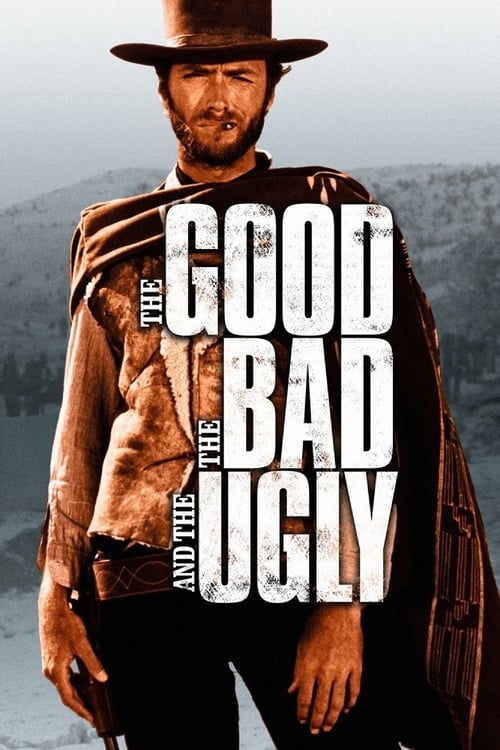
The Good, the Bad and the Ugly - Review
A Fistful of Dollars, A Few Dollars More, and a Whole Lot of Gold: A Review of "The Good, the Bad and the Ugly"
Sergio Leone's "The Good, the Bad and the Ugly" isn't just a Western; it's a cinematic opera. A sprawling, sun-baked epic of greed, survival, and the absurdity of war, it cemented the Spaghetti Western genre and remains a towering achievement in filmmaking. Released in 1966, this final installment of Leone's "Dollars Trilogy" transcends its simple premise to deliver a visually stunning and emotionally resonant experience that continues to captivate audiences decades later. Buckle up, amigos, because we're about to embark on a journey through the dusty landscapes and morally ambiguous characters that define this masterpiece.
Plot: A Treasure Hunt Amidst Carnage
The film's plot, while seemingly straightforward, is layered with deception and shifting alliances. Set against the backdrop of the American Civil War, the story revolves around three distinct individuals: Blondie (Clint Eastwood), "the Good," a resourceful bounty hunter; Angel Eyes (Lee Van Cleef), "the Bad," a ruthless and sadistic assassin; and Tuco Ramirez (Eli Wallach), "the Ugly," a wanted Mexican bandit. Each man possesses a piece of the puzzle leading to a buried treasure of $200,000 in Confederate gold.
Initially, Blondie and Tuco form a partnership, with Blondie turning Tuco in for the bounty and then rescuing him at the last moment. This lucrative scheme unravels when Blondie grows tired of Tuco's volatile nature. Their separation sets in motion a chain of events that leads them, and Angel Eyes, on a desperate race across the war-torn Southwest. The narrative is punctuated by encounters with brutal soldiers, desperate refugees, and the ever-present threat of violence. The Civil War itself becomes a character, a chaotic and destructive force that underscores the futility of human conflict and the desperation that drives men to extreme measures.
The brilliance of the plot lies not just in its treasure hunt narrative but in its masterful pacing. Leone takes his time, allowing the tension to build slowly, punctuated by bursts of intense action. The film's length (nearly three hours) is justified by the intricate character development and the immersive world-building. The audience is drawn into the harsh realities of the American West, where survival depends on cunning, ruthlessness, and a healthy dose of luck.
Characters: Archetypes Reimagined
The success of "The Good, the Bad and the Ugly" hinges on its unforgettable characters. While they embody archetypal figures – the stoic hero, the villainous antagonist, and the comedic sidekick – Leone imbues them with depth and complexity that elevates them beyond mere stereotypes.
Blondie (The Good):
Clint Eastwood's Blondie is the epitome of the "Man with No Name," a laconic and enigmatic figure who operates according to his own moral code. He is undeniably skilled with a gun, but he's not entirely virtuous. He profits from his partnership with Tuco, exploiting the legal system for his own gain. However, he also demonstrates moments of compassion, such as when he comforts a dying Confederate soldier. Eastwood's performance is iconic, defined by his steely gaze, minimalist dialogue, and effortless cool. He embodies the rugged individualism that is central to the Western genre.
Angel Eyes (The Bad):
Lee Van Cleef delivers a chilling performance as Angel Eyes, a cold-blooded killer who enjoys his work. He is devoid of empathy and motivated solely by greed. Angel Eyes is a predator, meticulously planning his moves and eliminating anyone who stands in his way. Van Cleef's piercing eyes and sinister smile create a truly menacing presence. He represents the darkest aspects of human nature, the capacity for cruelty and violence that lurks beneath the surface.
Tuco Ramirez (The Ugly):
Eli Wallach steals the show as Tuco Ramirez, a volatile and unpredictable bandit. He is cowardly, greedy, and prone to fits of rage, but he is also undeniably charismatic and surprisingly resourceful. Tuco provides much of the film's comedic relief, but his desperation and vulnerability also make him a sympathetic character. Wallach's performance is a tour de force, capturing the nuances of a man driven by poverty and a desire for survival. He is the most human of the three protagonists, flawed and relatable despite his criminal behavior.
The dynamic between these three characters is the heart of the film. Their constant betrayals and shifting alliances create a sense of suspense and unpredictability. Each man is driven by his own self-interest, but they are ultimately bound together by their shared pursuit of the gold. Their interactions are often tense and confrontational, but there is also a grudging respect that develops between them. They are forced to rely on each other, even as they plot to double-cross one another. This complex relationship adds layers of intrigue to the narrative and makes the characters all the more compelling.
Direction: Leone's Signature Style
Sergio Leone's direction is the defining characteristic of "The Good, the Bad and the Ugly." He created a unique cinematic style that revolutionized the Western genre and influenced countless filmmakers. His signature techniques include:
- Extreme Close-Ups: Leone uses extreme close-ups of faces, particularly eyes, to convey emotion and create tension. These close-ups draw the audience into the characters' inner thoughts and feelings, amplifying the drama of each scene.
- Long Shots: In contrast to the close-ups, Leone also employs sweeping long shots of the vast landscapes, emphasizing the isolation and desolation of the American West. These shots provide a sense of scale and grandeur, highlighting the epic scope of the story.
- Slow Motion: Leone frequently uses slow motion to accentuate moments of violence and create a sense of heightened realism. This technique allows the audience to savor the tension and impact of each action.
- Minimal Dialogue: Leone relies heavily on visual storytelling, using minimal dialogue to convey information and character development. This creates a sense of mystery and intrigue, forcing the audience to pay close attention to the characters' actions and expressions.
- Ennio Morricone's Score: The film's iconic score, composed by Ennio Morricone, is an integral part of Leone's directorial style. Morricone's music is both haunting and exhilarating, perfectly complementing the film's visuals and adding to the overall emotional impact.
Leone's direction is deliberate and meticulous, every shot carefully composed to create a specific effect. He understands the power of silence and uses it to build suspense and anticipation. He also understands the importance of visual storytelling, using the camera to communicate emotions and ideas that words cannot express. His unique style is instantly recognizable and has been widely imitated, but rarely equaled.
Cinematography: Painting with Light and Dust
Tonino Delli Colli's cinematography is a crucial element of "The Good, the Bad and the Ugly's" visual impact. He captures the harsh beauty of the American Southwest with stunning clarity and detail. The film is filled with breathtaking shots of vast deserts, rugged mountains, and sun-drenched landscapes. Delli Colli uses light and shadow to create a sense of depth and drama, highlighting the textures of the environment and the characters' faces.
The color palette is dominated by earth tones – browns, yellows, and oranges – reflecting the arid climate and the gritty reality of life in the West. The cinematography also captures the dust and grime that permeate the film, adding to its sense of authenticity. The battles scenes are particularly impressive, with Delli Colli capturing the chaos and violence of war with unflinching realism.
Delli Colli's work is not just visually appealing; it also contributes to the film's overall themes. The vast landscapes emphasize the isolation and vulnerability of the characters, while the harsh lighting reflects the moral ambiguity of their actions. The cinematography is a powerful tool that enhances the storytelling and creates a truly immersive experience.
Performances: A Trio of Excellence
The performances in "The Good, the Bad and the Ugly" are uniformly excellent. Clint Eastwood, Lee Van Cleef, and Eli Wallach deliver career-defining performances that have cemented their place in cinematic history.
Eastwood's portrayal of Blondie is the epitome of cool and understated. He embodies the stoicism and self-reliance that are central to the Western genre. Van Cleef's performance as Angel Eyes is chilling and unforgettable. He perfectly captures the character's cold-blooded ruthlessness and his unyielding determination. Wallach's performance as Tuco is a masterclass in comedic timing and dramatic range. He brings a manic energy to the role, making Tuco both hilarious and sympathetic.
The chemistry between the three actors is palpable. They play off each other perfectly, creating a dynamic that is both tense and entertaining. They bring a sense of authenticity to their roles, making the characters feel like real people struggling to survive in a harsh and unforgiving world.
The supporting cast is also strong, with memorable performances from actors such as Aldo Giuffrè as the alcoholic Union captain and Rada Rassimov as Maria, the woman Tuco attempts to marry. These supporting characters add depth and texture to the film, enriching the overall experience.
Themes and Messages: Beyond the Gold
While the pursuit of gold is the driving force behind the plot, "The Good, the Bad and the Ugly" explores deeper themes about human nature, morality, and the futility of war.
- Greed and Corruption: The film portrays greed as a powerful and destructive force that can corrupt even the most seemingly virtuous individuals. The characters are willing to betray, cheat, and kill in their pursuit of wealth, highlighting the dark side of human ambition.
- The Absurdity of War: The Civil War serves as a backdrop to the story, but it is also a central theme in its own right. Leone depicts the war as a senseless and brutal conflict that brings only suffering and destruction. The film questions the motivations behind the war and suggests that it is ultimately a futile exercise.
- Moral Ambiguity: The characters in "The Good, the Bad and the Ugly" are not simply good or evil; they are complex individuals with flaws and virtues. The film challenges the audience to question their own moral judgments and to consider the circumstances that drive people to make difficult choices.
- Survival and Resilience: The film celebrates the human spirit's capacity for survival and resilience in the face of adversity. The characters are constantly tested by the harsh environment and the dangers of the war, but they persevere through cunning, determination, and a willingness to do whatever it takes to survive.
The film's ending, with the three characters engaged in a tense standoff at the Sad Hill Cemetery, encapsulates these themes. The gold represents the ultimate temptation, while the cemetery serves as a reminder of the inevitable consequences of greed and violence. The final scene is a powerful commentary on the human condition, suggesting that we are all driven by our desires, but that we must also confront the consequences of our actions.
Comparisons: Spaghetti Western Legacy
"The Good, the Bad and the Ugly" is the culmination of Sergio Leone's "Dollars Trilogy," which also includes "A Fistful of Dollars" and "For a Few Dollars More." While each film stands on its own, they share a common style and thematic concerns. Compared to the other two films, "The Good, the Bad and the Ugly" is more ambitious in scope and more complex in its character development. It also features a more prominent role for the Civil War, adding a layer of historical context to the narrative.
The film also draws inspiration from classic American Westerns, such as "Shane" and "The Searchers," but it subverts the genre's conventions in several ways. Leone's Westerns are more violent, more cynical, and more morally ambiguous than their American counterparts. He also emphasizes the role of the outsider, portraying his characters as marginalized figures who are often at odds with the established order.
The film's influence can be seen in countless Westerns that followed, including "Once Upon a Time in the West," also directed by Leone, and "Unforgiven," directed by Clint Eastwood. It helped to redefine the genre and to pave the way for a new wave of Westerns that were more realistic, more violent, and more morally complex.
Positive Aspects: A Masterpiece of Cinema
The positive aspects of "The Good, the Bad and the Ugly" are numerous and well-documented. The film is a visual masterpiece, with stunning cinematography, innovative direction, and a memorable score. The performances are uniformly excellent, and the characters are complex and compelling. The plot is engaging and suspenseful, and the themes are thought-provoking and relevant.
The film's influence on cinema is undeniable. It helped to redefine the Western genre and to inspire countless filmmakers. It remains a popular and critically acclaimed film, and it continues to captivate audiences around the world.
Constructive Criticism: A Few Minor Flaws
While "The Good, the Bad and the Ugly" is a masterpiece, it is not without its flaws. Some critics have argued that the film is too long and that the pacing is uneven. The Civil War subplot, while thematically relevant, can feel somewhat disjointed from the main narrative. Additionally, the film's violence, while stylized, may be off-putting to some viewers.
However, these criticisms are relatively minor in the grand scheme of things. The film's strengths far outweigh its weaknesses, and it remains a towering achievement in filmmaking.
Conclusion: An Enduring Classic
"The Good, the Bad and the Ugly" is more than just a Western; it's a cinematic experience. It's a film that stays with you long after the credits roll, prompting you to reflect on the nature of good and evil, the futility of war, and the enduring power of the human spirit. Sergio Leone's masterpiece is a testament to the power of visual storytelling, the importance of compelling characters, and the enduring appeal of the Western genre. It's a film that deserves to be seen and appreciated by generations to come.