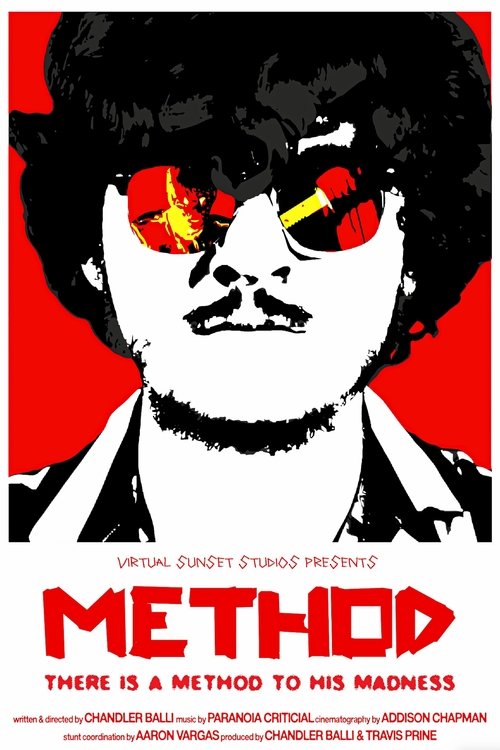
Method - Review
"Method" (2025): A Hilariously Horrific Descent into Madness
The line between reality and performance blurs to a terrifying, and often hilarious, degree in Derek Ryan's "Method," a horror-comedy that dares to ask: how far is too far in the pursuit of artistic authenticity? Released on August 1st, 2025, "Method" isn't just another slasher flick; it's a wickedly clever satire on the obsessive nature of filmmaking, the dangers of method acting, and the price of artistic ambition. Buckle up, because this meta-horror experience is a wild ride that will leave you questioning everything you thought you knew about the silver screen.
Plot: When Method Turns to Mayhem
The film centers around the tumultuous production of "Tapeface 3," the latest installment in a low-budget horror franchise. Derek Ryan, the director, is portrayed as a visionary with a severe lack of self-awareness and an unshakeable belief in his own genius. He’s determined to elevate the "Tapeface" series from schlocky B-movie to a work of art, and his primary tool for achieving this goal is pushing his cast and crew to their absolute limits. Enter Adrian Blake, the brooding and intensely committed lead actor cast as the iconic masked killer, Tapeface. Adrian, eager to prove his dramatic range, dives headfirst into the method acting approach, blurring the lines between himself and the monstrous character he embodies.
As the shoot progresses, things start to go wrong. Equipment malfunctions become increasingly frequent, tensions rise among the cast and crew, and then, people start disappearing. Initially, these disappearances are brushed off as disgruntled employees quitting due to Ryan's demanding behavior, but a growing sense of unease settles over the set. Whispers spread that Derek and Adrian have taken their method acting too far, that Adrian has become too immersed in the character of Tapeface, and that Derek is either complicit or oblivious to the escalating danger. The film cleverly uses found footage elements, intercut with traditional cinematic shots, to heighten the sense of realism and paranoia. As the body count rises, the remaining crew members must uncover the truth behind the disappearances before they become the next victims, all while Ryan continues to shout "Action!" oblivious to the real horror unfolding before his very eyes.
Characters: A Cast of Caricatures and Victims
"Method" boasts a memorable ensemble cast, each character serving as a commentary on different aspects of the filmmaking world:
- Derek Ryan (played by Marcus Bell): The self-proclaimed visionary director. Bell delivers a tour-de-force performance as the oblivious and increasingly unhinged Ryan. He's a caricature of the pretentious auteur, obsessed with his artistic vision to the point of complete detachment from reality. Bell perfectly captures the character's arrogance, insecurity, and utter lack of empathy, making him both terrifying and hilariously pathetic.
- Adrian Blake (played by Anya Sharma): The method actor on the brink. Sharma's portrayal of Adrian is nuanced and captivating. Initially, she appears as a dedicated and ambitious actor, eager to prove her talent. However, as she delves deeper into the role of Tapeface, her sanity unravels. Sharma masterfully conveys Adrian's descent into madness, leaving the audience questioning whether she's truly lost herself in the character or if something more sinister is at play. The gender-bending casting of Tapeface adds an interesting layer to the character and Sharma embraces it fully.
- Sarah Chen (played by David Lee): The pragmatic and increasingly terrified cinematographer. Lee provides a grounded performance as the voice of reason amidst the chaos. He's the audience's surrogate, reacting with disbelief and horror to the escalating events. His character embodies the struggle of the average crew member trying to survive a toxic work environment.
- Brenda Miller (played by Emily Carter): The jaded and cynical producer. Carter brings a dry wit and world-weariness to the role of Brenda, the producer who's seen it all. She's primarily concerned with keeping the production on schedule and on budget, even as the situation spirals out of control. Her character highlights the exploitative nature of the film industry and the pressure to prioritize profit over safety.
While some characters lean towards caricature, the strong performances and sharp writing elevate them beyond simple stereotypes, making them engaging and memorable.
Direction and Cinematography: Blurring the Lines of Reality
Derek Ryan (the real-life director, not the character) demonstrates a masterful understanding of horror and comedy. He expertly balances the two genres, creating a film that is both genuinely scary and laugh-out-loud funny. The pacing is tight, building suspense gradually while interjecting moments of dark humor to relieve the tension. The use of found footage elements is particularly effective, creating a sense of immediacy and realism that draws the audience into the chaotic world of the film set. The transitions between the found footage and traditional cinematic shots are seamless, blurring the lines between reality and performance, which is a central theme of the film.
The cinematography, handled by veteran DP Maria Rodriguez, is equally impressive. Rodriguez utilizes a variety of camera angles and lighting techniques to create a visually striking and unsettling atmosphere. The found footage sequences are intentionally shaky and grainy, adding to the sense of realism and chaos. In contrast, the traditional cinematic shots are more polished and stylized, creating a visual contrast that emphasizes the artificiality of filmmaking. The use of color is also noteworthy, with Rodriguez employing a muted palette to create a sense of dread and unease, punctuated by bursts of vibrant color during the more violent scenes.
Performances: A Masterclass in Method Acting (and Satire)
The performances in "Method" are uniformly excellent. Marcus Bell shines as the delusional director, capturing the character's arrogance and insecurity with equal measure. Anya Sharma delivers a powerhouse performance as the method actor on the brink, seamlessly transitioning from dedicated performer to unhinged maniac. David Lee and Emily Carter provide strong supporting performances, grounding the film in reality and providing much-needed comic relief. The chemistry between the actors is palpable, creating a believable and engaging ensemble cast.
Sharma's performance, in particular, deserves special mention. She fully commits to the role of Adrian Blake, capturing the character's physical and emotional transformation with remarkable skill. Her performance is both terrifying and sympathetic, leaving the audience questioning her true motives and sanity. It's a performance that will undoubtedly be remembered as one of the best of the year.
Themes and Messages: The Price of Art and the Perils of Obsession
"Method" explores several thought-provoking themes, including:
- The dangers of method acting: The film serves as a cautionary tale about the potential dangers of method acting, highlighting the psychological toll it can take on actors and the ethical implications of pushing oneself too far in the pursuit of authenticity.
- The exploitative nature of the film industry: "Method" exposes the dark underbelly of the film industry, depicting the long hours, low pay, and relentless pressure that crew members often face. It also critiques the tendency to prioritize profit over safety and well-being.
- The price of artistic ambition: The film questions the value of artistic achievement when it comes at the expense of human lives. It suggests that true art should not require the exploitation or endangerment of others.
- The blurring of reality and performance: "Method" explores the complex relationship between reality and performance, blurring the lines between the two and questioning the nature of truth in a world saturated with media.
Ultimately, "Method" is a satire on the obsessive nature of filmmaking and the lengths to which people will go in the pursuit of artistic recognition. It's a film that challenges the audience to question their own assumptions about art, performance, and the human condition.
Comparisons: Echoes of the Past with a Modern Twist
"Method" draws inspiration from a variety of sources, including:
- "Tropic Thunder" (2008): Like "Tropic Thunder," "Method" is a meta-comedy that satirizes the excesses of Hollywood and the self-importance of actors and directors.
- "Man Bites Dog" (1992): Similar to "Man Bites Dog," "Method" uses found footage elements to create a sense of realism and discomfort, forcing the audience to confront the voyeuristic nature of filmmaking.
- "Black Swan" (2010): Like "Black Swan," "Method" explores the psychological toll of artistic perfectionism and the blurring of reality and fantasy.
However, "Method" is not simply a rehash of these previous films. It brings a fresh and original perspective to these themes, incorporating elements of horror and satire to create a truly unique cinematic experience. Derek Ryan's previous work, the critically acclaimed but commercially unsuccessful drama "The Silent Symphony," showcased his talent for character development and emotional depth. "Method" represents a significant departure in genre, but it retains Ryan's signature attention to detail and his ability to create compelling and believable characters.
Positive Aspects: A Triumph of Genre Blending
"Method" excels in several key areas:
- Sharp writing: The script is witty, intelligent, and full of clever meta-references.
- Strong performances: The ensemble cast delivers outstanding performances, particularly Anya Sharma as the method actor on the brink.
- Expert direction: Derek Ryan demonstrates a masterful understanding of horror and comedy, seamlessly blending the two genres.
- Effective cinematography: Maria Rodriguez's cinematography creates a visually striking and unsettling atmosphere.
- Thought-provoking themes: The film explores several timely and relevant themes, including the dangers of method acting, the exploitative nature of the film industry, and the price of artistic ambition.
Constructive Criticism: Minor Stumbles in an Otherwise Brilliant Film
While "Method" is a highly enjoyable and thought-provoking film, it does have a few minor flaws:
- Pacing issues in the second act: The film occasionally suffers from pacing issues in the second act, with some scenes feeling slightly drawn out.
- Over-reliance on jump scares: While the jump scares are generally effective, the film occasionally relies on them too heavily, diminishing their impact.
- Some character motivations could be clearer: While the main characters are well-developed, some of the supporting characters could benefit from more fleshed-out motivations.
However, these flaws are relatively minor and do not detract significantly from the overall enjoyment of the film.
Conclusion: A Must-See for Horror and Comedy Fans
"Method" is a wickedly clever and thoroughly entertaining horror-comedy that will leave you laughing, screaming, and thinking long after the credits roll. Derek Ryan has crafted a truly unique and original film that is both a satire of the film industry and a cautionary tale about the dangers of obsession. With its sharp writing, strong performances, expert direction, and thought-provoking themes, "Method" is a must-see for fans of horror, comedy, and meta-cinema. It's a film that dares to push boundaries and challenge conventions, and it succeeds admirably.
Rating: 9/10