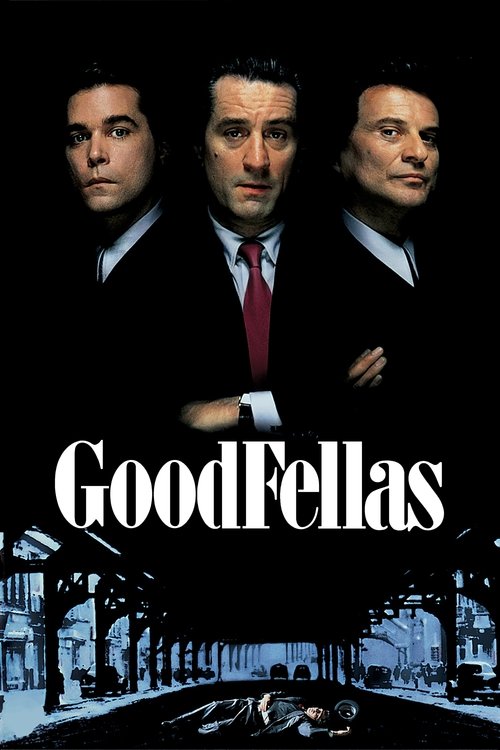
GoodFellas - Review
GoodFellas: A Symphony of Violence and Betrayal in the American Dream
Martin Scorsese's GoodFellas, released in 1990, isn't just a gangster film; it's a visceral, unflinching portrait of a life lived outside the bounds of societal norms, a captivating descent into the seductive allure and brutal realities of organized crime. From its iconic opening scene, punctuated by the chilling declaration, "As far back as I can remember, I always wanted to be a gangster," the film grabs you by the throat and refuses to let go, immersing you in a world of sharp suits, smoky backrooms, and unspeakable violence. More than just a crime story, GoodFellas is an exploration of ambition, loyalty, and the corrosive power of unchecked power, all delivered with Scorsese's signature stylistic flair. It's a cinematic masterpiece that continues to resonate decades later, its influence palpable in countless subsequent films and television shows.
Plot: A Life of Crime, Told with Unprecedented Honesty
The film chronicles the life of Henry Hill (Ray Liotta), a half-Irish, half-Sicilian boy from Brooklyn who dreams of escaping his working-class existence. He finds his ticket out through the local Mafia, quickly becoming enamored with the glamour and respect afforded to "wiseguys." Under the tutelage of Jimmy Conway (Robert De Niro) and the volatile Tommy DeVito (Joe Pesci), Henry rises through the ranks, participating in robberies, extortion, and other illegal activities. The narrative unfolds episodically, showcasing key moments in Henry's criminal career, from his early days as a cigarette smuggler to his involvement in the infamous Lufthansa heist. Scorsese masterfully balances the thrilling highs of the gangster lifestyle – the lavish parties, the expensive cars, the effortless acquisition of wealth – with the terrifying lows – the constant threat of violence, the ever-present paranoia, and the ultimate betrayal that awaits those who break the code of silence. The plot doesn't shy away from the moral complexities of Henry's choices, presenting him not as a monster, but as a flawed individual seduced by a lifestyle that ultimately consumes him.
The film's pacing is relentless, mirroring the frenetic energy of the criminal underworld. Scorsese employs a variety of techniques, including voice-over narration by Henry and his wife Karen (Lorraine Bracco), to provide context and insight into the characters' motivations. This narrative device allows the audience to connect with Henry on a personal level, even as he commits increasingly reprehensible acts. The Lufthansa heist sequence, in particular, is a masterclass in suspense, showcasing Scorsese's ability to build tension through meticulous planning and execution. However, the film's episodic structure, while effective in capturing the breadth of Henry's life, can occasionally feel disjointed, with certain events feeling rushed or underdeveloped.
Characters: Flawed Individuals in a Morally Bankrupt World
GoodFellas boasts a cast of unforgettable characters, each brought to life by powerhouse performances. Henry Hill, as portrayed by Ray Liotta, is the film's emotional anchor. Liotta perfectly captures Henry's ambition, his vulnerability, and his ultimate disillusionment with the gangster lifestyle. He's not a purely sympathetic character, but Liotta's performance allows the audience to understand his motivations and to empathize with his predicament, even as he makes questionable choices.
Robert De Niro delivers a typically nuanced performance as Jimmy Conway, a seasoned gangster who serves as Henry's mentor. Conway is a charismatic and ruthless figure, capable of both great generosity and extreme violence. De Niro portrays him as a calculating strategist, always looking for an angle, and always willing to do whatever it takes to protect his interests. Conway represents the pragmatic side of the Mafia, the cold and calculating force that keeps the organization running.
Joe Pesci's portrayal of Tommy DeVito is arguably the film's most iconic and terrifying performance. Tommy is a psychopathic loose cannon, prone to unpredictable outbursts of violence. Pesci imbues him with a chilling intensity, making him both terrifying and strangely compelling. The "Funny How?" scene is a perfect example of Pesci's brilliance, showcasing Tommy's volatile nature and his ability to turn seemingly innocuous situations into moments of extreme tension. Tommy represents the raw, unbridled violence that lies at the heart of the Mafia, the unpredictable force that can erupt at any moment.
Lorraine Bracco delivers a standout performance as Karen Hill, Henry's wife. Karen is initially drawn to the glamour of the gangster lifestyle, but she gradually becomes disillusioned as she witnesses the violence and betrayal that surround her. Bracco captures Karen's transformation from a naive young woman to a hardened survivor, forced to navigate the treacherous world of organized crime. Her voice-over narration provides a crucial female perspective on the events unfolding, offering a counterpoint to the male-dominated world of the Mafia.
The supporting cast is equally strong, with actors like Paul Sorvino as Paul Cicero, the head of the Mafia family, and Frank Sivero as Frankie Carbone, a low-level associate, adding depth and authenticity to the film's world. Each character, no matter how small, feels fully realized, contributing to the film's overall sense of realism.
Direction: Scorsese's Signature Style on Full Display
Martin Scorsese's direction is the driving force behind GoodFellas' success. He employs a variety of techniques to immerse the audience in the world of the Mafia, including long takes, rapid editing, and a dynamic camera that constantly moves and observes. The famous "Copacabana" scene, in which Henry leads Karen through the back entrance of the nightclub, is a perfect example of Scorsese's mastery of the long take, showcasing his ability to create a sense of intimacy and immersion. The use of freeze-frames and slow-motion further enhances the film's visual impact, highlighting key moments and emphasizing the characters' emotions.
Scorsese's use of music is also crucial to the film's success. The soundtrack is a carefully curated mix of classic rock, pop, and Italian opera, perfectly capturing the mood and atmosphere of each scene. The music is not just background noise; it's an integral part of the storytelling, often commenting on the action and foreshadowing future events. The use of "Layla" during the montage of dead bodies is particularly effective, juxtaposing the beauty of the music with the brutality of the violence.
Scorsese's attention to detail is evident in every aspect of the film, from the costumes and set design to the dialogue and accents. He creates a world that feels authentic and lived-in, drawing the audience into the lives of the characters. The film's visual style is both gritty and glamorous, reflecting the dual nature of the gangster lifestyle.
While Scorsese's direction is largely flawless, some critics have argued that the film's rapid editing and frenetic pacing can be overwhelming at times. The sheer volume of information presented can be difficult to absorb, and some viewers may find the film's relentless energy to be exhausting.
Cinematography: A Visual Feast of Light and Shadow
Michael Ballhaus's cinematography is essential to GoodFellas' visual impact. He uses a variety of techniques to create a dynamic and engaging viewing experience, including handheld cameras, wide-angle lenses, and dramatic lighting. The film's color palette is rich and vibrant, reflecting the glamour of the gangster lifestyle, but it also incorporates darker tones to convey the underlying violence and corruption. The use of chiaroscuro, the contrast between light and shadow, is particularly effective in creating a sense of tension and unease.
Ballhaus's camera work is fluid and expressive, constantly moving and reacting to the action. He uses long takes to immerse the audience in the scene, and he employs close-ups to capture the characters' emotions. The camera often becomes a participant in the action, moving with the characters and giving the audience a sense of being right there with them.
The film's visual style is both realistic and stylized, reflecting the dual nature of the gangster lifestyle. Ballhaus captures the gritty reality of the criminal underworld, but he also elevates the film's visuals to create a sense of glamour and excitement. The cinematography is a crucial element in creating the film's overall sense of immersion and realism.
Performances: A Masterclass in Acting
The performances in GoodFellas are universally acclaimed, and for good reason. The cast is filled with talented actors who bring their characters to life with depth and nuance. Ray Liotta's portrayal of Henry Hill is a career-defining performance, capturing the character's ambition, vulnerability, and ultimate disillusionment. Robert De Niro delivers a typically nuanced performance as Jimmy Conway, showcasing his ability to portray both charisma and ruthlessness. Joe Pesci's portrayal of Tommy DeVito is a tour-de-force, earning him an Academy Award for Best Supporting Actor. Lorraine Bracco delivers a standout performance as Karen Hill, providing a crucial female perspective on the events unfolding.
The supporting cast is equally strong, with actors like Paul Sorvino, Frank Sivero, and Mike Starr adding depth and authenticity to the film's world. Each actor fully embodies their character, making the film's world feel real and lived-in.
The actors' performances are enhanced by Scorsese's direction, which allows them to fully explore their characters' motivations and emotions. The actors are given the freedom to improvise and to bring their own personal experiences to the roles, resulting in performances that feel authentic and spontaneous.
Themes and Messages: The Corrosive Power of Ambition and the Illusion of Loyalty
GoodFellas explores a number of complex themes, including the corrosive power of ambition, the illusion of loyalty, and the seductive allure of the gangster lifestyle. The film shows how the pursuit of wealth and power can lead to moral compromise and ultimately to destruction. Henry Hill's ambition drives him to join the Mafia, but it also leads him to betray his friends and ultimately to lose everything.
The film also explores the concept of loyalty, showing how it is often a fragile and conditional thing in the criminal underworld. The characters are constantly betraying each other, and the only true loyalty is to the Mafia itself. The film suggests that the code of silence, "Omertà," is more important than any personal relationships.
GoodFellas also deconstructs the romanticized image of the gangster, showing the violence, paranoia, and betrayal that lie beneath the surface of the glamorous lifestyle. The film does not glorify the Mafia; it presents a realistic and unflinching portrayal of its dark side.
Ultimately, GoodFellas is a cautionary tale about the dangers of unchecked ambition and the seductive allure of a life of crime. It's a film that challenges the audience to confront the moral complexities of the characters' choices and to question the values of a society that often glorifies wealth and power.
Comparison to Other Films and Works
GoodFellas is often compared to other gangster films, such as The Godfather and Scarface. While all three films explore the world of organized crime, GoodFellas stands apart in its realism and its unflinching portrayal of violence. The Godfather is a more operatic and stylized film, while Scarface is a more over-the-top and exaggerated depiction of the gangster lifestyle. GoodFellas, on the other hand, strives for authenticity, drawing on real-life events and characters to create a world that feels both familiar and terrifying.
GoodFellas also shares similarities with other Scorsese films, such as Mean Streets and Casino. All three films explore the themes of violence, ambition, and betrayal, and they all feature Scorsese's signature stylistic flourishes. However, GoodFellas is arguably Scorsese's most accomplished gangster film, showcasing his mastery of the genre and his ability to create unforgettable characters.
The film's influence can be seen in countless subsequent films and television shows, including The Sopranos, Boardwalk Empire, and Breaking Bad. These works all draw inspiration from GoodFellas' realistic portrayal of crime and its complex characters.
Positive Aspects and Constructive Criticism
GoodFellas is a cinematic masterpiece that excels in almost every aspect of filmmaking. The plot is engaging and well-paced, the characters are unforgettable, the direction is masterful, the cinematography is stunning, and the performances are universally acclaimed. The film's themes are complex and thought-provoking, and its influence can be seen in countless subsequent works.
However, the film is not without its flaws. Some critics have argued that the rapid editing and frenetic pacing can be overwhelming at times. The sheer volume of information presented can be difficult to absorb, and some viewers may find the film's relentless energy to be exhausting. Additionally, the film's episodic structure, while effective in capturing the breadth of Henry's life, can occasionally feel disjointed, with certain events feeling rushed or underdeveloped.
Despite these minor flaws, GoodFellas remains a landmark achievement in filmmaking. It's a film that is both entertaining and thought-provoking, and it continues to resonate with audiences decades after its release.
Conclusion and Rating
GoodFellas is more than just a gangster film; it's a cinematic masterpiece that explores the dark side of the American dream. With its unforgettable characters, masterful direction, and unflinching portrayal of violence, the film remains a powerful and relevant work of art. It is a must-see for any film enthusiast and a testament to the enduring power of Martin Scorsese's vision.
Rating: 10/10