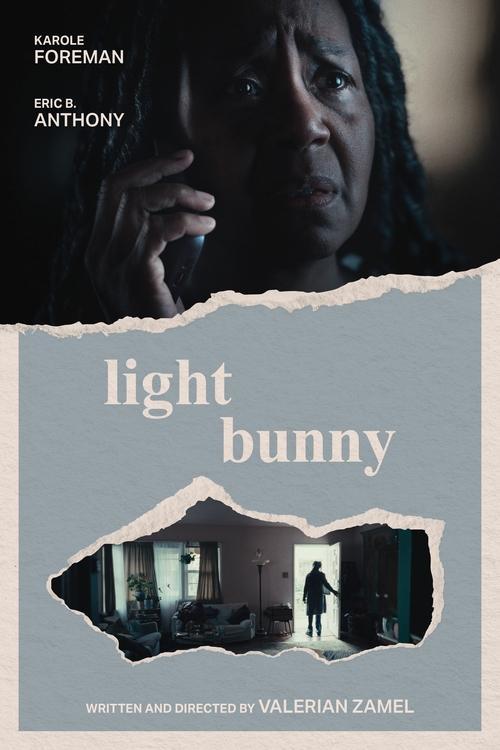
Light Bunny - Review
Light Bunny: A Haunting Exploration of Grief and Regret
The phone rings. A shrill, unwelcome intrusion into the suffocating silence that has become Eleanor’s life. But this is no ordinary call. It's a voice she thought she'd never hear again, a voice that shatters the fragile remnants of her reality: her son, Leo, dead for two years, is on the other end. Light Bunny, the latest offering from director Anya Sharma, isn’t just a ghost story; it's a deeply unsettling and profoundly moving exploration of grief, guilt, and the unbearable weight of unspoken words. Prepare to be captivated, disturbed, and ultimately, emotionally drained.
Plot: A Twist on the Afterlife
The premise of Light Bunny is deceptively simple. Eleanor (played with devastating vulnerability by veteran actress Julianne Moore) is a shell of her former self, consumed by the loss of her son, Leo (newcomer Daniel Choi in a breakout performance), in a tragic accident. She blames herself, haunted by the argument they had just hours before his death, a wound that festers with each passing day. Then, the impossible happens. Leo calls. Initially, she dismisses it as a cruel prank, a hallucination born of her grief-stricken mind. But Leo's voice, his memories, his intimate knowledge of their shared past, are undeniable. He’s back. Sort of.
The calls become frequent, a lifeline for Eleanor. She rediscovers a connection to her son, a chance to say the things she left unsaid, to express the love she held back. These early scenes are beautifully rendered, filled with poignant dialogue and genuine emotion. Sharma masterfully creates a sense of intimacy, drawing the viewer into Eleanor's desperate hope. However, this idyllic reunion is short-lived. Leo reveals that he's not entirely at peace, trapped between worlds, and he needs Eleanor to perform a task, a difficult and morally ambiguous request, to finally find his rest. This is where Light Bunny truly begins to unravel, transforming from a touching drama into a psychological thriller.
The specific nature of Leo's request is best left unspoiled, as it forms the core of the film's suspense and moral complexity. Suffice it to say, it forces Eleanor to confront her deepest fears and make a choice that will forever alter her life, regardless of the outcome. The second act is a slow burn, building tension as Eleanor grapples with the implications of Leo's request, consulting with therapists, friends, and even a dubious psychic, all while battling her own internal demons. The final act is a whirlwind of emotions, culminating in a heart-wrenching climax that leaves the audience questioning everything they've witnessed.
Characters: Broken Souls in Search of Redemption
Light Bunny hinges on the strength of its characters, and thankfully, Sharma has assembled a cast that delivers exceptional performances. Julianne Moore is simply mesmerizing as Eleanor. She embodies the character's grief with a raw, unflinching honesty, capturing the subtle nuances of her emotional state. Her portrayal is not just about sadness; it's about the crushing weight of regret, the constant replay of "what ifs" that torment her every waking moment. Moore's performance is a masterclass in understated acting, conveying volumes with a simple glance or a barely audible sigh.
Daniel Choi, as Leo, is a revelation. He manages to capture the essence of a young man caught between life and death, conveying both the innocence of his youth and the unsettling awareness of his afterlife existence. His voice, both familiar and strangely distant, is perfectly modulated to create a sense of unease. Choi's performance is particularly impressive considering his limited screen time; he manages to make Leo a fully realized character, despite only existing through phone calls and flashbacks.
The supporting cast, while not as prominent, also delivers strong performances. Sarah Paulson plays Maggie, Eleanor's skeptical but supportive best friend, offering a grounding presence amidst the supernatural events. Her pragmatic approach provides a necessary counterpoint to Eleanor's increasingly desperate actions. David Strathairn portrays Dr. Albright, Eleanor's therapist, who attempts to help her navigate her grief and discern reality from delusion. Strathairn brings a quiet authority to the role, adding another layer of complexity to Eleanor's psychological journey.
Direction and Cinematography: Painting a Portrait of Despair
Anya Sharma's direction is masterful, creating a palpable atmosphere of dread and unease. She utilizes slow, deliberate pacing to build suspense, allowing the audience to fully immerse themselves in Eleanor's emotional turmoil. Sharma's strength lies in her ability to create intimate moments, capturing the subtle nuances of human interaction and the unspoken emotions that simmer beneath the surface.
The cinematography, by veteran director of photography Roger Deakins (yes, that Roger Deakins), is equally impressive. The film is visually stunning, with a muted color palette that reflects Eleanor's bleak outlook on life. Deakins uses light and shadow to great effect, creating a sense of claustrophobia and isolation. The camera often lingers on Eleanor's face, capturing every flicker of emotion, every hint of pain. The use of long takes further enhances the film's immersive quality, drawing the viewer deeper into Eleanor's world.
One particularly striking visual motif is the recurring image of light. Eleanor's house is often bathed in soft, ethereal light, symbolizing the fleeting hope that Leo's presence brings. However, this light is often juxtaposed with harsh shadows, representing the darkness and uncertainty that lurk beneath the surface. The film's title, Light Bunny, is itself a symbolic reference, alluding to a childhood story Leo told Eleanor, about a bunny that could bring light to dark places. This motif is subtly woven throughout the film, adding another layer of meaning to the narrative.
Themes and Messages: Exploring the Unbearable
Light Bunny delves into several profound themes, most notably grief, guilt, and the power of forgiveness. The film explores the devastating impact of loss on the human psyche, showcasing the different ways in which people cope with unimaginable pain. Eleanor's journey is a testament to the resilience of the human spirit, but also a cautionary tale about the dangers of clinging to the past.
Guilt is another central theme, permeating every aspect of Eleanor's life. She is consumed by the belief that she could have prevented Leo's death, replaying the events of that fateful day in her mind. The film explores the destructive nature of guilt, showing how it can erode one's sense of self and lead to irrational behavior. Leo's request forces Eleanor to confront her guilt head-on, forcing her to make a choice that will either liberate her from its grasp or condemn her to a lifetime of torment.
Ultimately, Light Bunny is a film about forgiveness. It explores the importance of forgiving oneself and others, even in the face of unimaginable tragedy. Eleanor's journey is a quest for redemption, a desperate attempt to find peace after enduring the ultimate loss. The film suggests that forgiveness is not about forgetting the past, but about accepting it and moving forward. It's about finding a way to live with the pain, without allowing it to consume you.
Comparisons: Echoes of the Past
Light Bunny shares thematic similarities with other films that explore grief and loss, such as Manchester by the Sea and Rabbit Hole. However, Sharma's film distinguishes itself through its supernatural elements, blurring the lines between reality and fantasy. The film also draws inspiration from classic ghost stories, such as The Sixth Sense and The Others, creating a sense of unease and suspense that permeates the entire narrative.
Anya Sharma's previous work, particularly her acclaimed debut film The Silent Hour, also explored themes of loss and trauma. However, Light Bunny is a more ambitious and complex film, pushing the boundaries of her storytelling and showcasing her growth as a director. Julianne Moore's performance in Light Bunny can also be compared to her earlier roles in films such as Far From Heaven and Still Alice, where she delivered similarly nuanced and emotionally resonant performances. Daniel Choi's breakout role is reminiscent of Haley Joel Osment's performance in The Sixth Sense, showcasing a young actor's ability to convey complex emotions with remarkable maturity.
Positive Aspects: A Symphony of Emotion
Light Bunny is a triumph of filmmaking on multiple levels. The performances are uniformly excellent, particularly Julianne Moore's tour-de-force portrayal of Eleanor. Anya Sharma's direction is masterful, creating a palpable atmosphere of dread and unease. Roger Deakins' cinematography is visually stunning, enhancing the film's emotional impact. The film's themes are profound and thought-provoking, exploring the complexities of grief, guilt, and forgiveness.
The film's pacing is deliberate and effective, building suspense gradually and allowing the audience to fully immerse themselves in Eleanor's emotional journey. The dialogue is sharp and insightful, revealing the characters' inner thoughts and motivations. The use of symbolism is subtle and meaningful, adding another layer of depth to the narrative. The film's ending is both heartbreaking and hopeful, leaving the audience with a sense of catharsis.
Constructive Criticism: A Few Minor Flaws
While Light Bunny is a remarkable film, it is not without its flaws. The film's slow pacing may not appeal to all viewers, particularly those expecting a more fast-paced thriller. The supernatural elements, while effective in creating suspense, may also alienate some viewers who prefer a more grounded and realistic narrative.
The supporting characters, while well-acted, could have been further developed. Maggie, Eleanor's best friend, feels somewhat underdeveloped, and her motivations are not always clear. Dr. Albright, Eleanor's therapist, also feels somewhat generic, lacking the depth and complexity of the main characters.
The film's ending, while emotionally resonant, may also feel somewhat ambiguous. While ambiguity can be a strength in storytelling, in this case, it may leave some viewers feeling unsatisfied. A more definitive resolution could have provided a greater sense of closure.
Conclusion: A Must-See Masterpiece
Despite its minor flaws, Light Bunny is a powerful and unforgettable film that will stay with you long after the credits roll. It's a haunting exploration of grief, guilt, and the enduring power of love. Julianne Moore delivers a career-defining performance, and Anya Sharma proves herself to be one of the most talented directors working today. If you're looking for a film that will challenge you, move you, and leave you breathless, Light Bunny is a must-see. Be prepared to have your heartstrings tugged, your perceptions challenged, and your emotions thoroughly wrung out.
Rating: 9.5/10