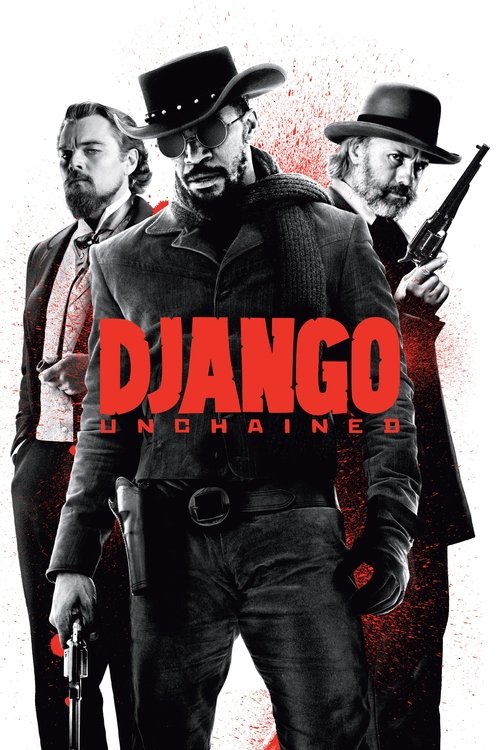
Django Unchained - Review
Django Unchained: A Tarantino Masterpiece of Vengeance and Liberation
Quentin Tarantino's Django Unchained isn't just a film; it's a visceral, operatic experience. Released on Christmas Day 2012, it exploded onto the screen with a potent blend of spaghetti western aesthetics, Blaxploitation grit, and Tarantino's signature stylized violence. More than just a revenge fantasy, it's a provocative exploration of slavery, racism, and the enduring human spirit. Prepare to be captivated, challenged, and perhaps even disturbed, because Django Unchained is a cinematic ride unlike any other.
Plot: A Quest for Freedom and Retribution
The story unfolds in the antebellum South, two years before the Civil War. We are introduced to Django (Jamie Foxx), a slave chained and being marched through the Texas wilderness. His fate takes an unexpected turn when he crosses paths with Dr. King Schultz (Christoph Waltz), a German bounty hunter masquerading as a dentist. Schultz, needing Django's knowledge to identify a trio of wanted men, offers him his freedom and a share of the bounty. This unlikely partnership forms the bedrock of the film's narrative.
After a series of successful bounty hunts, Schultz fulfills his promise and frees Django. However, Django's true desire is not simply freedom, but the liberation of his wife, Broomhilda von Shaft (Kerry Washington), who was sold away to a brutal Mississippi plantation owner named Calvin Candie (Leonardo DiCaprio). Schultz, recognizing Django's unwavering love and thirst for vengeance, agrees to help him infiltrate Candieland, Candie's sprawling and oppressive plantation. The plan is to pose as connoisseurs of Mandingo fighting (slave fighting) and purchase Broomhilda under the guise of wanting her as a companion for a prized fighter.
The plot thickens as Candie becomes suspicious of their true intentions. Stephen (Samuel L. Jackson), Candie's fiercely loyal and deeply unsettling house slave, further complicates matters with his sharp intellect and unwavering devotion to his master. The tension escalates relentlessly, culminating in a bloody and explosive showdown that delivers both catharsis and a chilling reminder of the inhumanity of slavery.
Characters: Complexities in a World of Black and White (and Red)
Django (Jamie Foxx): From Slave to Gunslinger
Jamie Foxx delivers a powerful and nuanced performance as Django. Initially, he is a quiet, reserved figure, scarred by years of brutal oppression. As he gains freedom and learns the art of bounty hunting from Schultz, he transforms into a confident, skilled gunslinger. He is not a simple revenge-seeking archetype; his driving force is love for Broomhilda. Foxx portrays Django's evolution with a quiet intensity, making his eventual acts of violence all the more impactful. He embodies both the vulnerability of a former slave and the righteous fury of a man fighting for his beloved.
Dr. King Schultz (Christoph Waltz): The Gentleman Bounty Hunter
Christoph Waltz is simply magnetic as Dr. King Schultz. He reprises the charismatic, morally ambiguous role that made him famous in Inglourious Basterds, but with a different flavor. Schultz is a man of principle, albeit one who makes his living killing people. He possesses a strong sense of justice and a genuine disdain for slavery. Waltz's delivery is impeccable, his dialogue crisp and witty, and his presence commanding. He serves as Django's mentor and surrogate father figure, guiding him through the treacherous landscape of the American South. His moral compass, though unconventional, provides a much-needed counterpoint to the pervasive brutality.
Calvin Candie (Leonardo DiCaprio): The Charming Monster
Leonardo DiCaprio delivers a career-defining performance as Calvin Candie. He embodies the casual cruelty and unbridled arrogance of a wealthy Southern plantation owner. Candie is charming and refined on the surface, but beneath lies a sadistic monster who revels in the suffering of his slaves. DiCaprio's portrayal is both captivating and deeply disturbing. He captures the chilling banality of evil, making Candie a truly unforgettable villain. The infamous "table scene," where DiCaprio accidentally cut his hand and continued the scene, is a testament to his commitment and intensity.
Stephen (Samuel L. Jackson): The House Slave as Enabler
Samuel L. Jackson's Stephen is perhaps the most complex and unsettling character in the film. He is the head house slave at Candieland, fiercely loyal to Candie and deeply invested in maintaining the status quo. Stephen is not simply a victim of the system; he is an active participant, wielding considerable power within the plantation. Jackson's performance is masterful, portraying Stephen as a cunning, manipulative, and utterly terrifying figure. He challenges the audience to confront the uncomfortable reality that some slaves benefited from and perpetuated the system of oppression.
Broomhilda von Shaft (Kerry Washington): The Symbol of Hope
Kerry Washington's Broomhilda, while not as central to the action as the other characters, is the heart and soul of the film. She represents the enduring hope for freedom and the unbreakable bond of love. Washington portrays Broomhilda with a quiet strength and resilience, making her reunion with Django all the more powerful. She is not simply a damsel in distress; she is a symbol of the enduring spirit of those enslaved and the unwavering desire for liberation.
Direction: Tarantino's Signature Style
Quentin Tarantino's direction is unmistakable. Django Unchained is a showcase of his signature stylistic choices: stylized violence, witty dialogue, anachronistic music, and a deliberate pacing that builds tension and suspense. He blends genres seamlessly, creating a unique cinematic experience that is both entertaining and thought-provoking.
Tarantino's use of long takes, close-ups, and slow-motion sequences intensifies the emotional impact of key scenes. He doesn't shy away from depicting the brutality of slavery, but he also uses violence as a form of catharsis and empowerment. His dialogue is sharp, witty, and often laced with dark humor, providing moments of levity amidst the grim reality of the story. The soundtrack, a mix of spaghetti western scores, Blaxploitation funk, and original tracks, perfectly complements the film's tone and atmosphere.
While Tarantino's stylistic flourishes are generally effective, some critics have argued that they sometimes detract from the seriousness of the subject matter. The extreme violence, while stylized, can be jarring and potentially desensitizing. However, Tarantino's intention is not simply to shock, but to confront the audience with the raw and unflinching reality of slavery and its enduring legacy.
Cinematography: Visual Storytelling
Robert Richardson's cinematography is stunning, capturing the beauty and brutality of the American South with equal measure. He uses a wide range of techniques, from sweeping landscapes to intimate close-ups, to create a visually compelling and emotionally resonant experience. The use of color is particularly effective, with vibrant hues contrasting sharply with the bleakness of the landscape and the darkness of the subject matter. The lighting is dramatic and evocative, enhancing the mood and atmosphere of each scene.
The film's visuals are heavily influenced by spaghetti westerns, with long shots of the characters riding across the open plains and dramatic showdowns in dusty towns. However, Richardson also incorporates elements of Blaxploitation cinema, with its gritty realism and unflinching portrayal of urban life. This fusion of styles creates a unique and visually striking aesthetic that perfectly complements Tarantino's vision.
Performances: A Stellar Ensemble Cast
The performances in Django Unchained are universally excellent. Jamie Foxx, Christoph Waltz, Leonardo DiCaprio, and Samuel L. Jackson all deliver career-defining performances that elevate the film to another level. The supporting cast is also outstanding, with memorable performances from Walton Goggins, Don Johnson, and James Remar. The chemistry between the actors is palpable, creating a believable and engaging dynamic that draws the audience into the story.
Waltz's performance as Dr. King Schultz earned him his second Academy Award for Best Supporting Actor, solidifying his status as one of the most talented and versatile actors working today. DiCaprio's portrayal of Calvin Candie is a tour de force of villainy, showcasing his range and commitment. Jackson's Stephen is a complex and unsettling character that lingers in the memory long after the credits roll. And Foxx's Django is a powerful and inspiring figure who embodies the enduring human spirit.
Themes and Messages: Confronting the Past
Django Unchained is not simply a revenge fantasy; it is a powerful and provocative exploration of slavery, racism, and the enduring legacy of these evils. The film confronts the audience with the brutal reality of slavery, depicting the physical and psychological trauma inflicted upon enslaved people. It also examines the complexities of race relations in the antebellum South, highlighting the power dynamics and the insidious nature of prejudice.
The film's central theme is the quest for freedom and the inherent right to self-determination. Django's journey from slave to gunslinger is a symbol of empowerment and resistance. He challenges the established order and reclaims his humanity by fighting for his love and his freedom. The film also explores the themes of justice, revenge, and the moral ambiguities of violence. Django's actions raise questions about the justification of violence in the face of oppression and the potential for revenge to become a destructive force.
Furthermore, Django Unchained subtly critiques the romanticized depictions of the Old South often found in popular culture. It dismantles the myth of the benevolent slave owner and exposes the hypocrisy and barbarity that lay beneath the surface of Southern gentility. The film also challenges the audience to confront their own biases and prejudices, forcing them to examine the enduring legacy of slavery in contemporary society.
Comparisons: Spaghetti Westerns, Blaxploitation, and Tarantino's Oeuvre
Django Unchained draws heavily from the traditions of spaghetti westerns and Blaxploitation cinema. The film's visual style, its use of violence, and its focus on revenge are all hallmarks of the spaghetti western genre. The character of Django, a lone gunslinger seeking justice, is a direct homage to the Sergio Corbucci film Django (1966). The film also incorporates elements of Blaxploitation, with its focus on African American characters and its themes of empowerment and resistance. The soundtrack, featuring funk and soul music, further reinforces this connection.
In comparison to other Tarantino films, Django Unchained shares many of his signature stylistic choices, including stylized violence, witty dialogue, and anachronistic music. However, it is also a more mature and thematically complex work than some of his earlier films. While Reservoir Dogs and Pulp Fiction are primarily concerned with style and genre, Django Unchained tackles serious social and political issues. It is perhaps most similar to Inglourious Basterds in its exploration of historical trauma and its use of violence as a form of catharsis.
However, Django Unchained has also faced criticism for its depiction of violence and its use of racial slurs. Some critics have argued that the film trivializes the suffering of enslaved people and perpetuates harmful stereotypes. Others have defended the film, arguing that it is a necessary and provocative exploration of a dark chapter in American history.
Positive Aspects: A Cinematic Triumph
- Stellar Performances: The acting is phenomenal across the board, particularly from Foxx, Waltz, DiCaprio, and Jackson.
- Tarantino's Signature Style: The film is visually stunning, with sharp dialogue, a killer soundtrack, and expertly choreographed action sequences.
- Provocative Themes: The film tackles difficult issues of slavery, racism, and revenge in a thought-provoking and unflinching manner.
- Compelling Narrative: The story is engaging and suspenseful, with a satisfying blend of action, drama, and humor.
- Memorable Characters: The characters are complex and well-developed, leaving a lasting impression on the viewer.
Constructive Criticism: Areas for Improvement
- Length: The film's nearly three-hour runtime can feel excessive at times. Some scenes could have been trimmed without sacrificing the overall impact.
- Violence: While the stylized violence is a trademark of Tarantino's work, it may be off-putting to some viewers. The film could have explored the themes of slavery and racism with a more nuanced approach.
- Historical Accuracy: While the film is not intended to be a strictly accurate historical portrayal, some liberties are taken with historical events and details. This may detract from the film's credibility for some viewers.
- Repetitive Use of Racial Slurs: The frequent use of racial slurs, while intended to reflect the language of the time, can be jarring and potentially offensive. While understandable in the context, its constant use can be overwhelming.
Conclusion: A Must-See Film That Demands Discussion
Django Unchained is a powerful and unforgettable film that will stay with you long after the credits roll. It is a challenging and provocative exploration of a dark chapter in American history, told with Tarantino's signature style and flair. While the film is not without its flaws, its strengths far outweigh its weaknesses. The performances are exceptional, the direction is masterful, and the themes are both timely and timeless. Django Unchained is a must-see film for anyone interested in cinema, history, or social justice. It’s a brutal ballet of blood, vengeance, and ultimately, liberation. It demands to be seen, discussed, and remembered.