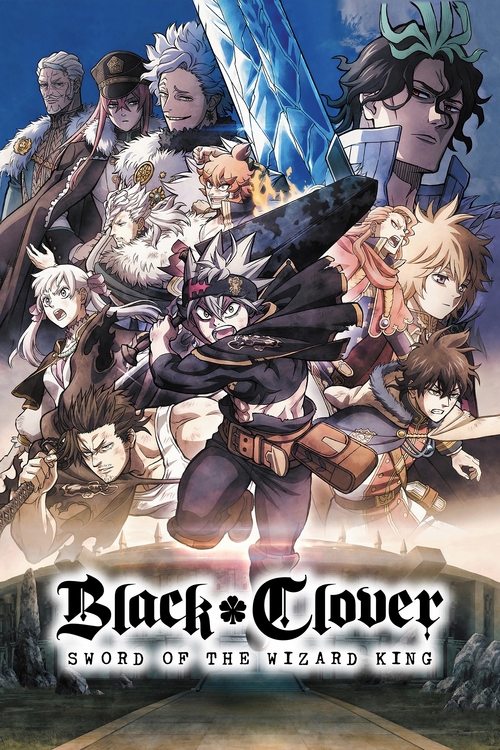
Black Clover: Sword of the Wizard King - Review
Black Clover: Sword of the Wizard King - A Review
Black Clover, the anime adaptation of Yūki Tabata's popular manga, has always been a series that divides opinion. Its shonen tropes, over-the-top characters, and initially rough animation were often cited as shortcomings. However, its heart, its dedication to classic shonen themes of perseverance and friendship, and its eventual visual improvements earned it a dedicated fanbase. So, when Black Clover: Sword of the Wizard King, a feature-length film promising a new story and higher production values, was announced, expectations were high. Does it live up to the hype? Does it transcend the criticisms leveled at the series? Let's delve into the Clover Kingdom and find out.
Plot: A Familiar Yet Fresh Crusade
The film's plot centers around the sudden re-emergence of four long-banished Wizard Kings: Conrad Leto, Edward Avalaché, Princia Funnybunny, and Jester Garandaros. These Kings, deemed too dangerous for the Clover Kingdom, were sealed away long ago. Now, through Conrad's machinations and the power of the Imperial Sword, they've returned, seeking to reshape the world according to their own twisted visions of peace and justice. Their return plunges the kingdom into chaos, forcing Asta, Yuno, and the Black Bulls to confront a threat unlike anything they've faced before.
The story, while rooted in familiar shonen tropes – powerful villains, a looming threat to the world, and the protagonist needing to overcome seemingly insurmountable odds – manages to carve out its own identity. The motivations of the banished Wizard Kings are surprisingly nuanced. They aren't simply evil for the sake of it; each possesses a tragic backstory and a skewed perspective on how to achieve a better world. This adds a layer of depth to the conflict, making the villains more compelling than some of the series' previous antagonists.
The film introduces a new artifact, the Imperial Sword, which serves as the catalyst for the Kings' resurrection and their source of immense power. This sword, capable of absorbing and amplifying magic, becomes a central point of contention throughout the film. The mechanics of the Imperial Sword are well-explained and integrated into the plot, providing a tangible reason for the Kings' overwhelming strength.
However, the plot isn't without its flaws. The pacing, particularly in the first act, feels somewhat rushed. The film attempts to establish the threat of the banished Kings quickly, which leads to a slightly disjointed introduction. Furthermore, the sheer number of characters involved can make it difficult to keep track of everyone's contributions to the story. While the Black Bulls get their moments to shine, some members feel relegated to supporting roles, which is a shame given their established personalities and abilities.
Characters: Familiar Faces, Deeper Dives
Black Clover: Sword of the Wizard King excels in its character work, particularly with the portrayal of Asta and Yuno. Asta's unwavering determination and refusal to give up, even in the face of overwhelming odds, remain central to his character. The film delves deeper into his insecurities and his desire to prove himself worthy of becoming Wizard King. His interactions with the banished Kings, particularly Conrad, highlight the contrast between their philosophies and solidify Asta's unwavering belief in justice and friendship.
Yuno, Asta's rival and foster brother, continues to be a formidable and stoic force. The film showcases his growth as a mage and his increasing confidence in his abilities. While his screen time is somewhat limited compared to Asta, his contributions to the battles are significant, and his unwavering support for Asta is palpable.
The banished Wizard Kings themselves are a highlight of the film. Conrad Leto, the leader of the group, is a charismatic and complex antagonist. His motivations stem from a desire to protect the weak, but his methods are extreme and ultimately self-destructive. The film provides glimpses into his past, revealing the events that shaped his worldview and led him down a path of darkness. Edward Avalaché, Princia Funnybunny, and Jester Garandaros, while less developed than Conrad, each possess unique personalities and fighting styles that make them memorable adversaries.
The supporting cast, including the members of the Black Bulls, receive varying degrees of attention. Noelle Silva, Luck Voltia, Magna Swing, and Yami Sukehiro all have their moments to shine, showcasing their individual abilities and contributing to the overall effort to defeat the banished Kings. However, characters like Charmy Pappitson and Grey are largely relegated to comedic relief or supporting roles, which feels like a missed opportunity.
Direction and Animation: A Visual Upgrade
The direction of Black Clover: Sword of the Wizard King is a significant improvement over the anime series, particularly in terms of animation quality. Studio Pierrot, known for its work on other popular anime series, delivers a visually stunning film. The fight sequences are fluid, dynamic, and packed with energy. The magic effects are vibrant and detailed, showcasing the power and scale of the battles. The character designs are consistent with the series, but with a noticeable upgrade in detail and polish.
The film's use of CGI is also well-integrated, enhancing the visual spectacle without detracting from the overall aesthetic. The environments are richly detailed, bringing the Clover Kingdom to life in a way that the anime series often struggled to achieve. The lighting and color palette are also noticeably improved, creating a more immersive and visually appealing experience.
However, the direction isn't without its flaws. Some scenes feel overly reliant on exposition, slowing down the pacing and detracting from the overall momentum. Furthermore, the film occasionally falls into the trap of repeating animation sequences, which can become repetitive and detract from the visual impact.
Cinematography: Capturing the Magic
The cinematography in Black Clover: Sword of the Wizard King is a vast improvement over the television series. The camera angles are more dynamic, the framing is more creative, and the overall visual storytelling is more sophisticated. The film utilizes a variety of techniques to enhance the emotional impact of the scenes, such as close-ups to emphasize characters' emotions and wide shots to showcase the scale of the battles.
The use of color is also particularly effective. The film employs a vibrant and dynamic color palette to bring the magic and energy of the Clover Kingdom to life. The contrast between light and dark is used to create a sense of tension and drama, particularly during the battle sequences. The film also utilizes color symbolism to convey deeper meanings, such as the use of red to represent danger and passion, and blue to represent tranquility and wisdom.
The cinematography also excels in capturing the unique fighting styles of each character. The film showcases the fluidity and grace of Yuno's wind magic, the raw power of Asta's anti-magic, and the versatility of the Black Bulls' various abilities. The camera angles and editing are carefully choreographed to highlight the strengths of each character and create a visually engaging experience.
Performances: Voice Acting Excellence
The voice acting in Black Clover: Sword of the Wizard King is consistently strong, with both the Japanese and English dubs delivering compelling performances. Gakuto Kajiwara, as Asta, continues to bring his signature energy and enthusiasm to the role. His portrayal of Asta's unwavering determination and his moments of vulnerability are particularly effective.
Nobunaga Shimazaki, as Yuno, delivers a stoic and confident performance that perfectly captures the character's personality. His delivery is understated but powerful, conveying Yuno's inner strength and his unwavering support for Asta.
The voice actors for the banished Wizard Kings also deliver memorable performances. Toshihiko Seki, as Conrad Leto, brings a sense of gravitas and complexity to the role. His portrayal of Conrad's motivations and his internal struggles is particularly compelling. The English dub actors also deliver strong performances, capturing the nuances of each character's personality and motivations.
Themes and Messages: Friendship, Justice, and Forgiveness
Black Clover: Sword of the Wizard King explores several familiar shonen themes, including the importance of friendship, the pursuit of justice, and the power of forgiveness. The film emphasizes the importance of teamwork and camaraderie, showcasing how the Black Bulls are able to overcome seemingly insurmountable odds by working together and supporting each other.
The film also explores the complexities of justice, challenging the notion that there is always a clear right and wrong. The banished Wizard Kings, while ultimately antagonists, are not simply evil for the sake of it. They believe that their actions are justified by their desire to protect the weak and create a better world. The film encourages viewers to consider the perspectives of others and to question their own assumptions about justice.
Furthermore, the film touches upon the theme of forgiveness. Despite the harm that the banished Wizard Kings have caused, Asta and his allies ultimately seek to understand their motivations and offer them a chance at redemption. The film suggests that forgiveness is not always easy, but it is often necessary for healing and moving forward.
Comparison to Other Works
Black Clover: Sword of the Wizard King draws inspiration from other popular shonen anime series, such as Naruto, Bleach, and One Piece. Like these series, Black Clover features a protagonist who dreams of becoming the strongest in the world, a diverse cast of supporting characters, and epic battles that test the limits of their abilities. However, Black Clover also distinguishes itself through its unique magic system, its focus on the importance of teamwork, and its exploration of complex themes.
Compared to previous works by Studio Pierrot, Black Clover: Sword of the Wizard King represents a significant improvement in animation quality. The studio's work on series like Naruto and Bleach was often criticized for its inconsistent animation and reliance on filler episodes. However, the film showcases a higher level of polish and attention to detail, demonstrating the studio's commitment to improving its visual storytelling.
Positive Aspects
- Improved animation quality
- Compelling antagonists with nuanced motivations
- Strong character development for Asta and Yuno
- Well-choreographed and visually stunning fight sequences
- Exploration of complex themes, such as justice and forgiveness
Constructive Criticism
- Rushed pacing in the first act
- Uneven focus on the supporting cast
- Occasional reliance on exposition
- Repetitive animation sequences in some scenes
Conclusion
Black Clover: Sword of the Wizard King is a worthwhile addition to the Black Clover franchise. It addresses many of the criticisms leveled at the anime series, delivering a visually stunning and emotionally engaging experience. The film's compelling antagonists, strong character development, and exploration of complex themes make it a must-see for fans of the series. While the pacing is somewhat rushed and the supporting cast could have been given more attention, these flaws are ultimately overshadowed by the film's strengths. Overall, Black Clover: Sword of the Wizard King is a solid shonen anime film that will leave fans wanting more.