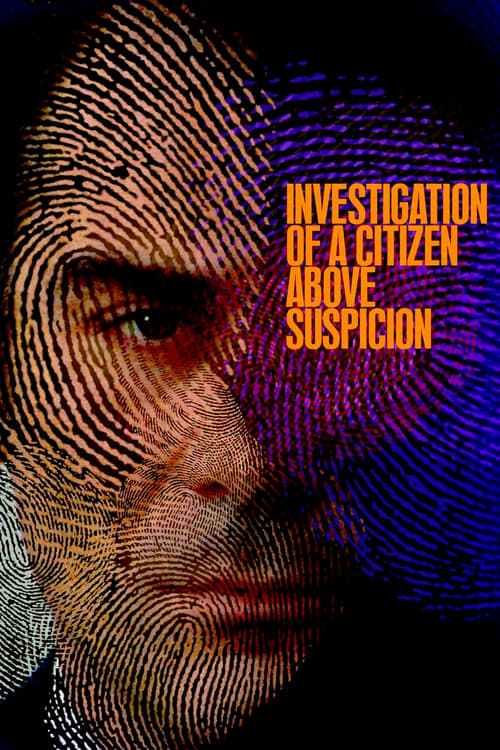
Investigation of a Citizen Above Suspicion - Review
Investigation of a Citizen Above Suspicion: A Masterclass in Moral Ambiguity and Societal Critique
Released in 1970, Elio Petri's Investigation of a Citizen Above Suspicion isn't just a film; it's a cinematic Molotov cocktail hurled at the heart of institutional power. More than half a century later, its themes of corruption, impunity, and the seductive nature of unchecked authority remain chillingly relevant. This is not a comfortable watch. It's a film that provokes, disturbs, and ultimately forces us to confront uncomfortable truths about ourselves and the systems we inhabit. But is its brilliance flawless, or are there cracks in its provocative facade? Let's delve into the intricate layers of this cinematic masterpiece.
Plot: A Game of Cat and Mouse, Played by the Cat
The film opens with a shocking act: a high-ranking police official, known only as "The Doctor" (Gian Maria Volonté), meticulously murders his mistress, Augusta Terzi (Florinda Bolkan). What follows isn't a frantic cover-up, but a twisted game of cat and mouse where the cat wants to be caught. The Doctor deliberately plants evidence, leaving a trail so blatant it borders on parody. He then oversees the investigation himself, manipulating his subordinates and reveling in the impunity his position affords him. The brilliance of the plot lies in its subversion of the traditional whodunit. We know who committed the crime from the outset. The suspense arises not from uncovering the truth, but from witnessing the audacious arrogance of a man who believes himself untouchable, and observing the reactions of those around him as they navigate the labyrinth of power and self-preservation.
The plot unfolds with a deliberate pace, punctuated by moments of intense psychological drama and dark humor. Petri masterfully uses flashbacks to reveal the complex and often perverse relationship between The Doctor and Augusta, adding layers of ambiguity to their motivations and the nature of their connection. The investigation itself becomes a satirical commentary on the incompetence and inherent biases of the justice system. The Doctor's colleagues, despite encountering overwhelming evidence pointing to him, are either too afraid to challenge him or too conditioned to accept his authority to seriously consider his guilt. They chase red herrings, concoct elaborate theories to exonerate him, and ultimately prioritize maintaining the status quo over seeking justice. The final act culminates in a confrontation that is both unsettling and profoundly cynical, leaving the audience questioning the very foundations of law and order.
Characters: Masks of Power and Fragility
The characters in Investigation of a Citizen Above Suspicion are not simply individuals; they are archetypes representing different facets of power, corruption, and complicity.
The Doctor (Gian Maria Volonté): The Embodiment of Unchecked Authority
Volonté's portrayal of The Doctor is nothing short of iconic. He embodies the chilling banality of evil, seamlessly transitioning between moments of calculated cruelty and unsettling vulnerability. The Doctor is not a monster in the traditional sense; he is a man consumed by his own sense of superiority and the intoxicating belief that he is above the law. His actions are driven not by passion or rage, but by a cold, clinical desire to test the limits of his power and expose the inherent weaknesses of the system he serves. Volonté's performance is nuanced and unsettling, capturing the character's intelligence, arrogance, and underlying fragility with remarkable precision.
Augusta Terzi (Florinda Bolkan): A Victim of Her Own Desires
Augusta is not merely a victim; she is a complex and enigmatic figure who is both drawn to and repulsed by The Doctor's power. She is a woman who seeks excitement and validation through dangerous liaisons, ultimately becoming a pawn in The Doctor's twisted game. Bolkan portrays Augusta with a captivating blend of sensuality and vulnerability, hinting at a deeper psychological complexity that makes her fate all the more tragic.
The Subordinates: Cogs in the Machine
The supporting characters, particularly The Doctor's subordinates, are essential to the film's critique of institutional corruption. They represent the silent majority who enable abuse of power through their complicity and fear. They are not necessarily evil themselves, but their willingness to turn a blind eye to injustice makes them culpable in The Doctor's crimes. Their interactions with The Doctor are filled with a palpable sense of unease and deference, highlighting the corrosive effects of unchecked authority on the human spirit.
Direction: A Masterful Orchestration of Tension and Satire
Elio Petri's direction is the driving force behind Investigation of a Citizen Above Suspicion. He masterfully blends elements of thriller, drama, and satire to create a film that is both suspenseful and intellectually stimulating. Petri's use of visual metaphors and symbolism is particularly striking, adding layers of meaning to the narrative and enhancing the film's overall impact.
Petri's direction isn't just about telling a story; it's about creating an experience. He uses jarring camera angles, close-ups, and sudden shifts in tone to unsettle the viewer and force them to confront the uncomfortable realities depicted on screen. He also employs a distinctive visual style that is both stylish and gritty, reflecting the film's themes of corruption and moral decay. The film's pacing is deliberate, allowing the tension to build gradually and creating a sense of unease that permeates every scene.
Cinematography: Visualizing Corruption and Paranoia
Luigi Kuveiller's cinematography is crucial in establishing the film's unsettling atmosphere and conveying its thematic concerns. The use of stark lighting, claustrophobic framing, and disorienting camera angles contributes to a sense of paranoia and unease. The film's color palette is predominantly muted and desaturated, reflecting the moral decay at the heart of the story. Kuveiller's use of close-ups is particularly effective in capturing the characters' psychological states, revealing their inner turmoil and anxieties. The visual style is not simply aesthetically pleasing; it is integral to the film's overall message, reinforcing its critique of power and corruption.
The camera often lingers on details that might seem insignificant at first glance, but which ultimately contribute to the film's overall sense of unease. A dripping faucet, a flickering light, a bloodstain on a pristine white shirt – these visual cues create a world that is both familiar and unsettling, reflecting the pervasive sense of corruption that permeates every aspect of society.
Performances: A Triumph of Acting
The performances in Investigation of a Citizen Above Suspicion are uniformly excellent, but Gian Maria Volonté's portrayal of The Doctor stands out as a tour de force. He embodies the character's arrogance, intelligence, and underlying fragility with remarkable skill. Florinda Bolkan delivers a captivating performance as Augusta, portraying her as a complex and enigmatic figure who is both drawn to and repulsed by The Doctor's power. The supporting cast is equally strong, adding depth and nuance to the film's exploration of power dynamics and institutional corruption. The actors' ability to convey a range of emotions, from fear and deference to arrogance and contempt, is crucial to the film's overall impact.
Volonté's performance, in particular, is a masterclass in acting. He doesn't simply play The Doctor; he inhabits him, capturing his every nuance and idiosyncrasy. He is both terrifying and strangely sympathetic, a testament to Volonté's ability to portray complex and morally ambiguous characters.
Themes and Messages: Power, Corruption, and the Illusion of Justice
Investigation of a Citizen Above Suspicion is a film that grapples with profound and timeless themes. At its core, it is a scathing critique of power, corruption, and the illusion of justice. The film exposes the inherent biases and weaknesses of the justice system, highlighting how those in positions of authority can manipulate the system to their own advantage. It also explores the corrosive effects of unchecked power on the human spirit, demonstrating how it can lead to arrogance, cruelty, and a complete disregard for the rule of law.
The film also delves into the theme of complicity, examining the ways in which individuals and institutions enable abuse of power through their silence and inaction. The Doctor's subordinates, for example, are not necessarily evil themselves, but their willingness to turn a blind eye to his crimes makes them culpable in his actions. The film suggests that corruption is not simply the result of a few bad apples; it is a systemic problem that requires the complicity of many to thrive.
Furthermore, the film explores the psychological dimensions of power, examining how it can distort one's perception of reality and lead to a sense of invincibility. The Doctor's actions are driven not only by a desire to test the limits of his power, but also by a deep-seated need for validation and control. He seeks to prove that he is above the law, that he can commit any crime and get away with it. In doing so, he exposes the inherent fragility of his own ego and the emptiness of his power.
Comparison to Other Films and Works
Investigation of a Citizen Above Suspicion can be compared to other films that explore themes of corruption, power, and impunity, such as Orson Welles' Touch of Evil and Francis Ford Coppola's The Godfather. However, Petri's film distinguishes itself through its satirical tone and its focus on the psychological dimensions of power. Unlike Touch of Evil, which focuses on the personal corruption of a single individual, Investigation of a Citizen Above Suspicion examines the systemic nature of corruption within institutions. And unlike The Godfather, which glorifies the power and wealth of the Mafia, Petri's film offers a more critical and cynical perspective on the abuse of power.
Within Petri's own filmography, Investigation of a Citizen Above Suspicion shares thematic similarities with his later works, such as The Working Class Goes to Heaven and Todo Modo. These films also explore the themes of alienation, power, and the dehumanizing effects of modern society. However, Investigation of a Citizen Above Suspicion is arguably Petri's most successful and enduring work, due to its tightly constructed plot, its compelling characters, and its powerful critique of institutional corruption.
Positive Aspects: A Masterful and Relevant Cinematic Experience
Investigation of a Citizen Above Suspicion is a film that excels on multiple levels. Its plot is intricate and suspenseful, its characters are complex and compelling, its direction is masterful, and its themes are profound and timeless. The film's satirical tone and its use of visual metaphors and symbolism add layers of meaning to the narrative and enhance its overall impact. The performances, particularly Gian Maria Volonté's portrayal of The Doctor, are uniformly excellent. The film's relevance to contemporary society, particularly its critique of power and corruption, is undeniable.
Constructive Criticism: Minor Imperfections in a Masterpiece
While Investigation of a Citizen Above Suspicion is undoubtedly a masterpiece, it is not without its minor imperfections. Some viewers may find the film's pacing to be too slow, particularly in the middle section. The film's satirical tone may also be off-putting to some viewers, who may find it too cynical or heavy-handed. Additionally, the film's ending, while powerful and thought-provoking, may leave some viewers feeling unsatisfied. However, these criticisms are relatively minor and do not detract significantly from the film's overall brilliance.
Conclusion: A Must-See for Cinephiles and Socially Conscious Viewers
Investigation of a Citizen Above Suspicion is a film that deserves to be seen and discussed. It is a powerful and thought-provoking exploration of power, corruption, and the illusion of justice. Its themes remain chillingly relevant today, making it a must-see for cinephiles and socially conscious viewers alike. It's a film that stays with you long after the credits roll, prompting reflection and sparking conversation about the state of our world.