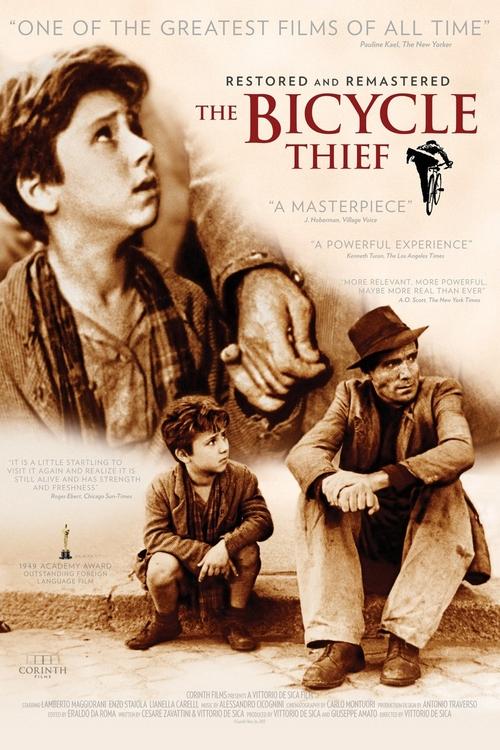
Bicycle Thieves - Review
Bicycle Thieves: A Timeless Masterpiece of Neorealism
In the annals of cinematic history, few films resonate with the raw, unvarnished truth of human experience quite like Vittorio De Sica's Bicycle Thieves (Ladri di Biciclette). Released in 1948, amidst the rubble and despair of post-World War II Italy, this poignant drama transcends its historical context to offer a universal and enduring commentary on poverty, desperation, and the fragile bonds of family. More than just a film, it's a visceral journey into the heart of human suffering, a stark reminder of the societal forces that can strip away dignity and hope. Prepare to be moved, challenged, and profoundly affected by this cinematic masterpiece.
Plot Summary and Analysis
The narrative is deceptively simple, yet its emotional depth is staggering. Antonio Ricci, an unemployed father in Rome, finally secures a job putting up posters, a lifeline in a city choked by unemployment. The catch? The job requires a bicycle, which he and his wife Maria pawned to survive. In a moment of hard-won hope, they retrieve the bicycle, sacrificing their bed linens to do so. However, Antonio's newfound optimism is brutally shattered on his first day when his bicycle is stolen. This theft isn't just a loss of property; it's the theft of Antonio's livelihood, his family's security, and his very sense of self-worth.
The film then follows Antonio and his young son, Bruno, as they embark on a desperate search for the bicycle. They scour the crowded markets, the back alleys, and the pawn shops of Rome, their hope dwindling with each passing hour. The search is not just a physical one; it's an emotional odyssey that exposes the harsh realities of post-war Italy. We see the indifference of the authorities, the desperation of the poor, and the pervasive sense of moral decay. Antonio's desperation grows with each failed lead, pushing him to the brink of moral compromise. The climax sees Antonio, driven to the edge, attempting to steal a bicycle himself, an act that shatters his son's innocent perception of him and leads to his public humiliation. The film concludes with Antonio and Bruno walking away, their future uncertain, but their bond, though tested, seemingly unbroken. The simplicity of the plot allows the film to focus on the emotional and social ramifications of poverty, making it incredibly powerful.
Character Analysis
The characters in Bicycle Thieves are not mere actors; they are embodiments of the struggles and resilience of the Italian people.
Antonio Ricci
Antonio, played with heartbreaking authenticity by Lamberto Maggiorani (a factory worker cast for the role), is the heart and soul of the film. He's a man driven by desperation and a fierce love for his family. He's not a saint; he's flawed, prone to anger and frustration. But his desire to provide for his family is unwavering. His initial joy at finding work is palpable, making the subsequent theft all the more devastating. As the search for the bicycle intensifies, we witness his descent into despair, his moral compass wavering under the weight of his circumstances. His attempt to steal a bicycle, though morally questionable, is understandable in the context of his desperation. It's a moment of profound human weakness that makes him all the more relatable.
Bruno Ricci
Bruno, played by Enzo Staiola, is the film's moral center. His innocent eyes witness his father's struggle, his humiliation, and his despair. He is Antonio's conscience, a constant reminder of what's at stake. Bruno's unwavering love and loyalty to his father provide a glimmer of hope amidst the darkness. His presence serves as a powerful commentary on the impact of poverty on children, forcing them to grow up too quickly and bear witness to the harsh realities of the world.
Maria Ricci
Maria, Antonio's wife, though not as prominently featured as Antonio and Bruno, plays a crucial role. She embodies the quiet strength and resilience of women in post-war Italy. She sacrifices her family's possessions to secure Antonio's job, demonstrating her unwavering support. Her brief visit to a fortune teller, while seemingly insignificant, reveals her deep anxieties and her desperate hope for a better future.
Direction and Cinematography
Vittorio De Sica's direction is masterful in its simplicity and authenticity. He eschews elaborate camera movements and dramatic lighting, opting instead for a naturalistic style that immerses the viewer in the gritty reality of post-war Rome. He famously used non-professional actors, lending a raw and unscripted feel to the performances. This commitment to realism is a hallmark of the Italian Neorealist movement, which sought to depict the lives of ordinary people with honesty and compassion.
The cinematography, largely shot on location in Rome, is equally effective in conveying the film's themes. The use of long shots emphasizes the vastness of the city and the anonymity of its inhabitants, highlighting Antonio's isolation and powerlessness. The camera often lingers on the faces of the characters, capturing their emotions with unflinching honesty. The film's visual style is not glamorous or polished; it's rough and unadorned, reflecting the harsh realities of the world it depicts. The black and white film stock adds to the sense of realism and historical authenticity.
Performances
The performances in Bicycle Thieves are nothing short of extraordinary, especially considering the fact that both Lamberto Maggiorani and Enzo Staiola were non-professional actors. Maggiorani's portrayal of Antonio is a tour de force of understated emotion. He conveys Antonio's desperation, his frustration, and his love for his son with remarkable subtlety and authenticity. Staiola, as Bruno, is equally compelling. His natural charm and his ability to convey a wide range of emotions make him a truly unforgettable character. The supporting cast, comprised largely of non-professional actors, also delivers convincing performances, adding to the film's overall sense of realism.
Themes and Messages
Bicycle Thieves is a film rich in thematic depth, exploring a range of issues that remain relevant today.
Poverty and Desperation
The film is, first and foremost, a powerful indictment of poverty and its dehumanizing effects. It shows how poverty can strip away dignity, erode moral values, and drive people to desperate measures. The stolen bicycle is not just a piece of property; it's a symbol of Antonio's hope for a better future, and its loss represents the crushing weight of poverty that threatens to suffocate him and his family.
The Importance of Family
Despite the bleakness of its subject matter, Bicycle Thieves also celebrates the enduring power of family. Antonio's love for Bruno is his driving force, and Bruno's unwavering loyalty to his father provides a glimmer of hope amidst the darkness. The film suggests that even in the face of extreme adversity, the bonds of family can provide solace and strength.
Social Injustice
The film also exposes the systemic injustices that perpetuate poverty. The indifference of the authorities, the lack of opportunities for the poor, and the pervasive sense of moral decay all contribute to Antonio's plight. The film is a powerful critique of a society that fails to provide for its most vulnerable members.
Loss of Innocence
Bruno's experience in the film represents the loss of innocence. He is forced to witness his father's struggles, his humiliation, and his moral compromise. The film suggests that poverty can rob children of their childhood, forcing them to grow up too quickly and bear witness to the harsh realities of the world.
Comparison to Other Films and Works
Bicycle Thieves is a seminal work of Italian Neorealism, a cinematic movement that emerged in post-war Italy. It shares many characteristics with other films of the era, such as Roberto Rossellini's Rome, Open City (1945) and Luchino Visconti's La Terra Trema (1948). Like these films, Bicycle Thieves is characterized by its use of non-professional actors, its location shooting, and its focus on the lives of ordinary people. It also shares the movement's commitment to social realism and its critique of societal injustices.
De Sica's other works, such as Shoeshine (1946) and Umberto D. (1952), also explore similar themes of poverty, desperation, and the human condition. These films, like Bicycle Thieves, are characterized by their emotional honesty and their unflinching portrayal of the struggles of ordinary people.
In terms of contemporary films, Bicycle Thieves can be compared to films like Ken Loach's Kes (1969) and the Dardenne brothers' Rosetta (1999), which also explore themes of poverty, social injustice, and the resilience of the human spirit. These films, like Bicycle Thieves, offer a powerful and moving commentary on the challenges faced by marginalized communities.
Positive Aspects
Bicycle Thieves is a film that excels on every level. Its simple yet powerful plot, its authentic characters, its masterful direction, and its compelling performances all contribute to its enduring appeal. The film's ability to evoke empathy and understanding for its characters is truly remarkable. It's a film that stays with you long after the credits have rolled, prompting reflection on the human condition and the societal forces that shape our lives. The film's historical significance as a landmark of Italian Neorealism cannot be overstated. It helped to define a cinematic movement and influenced generations of filmmakers.
Constructive Criticism
While Bicycle Thieves is undeniably a masterpiece, some might argue that its bleakness is overwhelming. The film offers little in the way of hope or redemption, and its ending is profoundly depressing. Some viewers may find the film's pacing to be slow and deliberate, lacking the dramatic tension of more conventional narratives. Additionally, the film's focus on a single family's plight may be seen as limiting, failing to fully explore the broader social and political context of post-war Italy. However, these criticisms are minor in comparison to the film's overall achievements. The bleakness is arguably essential to the film's message, highlighting the harsh realities of poverty. The slow pacing allows for a deeper exploration of the characters' emotions, and the focus on a single family makes the film's themes more personal and relatable.
Conclusion and Rating
Bicycle Thieves is not just a film; it's an experience. It's a visceral and emotionally resonant journey into the heart of human suffering, a stark reminder of the societal forces that can strip away dignity and hope. It's a film that challenges us to confront the realities of poverty and injustice, and to recognize the importance of empathy and compassion. Despite its bleakness, Bicycle Thieves is ultimately a testament to the resilience of the human spirit and the enduring power of family. It is a timeless masterpiece that deserves to be seen and appreciated by audiences of all generations.
Rating: 10/10