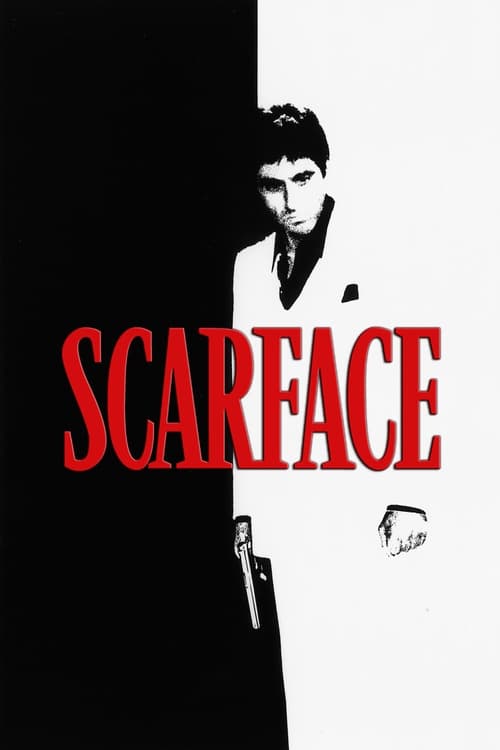
Scarface - Review
Scarface: A Symphony of Excess and Downfall
Brian De Palma's Scarface, released in 1983, isn't just a movie; it's a cultural phenomenon, a cautionary tale etched in blood, cocaine, and operatic excess. More than just a gangster flick, it's a visceral exploration of the American Dream twisted into a nightmare, a brutal and unflinching look at ambition, greed, and the corrosive power of unchecked ego. Decades after its release, Scarface continues to fascinate, provoke, and shock, cementing its place as a cinematic landmark. But is its iconic status truly deserved, or has the film's notoriety overshadowed its flaws? Let's delve into the world of Tony Montana and dissect the layers of this controversial masterpiece.
Plot: From Refugee to Kingpin, a Descent into Madness
The narrative of Scarface is a classic rise-and-fall story, albeit one drenched in the lurid colors of 1980s Miami. Tony Montana (Al Pacino), a Cuban refugee arriving in Miami during the Mariel boatlift, is a man driven by ambition and a burning desire for more. He quickly finds himself entangled in the city's burgeoning drug trade, initially working as muscle for Frank Lopez (Robert Loggia), a powerful but aging drug lord. Tony's ruthless efficiency and unwavering loyalty (at least initially) allow him to quickly climb the ranks. He eliminates rivals, expands Lopez's empire, and eventually betrays him, seizing control for himself.
Tony's rise to power is meteoric. He amasses unimaginable wealth, lives in a lavish mansion, and seemingly has everything he ever desired. However, his insatiable hunger for more, coupled with his increasing paranoia and cocaine addiction, leads to his inevitable downfall. He makes enemies, alienates his friends and family, and ultimately loses control of his empire, succumbing to the very violence he embraced. The plot, while relatively straightforward in its structure, is punctuated by moments of intense brutality and shocking betrayal, keeping the audience constantly on edge.
However, the plot isn't without its criticisms. Some argue that the pacing is uneven, particularly in the middle act, where Tony's ascent feels somewhat rushed. The motivations of certain characters, particularly Tony's sister Gina (Mary Elizabeth Mastrantonio), can feel underdeveloped. While the film excels at depicting the consequences of Tony's actions, it sometimes struggles to fully explore the psychological complexities that drive him.
Characters: A Gallery of Greed and Desperation
Scarface boasts a cast of memorable characters, each contributing to the film's overall impact. Tony Montana, of course, is the centerpiece. He's a complex and contradictory figure, simultaneously charismatic and repulsive. He's fiercely loyal to his friends (at least initially), but also capable of unimaginable cruelty. He's driven by ambition, but ultimately undone by his own hubris. Al Pacino's portrayal of Tony is iconic, cementing his status as one of the greatest actors of all time. He embodies Tony's swagger, his anger, and his vulnerability with breathtaking intensity.
Other notable characters include:
- Frank Lopez (Robert Loggia): The aging drug lord who initially takes Tony under his wing. Lopez represents the old guard, a more cautious and pragmatic approach to the drug trade. His eventual betrayal by Tony highlights the ruthless nature of the business.
- Elvira Hancock (Michelle Pfeiffer): Lopez's trophy wife and Tony's eventual obsession. Elvira is a beautiful but emotionally damaged woman, addicted to cocaine and detached from reality. Her relationship with Tony is toxic and ultimately destructive.
- Manny Ribera (Steven Bauer): Tony's best friend and closest confidant. Manny is more level-headed than Tony, but he's also drawn into the world of crime. His eventual betrayal by Tony, stemming from his relationship with Gina, is a key turning point in the film.
- Gina Montana (Mary Elizabeth Mastrantonio): Tony's sister, whom he is fiercely protective of. Gina's relationship with Manny and her eventual descent into drug addiction contribute to Tony's paranoia and ultimately contribute to his downfall.
While the characters are generally well-developed, some critics argue that the female characters, particularly Elvira and Gina, are somewhat stereotypical and lack agency. Elvira is often reduced to a beautiful but passive object of desire, while Gina is portrayed as a naive and vulnerable victim. However, others argue that these portrayals are intentional, reflecting the patriarchal and misogynistic world of the drug trade.
Direction: De Palma's Operatic Vision
Brian De Palma's direction is a key element of Scarface's success. He creates a visually stunning and emotionally charged world, using bold colors, dramatic camera angles, and operatic set pieces to amplify the film's themes. De Palma's use of slow motion, split-screen, and tracking shots adds to the film's sense of style and suspense. The film's violence is often stylized and over-the-top, reflecting the exaggerated nature of Tony's world. The infamous chainsaw scene, while controversial, is a prime example of De Palma's willingness to push boundaries and shock audiences.
De Palma's direction is also notable for its use of music. The film's score, composed by Giorgio Moroder, is an iconic blend of electronic and orchestral sounds that perfectly captures the mood of the film. The soundtrack also features a number of popular songs from the 1980s, further immersing the audience in the film's world.
Some critics argue that De Palma's style is too self-conscious and that he relies too heavily on visual tricks. However, others argue that his style is essential to the film's overall impact, creating a heightened and unforgettable cinematic experience.
Cinematography: A Miami Vice Dreamscape Gone Wrong
John A. Alonzo's cinematography is crucial in establishing the visual identity of Scarface. He captures the vibrant colors and sun-drenched landscapes of Miami, creating a visually alluring backdrop for the film's dark and violent story. Alonzo's use of light and shadow is particularly effective, creating a sense of both beauty and menace. The film's visuals are often exaggerated and stylized, reflecting the excesses of Tony's world.
The cinematography also plays a key role in conveying the film's themes. The opulent mansions, expensive cars, and designer clothes are visual symbols of Tony's wealth and power. However, these symbols are often juxtaposed with images of violence, poverty, and despair, highlighting the dark side of the American Dream.
Alonzo's work on Scarface is widely praised for its visual flair and its ability to create a sense of atmosphere and tension. The film's visuals are both beautiful and disturbing, perfectly capturing the contradictory nature of Tony Montana's world.
Performances: Pacino at His Peak
Al Pacino's performance as Tony Montana is undoubtedly the film's greatest strength. He embodies the character with a raw intensity and a captivating charisma. Pacino's portrayal of Tony's swagger, his anger, and his vulnerability is both mesmerizing and terrifying. He delivers iconic lines with a ferocity that has become legendary. Pacino's performance is so powerful that it's difficult to imagine anyone else playing the role.
Michelle Pfeiffer also delivers a memorable performance as Elvira Hancock. She captures the character's beauty, her fragility, and her addiction with remarkable subtlety. Steven Bauer is excellent as Manny Ribera, providing a grounded and relatable counterpoint to Tony's excesses. Robert Loggia is convincing as Frank Lopez, portraying the character's power, his vulnerability, and his eventual demise with skill. Mary Elizabeth Mastrantonio is effective as Gina Montana, although her character is somewhat underdeveloped.
The supporting cast is also strong, with notable performances from F. Murray Abraham as Omar Suarez, Miriam Colon as Mama Montana, and Paul Shenar as Alejandro Sosa. Each actor contributes to the film's overall impact, creating a believable and compelling world.
Themes and Messages: The Corrosive Nature of Ambition
Scarface explores a number of complex themes, including:
- The American Dream: The film presents a cynical view of the American Dream, suggesting that it's often unattainable and that the pursuit of wealth and power can lead to corruption and destruction. Tony Montana's rise to power is ultimately hollow, as he sacrifices his morality and his relationships in pursuit of his goals.
- Greed and Excess: The film is a cautionary tale about the dangers of greed and excess. Tony Montana's insatiable hunger for more ultimately leads to his downfall. He becomes consumed by his own wealth and power, losing sight of what's truly important.
- Violence and Power: The film explores the relationship between violence and power. Tony Montana uses violence to achieve his goals, but ultimately becomes a victim of his own violence. The film suggests that violence is a destructive force that corrupts everyone it touches.
- Family and Loyalty: The film examines the importance of family and loyalty. Tony Montana is fiercely loyal to his friends and family, but his actions ultimately alienate him from them. The film suggests that loyalty is a valuable trait, but it can also be misplaced.
- The Immigrant Experience: The film offers a glimpse into the immigrant experience in America. Tony Montana arrives in Miami with nothing and struggles to make a life for himself. He faces discrimination and prejudice, but he also finds opportunities to succeed. The film suggests that the immigrant experience is both challenging and rewarding.
The film's message is ultimately ambiguous. While it serves as a cautionary tale about the dangers of greed and violence, it also celebrates Tony Montana's ambition and his refusal to conform. The film leaves it up to the audience to decide whether Tony is a hero or a villain.
Comparison to Other Films and Works
Scarface is often compared to other gangster films, such as The Godfather and Goodfellas. While Scarface shares some similarities with these films, it also has its own unique identity. Scarface is more violent and more over-the-top than The Godfather, and it's less focused on the inner workings of organized crime than Goodfellas. Scarface is also more explicitly critical of the American Dream than these other films.
Scarface can also be compared to other works by Brian De Palma, such as Carrie and Dressed to Kill. De Palma is known for his stylish direction, his use of suspense, and his exploration of themes related to violence and sexuality. Scarface shares these characteristics, but it's also a more ambitious and more epic film than De Palma's earlier works.
Al Pacino's performance in Scarface can be compared to his other iconic roles, such as Michael Corleone in The Godfather and Sonny Wortzik in Dog Day Afternoon. Pacino is known for his intensity, his charisma, and his ability to portray complex and contradictory characters. His performance in Scarface is arguably his most iconic, showcasing his range and his ability to embody a character with both strength and vulnerability.
Positive Aspects and Constructive Criticism
Scarface has many positive aspects, including:
- Al Pacino's Performance: Pacino's portrayal of Tony Montana is a tour de force, cementing his status as one of the greatest actors of all time.
- Brian De Palma's Direction: De Palma's stylish and operatic direction creates a visually stunning and emotionally charged world.
- The Film's Themes: The film explores complex and thought-provoking themes related to the American Dream, greed, violence, and family.
- The Film's Impact: Scarface has had a lasting impact on popular culture, influencing music, fashion, and film.
However, the film also has some weaknesses, including:
- Uneven Pacing: The film's pacing can be uneven, particularly in the middle act.
- Underdeveloped Female Characters: The female characters, particularly Elvira and Gina, can feel somewhat stereotypical and lack agency.
- Over-the-Top Violence: The film's violence can be excessive and gratuitous, potentially alienating some viewers.
Despite these weaknesses, Scarface remains a powerful and unforgettable film. Its strengths far outweigh its weaknesses, making it a cinematic masterpiece.
Conclusion: A Timeless Tale of Ambition and Destruction
Scarface is more than just a gangster film; it's a cultural touchstone, a reflection of the American Dream gone awry. Al Pacino's unforgettable performance, Brian De Palma's stylish direction, and the film's exploration of complex themes make it a cinematic masterpiece. While the film may not be for everyone due to its violence and its controversial themes, it remains a powerful and thought-provoking work of art. Scarface is a film that stays with you long after the credits roll, prompting you to consider the true cost of ambition and the corrosive nature of unchecked power.
Rating: 9.5/10