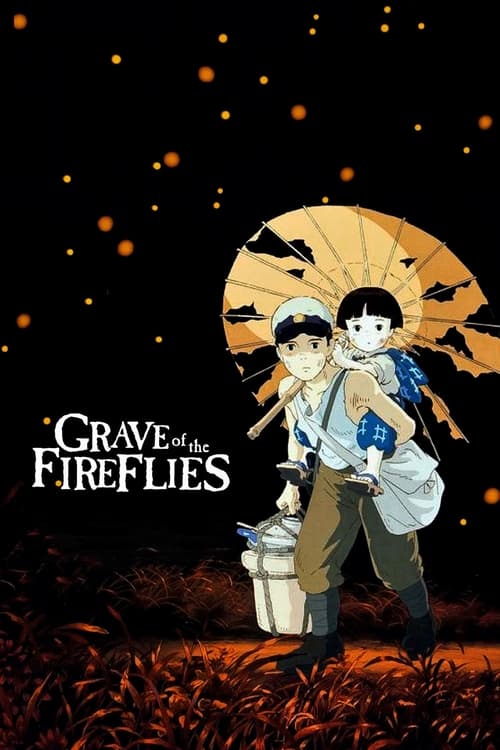
Grave of the Fireflies - Review
Grave of the Fireflies: A Haunting Masterpiece Review
Grave of the Fireflies, released in 1988, is not simply an animated film; it's a visceral, heartbreaking experience that etches itself into the viewer's memory long after the credits roll. Isao Takahata's unflinching portrayal of two orphaned siblings struggling to survive in war-torn Japan is a cinematic tour de force, a testament to the resilience of the human spirit and a searing indictment of the devastating consequences of conflict. More than just a war story, it's a profound exploration of family, loss, and the desperate fight for survival against insurmountable odds. Prepare to be moved, challenged, and forever changed by this animated masterpiece.
Synopsis
Set in the final months of World War II, Grave of the Fireflies tells the story of Seita, a resourceful 14-year-old boy, and his younger sister Setsuko. Their lives are irrevocably shattered when an American air raid devastates Kobe, Japan, claiming the life of their mother. Forced to fend for themselves, Seita and Setsuko seek refuge with a distant aunt, but the aunt's increasing resentment and the dwindling food supplies lead Seita to make a fateful decision: to leave and find their own way. They find shelter in an abandoned bomb shelter, where they attempt to build a life amidst the ruins, illuminated only by the ethereal glow of fireflies. However, the grim realities of war – starvation, disease, and isolation – relentlessly close in on them, threatening to extinguish their fragile hope.
Plot Analysis
The narrative structure of Grave of the Fireflies is both simple and deeply impactful. The film opens with a chilling revelation: Seita's death. This immediately establishes a sense of impending doom, framing the subsequent events as a tragic inevitability. The film then flashes back to the events leading up to his demise, allowing the audience to witness the gradual disintegration of their hope and the slow, agonizing decline of Setsuko. This non-linear storytelling technique, while potentially distancing, actually heightens the emotional impact by forcing the viewer to confront the tragic outcome from the outset. We are not simply watching a story unfold; we are witnessing a preordained tragedy, making every moment of joy and resilience all the more poignant.
The pacing of the film is deliberate and measured, allowing the audience to fully immerse themselves in the characters' experiences. Takahata doesn't shy away from depicting the mundane aspects of their struggle – the endless search for food, the constant battle against illness, the simple joys of playing games. These moments, interspersed with scenes of intense hardship and despair, create a powerful contrast that underscores the fragility of their existence. The film avoids sensationalism, instead focusing on the subtle nuances of human emotion and the gradual erosion of hope. The plot is less about grand battles and heroic deeds, and more about the quiet, desperate fight for survival in the face of overwhelming adversity.
Character Analysis
Seita
Seita is a complex and often controversial character. While his intentions are undoubtedly noble – to protect and care for his younger sister – his actions are sometimes questionable. His pride and stubbornness often prevent him from seeking help, leading to decisions that ultimately exacerbate their situation. Some viewers criticize him for not swallowing his pride and begging for assistance from his aunt or other adults. However, it's important to consider the context of his actions. He is a young boy thrust into an impossible situation, burdened with the responsibility of caring for a child. His decisions, however flawed, are driven by a fierce love for his sister and a desperate desire to maintain some semblance of dignity and control in a world that has stripped them of everything. He embodies the resilience of youth, but also its limitations. He is neither a hero nor a villain, but a deeply flawed and ultimately tragic figure.
Setsuko
Setsuko is the heart and soul of the film. She represents innocence, hope, and the devastating cost of war on the most vulnerable. Her childlike wonder and unwavering love for her brother provide a glimmer of light in the darkness of their existence. Setsuko's gradual decline is particularly heartbreaking to witness. Her innocent questions, her simple joys, and her eventual succumbing to illness serve as a powerful indictment of the inhumanity of war. She is a symbol of the countless children who suffer and die as a result of conflict, their potential and their future tragically cut short.
The Aunt
The aunt is a crucial character in understanding the societal pressures and the breakdown of compassion during wartime. Initially, she provides a semblance of stability for Seita and Setsuko. However, as resources become scarce and the war intensifies, her resentment grows. She becomes increasingly critical and demanding, ultimately pushing Seita to leave. While she is often portrayed as the antagonist, it's important to consider her perspective as well. She is struggling to survive in a war-torn society, facing her own hardships and anxieties. Her actions, while cruel, are arguably a reflection of the dehumanizing effects of war and the breakdown of social bonds. She embodies the selfishness and desperation that can arise when survival is at stake.
Direction and Cinematography
Isao Takahata's direction is masterful, characterized by its realism, sensitivity, and attention to detail. He avoids sentimentality and melodrama, instead opting for a nuanced and understated approach that allows the emotional weight of the story to resonate organically. His use of animation is particularly effective in conveying the characters' emotions and the stark realities of their environment. The animation style, while simple, is incredibly expressive, capturing the subtle nuances of facial expressions and body language. Takahata's meticulous attention to detail extends to the depiction of the wartime setting, accurately portraying the devastation and the atmosphere of fear and uncertainty.
The cinematography, while not employing flashy techniques, is crucial to the film's emotional impact. The use of light and shadow is particularly effective in creating a sense of atmosphere and mood. The ethereal glow of the fireflies, for example, provides a fleeting moment of beauty and hope amidst the darkness. The color palette is often muted, reflecting the bleakness of their surroundings. However, Takahata also uses vibrant colors to highlight moments of joy and innocence, creating a stark contrast that underscores the tragedy of their situation. The visual storytelling is powerful and evocative, enhancing the emotional resonance of the narrative.
Performances
The voice acting in Grave of the Fireflies is exceptional, capturing the vulnerability and resilience of the characters. Tsutomu Tatsumi, as Seita, delivers a nuanced performance that conveys the boy's strength, determination, and inner turmoil. Ayano Shiraishi, as Setsuko, is simply heartbreaking, capturing the innocence and vulnerability of a child caught in the horrors of war. Their performances are so authentic and emotionally resonant that it's easy to forget that they are simply providing voices for animated characters. The Japanese language track is highly recommended for the most authentic experience, as it captures the cultural nuances and emotional subtleties of the story.
Themes and Messages
Grave of the Fireflies is a film rich in themes and messages, exploring the devastating consequences of war, the importance of family, and the fragility of hope. One of the central themes is the dehumanizing effect of war. The film vividly portrays how war strips individuals of their humanity, leading to selfishness, cruelty, and the breakdown of social bonds. The characters are forced to make impossible choices in order to survive, often at the expense of others. The film also explores the theme of the loss of innocence. Setsuko, in particular, represents the devastating cost of war on children, their innocence shattered and their potential tragically cut short. The film serves as a powerful reminder of the importance of protecting children from the horrors of conflict.
Another important theme is the importance of family. Seita's unwavering love for his sister is the driving force behind his actions. He is willing to sacrifice everything to protect her, even if it means making questionable decisions. The film highlights the strength and resilience of family bonds in the face of adversity. However, it also explores the limitations of family, particularly in a society where resources are scarce and survival is paramount. The film also touches upon the theme of the individual versus society. Seita's refusal to conform to societal expectations and his decision to strike out on his own ultimately lead to his downfall. The film raises questions about the importance of individual freedom versus the need for social responsibility.
Finally, the film explores the theme of the fleeting nature of hope. The fireflies themselves serve as a metaphor for hope, their ephemeral glow providing a fleeting moment of beauty and comfort amidst the darkness. However, like the fireflies, hope is fragile and easily extinguished. The film suggests that even in the darkest of times, it is important to cling to hope, but also to recognize its limitations. The film is a powerful anti-war statement, highlighting the devastating human cost of conflict and the importance of striving for peace.
Comparison to Other Films/Works
Grave of the Fireflies stands apart from many animated films due to its unflinching realism and its focus on mature themes. While many animated films aim to entertain and provide escapism, Grave of the Fireflies is a deeply serious and thought-provoking work that challenges viewers to confront the harsh realities of war. In terms of its themes and its portrayal of the human cost of conflict, it can be compared to films such as Come and See (1985), a harrowing depiction of the Nazi occupation of Belarus, and The Pianist (2002), a biographical drama about a Jewish pianist's struggle for survival in Nazi-occupied Poland. Like these films, Grave of the Fireflies offers a bleak and unflinching portrayal of the horrors of war, focusing on the individual experiences of those caught in the crossfire.
Within the realm of animation, Grave of the Fireflies can be compared to other works by Studio Ghibli, particularly those directed by Hayao Miyazaki. While Miyazaki's films often feature fantastical elements and more optimistic narratives, they also share a common concern for environmentalism, pacifism, and the importance of human connection. However, Grave of the Fireflies is arguably the darkest and most emotionally challenging film in the Studio Ghibli canon. Its unflinching realism and its tragic ending set it apart from Miyazaki's more hopeful and uplifting works. Isao Takahata's later work, *The Tale of the Princess Kaguya*, shares a similar visual style and a focus on Japanese folklore, but lacks the raw emotional power of *Grave of the Fireflies*.
Positive Aspects
- Emotional Impact: The film's greatest strength lies in its ability to evoke a profound emotional response from the viewer. The story is deeply moving, and the characters are so well-developed that it's impossible not to feel empathy for their plight.
- Realistic Portrayal of War: The film avoids romanticizing war, instead offering a bleak and unflinching portrayal of its devastating consequences. The focus on the individual experiences of ordinary people caught in the crossfire makes the film all the more impactful.
- Masterful Direction: Isao Takahata's direction is superb, characterized by its realism, sensitivity, and attention to detail. His use of animation is particularly effective in conveying the characters' emotions and the stark realities of their environment.
- Exceptional Voice Acting: The voice acting is outstanding, capturing the vulnerability and resilience of the characters.
- Thought-Provoking Themes: The film explores a range of important themes, including the dehumanizing effect of war, the loss of innocence, the importance of family, and the fragility of hope.
Constructive Criticism
- Pacing: While the deliberate pacing allows for a deep immersion in the characters' experiences, some viewers may find it slow or uneventful at times.
- Seita's Character: Seita's decisions and actions can be frustrating to watch, and some viewers may criticize him for his pride and stubbornness. However, this is arguably a deliberate choice on the part of the filmmakers, highlighting the complexities of human nature and the limitations of youth.
- Overwhelming Sadness: The film is undeniably depressing, and its tragic ending may be too much for some viewers to handle. While this is arguably a strength of the film, it's important to be aware of its emotional intensity before watching it.
Conclusion
Grave of the Fireflies is a cinematic masterpiece, a deeply moving and unforgettable experience that transcends the boundaries of animation. It is a powerful anti-war statement, a testament to the resilience of the human spirit, and a poignant reminder of the importance of family and compassion. While its tragic ending may be difficult to bear, the film's emotional impact and its thought-provoking themes make it an essential viewing experience for anyone interested in animation, war films, or simply stories that explore the depths of the human condition. It's a film that stays with you long after the credits roll, prompting reflection and challenging your perspective on the world. Despite its flaws, its power and artistry are undeniable.