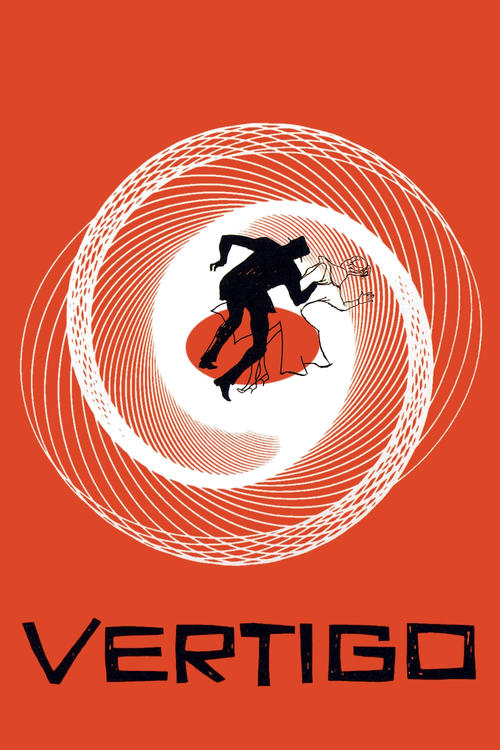
Vertigo - Review
Vertigo: A Descent into Obsession and Illusion
Alfred Hitchcock's Vertigo, released in 1958, isn't just a film; it's an experience. It's a psychological thriller that burrows under your skin, leaving you disoriented and questioning the very nature of reality. More than just a suspenseful mystery, Vertigo is a profound exploration of obsession, identity, and the destructive power of idealized love. It's a film that demands multiple viewings to fully appreciate its intricate layers and continues to provoke discussion and analysis decades after its release. Buckle up, because we're about to take a dizzying plunge into the heart of Hitchcock's masterpiece.
Plot: A Tangled Web of Deception
The film opens with a thrilling chase sequence across the rooftops of San Francisco, culminating in a tragic accident that leaves police detective John "Scottie" Ferguson (James Stewart) with a crippling fear of heights – acrophobia. Forced into early retirement, Scottie is contacted by an old college friend, Gavin Elster (Tom Helmore), who asks him to investigate his wife, Madeleine (Kim Novak). Gavin claims Madeleine is behaving strangely, believing herself to be possessed by the spirit of her great-grandmother, Carlotta Valdes, who committed suicide.
Scottie, initially skeptical, becomes increasingly captivated by Madeleine's ethereal beauty and melancholic demeanor. He follows her through San Francisco, witnessing her strange rituals and ultimately saving her from a suicide attempt in the bay. As Scottie and Madeleine fall in love, their romance is tragically cut short when Madeleine seemingly jumps to her death from the bell tower of Mission San Juan Bautista.
Consumed by guilt and grief, Scottie is haunted by Madeleine's memory. Months later, he encounters Judy Barton (also played by Kim Novak), a woman who bears a striking resemblance to Madeleine. Driven by an insatiable desire to recreate his lost love, Scottie obsessively transforms Judy into Madeleine, forcing her to adopt the hairstyle, clothes, and mannerisms of the deceased woman. However, as he pieces together the truth, he uncovers a shocking conspiracy that reveals the true nature of Madeleine's identity and the devastating extent of Gavin Elster's manipulation.
Characters: Shadows of the Self
Vertigo is populated by characters grappling with their own inner demons and fractured identities.
- John "Scottie" Ferguson (James Stewart): Scottie is a man defined by his limitations. His acrophobia not only prevents him from performing his duty as a police officer but also symbolizes his inability to fully grasp the truth and control his own desires. He is driven by a deep-seated need to possess and control, transforming Judy into a replica of his idealized Madeleine. Stewart's performance is nuanced and complex, showcasing Scottie's vulnerability, obsession, and ultimate descent into madness.
- Madeleine Elster/Judy Barton (Kim Novak): Novak delivers a tour-de-force performance in dual roles. As Madeleine, she embodies an enigmatic and ethereal beauty, captivating Scottie with her fragile vulnerability. As Judy, she is more grounded and practical, yet haunted by her complicity in Gavin Elster's scheme. Novak masterfully portrays the subtle differences between the two characters, highlighting the manipulation at the heart of the story. She is both the object of Scottie's desire and a victim of his obsession.
- Gavin Elster (Tom Helmore): Elster is the film's puppet master, a wealthy and manipulative businessman who orchestrates the entire deception. He represents the corrupting influence of power and the lengths to which people will go to achieve their desires. While his screen time is limited, Elster's presence looms large over the narrative, driving the events and shaping the destinies of Scottie and Madeleine/Judy.
- Midge Wood (Barbara Bel Geddes): Midge, Scottie's friend and former fiancée, serves as a voice of reason and a source of emotional support. She is a practical and independent woman who represents a healthy alternative to Scottie's obsessive tendencies. Midge's unrequited love for Scottie adds another layer of complexity to the narrative, highlighting the different forms that love can take.
Direction: Hitchcock's Masterful Control
Alfred Hitchcock's direction in Vertigo is nothing short of masterful. He meticulously crafts a world of illusion and deception, using every cinematic tool at his disposal to manipulate the audience's perception and create a sense of unease and disorientation. Hitchcock's signature suspense techniques are on full display, building tension through subtle camera movements, evocative music, and carefully constructed visual cues.
He uses the "vertigo effect" (also known as the dolly zoom) to visually represent Scottie's fear of heights and his psychological instability. This technique, which involves simultaneously zooming the lens and dollying the camera, creates a disorienting effect that mirrors Scottie's own sense of vertigo. The use of color is also significant, with green often associated with Madeleine and representing her otherworldly nature and the artificiality of the illusion.
Hitchcock's control over the narrative is absolute. He carefully withholds information from the audience, allowing them to experience the story through Scottie's subjective perspective. This creates a sense of empathy for Scottie, even as his actions become increasingly questionable. By blurring the lines between reality and illusion, Hitchcock forces the audience to confront their own perceptions and biases.
Cinematography: A Visual Feast
Robert Burks' cinematography in Vertigo is breathtaking. He captures the beauty of San Francisco with stunning clarity, using wide shots to showcase the city's iconic landmarks and intimate close-ups to reveal the characters' inner turmoil. The use of Technicolor is particularly striking, with vibrant hues that enhance the film's dreamlike quality.
Burks' camera work is fluid and dynamic, mirroring the swirling emotions of the characters. He frequently uses subjective camera angles to place the audience directly into Scottie's perspective, allowing them to experience his fear of heights and his growing obsession with Madeleine. The lighting is also carefully controlled, creating a mood of mystery and suspense. Shadows play a significant role, obscuring details and adding to the film's overall sense of unease.
The film's visual style is heavily influenced by German Expressionism, particularly in its use of distorted perspectives and dramatic lighting. This adds to the film's psychological depth, reflecting the characters' inner turmoil and the distorted nature of their reality. The cinematography is not merely decorative; it is an integral part of the storytelling, enhancing the film's themes and emotions.
Performances: Stellar Turns from Stewart and Novak
The success of Vertigo rests heavily on the shoulders of its two leads, James Stewart and Kim Novak, both of whom deliver career-defining performances. Stewart, known for his affable everyman persona, subverts expectations by portraying a deeply flawed and obsessive character. He convincingly conveys Scottie's vulnerability, his growing obsession, and his ultimate descent into madness. Stewart's performance is nuanced and complex, showcasing the darker side of human nature.
Novak, in her dual roles as Madeleine and Judy, is equally impressive. She embodies both the ethereal beauty of Madeleine and the grounded practicality of Judy, creating two distinct characters who are both captivating and tragic. Novak's performance is subtle and nuanced, revealing the inner turmoil of both women. She captures the vulnerability of Madeleine and the desperation of Judy, making them both sympathetic figures. The chemistry between Stewart and Novak is palpable, adding to the film's emotional impact.
Barbara Bel Geddes provides a strong supporting performance as Midge, offering a grounded and relatable perspective. Her portrayal of Midge as a strong and independent woman provides a counterpoint to Scottie's obsessive tendencies. Tom Helmore is also effective as Gavin Elster, conveying the character's manipulative nature with subtle gestures and expressions.
Themes and Messages: Obsession, Identity, and Illusion
Vertigo is a film rich in thematic depth, exploring complex ideas about obsession, identity, and the power of illusion. The film's central theme is the destructive nature of obsession. Scottie's obsession with Madeleine consumes him, blinding him to reality and leading to tragic consequences. He is so fixated on recreating his idealized image of Madeleine that he fails to see Judy for who she is, ultimately destroying both of them.
The film also explores the theme of identity, questioning the very nature of self. Madeleine/Judy is forced to adopt different identities, blurring the lines between her true self and the persona she is forced to inhabit. Scottie, too, struggles with his identity, feeling emasculated by his acrophobia and desperately seeking to regain control through his obsession with Madeleine. The film suggests that identity is fluid and malleable, shaped by external forces and internal desires.
Illusion is another key theme in Vertigo. The film is filled with illusions, from Gavin Elster's carefully constructed scheme to Scottie's idealized image of Madeleine. The film questions the nature of reality, suggesting that what we see is not always what is true. The use of mirrors and reflections throughout the film reinforces this theme, highlighting the deceptive nature of appearances.
Furthermore, Vertigo touches upon themes of guilt, loss, and the male gaze. Scottie is consumed by guilt over his inability to save Madeleine, and his obsession with Judy is a desperate attempt to atone for his perceived failure. The film also explores the power dynamics between men and women, with Scottie's controlling behavior towards Judy reflecting a patriarchal desire to dominate and possess. The film can be interpreted as a critique of the male gaze, exposing the objectification and manipulation that can occur when women are viewed solely as objects of desire.
Comparisons: Hitchcock's Legacy and Similar Films
Vertigo is often compared to other Hitchcock films, particularly Rear Window (1954) and Psycho (1960). Like Rear Window, Vertigo explores themes of voyeurism and obsession, with the protagonist becoming fixated on observing the lives of others. Like Psycho, Vertigo features a shocking twist and a protagonist grappling with psychological trauma. However, Vertigo is arguably Hitchcock's most personal and complex film, delving deeper into the psychological depths of its characters and exploring more profound themes.
In terms of its exploration of obsession and identity, Vertigo can be compared to films such as Mulholland Drive (2001) by David Lynch and Fight Club (1999) by David Fincher. These films also explore the blurred lines between reality and illusion, and the destructive consequences of unchecked desires. Vertigo's influence can be seen in countless films that explore themes of psychological suspense and romantic obsession.
Compared to James Stewart's other collaborations with Hitchcock, such as Rear Window and The Man Who Knew Too Much, Vertigo presents a starkly different persona. Stewart's typical all-American charm is replaced by a vulnerability and darkness that is both unsettling and compelling. This departure from his established image contributes to the film's overall sense of unease and subversion.
Positive Aspects: A Cinematic Triumph
Vertigo is a cinematic triumph on multiple levels. Its intricate plot, complex characters, masterful direction, stunning cinematography, and stellar performances combine to create a truly unforgettable viewing experience. The film's exploration of profound themes such as obsession, identity, and illusion makes it a work of lasting significance.
Hitchcock's direction is flawless, creating a sense of unease and disorientation that perfectly reflects Scottie's psychological state. The "vertigo effect" is a brilliant visual representation of Scottie's fear of heights and his mental instability. Burks' cinematography is breathtaking, capturing the beauty of San Francisco and enhancing the film's dreamlike quality. Stewart and Novak deliver career-defining performances, bringing depth and nuance to their respective roles. The film's haunting score by Bernard Herrmann adds to the overall sense of mystery and suspense.
Vertigo is a film that rewards multiple viewings, revealing new layers of meaning and complexity with each subsequent viewing. It is a testament to Hitchcock's genius and a landmark achievement in cinematic history.
Constructive Criticism: Minor Flaws in a Masterpiece
While Vertigo is widely regarded as a masterpiece, it is not without its minor flaws. Some critics have argued that the film's pacing is slow, particularly in the first act. The extended sequences of Scottie following Madeleine through San Francisco can feel repetitive at times, although they are arguably necessary to establish the character's growing obsession.
Another point of contention is the film's portrayal of women. Some critics have argued that the female characters are overly passive and objectified, serving primarily as objects of male desire. While this criticism has merit, it is important to consider the historical context of the film and the prevailing gender roles of the time. Furthermore, the film can be interpreted as a critique of the male gaze, exposing the dangers of objectification and manipulation.
Finally, some viewers may find the film's ending to be somewhat ambiguous and unsatisfying. While the ending is certainly impactful, it leaves some questions unanswered and may not provide a sense of closure for all viewers. However, this ambiguity is arguably intentional, reflecting the film's exploration of the elusive nature of truth and the impossibility of truly knowing another person.
Conclusion: A Timeless Classic
Despite its minor flaws, Vertigo remains a timeless classic and a landmark achievement in cinematic history. It is a film that continues to captivate and challenge audiences decades after its release. Its exploration of profound themes, its masterful direction, its stunning cinematography, and its stellar performances make it a truly unforgettable viewing experience. Vertigo is not just a film; it is an experience that will stay with you long after the credits roll. It's a must-see for any serious film enthusiast and a testament to the enduring power of Alfred Hitchcock's genius.
Rating: 9.8/10