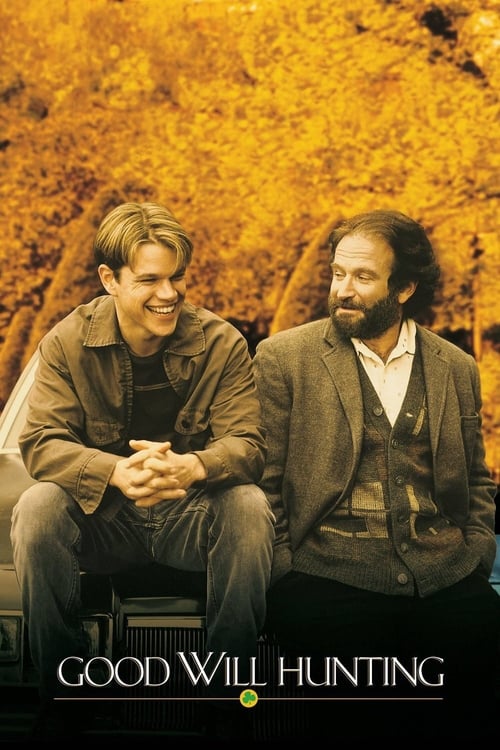
Good Will Hunting - Review
Good Will Hunting: A Timeless Tale of Genius, Trauma, and Self-Discovery
Good Will Hunting, released in 1997, is more than just a coming-of-age story; it's a profound exploration of trauma, potential, and the courage it takes to confront one's demons. Directed by Gus Van Sant and penned by then-unknowns Matt Damon and Ben Affleck, the film resonated deeply with audiences, earning critical acclaim and cementing its place as a modern classic. It's a film that invites introspection, prompting us to consider the masks we wear and the vulnerabilities we hide beneath layers of intellect and bravado. Two decades later, its themes of self-acceptance and the importance of human connection remain powerfully relevant. This review delves into the intricacies of Good Will Hunting, examining its plot, characters, direction, cinematography, performances, and enduring themes, while also offering a balanced perspective on its strengths and weaknesses.
Plot Analysis: Unveiling the Layers of Will Hunting
The narrative of Good Will Hunting centers around Will Hunting (Matt Damon), a prodigious talent working as a janitor at MIT. He possesses an extraordinary intellect, effortlessly solving complex mathematical equations left on blackboards by graduate students. His life, however, is far from academic pursuits. Will spends his days hanging out with his close-knit group of friends – Chuckie (Ben Affleck), Billy (Cole Hauser), and Morgan (Casey Affleck) – engaging in petty crimes and avoiding any real commitment to his potential. This all changes when Professor Gerald Lambeau (Stellan Skarsgård), a Fields Medal-winning mathematician, discovers Will's hidden genius after he anonymously solves a particularly challenging problem. Lambeau, recognizing Will's unparalleled abilities, becomes determined to guide him towards a more fulfilling path.
Will's troubled past, marked by abuse and neglect, manifests in his rebellious behavior and deep-seated emotional barriers. After assaulting a police officer, Will is offered a deal by Lambeau: in exchange for avoiding jail time, he must attend therapy sessions and continue working on mathematical problems under Lambeau's supervision. This leads him to a series of therapists, whom he systematically outsmarts and dismisses, refusing to confront his inner turmoil. Desperate, Lambeau turns to his former college roommate, Sean Maguire (Robin Williams), a widowed psychologist who has retreated from academia after a personal tragedy. Sean, unlike the other therapists, sees through Will's intellectual defenses and challenges him to confront his past traumas and embrace vulnerability.
The film unfolds as a delicate dance between Will and Sean, with each pushing the other to confront uncomfortable truths. Sean's unconventional therapy sessions, filled with empathy and genuine connection, gradually break down Will's walls. Simultaneously, Will navigates his budding relationship with Skylar (Minnie Driver), a Harvard medical student. Their relationship forces him to confront his fear of intimacy and commitment, as he struggles to reconcile his past with the possibility of a brighter future. The subplot involving Will's friends, particularly Chuckie's unwavering belief in Will's potential, adds another layer to the narrative, emphasizing the importance of loyalty and genuine friendship.
Character Development: A Symphony of Broken Souls
Will Hunting (Matt Damon)
Will Hunting is the heart and soul of the film. Damon delivers a nuanced and compelling performance, portraying Will as a complex individual torn between his intellectual gifts and his deeply ingrained insecurities. He is brilliant yet self-destructive, charming yet guarded. Will's intelligence is not merely a plot device; it's a shield he uses to protect himself from emotional vulnerability. His witty retorts and encyclopedic knowledge serve as a defense mechanism against genuine connection. Damon masterfully portrays Will's internal conflict, showcasing his moments of vulnerability alongside his defiant bravado. We see glimpses of the vulnerable child beneath the hardened exterior, making his journey of self-discovery all the more poignant.
Sean Maguire (Robin Williams)
Robin Williams delivers a career-defining performance as Sean Maguire. Unlike his more comedic roles, Williams brings a quiet intensity and profound empathy to the character. Sean is not just a therapist; he's a wounded soul who understands Will's pain because he has experienced his own. He is a mirror reflecting Will's potential for healing and growth. Williams's performance is subtle yet powerful, conveying Sean's wisdom and compassion through his eyes and gentle demeanor. His iconic line, "It's not your fault," delivered with unwavering conviction, is a pivotal moment in the film, marking a turning point in Will's emotional journey.
Professor Gerald Lambeau (Stellan Skarsgård)
Stellan Skarsgård portrays Professor Lambeau as a complex and somewhat flawed mentor. While he recognizes Will's genius and genuinely wants to help him, his motivations are not entirely altruistic. He sees Will as a potential protégé, a means of validating his own intellectual legacy. Lambeau's character highlights the dangers of prioritizing intellect over emotional well-being. He represents the academic world's tendency to objectify individuals based on their intellectual capabilities, often overlooking their personal struggles. Skarsgård's performance captures Lambeau's ambition and intellectual arrogance, while also hinting at his underlying insecurities.
Skylar (Minnie Driver)
Minnie Driver delivers a charming and authentic performance as Skylar, Will's love interest. Skylar is not merely a romantic subplot; she serves as a catalyst for Will's emotional growth. She challenges him to confront his fears of intimacy and commitment, forcing him to examine his self-destructive patterns. Driver portrays Skylar as intelligent, independent, and compassionate, making her a believable and relatable character. Their relationship is not without its challenges, reflecting the complexities of human connection and the difficulties of overcoming past traumas.
Chuckie (Ben Affleck)
Ben Affleck shines as Chuckie, Will's loyal and supportive best friend. Chuckie represents the unwavering power of friendship and the importance of having someone who believes in you unconditionally. He is not intellectually gifted like Will, but he possesses a deep understanding of Will's character and a genuine desire for him to succeed. Chuckie's famous speech about wanting Will to leave Southie and pursue his potential is a testament to his selflessness and unwavering friendship. Affleck's performance is grounded and authentic, capturing the essence of working-class camaraderie.
Direction and Cinematography: Painting a Portrait of Boston
Gus Van Sant's direction is subtle yet effective, allowing the characters and their relationships to take center stage. He avoids flashy camerawork and instead focuses on creating a sense of realism and intimacy. The film's pacing is deliberate, allowing the emotional depth of the story to unfold gradually. Van Sant's direction is particularly effective in capturing the atmosphere of South Boston, portraying it as a working-class neighborhood with its own unique culture and sense of community. The film's visual style is understated, reflecting the characters' grounded reality.
The cinematography, helmed by Robert Elswit, is equally effective in capturing the film's mood and atmosphere. The film's color palette is muted and realistic, reflecting the gritty urban landscape of Boston. Elswit uses natural lighting to create a sense of intimacy and authenticity. The camera often lingers on the characters' faces, capturing their emotions and vulnerabilities. The use of close-ups is particularly effective in highlighting the nuances of the performances, allowing the audience to connect with the characters on a deeper level. The cinematography effectively portrays the stark contrast between the intellectual world of MIT and the working-class environment of South Boston, highlighting Will's struggle to reconcile these two aspects of his life.
Themes and Messages: Exploring the Depths of the Human Psyche
Good Will Hunting explores several profound themes, including:
- The Power of Vulnerability: The film emphasizes the importance of confronting one's fears and insecurities in order to achieve personal growth. Will's journey is a testament to the transformative power of vulnerability and the courage it takes to open oneself up to others.
- The Importance of Human Connection: The film highlights the significance of genuine human connection in overcoming trauma and building a fulfilling life. Will's relationships with Sean, Skylar, and his friends demonstrate the power of empathy, support, and unconditional love.
- The Dangers of Intellectual Arrogance: The film cautions against prioritizing intellect over emotional well-being. Lambeau's character serves as a reminder that intellectual brilliance alone is not enough to achieve true happiness and fulfillment.
- The Search for Identity: Will's journey is a search for his own identity, a process of reconciling his past with his potential future. He struggles to define himself outside of his intellectual abilities and his troubled past, ultimately finding his own path.
- The Value of Friendship: The film celebrates the importance of genuine friendship and the unwavering support that friends can provide. Chuckie's character embodies the selfless loyalty and unconditional love that defines true friendship.
The film's central message is that true fulfillment comes not from intellectual achievement or societal validation, but from embracing one's vulnerabilities, connecting with others, and finding one's own path in life. It encourages viewers to confront their own demons and to seek help when needed, emphasizing the transformative power of therapy and human connection.
Comparisons: Echoes of Other Films
Good Will Hunting shares thematic similarities with other coming-of-age dramas, particularly those that explore the challenges of navigating adolescence and finding one's place in the world. Films like Dead Poets Society (1989) and Ordinary People (1980) also explore the transformative power of mentorship and the importance of confronting personal traumas. However, Good Will Hunting distinguishes itself through its unique blend of intellectual brilliance, working-class authenticity, and compelling character development.
Gus Van Sant's previous works, such as My Own Private Idaho (1991), also explore themes of alienation and the search for identity. However, Good Will Hunting is arguably his most commercially successful and critically acclaimed film, demonstrating his ability to connect with a wider audience while still maintaining his artistic integrity.
Robin Williams's performance in Good Will Hunting is often compared to his role in Dead Poets Society, both of which showcase his ability to portray empathetic and inspiring mentors. However, Sean Maguire is a more complex and nuanced character than John Keating, reflecting Williams's growth as an actor and his willingness to explore darker and more challenging roles.
Positive Aspects: A Masterpiece of Storytelling and Performance
Good Will Hunting excels in several key areas:
- Exceptional Screenplay: The screenplay, written by Matt Damon and Ben Affleck, is a masterpiece of storytelling, blending wit, humor, and emotional depth. The dialogue is sharp and realistic, capturing the unique voices of the characters.
- Outstanding Performances: The performances are uniformly excellent, with Damon, Williams, Skarsgård, and Driver all delivering career-defining performances. The chemistry between the actors is palpable, creating a sense of authenticity and emotional resonance.
- Compelling Character Development: The characters are complex and well-developed, each with their own unique motivations and flaws. The audience is invested in their journeys and empathizes with their struggles.
- Effective Direction: Gus Van Sant's direction is subtle yet effective, allowing the characters and their relationships to take center stage. The film's pacing is deliberate, allowing the emotional depth of the story to unfold gradually.
- Timeless Themes: The film's themes of vulnerability, human connection, and self-discovery remain powerfully relevant, resonating with audiences of all ages and backgrounds.
Constructive Criticism: Areas for Improvement
While Good Will Hunting is a highly acclaimed film, it is not without its minor flaws:
- Pacing: Some viewers may find the film's pacing to be slow at times, particularly in the early scenes. The deliberate pacing, while allowing for deeper character development, may not appeal to all audiences.
- Predictability: The film's narrative arc, while well-executed, is somewhat predictable. The audience can anticipate certain plot developments, such as Will's eventual breakthrough in therapy and his decision to pursue a relationship with Skylar.
- Stereotypical Portrayal of South Boston: While the film accurately captures the atmosphere of South Boston, some critics have argued that it relies on certain stereotypes of working-class communities. The portrayal of violence and crime may perpetuate negative perceptions of the neighborhood.
- Skylar's Character Arc: While Minnie Driver delivers a strong performance, Skylar's character arc is somewhat underdeveloped compared to Will's. Her motivations and personal struggles are not explored as deeply, making her feel slightly less complex.
These criticisms are minor and do not significantly detract from the film's overall quality. However, they are worth noting in order to provide a balanced and comprehensive review.
Conclusion: A Lasting Legacy
Good Will Hunting is a timeless and deeply moving film that continues to resonate with audiences decades after its release. Its exploration of trauma, potential, and the power of human connection is both profound and relatable. The film's exceptional screenplay, outstanding performances, and effective direction combine to create a truly unforgettable cinematic experience. While it may have minor flaws, its strengths far outweigh its weaknesses, solidifying its place as a modern classic. Good Will Hunting is a film that stays with you long after the credits roll, prompting introspection and reminding us of the importance of embracing our vulnerabilities and seeking genuine connection with others.