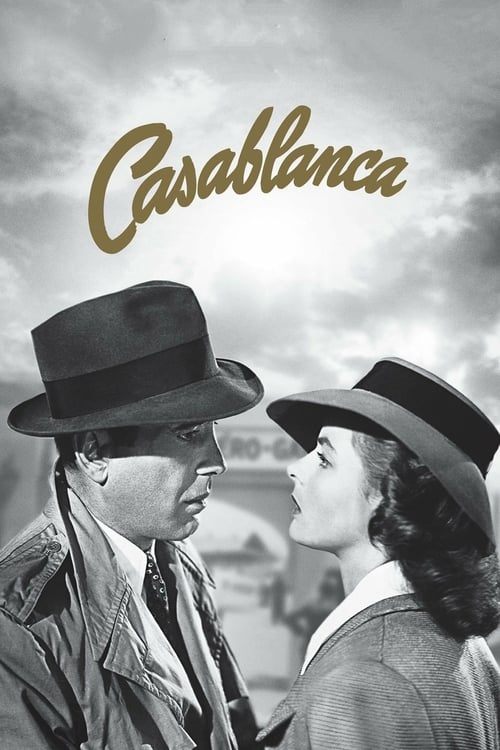
Casablanca - Review
Casablanca: A Timeless Romance Forged in the Crucible of War
In the annals of cinematic history, certain films transcend the label of mere entertainment, evolving into cultural touchstones that resonate across generations. Casablanca, released in the tumultuous year of 1943, stands as a prime example. More than just a wartime romance, it's a potent cocktail of sacrifice, patriotism, lost love, and moral ambiguity, all served with a generous dash of classic Hollywood glamour. But does this legendary film still hold up under the scrutiny of modern eyes, or has its reputation been burnished beyond recognition by decades of unwavering acclaim? Let's delve into the smoky atmosphere of Rick's Café Américain and explore the enduring magic of Casablanca.
Plot: A Crossroads of Fate and Unrequited Love
The film is set in Casablanca, Morocco, in December 1941, a city teeming with European refugees desperately seeking passage to neutral America. Rick Blaine (Humphrey Bogart), a cynical American expatriate, owns and operates the most popular nightclub in town, Rick's Café Américain. He maintains a detached and seemingly indifferent facade, claiming to "stick his neck out for nobody." His carefully constructed neutrality is shattered by the unexpected arrival of Ilsa Lund (Ingrid Bergman), the woman who abruptly left him in Paris years prior, and her husband, Victor Laszlo (Paul Henreid), a renowned Czech resistance leader.
Laszlo is desperately trying to obtain letters of transit that will allow him and Ilsa to escape to America and continue his fight against the Nazis. These letters, mysteriously acquired by Ugarte (Peter Lorre), a petty criminal, are now in Rick's possession. The plot thickens as Rick grapples with his resurfaced feelings for Ilsa, his moral obligation to help Laszlo, and the constant scrutiny of Captain Renault (Claude Rains), the corrupt and opportunistic local Prefect of Police. As the net closes around Laszlo, Rick must make a life-altering decision that will determine the fate of everyone involved.
Characters: A Symphony of Moral Ambiguity
Rick Blaine: The Wounded Idealist
Rick is the heart and soul of Casablanca. Initially presented as a hardened cynic, his past as an idealistic fighter against fascism in Spain slowly reveals itself. Bogart's performance is masterful, conveying a world-weariness that masks a deep well of pain and suppressed emotion. He's a man haunted by lost love and disillusioned by the world, yet capable of extraordinary selflessness when pushed to his breaking point. His iconic lines, delivered with Bogart's trademark gruffness, have become ingrained in popular culture.
Ilsa Lund: The Object of Desire and Moral Dilemma
Ingrid Bergman's Ilsa is a complex and enigmatic figure. Torn between her love for Rick and her loyalty to her husband, she embodies the moral quandaries of wartime. Her beauty is undeniable, but it's her vulnerability and inner turmoil that make her so compelling. While some critics have argued that Ilsa is a passive character, she's ultimately the catalyst for Rick's transformation, forcing him to confront his past and embrace his principles.
Victor Laszlo: The Unwavering Patriot
Victor Laszlo represents unwavering courage and dedication to a noble cause. He's a symbol of resistance against oppression, a man willing to sacrifice everything for freedom. While perhaps less nuanced than Rick and Ilsa, Laszlo's unwavering commitment serves as a moral compass for the film, reminding the audience of the stakes involved in the global conflict.
Captain Renault: The Charming Opportunist
Claude Rains delivers a scene-stealing performance as Captain Renault, the morally ambiguous Prefect of Police. He's a charming and witty character, but also a corrupt official who exploits his position for personal gain. Renault's evolution throughout the film, culminating in his decision to side with Rick and Laszlo, adds another layer of complexity to the narrative.
Direction: A Masterclass in Visual Storytelling
Michael Curtiz's direction is a masterclass in visual storytelling. He skillfully uses lighting, camera angles, and set design to create a palpable atmosphere of tension and intrigue. The claustrophobic setting of Rick's Café Américain reinforces the feeling of confinement and desperation that permeates the film. Curtiz expertly balances the romantic elements with the political backdrop, creating a seamless blend of genres that keeps the audience engaged from beginning to end.
Curtiz also masterfully directs the actors, drawing out nuanced performances from the entire cast. He understands the power of subtle gestures and facial expressions, allowing the actors to convey complex emotions without resorting to melodrama. The pacing of the film is also expertly handled, with moments of intense drama punctuated by moments of quiet reflection.
Cinematography: Shadow and Light in a City of Intrigue
Arthur Edeson's cinematography is crucial to the film's success. He utilizes a chiaroscuro style, employing stark contrasts between light and shadow to create a sense of mystery and foreboding. The lighting in Rick's Café Américain is particularly effective, casting long shadows that accentuate the characters' inner turmoil. Edeson's use of close-ups allows the audience to connect with the characters on a deeper level, revealing their emotions through subtle expressions.
The visual language of Casablanca is rich with symbolism. The fog-shrouded airport at the end of the film represents the uncertainty and danger that lie ahead for Laszlo and Ilsa. The rain-soaked streets of Casablanca reflect the characters' emotional state, mirroring their sadness and despair.
Performances: An Ensemble of Excellence
The performances in Casablanca are uniformly excellent. Humphrey Bogart delivers a career-defining performance as Rick Blaine, imbuing the character with a perfect blend of cynicism, vulnerability, and understated heroism. Ingrid Bergman is equally captivating as Ilsa Lund, conveying the character's inner conflict with grace and subtlety. Paul Henreid provides a strong and dignified portrayal of Victor Laszlo, while Claude Rains steals every scene he's in as Captain Renault.
The supporting cast is equally impressive, featuring memorable performances from Peter Lorre as the desperate Ugarte, Sydney Greenstreet as the black marketeer Ferrari, and Dooley Wilson as Sam, the piano player whose rendition of "As Time Goes By" adds an extra layer of emotional resonance to the film.
Themes and Messages: Sacrifice, Duty, and the Greater Good
Casablanca is a film rich in themes and messages. At its core, it's a story about sacrifice. Rick must ultimately choose between his own happiness and the greater good, putting aside his personal desires to help Laszlo continue his fight against the Nazis. The film also explores the themes of duty and patriotism, highlighting the importance of standing up for what is right, even in the face of overwhelming odds.
The film also touches on the complexities of love and relationships. Rick and Ilsa's relationship is a testament to the enduring power of love, but also a reminder of the sacrifices that are sometimes necessary in wartime. The film suggests that true love is not always about personal happiness, but about putting the needs of others first.
Furthermore, Casablanca subtly critiques the isolationist tendencies prevalent in America at the time of its release. Rick's initial reluctance to get involved in the war reflects the widespread reluctance among Americans to enter the conflict. However, his eventual decision to embrace his principles and help Laszlo can be seen as an allegory for America's eventual entry into World War II.
Comparison to Other Films and Works
Casablanca shares thematic similarities with other wartime romances, such as Waterloo Bridge (1940) and The English Patient (1996). Like these films, Casablanca explores the impact of war on personal relationships and the sacrifices that individuals are forced to make. However, Casablanca stands apart due to its unique blend of romance, intrigue, and political commentary.
Humphrey Bogart's performance in Casablanca solidified his image as a tough but ultimately honorable hero, a persona that he would revisit in later films such as The Big Sleep (1946) and The Maltese Falcon (1941). Ingrid Bergman's portrayal of Ilsa Lund is similar to her roles in other films such as Notorious (1946), where she plays a woman caught between love and duty.
Michael Curtiz, known for his versatility, directed a wide range of films, including swashbucklers like The Adventures of Robin Hood (1938) and musicals like White Christmas (1954). However, Casablanca remains his most enduring and critically acclaimed work, showcasing his ability to blend genres and create emotionally resonant stories.
Positive Aspects
Casablanca is a near-perfect film. Its strengths lie in its compelling plot, memorable characters, masterful direction, stunning cinematography, and exceptional performances. The film's themes of sacrifice, duty, and love resonate deeply with audiences, making it a timeless classic. The dialogue is sharp and witty, filled with quotable lines that have become ingrained in popular culture. The film's emotional impact is undeniable, leaving a lasting impression on viewers long after the credits roll.
Constructive Criticism
While Casablanca is widely considered a masterpiece, it's not without its minor flaws. Some critics argue that Ilsa Lund is a somewhat passive character, lacking the agency and complexity of Rick Blaine. Others have pointed out that the film's plot relies on a series of coincidences and contrivances. While these criticisms are valid, they do little to diminish the overall impact of the film. The film's pacing, while generally excellent, could be seen as slightly slow in certain sections for modern viewers accustomed to faster-paced narratives.
Furthermore, some may find the film's romanticized portrayal of wartime sacrifice somewhat unrealistic. However, it's important to remember that Casablanca was made during the war, and its primary purpose was to inspire and uplift audiences. Viewed in this context, the film's slightly idealized vision of heroism is understandable.
Conclusion and Rating
Casablanca is more than just a movie; it's a cultural phenomenon. It's a film that has captivated audiences for decades with its timeless story of love, sacrifice, and duty. While it may have a few minor flaws, its strengths far outweigh its weaknesses. The film's enduring appeal lies in its ability to resonate with audiences on a deeply emotional level, reminding us of the importance of standing up for what is right, even in the face of overwhelming odds. Casablanca is a must-see for any serious film enthusiast.
Rating: 9.8/10