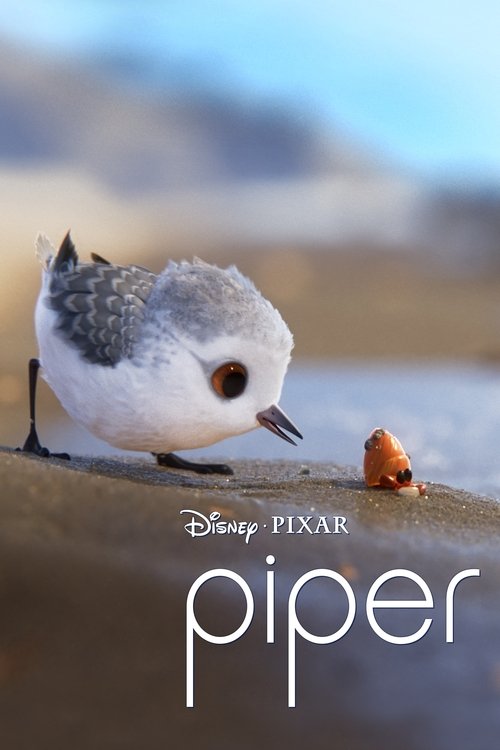
Piper - Review
Piper: A Tiny Bird, a Giant Leap of Faith
Pixar. The name itself conjures images of heartwarming stories, stunning visuals, and characters that burrow their way into your heart. Before the feature presentation of many of their films, we're treated to a short film, a bite-sized morsel of animated brilliance designed to set the stage and whet our appetites. In 2016, that morsel was Piper, a six-minute masterpiece directed by Alan Barillaro, and it's a film that proves that even the smallest of creatures can teach us the biggest lessons. Far from being a mere appetizer, Piper stands on its own as a testament to the power of observation, the importance of overcoming fear, and the sheer beauty of the natural world. But does this short film soar as high as other Pixar classics? Let's dive in and find out.
Plot: A Shorebird's Struggle for Survival
The plot of Piper is deceptively simple. It centers around a young sandpiper chick, newly hatched and eager to join its flock in the daily ritual of foraging for food along the shoreline. The film opens with a flock of adult sandpipers rhythmically darting in and out with the tide, their beaks probing the wet sand for tasty treats. Our protagonist, Piper, is coaxed out of the nest by its mother, but her first attempt at feeding ends in disaster. A large wave crashes over her, leaving her drenched, terrified, and empty-bellied. The experience leaves Piper traumatized, hesitant to venture near the water again.
However, Piper soon observes a hermit crab scuttling beneath the sand to avoid the waves. Inspired by this ingenious strategy, Piper begins to study the ebb and flow of the tide, learning to anticipate the waves and dig deeper for food. She discovers a hidden world beneath the surface, filled with delicious clams and other delicacies. Empowered by her newfound knowledge and courage, Piper not only overcomes her fear but also becomes the most successful forager in the flock, teaching her peers a new way to thrive.
Characters: A Symphony of Non-Verbal Storytelling
The brilliance of Piper lies in its ability to convey complex emotions and character development without a single word of dialogue.
Piper
Piper is the heart and soul of the film. We see her vulnerability, her fear, and her ultimate triumph. Her wide, expressive eyes perfectly capture her initial naiveté and subsequent terror. As she observes the hermit crab, we witness her curiosity and determination grow. Piper’s journey is relatable because it reflects the universal experience of facing our fears and learning to adapt to new challenges.
Piper's Mother
Piper's mother embodies the patient and supportive parent. She initially encourages Piper to join the flock but understands the importance of allowing her chick to learn at her own pace. She provides gentle guidance without being overly intrusive, allowing Piper to discover her own resilience. Her concern and love for her child are evident in her every gesture.
The Hermit Crab
The hermit crab acts as Piper's unlikely mentor. It doesn't offer direct instruction, but its behavior provides a crucial example of adaptation and problem-solving. The crab's resourcefulness and ability to thrive in a challenging environment inspire Piper to find her own way to overcome her fear. The crab is a testament to the idea that inspiration can come from unexpected sources.
The Flock
The flock represents the community and the pressures of conformity. Initially, they seem oblivious to Piper's struggle. However, by the end of the film, they are willing to learn from her, demonstrating the potential for collective growth and adaptation.
Direction: A Masterclass in Visual Storytelling
Alan Barillaro's direction is nothing short of masterful. He skillfully uses visual cues, body language, and environmental details to tell a compelling story without relying on dialogue. The pacing of the film is perfect, allowing the audience to fully immerse themselves in Piper's experience. The direction emphasizes the beauty and wonder of the natural world, creating a sense of awe and respect for the delicate balance of the ecosystem.
Barillaro's decision to focus on a single, specific event – Piper's encounter with the wave – allows him to explore the themes of fear and resilience in a deeply personal and relatable way. He avoids the trap of over-explaining or moralizing, instead trusting the audience to connect with Piper's journey on an emotional level.
Cinematography: A Feast for the Eyes
The cinematography in Piper is breathtaking. The level of detail in the animation is astounding, from the individual grains of sand to the shimmering feathers of the sandpipers. The film perfectly captures the textures and colors of the beach environment, creating a sense of realism that is both immersive and captivating.
The use of lighting is particularly effective. The bright, sunny scenes contrast sharply with the dark, underwater sequences, emphasizing Piper's fear and vulnerability. The film also utilizes shallow depth of field to draw the viewer's attention to specific details, such as Piper's expressive eyes or the intricate movements of the hermit crab.
The camera angles are carefully chosen to enhance the emotional impact of the story. Low-angle shots emphasize the size and power of the waves, while close-up shots allow us to connect with Piper's emotions on a deeper level. The dynamic camera movements, such as the sweeping shots of the flock foraging, add a sense of energy and excitement to the film.
Performances: Animation as Acting
While there are no traditional voice actors in Piper, the animation itself is a form of performance. The animators have imbued the characters with such expressive body language and facial expressions that they are able to convey a wide range of emotions without uttering a single word.
Piper's movements are particularly nuanced, capturing her awkwardness, her curiosity, and her growing confidence. The hermit crab's scuttling and digging are equally convincing, adding to the realism of the film. The collective movements of the flock are also impressive, showcasing the animators' ability to create a sense of coordinated behavior.
Themes and Messages: Lessons from the Shoreline
Piper is more than just a visually stunning short film; it's a story with profound themes and messages that resonate with audiences of all ages.
Overcoming Fear
The central theme of the film is the importance of overcoming fear. Piper's initial trauma after being hit by the wave is a relatable experience for anyone who has faced a setback or a challenging situation. The film shows that fear can be paralyzing, but it can also be a catalyst for growth. By observing the hermit crab and learning to adapt to the environment, Piper is able to conquer her fear and discover new opportunities.
Adaptation and Resilience
Piper also highlights the importance of adaptation and resilience. The natural world is constantly changing, and creatures must be able to adapt in order to survive. Piper's ability to learn from her mistakes and find new ways to forage for food demonstrates her resilience and her capacity for growth. The film suggests that adaptability is a key to success in any environment.
Observation and Learning
The film emphasizes the power of observation and learning. Piper doesn't receive direct instruction from her mother or the hermit crab; instead, she learns by observing their behavior and experimenting on her own. This underscores the importance of curiosity and a willingness to learn from the world around us. The film suggests that we can all learn something valuable from observing the natural world.
Community and Collaboration
While Piper's journey is largely individual, the film also touches on the importance of community and collaboration. By the end of the film, the flock is willing to learn from Piper's example, demonstrating the potential for collective growth and adaptation. The film suggests that we can achieve more by working together and sharing our knowledge.
Comparison to Other Films
Piper shares similarities with other Pixar shorts, particularly in its focus on character-driven storytelling and its use of stunning visuals. Like For the Birds (2000), Piper features birds as the main characters and explores themes of acceptance and understanding. However, Piper is arguably more emotionally resonant and visually sophisticated than For the Birds.
The film also shares thematic similarities with Finding Nemo (2003), which also explores the theme of overcoming fear in the face of adversity. Both films feature young characters who must learn to navigate a challenging environment and overcome their anxieties. However, Piper is a more concise and focused exploration of this theme.
In terms of animation style, Piper represents a significant step forward for Pixar. The level of detail in the animation is unprecedented, blurring the line between animation and live-action. The film's photorealistic rendering of the beach environment is particularly impressive, showcasing the studio's commitment to pushing the boundaries of animation technology.
Positive Aspects
- Stunning Visuals: The animation is breathtaking, with incredible attention to detail and photorealistic rendering.
- Compelling Story: The plot is simple yet emotionally resonant, exploring universal themes of fear, resilience, and adaptation.
- Expressive Characters: The characters are brought to life through nuanced animation and expressive body language.
- Masterful Direction: Alan Barillaro's direction is flawless, using visual cues and pacing to create a captivating experience.
- Thought-Provoking Themes: The film explores profound themes that resonate with audiences of all ages.
Constructive Criticism
- Simplicity: While the simplicity of the plot is a strength, some viewers may find it lacking in complexity. A slightly more developed narrative could have added further depth.
- Predictability: The film's narrative arc is somewhat predictable, following a familiar pattern of fear, adversity, and triumph. While this is not necessarily a flaw, it does make the film less surprising.
- Limited Scope: As a short film, Piper has a limited scope. Some viewers may wish that the story was expanded into a feature-length film to explore the characters and themes in greater detail.
Conclusion
Piper is a triumph of visual storytelling. It's a short film that packs an emotional punch, leaving a lasting impression on the viewer. While it may be brief, its themes of overcoming fear, adapting to change, and learning from the world around us resonate long after the credits roll. The stunning animation and masterful direction elevate Piper above the typical animated short, making it a true work of art. While a slightly more complex narrative would have been welcome, the film's simplicity is ultimately its strength. Piper is a must-see for animation fans and anyone who appreciates a heartwarming story about resilience and the power of observation.
Rating: 9.5/10