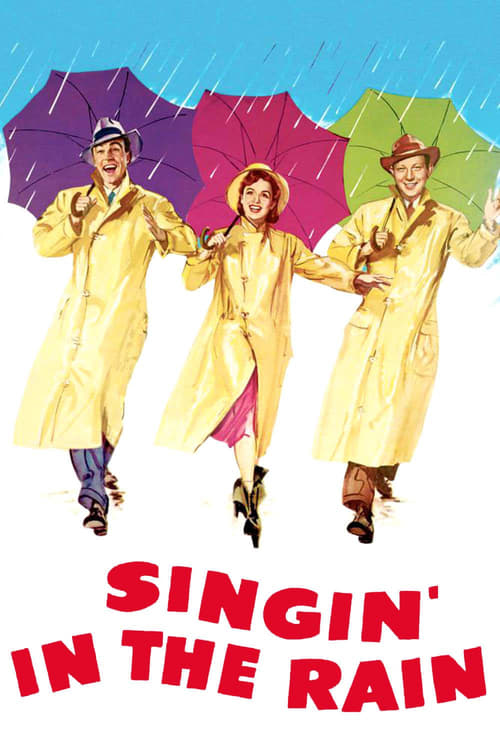
Singin' in the Rain - Review
Singin' in the Rain: A Timeless Masterpiece Review
Imagine a film so effervescent, so joyously exuberant, that it could make even the grimmest curmudgeon crack a smile. Imagine a cinematic experience so perfect in its execution, so charming in its simplicity, that it transcends generations and remains eternally fresh. That film is Singin' in the Rain, a 1952 musical comedy that isn't just a classic; it's the gold standard against which all other musicals are measured. More than just a collection of catchy tunes and dazzling dance numbers, it's a witty, insightful, and ultimately heartwarming story about the turbulent transition from silent films to "talkies" in Hollywood's Golden Age. But does this cinematic icon hold up to modern scrutiny? Let's dive in and see if it still deserves its place on the cinematic throne.
Plot Summary: Navigating the Sound Barrier
The story unfolds in 1927 Hollywood, where silent film stars Don Lockwood (Gene Kelly) and Lina Lamont (Jean Hagen) are the darlings of the silver screen. Their on-screen romance fuels their popularity, though in reality, they can barely tolerate each other. Don, a talented dancer and actor with a genuine heart, finds Lina’s shrill voice and inflated ego grating. Lina, convinced of their real-life romance, clings to Don with a possessive grip, much to his dismay.
The arrival of "The Jazz Singer," the first commercially successful talking picture, throws Hollywood into a frenzy. Monumental Pictures, Don and Lina's studio, is forced to adapt or face obsolescence. Their first attempt at a "talkie," "The Dueling Cavalier," is a disaster. Lina's grating voice, amplified by the new technology, proves unbearable. The film is screened for a test audience and immediately ridiculed.
Enter Kathy Selden (Debbie Reynolds), an aspiring actress and dancer who initially clashes with Don, but quickly captures his heart with her talent and genuine personality. Don, along with his lifelong friend and musical collaborator Cosmo Brown (Donald O'Connor), devise a daring plan to salvage "The Dueling Cavalier." They decide to turn it into a musical and dub Lina's voice with Kathy's, transforming the film into "The Dancing Cavalier."
Lina, however, is furious when she discovers the plan. Driven by jealousy and a desperate desire to maintain her stardom, she plots to sabotage Kathy's career and ensure she remains the voice of Lina Lamont, both on and off-screen. The climax arrives at the premiere of "The Dancing Cavalier," where Don, Cosmo, and the studio head expose Lina's deception, revealing Kathy as the true voice behind the star. Kathy, initially heartbroken by the subterfuge, ultimately finds her own path to stardom, winning Don's heart in the process.
Character Analysis: A Symphony of Personalities
Don Lockwood (Gene Kelly): The Charming Protagonist
Don Lockwood is the quintessential Hollywood leading man: handsome, talented, and charismatic. However, beneath the polished exterior lies a genuine artist yearning for something more than fabricated romances and empty accolades. Gene Kelly imbues Don with a captivating blend of charm and vulnerability. He's not just a dancer; he's a storyteller, using his movements to express a range of emotions, from playful exuberance to heartfelt longing. His relationship with Kathy Selden allows him to shed his superficial persona and embrace authenticity. Kelly's performance is a masterclass in physical comedy and expressive acting, making Don a truly relatable and endearing character.
Lina Lamont (Jean Hagen): The Hilariously Horrendous Villain
Lina Lamont is arguably the most memorable character in Singin' in the Rain, and Jean Hagen's portrayal is nothing short of comedic genius. Lina's shrill voice, inflated ego, and utter lack of self-awareness make her the perfect foil to Don's charm and Kathy's talent. She's not just a villain; she's a caricature of Hollywood vanity and the perils of unchecked ambition. Hagen's commitment to the role is astounding. She fully embraces Lina's ridiculousness, delivering lines with impeccable timing and physical comedy that is both hilarious and subtly poignant. While she's the antagonist, Lina's sheer absurdity makes her strangely likable, a testament to Hagen's exceptional performance.
Kathy Selden (Debbie Reynolds): The Aspiring Star
Kathy Selden represents the fresh-faced talent that Hollywood often overlooks. Debbie Reynolds, despite being a relatively inexperienced dancer at the time, delivers a charming and spirited performance. Kathy is intelligent, witty, and fiercely independent. She's not easily impressed by Hollywood glamour and holds her own against Don's initial arrogance. Her passion for acting and her genuine talent make her a worthy rival to Lina and a perfect match for Don. Reynolds' singing and dancing are impressive, especially considering the rigorous training she underwent during the film's production. Kathy's journey from aspiring actress to rising star is both inspiring and heartwarming.
Cosmo Brown (Donald O'Connor): The Comedic Genius
Cosmo Brown is the comedic backbone of Singin' in the Rain, and Donald O'Connor's performance is a tour de force of physical comedy. Cosmo is Don's lifelong friend and musical collaborator, providing both moral support and endless entertainment. His "Make 'Em Laugh" number is a highlight of the film, showcasing O'Connor's incredible athleticism and comedic timing. Cosmo is more than just a sidekick; he's an integral part of the story, contributing to the film's humor and heart. His quick wit and infectious energy make him an audience favorite.
Direction and Cinematography: A Visual Symphony
Directed by Stanley Donen and Gene Kelly, Singin' in the Rain is a masterclass in cinematic storytelling. Donen and Kelly seamlessly blend musical numbers with narrative, creating a film that is both entertaining and emotionally resonant. The direction is dynamic and inventive, utilizing creative camera angles, fluid editing, and vibrant set design to create a visually stunning experience. The film's pacing is impeccable, maintaining a high level of energy throughout without feeling rushed. The directors expertly balance the comedic and romantic elements of the story, creating a film that is both funny and heartwarming.
The cinematography, by Harold Rosson, is equally impressive. The use of Technicolor is particularly striking, enhancing the film's vibrant colors and creating a visually rich and immersive experience. The lighting is expertly crafted, highlighting the actors' expressions and adding depth to the scenes. The camera work is fluid and dynamic, capturing the energy and grace of the dance numbers. The iconic "Singin' in the Rain" sequence is a testament to the film's visual artistry, showcasing the beauty of the rain-soaked streets and Kelly's expressive performance.
Performances: A Cast at the Peak of Their Powers
The performances in Singin' in the Rain are uniformly excellent. Gene Kelly is at his peak, delivering a charismatic and nuanced performance as Don Lockwood. His dancing is breathtaking, his singing is charming, and his acting is surprisingly subtle. Debbie Reynolds, despite her relative inexperience, holds her own against Kelly and O'Connor, delivering a spirited and endearing performance as Kathy Selden. Donald O'Connor is a comedic force of nature, stealing every scene he's in with his boundless energy and impeccable timing. Jean Hagen is simply brilliant as Lina Lamont, creating a character that is both hilarious and surprisingly sympathetic. The supporting cast is equally strong, adding depth and color to the film's vibrant world.
Themes and Messages: More Than Just a Musical
Singin' in the Rain is more than just a fluffy musical; it explores several important themes. One of the central themes is the transformative power of technology. The film depicts the chaos and uncertainty that gripped Hollywood during the transition from silent films to talkies. It explores the challenges faced by actors and filmmakers as they adapted to the new technology, highlighting the importance of innovation and adaptability. The film also examines the nature of fame and the illusion of Hollywood. Don and Lina's on-screen romance is a fabrication, highlighting the manufactured nature of celebrity. The film exposes the superficiality and vanity that can permeate the entertainment industry, while also celebrating the genuine talent and hard work that are essential for success. Finally, the film celebrates the importance of authenticity and self-expression. Kathy's journey is a testament to the power of staying true to oneself and pursuing one's passions. Don's transformation from a superficial leading man to a genuine artist is a result of his connection with Kathy and his willingness to embrace authenticity.
Comparison to Other Films and Works
Singin' in the Rain is often compared to other classic Hollywood musicals, such as An American in Paris (1951), also directed by Vincente Minnelli, and The Band Wagon (1953), directed by Vincente Minnelli. While all three films are visually stunning and feature memorable musical numbers, Singin' in the Rain stands out for its wit, its satirical take on Hollywood, and its focus on the transition from silent films to talkies. Gene Kelly's earlier work, such as On the Town (1949), also co-directed with Stanley Donen, showcases his innovative choreography and his ability to blend dance with narrative. However, Singin' in the Rain is arguably his most accomplished work, showcasing his talents as a dancer, actor, and director.
Positive Aspects: A Symphony of Perfection
Singin' in the Rain is a triumph of filmmaking on virtually every level. The performances are excellent, the direction is inventive, the cinematography is stunning, and the music is unforgettable. The film's humor is timeless, its romance is heartwarming, and its message is inspiring. The "Singin' in the Rain" sequence is a cinematic masterpiece, showcasing Kelly's incredible talent and the film's visual artistry. The "Make 'Em Laugh" number is a comedic tour de force, showcasing O'Connor's physical prowess and comedic timing. The film's depiction of Hollywood's Golden Age is both nostalgic and insightful, offering a glimpse into a bygone era of filmmaking.
Constructive Criticism: Searching for Imperfection
While Singin' in the Rain is widely considered a masterpiece, it's not without its minor flaws. Some critics argue that the film's plot is somewhat predictable and that the characters are somewhat stereotypical. However, these criticisms are largely outweighed by the film's many strengths. Debbie Reynolds, while charming, was not a trained dancer like Kelly and O'Connor, and this is noticeable in some of the dance sequences. The "Broadway Melody" ballet sequence, while visually impressive, feels somewhat out of place and slows down the film's momentum. However, these are minor quibbles in an otherwise flawless film.
Conclusion: A Timeless Treasure
Singin' in the Rain is more than just a classic; it's a cinematic treasure. It's a film that can be enjoyed by audiences of all ages and backgrounds. Its timeless humor, its unforgettable music, and its heartwarming story make it a truly special and enduring work of art. It's a film that reminds us of the power of cinema to entertain, to inspire, and to transport us to another world. Singin' in the Rain is a film that deserves to be celebrated and cherished for generations to come.
Rating: 10/10
A perfect score for a perfect film. Singin' in the Rain remains a shining example of the magic of Hollywood's Golden Age and a testament to the enduring power of musical cinema.