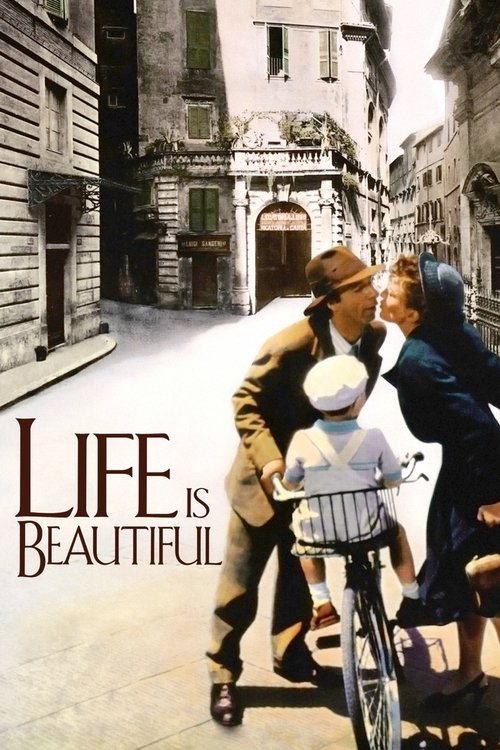
Life Is Beautiful - Review
Life Is Beautiful: A Review of a Masterpiece of Hope Amidst Horror
Roberto Benigni's Life Is Beautiful, released in 1997, isn't just a film; it's an experience. It's a gut-wrenching, heart-soaring, tear-inducing journey that explores the depths of human resilience and the power of imagination in the face of unimaginable evil. It's a film that dares to find humor in the Holocaust, not to diminish its horrors, but to illuminate the enduring spirit of a father's love. Is it a perfect film? Perhaps not. But its imperfections are overshadowed by its profound impact and unwavering message of hope. This review delves into the intricate layers of Life Is Beautiful, examining its plot, characters, direction, cinematography, performances, themes, and its place within the broader cinematic landscape.
Plot Analysis: From Fairy Tale Romance to Harrowing Reality
The film unfolds in two distinct acts. The first act is a whimsical, almost Chaplinesque, romantic comedy set in pre-war Italy. Guido Orefice (Roberto Benigni), a charming and irrepressible Jewish waiter, arrives in Arezzo with dreams of opening a bookstore. His early scenes are filled with slapstick humor, mistaken identities, and a relentless pursuit of his "principessa," Dora (Nicoletta Braschi). Benigni crafts a world filled with quirky characters and improbable situations, establishing Guido as a man who sees the world through a lens of optimism and imagination. His persistent pursuit of Dora, culminating in their unlikely romance, is both endearing and hilarious. He literally sweeps her off her feet, even stealing her away from her fiancé on her wedding day.
The second act takes a stark turn as the Nazi occupation of Italy intensifies. Guido, Dora, and their young son, Giosuè (Giorgio Cantarini), are deported to a concentration camp. In a desperate attempt to shield his son from the horrors around them, Guido convinces Giosuè that the camp is all part of an elaborate game. He invents rules, assigns points, and promises a real tank as the grand prize for the winner. This elaborate charade becomes Guido's lifeline, allowing him to protect Giosuè's innocence and maintain a semblance of normalcy in the face of unimaginable suffering.
The brilliance of the plot lies in its juxtaposition of these two contrasting worlds. The lightheartedness of the first act serves to heighten the impact of the second. We see how a man who once used his imagination to woo his beloved now uses it to save his child's life. The transition is seamless, yet jarring, forcing the audience to confront the abrupt and devastating shift in reality that many Jewish families faced during World War II.
Character Analysis: Love, Innocence, and the Power of Imagination
Guido Orefice: The Enduring Optimist
Guido is the heart and soul of Life Is Beautiful. He is a force of nature, a whirlwind of energy and enthusiasm. His unwavering optimism, even in the face of adversity, is both inspiring and heartbreaking. Benigni's portrayal of Guido is a masterclass in physical comedy and emotional depth. He is not simply a clown; he is a complex and nuanced character who is willing to sacrifice everything for his son. His love for Giosuè is the driving force behind his actions, and it is this love that ultimately defines him.
Dora: The Silent Strength
Dora, played by Nicoletta Braschi, is often overshadowed by Guido's larger-than-life personality. However, she is a crucial part of the story. As a non-Jewish woman, she voluntarily boards the train to the concentration camp with her husband and son, demonstrating her unwavering loyalty and love. While she doesn't have the same comedic flair as Guido, her quiet strength and unwavering support are essential to the film's emotional core. Her scenes in the women's camp, searching desperately for news of her family, are particularly poignant.
Giosuè: The Innocent Observer
Giosuè, played by Giorgio Cantarini, is the innocent observer through whose eyes we experience the horrors of the concentration camp. He is a typical young boy, full of energy and curiosity. Guido's game is designed to protect him from the truth, but Giosuè is not entirely oblivious. He senses the danger and fear around him, but he trusts his father implicitly. Cantarini's performance is remarkable for such a young actor. He conveys both the innocence and the resilience of a child caught in extraordinary circumstances.
Dr. Lessing: The Ambiguous Antagonist
Dr. Lessing, played by Horst Buchholz, is a more ambiguous character. He is a German doctor who Guido befriends before the war. Later, in the concentration camp, he recognizes Guido and seeks his help with a riddle. This subplot adds another layer of complexity to the film, suggesting that even in the darkest of times, humanity can still be found in unexpected places. However, his ultimate allegiance remains with the Nazi regime, highlighting the moral compromises that many individuals made during the war.
Direction and Cinematography: A Deliberate Contrast
Roberto Benigni's direction is both masterful and controversial. His decision to incorporate humor into a film about the Holocaust has been met with both praise and criticism. However, it is precisely this juxtaposition of comedy and tragedy that makes Life Is Beautiful so unique and powerful. Benigni uses humor not to trivialize the Holocaust, but to highlight the absurdity of it and to showcase the resilience of the human spirit.
The cinematography, by Tonino Delli Colli, is equally deliberate. The first act is shot in a bright, vibrant style, reflecting the optimism and energy of Guido's world. The second act is darker and more somber, reflecting the horrors of the concentration camp. However, even in the darkest scenes, there are moments of beauty and hope. Delli Colli uses light and shadow to create a sense of claustrophobia and despair, but also to highlight the moments of human connection and resilience.
The use of color is also significant. The vibrant colors of the first act contrast sharply with the muted tones of the second. This visual contrast reinforces the thematic contrast between the two halves of the film. The costumes also play a role in creating this contrast. Guido's colorful and eccentric clothing in the first act is replaced by the drab and uniform clothing of the concentration camp prisoners.
Performances: A Triumph of Emotion
The performances in Life Is Beautiful are uniformly excellent. Roberto Benigni's portrayal of Guido is a tour de force. He seamlessly blends physical comedy with emotional depth, creating a character that is both hilarious and heartbreaking. Nicoletta Braschi delivers a powerful and understated performance as Dora. Her quiet strength and unwavering loyalty are essential to the film's emotional core. Giorgio Cantarini is remarkable as Giosuè. His innocence and resilience are both endearing and heartbreaking. The supporting cast is also excellent, particularly Horst Buchholz as Dr. Lessing.
Benigni's direction of the actors is particularly noteworthy. He elicits natural and believable performances from the entire cast, even the child actors. He creates a sense of intimacy and connection between the characters, making their relationships feel real and authentic. The performances are so compelling that they draw the audience into the story and make them feel deeply invested in the characters' fates.
Themes and Messages: Love, Hope, and the Power of the Human Spirit
Life Is Beautiful explores several profound themes, including the power of love, the importance of hope, and the resilience of the human spirit in the face of unimaginable adversity. The film's central message is that even in the darkest of times, it is possible to find beauty and meaning in life. Guido's unwavering love for his son is the driving force behind his actions, and it is this love that ultimately allows him to protect Giosuè from the horrors of the concentration camp.
The film also explores the theme of innocence. Giosuè represents the innocence of childhood, which Guido is determined to protect. By convincing Giosuè that the concentration camp is all part of a game, Guido is able to shield him from the truth and preserve his innocence. This act of selflessness is both heroic and heartbreaking.
Another important theme is the power of imagination. Guido uses his imagination to create a world of fantasy for Giosuè, a world where the concentration camp is just a game and where anything is possible. This act of imagination is not simply escapism; it is a form of resistance. By refusing to succumb to despair, Guido is able to maintain his humanity and to give Giosuè hope.
Ultimately, Life Is Beautiful is a testament to the enduring power of the human spirit. It is a film that reminds us that even in the face of unimaginable evil, it is possible to find love, hope, and meaning in life. The film's message is both universal and timeless, and it resonates with audiences around the world.
Comparison to Similar Films and Previous Works
Life Is Beautiful has been compared to other films that deal with the Holocaust, such as Schindler's List and The Pianist. However, Life Is Beautiful is unique in its use of humor and its focus on the power of imagination. While Schindler's List is a harrowing and realistic depiction of the Holocaust, Life Is Beautiful is more of a fable, a story that uses the Holocaust as a backdrop to explore universal themes of love, hope, and resilience.
Benigni's previous works, such as Johnny Stecchino and The Monster, are also characterized by their use of slapstick humor and their exploration of human foibles. However, Life Is Beautiful is a more ambitious and emotionally complex film than his previous works. It is a film that takes risks and dares to be both funny and tragic.
The film also shares thematic similarities with Charlie Chaplin's The Great Dictator, which also used humor to satirize the Nazi regime. However, Life Is Beautiful is a more personal and intimate film than The Great Dictator. It focuses on the experiences of one family, rather than on the broader political context of the war.
Positive Aspects and Constructive Criticism
Positive Aspects:
- Powerful and Moving Story: The film tells a compelling and emotionally resonant story about the power of love and hope in the face of unimaginable adversity.
- Excellent Performances: The performances, particularly by Roberto Benigni and Giorgio Cantarini, are outstanding.
- Masterful Direction: Roberto Benigni's direction is both innovative and effective.
- Beautiful Cinematography: The cinematography is visually stunning and enhances the film's emotional impact.
- Profound Themes: The film explores profound themes of love, hope, innocence, and the resilience of the human spirit.
Constructive Criticism:
- Sentimentality: Some critics have argued that the film is overly sentimental and that its use of humor is inappropriate given the subject matter. While the sentimentality is undeniable, it is arguably essential to the film's message of hope.
- Historical Accuracy: The film has been criticized for its lack of historical accuracy. While it is true that the film takes liberties with historical facts, it is not intended to be a documentary. Its primary goal is to tell a story about the power of love and hope, not to provide a historically accurate account of the Holocaust.
- Simplistic Portrayal of Evil: While the horrors of the concentration camp are evident, some argue that the film simplifies the nature of evil and the complexities of the Holocaust.
Despite these criticisms, Life Is Beautiful remains a powerful and moving film that has resonated with audiences around the world. Its message of hope and resilience is particularly relevant in today's world, where we are constantly confronted with violence and suffering.
Conclusion: A Timeless Testament to the Human Spirit
Life Is Beautiful is a film that stays with you long after the credits have rolled. It is a film that makes you laugh, cry, and think. It is a film that reminds you of the power of love, the importance of hope, and the resilience of the human spirit. While it may not be a perfect film, its imperfections are overshadowed by its profound impact and unwavering message. It's a film that dares to find beauty in the midst of horror, and in doing so, it offers a powerful testament to the enduring strength of the human heart.
Life Is Beautiful is a must-see for anyone who appreciates cinema that is both entertaining and thought-provoking. It is a film that will stay with you long after the credits have rolled, reminding you of the power of love, hope, and the human spirit.