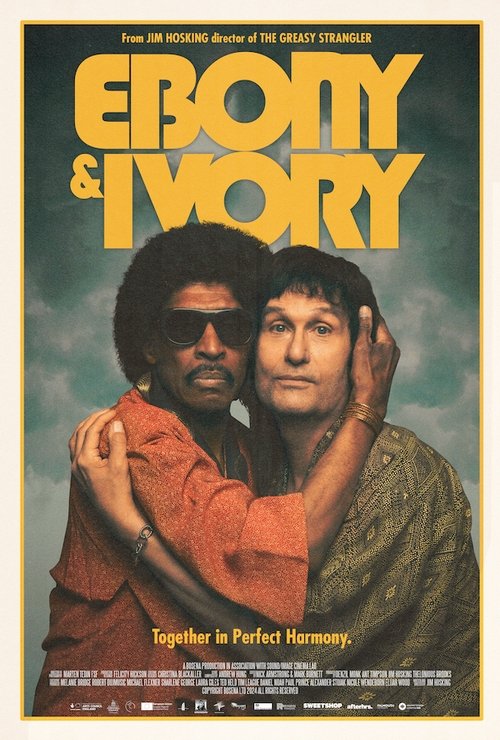
Ebony & Ivory - Review
Ebony & Ivory: A Tonal Symphony of Collaboration and Conflict
The year is 2025. The world, weary of manufactured pop and algorithm-driven hits, craves authenticity. Enter Ebony & Ivory, a film that dares to peek behind the curtain of musical genius, revealing the messy, hilarious, and ultimately heartwarming process of creating a global anthem. Released on August 8th, 2025, this dramedy, directed by the seasoned auteur Amelia Stone, isn't just about the music; it's about the clash of egos, the bridge-building of generations, and the enduring power of human connection. Stone, known for her character-driven narratives and subtle humor, takes a bold step into the world of musical legends, crafting a film that is both intimate and epic in its scope. Prepare to be captivated, challenged, and ultimately moved by this cinematic ode to collaboration.
Plot: A Highland Harmony of Discord
The premise is deceptively simple: two musical titans, the aging rock god Alistair "Al" Blackwood (played with grizzled charm by Ewan McGregor) and the young, chart-topping R&B sensation, Imani "Ivy" Jones (portrayed with vibrant energy by Zendaya), find themselves holed up in a remote Scottish cottage on the Mull Of Kintyre. Their mission, should they choose to accept it: write a song. The catch? Alistair, a relic of the stadium rock era, is stubbornly resistant to change, clinging to his vintage guitars and rebellious spirit. Imani, a digital native with a voice that could melt glaciers, is equally uncompromising, fiercely protective of her artistic vision and determined to prove her mettle against the old guard.
The initial days are a cacophony of clashing personalities and creative differences. Alistair, fueled by whiskey and nostalgia, churns out bluesy riffs that sound like they were ripped from a 1970s arena rock album. Imani, armed with her laptop and a library of samples, crafts intricate beats and soulful melodies that Alistair dismisses as "soulless noise." The tension is palpable, the air thick with unspoken resentments and generational divides. Their manager, a perpetually stressed-out veteran of the music industry named Barry (a brilliantly understated performance by Bill Nighy), tries desperately to mediate, serving as a comedic buffer between the two volatile artists.
As the days turn into weeks, however, cracks begin to appear in their hardened facades. A shared love for classic soul music, a late-night jam session fueled by mutual respect, and a surprisingly candid conversation about their individual struggles gradually chip away at their initial animosity. They begin to listen to each other, not just as musicians, but as human beings. Alistair learns to appreciate the power of modern production techniques, while Imani discovers the raw emotion and timeless appeal of Alistair's songwriting.
The creation of the song itself, a soaring ballad titled "Echoes in the Glen," becomes a metaphor for their evolving relationship. It's a painstaking process, filled with moments of frustration, inspiration, and unexpected breakthroughs. They argue over lyrics, tempos, and instrumental arrangements, but through it all, a genuine collaboration begins to emerge. The film cleverly interweaves scenes of their creative process with flashbacks to their individual pasts, revealing the experiences that shaped them as artists and as people. We see Alistair's rise and fall from grace, his struggles with addiction and the pressures of fame. We witness Imani's relentless pursuit of her dreams, her battles against industry sexism and racism, and her unwavering commitment to her art.
The climax of the film arrives with the unveiling of "Echoes in the Glen." The song, a perfect blend of Alistair's classic rock sensibilities and Imani's contemporary R&B flair, is an instant hit. It tops the charts worldwide, uniting audiences across generations and cultures. But the film doesn't end there. Stone wisely avoids a simplistic "happily ever after" ending. Alistair and Imani, while now friends and collaborators, still have their own paths to follow. The film concludes with them performing the song live at a global music festival, a triumphant moment that celebrates their individual talents and the power of their unlikely partnership.
Characters: A Duet of Personalities
Ebony & Ivory lives and breathes through its characters. Alistair Blackwood, the aging rock star, is a complex and compelling figure. McGregor imbues him with a world-weariness that is both heartbreaking and endearing. He's a man haunted by his past, struggling to stay relevant in a rapidly changing music landscape. But beneath his gruff exterior lies a genuine artistic soul, yearning for connection and redemption. McGregor's performance is nuanced and subtle, capturing Alistair's vulnerability and his unwavering passion for music.
Imani Jones, the rising R&B star, is a force of nature. Zendaya brings an undeniable charisma and energy to the role, portraying Imani as a confident and ambitious artist who is determined to make her mark on the world. But beneath her confident exterior, Imani is also grappling with her own insecurities and pressures. She's constantly fighting to be taken seriously as an artist, battling against the stereotypes and expectations that are often placed upon young Black women in the music industry. Zendaya's performance is both powerful and vulnerable, showcasing Imani's strength and her humanity.
Bill Nighy, as Barry, the long-suffering manager, provides much-needed comic relief. He's the glue that holds the entire operation together, navigating the egos and eccentricities of his two star clients with a mixture of exasperation and affection. Nighy's deadpan delivery and impeccable timing are perfectly suited to the role, making Barry a memorable and relatable character.
The supporting cast, while smaller, also adds depth and texture to the film. Fiona Shaw plays Alistair's estranged wife, a woman who understands him better than anyone else. Her brief but powerful scenes with McGregor are among the most emotionally resonant in the film. John Sessions plays the local pub owner, a colorful character who provides Alistair with a much-needed dose of normalcy and perspective.
Direction and Cinematography: A Visual Melody
Amelia Stone's direction is masterful, creating a film that is both visually stunning and emotionally resonant. She uses the stunning Scottish landscape as a backdrop for the drama, capturing the rugged beauty of the Mull Of Kintyre with breathtaking cinematography. The film is visually rich, with sweeping aerial shots of the coastline contrasting with intimate close-ups of the characters' faces. The lighting is particularly effective, creating a warm and inviting atmosphere in the cottage, while also capturing the harshness of the Scottish weather.
Stone's direction is also notable for its subtle use of symbolism. The cottage itself becomes a metaphor for the collaboration between Alistair and Imani. It's a place where they are forced to confront their differences and find common ground. The ever-present ocean serves as a reminder of the vastness of the world and the smallness of their individual struggles. The musical instruments, of course, are also symbolic, representing their individual talents and the potential for harmony.
The film's editing is also top-notch, seamlessly weaving together scenes of the present with flashbacks to the characters' pasts. The pacing is deliberate, allowing the audience to fully immerse themselves in the story and connect with the characters on an emotional level.
Themes and Messages: Bridging the Generational Divide
Ebony & Ivory explores a number of important themes, including the power of collaboration, the importance of bridging the generational divide, and the enduring appeal of authentic music. The film argues that true creativity can only flourish when people are willing to listen to each other, to learn from each other, and to embrace their differences. It also suggests that the music industry, often driven by commercial interests, needs to make room for artists who are willing to take risks and push boundaries.
The film's central message is one of hope and reconciliation. It suggests that even in a world that is increasingly divided, it is still possible to find common ground and build bridges of understanding. Alistair and Imani, despite their vastly different backgrounds and experiences, are able to connect on a human level through their shared love of music. Their collaboration becomes a symbol of hope for a more unified and harmonious future.
The film also touches on themes of aging, relevance, and the fear of being forgotten. Alistair's struggles to stay relevant in a rapidly changing music landscape are relatable to anyone who has ever felt like they are losing their grip on their youth. Imani's battles against sexism and racism are a reminder of the ongoing challenges faced by women and people of color in the entertainment industry.
Performances: A Symphony of Talent
The performances in Ebony & Ivory are uniformly excellent. Ewan McGregor delivers a career-defining performance as Alistair Blackwood, capturing the character's complexity and vulnerability with remarkable skill. Zendaya is equally impressive as Imani Jones, bringing a vibrancy and energy to the role that is both captivating and inspiring. Their on-screen chemistry is undeniable, making their unlikely partnership believable and compelling.
Bill Nighy is a standout as Barry, providing much-needed comic relief without ever resorting to caricature. Fiona Shaw and John Sessions also deliver memorable performances in their supporting roles.
The film's musical performances are also a highlight. McGregor and Zendaya both demonstrate their vocal talents, performing "Echoes in the Glen" with passion and conviction. The film's soundtrack, which features a mix of original songs and classic tracks, is a perfect complement to the story.
Comparisons: Echoes of the Past, Harmonies of the Future
Ebony & Ivory draws comparisons to other films that explore the themes of musical collaboration and generational divides, such as Begin Again and Walk the Line. However, Stone's film distinguishes itself through its nuanced character development, its stunning cinematography, and its ultimately hopeful message. Unlike some of its predecessors, Ebony & Ivory avoids simplistic plot resolutions and instead focuses on the complexities of human relationships.
Amelia Stone's previous work, including the critically acclaimed dramas The Lighthouse Keeper's Daughter and The Silent Symphony, is characterized by its focus on character-driven narratives and its exploration of complex human emotions. Ebony & Ivory represents a departure from her earlier work in terms of its tone and subject matter, but it retains her signature attention to detail and her ability to create emotionally resonant stories.
Ewan McGregor's performance as Alistair Blackwood can be compared to his earlier roles as musicians in films like Velvet Goldmine and Moulin Rouge! However, his portrayal of Alistair is more nuanced and mature, reflecting his own growth as an actor. Zendaya's performance as Imani Jones showcases her versatility as an actress, demonstrating her ability to handle both dramatic and comedic roles with equal skill.
Positive Aspects: A Resounding Success
Ebony & Ivory is a triumph on many levels. The performances are outstanding, the direction is masterful, and the cinematography is breathtaking. The film's themes are timely and relevant, and its message of hope and reconciliation is both inspiring and uplifting. The soundtrack is superb, and the original song "Echoes in the Glen" is a genuine earworm.
The film's greatest strength lies in its character development. Alistair and Imani are both complex and relatable characters, and their unlikely partnership is both believable and compelling. The film's exploration of the generational divide is particularly well-handled, avoiding simplistic stereotypes and instead focusing on the shared humanity of the two artists.
The film's humor is also a highlight, providing much-needed levity without ever undermining the seriousness of the underlying themes. Bill Nighy's performance as Barry is a particular delight, and his deadpan delivery is perfectly suited to the role.
Constructive Criticism: A Few Minor Chords
While Ebony & Ivory is a largely successful film, it is not without its flaws. The film's pacing can be a bit slow at times, particularly in the first act. Some viewers may find the flashbacks to the characters' pasts to be distracting or unnecessary.
The film's ending, while ultimately satisfying, could have been more impactful. The final performance of "Echoes in the Glen" is a bit anticlimactic, lacking the emotional punch that it could have had.
Additionally, while the film does address the issue of sexism and racism in the music industry, it could have explored these themes in greater depth. Imani's struggles are somewhat glossed over, and her character could have been given more agency.
Conclusion: A Harmonious Masterpiece
Despite its minor flaws, Ebony & Ivory is a truly remarkable film. It's a celebration of music, collaboration, and the enduring power of human connection. Amelia Stone has crafted a film that is both visually stunning and emotionally resonant, and the performances are uniformly excellent. This is a film that will stay with you long after the credits have rolled.
Ebony & Ivory is a must-see for music lovers, film enthusiasts, and anyone who believes in the power of hope and reconciliation. It's a film that will make you laugh, make you cry, and make you believe in the possibility of a better future.
Rating: 9.2/10