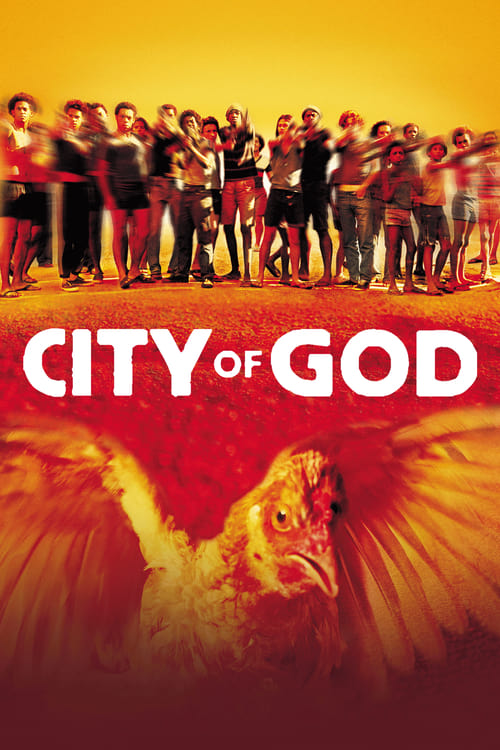
City of God - Review
City of God: A Visceral Portrait of a Lost Generation
Imagine a place where childhood is a fleeting memory, where innocence is a luxury few can afford, and where the only law is the law of the gun. This is the world Fernando Meirelles plunges us into with City of God, a cinematic tour-de-force that sears itself into your memory long after the credits roll. Released in 2002, this unflinching and unforgettable film offers a raw, brutal, and ultimately human look at the favelas of Rio de Janeiro, leaving viewers breathless with its kinetic energy and heartbroken by its tragic realities. Prepare to be captivated, disturbed, and deeply moved.
Plot: A Chronicle of Violence and Opportunity
City of God isn't just a crime drama; it's a coming-of-age story set against the backdrop of escalating violence. The film follows the lives of two young boys, Rocket and Zé Pequeno (also known as Li'l Zé), as they navigate the treacherous landscape of the favelas in the 1970s and 80s. Rocket, our narrator, dreams of escaping the cycle of poverty and violence through his passion for photography. He's an observer, a witness to the horrors unfolding around him, documenting the lives of those trapped in the City of God. Zé Pequeno, on the other hand, is driven by an insatiable hunger for power. He's ruthless, violent, and single-minded in his pursuit of becoming the undisputed kingpin of the favelas.
The film cleverly weaves together multiple storylines, introducing a cast of characters whose lives are inextricably linked. We see the rise and fall of various gangs, the brutal realities of drug trafficking, and the devastating impact of violence on the community. The narrative structure, while initially disorienting, ultimately serves to create a rich tapestry of interconnected lives, highlighting the cyclical nature of violence and the limited choices available to those born into this environment. The film masterfully avoids glorifying the violence; instead, it presents it as a tragic consequence of poverty, neglect, and systemic inequality.
Characters: A Spectrum of Humanity
One of the film's greatest strengths lies in its richly drawn and complex characters. These aren't just caricatures of criminals; they are individuals with hopes, dreams, fears, and flaws. The performances, largely by non-professional actors from the favelas themselves, lend an authenticity and rawness that is truly remarkable.
- Rocket (Alexandre Rodrigues): As our narrator and protagonist, Rocket provides a crucial perspective. He's not a hero, but he's a survivor. He's torn between his desire to escape the favelas and his loyalty to his friends and family. His journey is one of self-discovery, as he learns to navigate the complexities of his environment and ultimately finds his voice through his photography.
- Zé Pequeno (Leandro Firmino): Zé Pequeno is a terrifying force of nature. He's a sociopath, driven by an insatiable lust for power and a complete disregard for human life. Firmino's performance is chillingly believable, capturing the character's unpredictable nature and his capacity for extreme violence. Despite his monstrous actions, the film also hints at the circumstances that shaped him, suggesting that he is as much a product of his environment as a perpetrator of its violence.
- Bené (Phellipe Haagensen): Bené is Zé Pequeno's charismatic and relatively peaceful right-hand man. He represents a different path, a possibility of escaping the violence through love and connection. His death is a pivotal moment in the film, marking the beginning of Zé Pequeno's descent into madness and the escalation of the conflict.
- Knockout Ned (Seu Jorge): Knockout Ned is a former soldier who seeks revenge after his girlfriend is assaulted by Zé Pequeno. He becomes a formidable opponent, leading a rival gang and challenging Zé Pequeno's dominance. Seu Jorge brings a quiet intensity to the role, portraying Ned as a man driven by honor and a desire for justice in a world where justice is often elusive.
The supporting characters are equally compelling, each contributing to the film's rich tapestry of human experience. From the innocent children forced to carry guns to the desperate mothers struggling to protect their families, City of God offers a multifaceted portrait of a community struggling to survive.
Direction: A Masterclass in Kinetic Storytelling
Fernando Meirelles' direction is nothing short of masterful. He employs a variety of techniques to create a visceral and immersive experience for the viewer. The film's frenetic pace, handheld camera work, and rapid editing create a sense of urgency and chaos, mirroring the chaotic reality of life in the favelas. Meirelles expertly balances moments of intense violence with moments of quiet reflection, allowing the audience to connect with the characters on a human level.
One of the most striking aspects of Meirelles' direction is his use of non-professional actors. By casting individuals from the favelas themselves, he brings an unparalleled level of authenticity to the film. He worked closely with the actors, encouraging them to improvise and draw on their own experiences to bring their characters to life. This collaborative approach resulted in performances that are raw, honest, and deeply moving.
Meirelles' decision to use Rocket as the narrator is also a stroke of genius. By telling the story through Rocket's eyes, he provides a crucial filter for the violence. We see the events unfold through the perspective of someone who is both a participant and an observer, allowing us to understand the complexities of the situation without being overwhelmed by the brutality.
Cinematography: A Visual Feast of Contrasts
The cinematography, by César Charlone, is simply stunning. He captures the vibrant colors and textures of the favelas, creating a visually arresting world that is both beautiful and disturbing. Charlone's use of light and shadow is particularly effective, highlighting the stark contrasts between hope and despair, innocence and corruption. He often uses close-ups to capture the raw emotions on the actors' faces, drawing the audience into their inner world.
The film's color palette is also carefully considered. The bright, saturated colors of the favelas initially create a sense of vibrancy and energy. However, as the violence escalates, the colors become more muted and desaturated, reflecting the growing sense of hopelessness and despair. This subtle shift in visual tone effectively underscores the film's thematic concerns.
Charlone's use of handheld camera work and rapid editing contributes to the film's sense of urgency and chaos. The camera often moves erratically, mimicking the unpredictable nature of life in the favelas. This technique creates a sense of immediacy and immerses the viewer in the heart of the action.
Performances: Raw Authenticity and Emotional Power
As previously mentioned, the performances in City of God are truly remarkable. The fact that many of the actors were non-professionals from the favelas themselves lends an unparalleled level of authenticity to the film. Each actor embodies their character with a raw honesty and emotional power that is deeply moving.
Leandro Firmino's portrayal of Zé Pequeno is particularly chilling. He captures the character's sociopathic tendencies with a chillingly believable performance. Alexandre Rodrigues brings a quiet strength and vulnerability to the role of Rocket, making him a relatable and sympathetic protagonist. Phellipe Haagensen's portrayal of Bené is charismatic and heartbreaking, while Seu Jorge brings a quiet intensity to the role of Knockout Ned.
The performances of the child actors are also particularly noteworthy. They convey the innocence and vulnerability of children forced to grow up in a violent environment. Their performances are a stark reminder of the devastating impact of violence on the youngest members of the community.
Themes and Messages: A Commentary on Poverty, Violence, and Systemic Inequality
City of God is more than just a crime drama; it's a powerful commentary on poverty, violence, and systemic inequality. The film explores the cyclical nature of violence, highlighting how poverty and lack of opportunity can lead to crime, which in turn perpetuates poverty and violence. It also examines the corrosive effects of corruption and the failure of institutions to protect the most vulnerable members of society.
The film also raises important questions about the role of the media in shaping our perceptions of violence. Rocket's photography serves as a powerful reminder of the importance of bearing witness to injustice and giving voice to the voiceless. However, the film also acknowledges the potential for exploitation and sensationalism, highlighting the ethical dilemmas faced by those who document violence.
Ultimately, City of God is a story about survival and the human spirit's capacity for resilience. Despite the overwhelming odds, the characters in the film find ways to cope, to connect, and to find meaning in their lives. The film's ending, while bittersweet, offers a glimmer of hope, suggesting that it is possible to break the cycle of violence and create a better future.
Comparison to Other Films
City of God has been compared to other films that explore similar themes of poverty, violence, and social inequality, such as La Haine (1995), Boyz n the Hood (1991), and Pixote (1980). Like these films, City of God offers a raw and unflinching look at the lives of marginalized communities, highlighting the systemic factors that contribute to their struggles. However, City of God stands apart in its unique visual style, its frenetic pace, and its use of non-professional actors. The film's focus on the interconnected lives of its characters also sets it apart, creating a rich tapestry of human experience that is both compelling and heartbreaking.
While Fernando Meirelles had directed other films before *City of God*, none achieved the same level of critical acclaim or cultural impact. His subsequent works, such as *The Constant Gardener* and *Blindness*, demonstrate his continued interest in exploring complex social and political issues through a visually arresting and emotionally engaging lens. However, *City of God* remains his most iconic and influential film, cementing his reputation as one of the most talented and innovative directors of his generation.
Positive Aspects
- Authenticity: The use of non-professional actors from the favelas lends an unparalleled level of authenticity to the film.
- Direction: Fernando Meirelles' direction is masterful, creating a visceral and immersive experience for the viewer.
- Cinematography: César Charlone's cinematography is stunning, capturing the vibrant colors and textures of the favelas.
- Characters: The characters are richly drawn and complex, each with their own hopes, dreams, and flaws.
- Themes: The film explores important themes of poverty, violence, and systemic inequality.
Constructive Criticism
- Pacing: The film's frenetic pace can be overwhelming at times, making it difficult to keep track of the various storylines and characters.
- Violence: The film's graphic violence may be disturbing for some viewers. While the violence is essential to the story, it could be argued that some scenes are gratuitous.
- Narrative Structure: The film's non-linear narrative structure can be confusing at times, particularly in the first act.
Conclusion
City of God is a cinematic masterpiece that deserves all the praise it has received. It's a raw, unflinching, and ultimately human look at the lives of those trapped in the favelas of Rio de Janeiro. The film is visually stunning, emotionally powerful, and thought-provoking. While the violence may be disturbing for some viewers, it is essential to the story and serves to highlight the tragic consequences of poverty, neglect, and systemic inequality. City of God is a film that will stay with you long after the credits roll, prompting you to reflect on the complexities of the human condition and the importance of fighting for a more just and equitable world.
Rating: 9.5/10