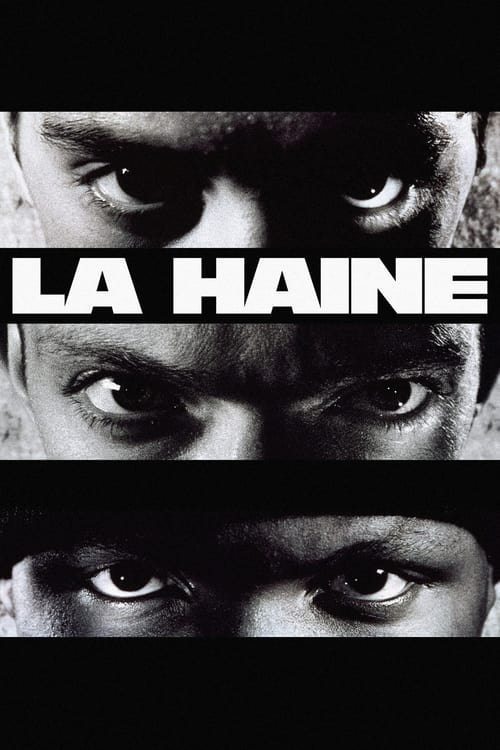
La Haine - Review
La Haine: A Timeless Portrait of Societal Decay
Mathieu Kassovitz's La Haine (Hate), released in 1995, isn't just a film; it's a visceral experience. It's a punch to the gut, a stark and unflinching look at the simmering tensions and explosive potential of marginalized communities in France. More than two decades after its release, the film remains tragically relevant, its themes of police brutality, systemic racism, and the cyclical nature of violence resonating with audiences worldwide. La Haine is a cinematic masterpiece that demands to be seen, discussed, and understood, not just as a historical document, but as a mirror reflecting the ongoing struggles for justice and equality.
Plot Summary and Analysis
The film unfolds over a single day following a night of intense rioting in a Parisian banlieue (suburb). The unrest was sparked by the brutal beating of Abdel Ichah, a young Arab man, by police. As Abdel lies in a coma, his friends Vinz, Hubert, and Saïd, three young men of Jewish, Afro-French, and Arab descent respectively, navigate their bleak surroundings. Vinz (Vincent Cassel), fueled by rage and a misplaced sense of power, finds a police officer's lost gun and vows to kill a cop if Abdel dies. Hubert (Hubert Koundé), a boxer and the most grounded of the three, dreams of escaping the ghetto but is trapped by circumstance and the constant threat of violence. Saïd (Saïd Taghmaoui), the film's de facto narrator and peacemaker, tries to keep his friends from spiraling out of control, often acting as a buffer between their volatile personalities.
The plot isn't driven by a traditional narrative arc; instead, it's a series of interconnected vignettes that paint a vivid picture of life in the banlieue. We see the casual racism they encounter, the constant police harassment, the lack of opportunity, and the pervasive sense of hopelessness. Their journey takes them from their housing project to the heart of Paris, where they encounter even more alienation and hostility. The tension steadily builds throughout the day, punctuated by moments of dark humor and fleeting glimpses of hope. The ending, abrupt and tragic, serves as a stark reminder of the futility of violence and the devastating consequences of systemic injustice.
Character Development and Performances
The strength of La Haine lies not only in its social commentary but also in its deeply human characters. Each protagonist is a complex individual with their own motivations, flaws, and vulnerabilities.
Vinz (Vincent Cassel)
Vinz is the embodiment of youthful rage and frustration. He's impulsive, reckless, and driven by a desire for revenge. The gun he finds becomes a symbol of power, a way for him to feel in control in a world where he has none. Cassel delivers a tour-de-force performance, capturing Vinz's volatile energy and underlying insecurity with remarkable authenticity. His iconic portrayal helped launch his international career, and it's easy to see why. Vinz is both terrifying and pitiable, a product of his environment and a victim of his own anger.
Hubert (Hubert Koundé)
Hubert is the moral compass of the film. He's the most intelligent and thoughtful of the three, but he's also the most disillusioned. He dreams of escaping the banlieue and opening a boxing gym, but his hopes are constantly dashed by the harsh realities of his life. Koundé's performance is understated but powerful, conveying Hubert's weariness and quiet desperation with subtle gestures and expressions. He represents the potential that is stifled by poverty and lack of opportunity.
Saïd (Saïd Taghmaoui)
Saïd is the glue that holds the group together. He's the most affable and easygoing of the three, but he's also the most vulnerable. He tries to mediate between Vinz and Hubert, but he often gets caught in the crossfire. Taghmaoui brings a warmth and humor to the role that provides moments of levity in an otherwise bleak film. He represents the everyday struggles of young people trying to navigate a world that seems stacked against them.
The supporting characters, from the local drug dealers to the Parisian art gallery patrons, are equally well-drawn and contribute to the film's overall sense of realism. Each character, no matter how small, feels like a real person with their own story to tell.
Direction and Cinematography
Mathieu Kassovitz's direction is nothing short of masterful. He creates a sense of claustrophobia and tension through tight framing, handheld camerawork, and a relentless pace. The film is shot in stark black and white, which adds to its gritty and realistic feel. The cinematography, by Pierre Aïm, is both beautiful and unsettling, capturing the beauty of the banlieue even as it depicts its ugliness. The use of long takes, particularly during the riot scenes, immerses the viewer in the chaos and confusion of the situation.
Kassovitz's innovative use of visual language is evident throughout the film. The recurring motif of the ticking clock emphasizes the sense of urgency and the impending doom that hangs over the characters. The surreal dream sequences, particularly Vinz's fantasy of killing a skinhead, provide insight into his inner turmoil. The film's soundtrack, featuring hip-hop and reggae, further enhances its atmosphere and reflects the cultural identity of the banlieue.
One of the most striking aspects of Kassovitz's direction is his ability to elicit naturalistic performances from his actors. He allows them to improvise and bring their own experiences to the roles, which adds to the film's authenticity. The dialogue is raw and unfiltered, reflecting the way young people actually speak.
Themes and Messages
La Haine is a film with many layers, exploring a range of complex themes and messages.
Police Brutality and Systemic Racism
The film is a scathing indictment of police brutality and systemic racism. The opening scene, which features real-life footage of police violence, sets the tone for the rest of the film. The characters are constantly harassed and abused by the police, who view them as criminals simply because of their race and social class. The film highlights the power imbalance between the police and the marginalized communities they are supposed to protect.
Cycle of Violence
La Haine explores the cyclical nature of violence. The film suggests that violence begets violence, and that the only way to break the cycle is to address the root causes of the problem. Vinz's desire for revenge is a prime example of this cycle in action. His anger and frustration lead him down a path of destruction, ultimately contributing to the tragic outcome of the film.
Social Inequality and Marginalization
The film exposes the stark social inequalities that exist in French society. The characters are trapped in a cycle of poverty and lack of opportunity, with little hope of escaping their circumstances. The film highlights the ways in which marginalized communities are excluded from mainstream society and denied access to basic resources and opportunities.
Identity and Belonging
La Haine explores the themes of identity and belonging. The characters are caught between two worlds: their own cultural heritage and the dominant French culture. They struggle to find their place in a society that often rejects them. The film suggests that a sense of identity and belonging is essential for individual and collective well-being.
The Power of Friendship
Despite the bleakness of their surroundings, the characters find solace and support in their friendship. Their bond is tested throughout the film, but ultimately it is what keeps them going. The film suggests that friendship is a powerful force that can help people overcome even the most difficult challenges.
Comparison to Other Films and Works
La Haine can be compared to other films that explore similar themes of social unrest, police brutality, and marginalized communities. Films like Spike Lee's Do the Right Thing (1989) and John Singleton's Boyz n the Hood (1991) also depict the tensions and frustrations of urban life. However, La Haine stands out for its stark realism, its innovative cinematography, and its focus on the specific context of French society.
In terms of Mathieu Kassovitz's other works, La Haine is arguably his most acclaimed and influential film. While he has directed other notable films, such as Gothika (2003) and Babylon A.D. (2008), none have achieved the same level of critical success or cultural impact as La Haine.
Vincent Cassel's performance in La Haine is often compared to his later roles in films like Eastern Promises (2007) and Black Swan (2010), where he also plays complex and morally ambiguous characters. Saïd Taghmaoui has gone on to have a successful international career, appearing in films like Three Kings (1999) and Wonder Woman (2017).
Positive Aspects
- Powerful and relevant themes: The film tackles important issues such as police brutality, systemic racism, and social inequality with unflinching honesty.
- Exceptional performances: Vincent Cassel, Hubert Koundé, and Saïd Taghmaoui deliver unforgettable performances that capture the complexities of their characters.
- Innovative direction and cinematography: Mathieu Kassovitz's direction is masterful, and Pierre Aïm's cinematography is both beautiful and unsettling.
- Realistic and authentic portrayal of the banlieue: The film provides a glimpse into the lives of marginalized communities in France with remarkable accuracy.
- Timeless message: The film's message about the cyclical nature of violence and the need for social justice remains as relevant today as it was in 1995.
Constructive Criticism
- Pacing: While the film's relentless pace contributes to its sense of urgency, some viewers may find it overwhelming at times. A few moments of respite could have allowed for deeper character exploration.
- Ending: The ending, while impactful, can feel somewhat abrupt and nihilistic. Some viewers may have preferred a more nuanced or hopeful resolution.
- Lack of female representation: The film is predominantly focused on male characters, and there is a noticeable lack of female representation. Exploring the experiences of women in the banlieue could have added another layer to the film's social commentary.
Conclusion and Rating
La Haine is a cinematic masterpiece that deserves its place among the greatest films ever made. It's a powerful and unflinching portrait of societal decay, police brutality, and the cyclical nature of violence. The film's themes remain tragically relevant, and its message about the need for social justice resonates with audiences worldwide. While the film has some minor flaws, its strengths far outweigh its weaknesses. La Haine is a must-see for anyone interested in social commentary, compelling character studies, and innovative filmmaking.
Rating: 9.5/10