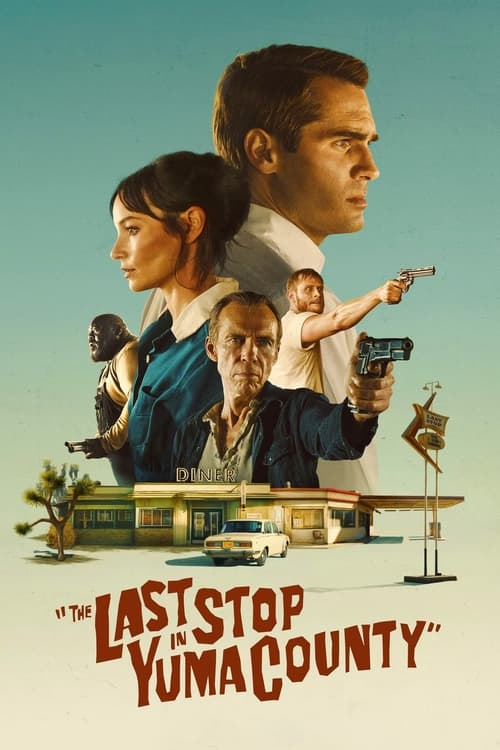
The Last Stop in Yuma County - Review
"The Last Stop in Yuma County": A Tense Desert Noir That Cuts Deep
In the vast, sun-baked landscape of Arizona, where the horizon stretches endlessly and the air hangs heavy with the promise of heat, lies a rest stop. Not just any rest stop, but the titular setting for Francis Galluppi's debut feature, "The Last Stop in Yuma County." This isn't your typical roadside pit stop offering lukewarm coffee and stale snacks. It's a pressure cooker, a microcosm of greed, desperation, and the chilling banality of evil, all simmering under the unforgiving desert sun. Galluppi delivers a taut, character-driven thriller that transcends its seemingly simple premise, leaving a lasting impression long after the credits roll. It's a film that stays with you, not just for its suspenseful plot, but for its exploration of human nature at its most vulnerable and depraved.
Plot: A Bottle Episode of Brutality
The narrative hinges on a classic setup: a seemingly ordinary situation spiraling into extraordinary chaos. Our protagonist, a young, unnamed knife salesman (Jim Cummings, delivering a performance brimming with nervous energy), finds himself stranded at a desolate rest stop just outside Yuma County. The gas truck is delayed, a common occurrence in this remote locale, leaving him and a handful of other travelers impatiently waiting. Among them are two hardened bank robbers, Beau (Richard Brake, radiating menace) and Travis (Nicholas Logan, a coiled spring of unpredictability), who are attempting to lay low after a successful, albeit bloody, heist. The tension is palpable from their first appearance, their every gesture and glance radiating a sense of barely contained violence. As the wait stretches on, the robbers' paranoia intensifies, and the salesman inadvertently becomes entangled in their web of deceit and brutality. What begins as an inconvenience quickly transforms into a life-or-death struggle, forcing him to confront his own limitations and make impossible choices. The plot unfolds with a deliberate pace, building suspense with each passing minute. Galluppi masterfully utilizes the confined setting to amplify the claustrophobia and heighten the stakes, creating a sense of inescapable dread.
Characters: Strangers in a Strange Land, Bound by Fate
"The Last Stop in Yuma County" excels in its character development. Each character, even those with limited screen time, feels distinct and fully realized. The knife salesman, played with remarkable vulnerability by Jim Cummings, is the everyman thrust into extraordinary circumstances. He's not a hero, but he's not a coward either. He's simply trying to survive, grappling with fear and uncertainty as he navigates the increasingly perilous situation. Cummings imbues the character with a relatable awkwardness and a quiet desperation that makes him instantly sympathetic.
Richard Brake, as Beau, delivers a chillingly effective performance as the hardened leader of the robbers. He's not a caricature of evil, but a complex character driven by greed and a ruthless pragmatism. Brake's portrayal is subtle yet deeply unsettling, conveying a sense of cold calculation beneath a veneer of forced calm. His eyes, devoid of warmth, speak volumes about his capacity for violence.
Nicholas Logan, as Travis, provides a stark contrast to Beau's calculated demeanor. He's the volatile element, a loose cannon prone to unpredictable outbursts. Logan's performance is mesmerizing, capturing the character's simmering rage and underlying insecurity. He's a powder keg waiting to explode, adding another layer of tension to the already fraught situation.
The supporting characters, including the rest stop owner (Michael Abbott Jr.) and the local sheriff (Gene Jones), also contribute to the film's rich tapestry. They are not mere plot devices, but individuals with their own motivations and vulnerabilities, adding depth and realism to the story. Even small roles, like the stranded couple arguing about directions, contribute to the overall atmosphere of unease and societal breakdown.
Direction: A Masterclass in Tension and Atmosphere
Francis Galluppi's direction is nothing short of masterful. He expertly crafts a sense of unease and dread from the very first frame, utilizing long takes, tight close-ups, and strategic camera angles to amplify the tension. The film's pacing is deliberate, allowing the suspense to build gradually, culminating in a series of explosive confrontations. Galluppi's attention to detail is remarkable, from the dusty landscape to the sweat-soaked faces of the characters. He creates a believable and immersive world, drawing the viewer into the heart of the story.
Galluppi's use of sound is particularly effective. The silence of the desert, punctuated by the occasional creak of metal or the distant hum of a car engine, creates a sense of isolation and vulnerability. The score, composed by Chris Thomas, is sparse and unsettling, perfectly complementing the film's mood. The sound design is meticulously crafted, with every gunshot, every footstep, and every whispered word carrying significant weight.
Cinematography: Painting a Picture of Desolation
Maciek Grochowski's cinematography is a vital component of the film's success. He captures the beauty and desolation of the Arizona landscape with stunning clarity. The harsh sunlight, the endless expanse of desert, and the dilapidated rest stop all contribute to the film's overall atmosphere of bleakness. Grochowski's use of color is also noteworthy. The muted palette, dominated by browns, yellows, and grays, reflects the harsh realities of the setting. He uses light and shadow to dramatic effect, highlighting the characters' inner turmoil and creating a sense of foreboding.
The camera work is dynamic and engaging, constantly shifting perspectives and drawing the viewer closer to the action. Grochowski's use of close-ups is particularly effective, allowing the audience to witness the characters' fear, desperation, and resolve. The cinematography is not just visually appealing, but also serves to enhance the storytelling, adding depth and nuance to the narrative.
Performances: A Symphony of Suspense
The performances in "The Last Stop in Yuma County" are uniformly excellent. Jim Cummings delivers a career-defining performance as the knife salesman, capturing the character's vulnerability, resilience, and growing sense of desperation. Richard Brake is chillingly effective as the ruthless Beau, conveying a sense of cold calculation beneath a veneer of forced calm. Nicholas Logan is mesmerizing as the volatile Travis, bringing a raw intensity and unpredictable energy to the role. The supporting cast is equally strong, each actor contributing to the film's overall sense of realism and authenticity.
The chemistry between the actors is palpable, particularly between Brake and Logan, who convincingly portray the complex and often strained relationship between the two robbers. Cummings' interactions with both Brake and Logan are equally compelling, highlighting the power dynamics and the inherent dangers of the situation. The performances are not just believable, but also deeply affecting, drawing the viewer into the characters' emotional journeys and making them feel invested in their fate.
Themes and Messages: Morality in the Desert
"The Last Stop in Yuma County" explores several compelling themes, including greed, desperation, and the fragility of morality in the face of extreme circumstances. The film examines the lengths to which people will go to protect their interests, even at the expense of others. It also questions the nature of good and evil, suggesting that even ordinary individuals are capable of extraordinary acts of violence when pushed to their limits.
The film also touches on themes of isolation and societal breakdown. The desolate setting and the lack of communication with the outside world contribute to the characters' sense of vulnerability and desperation. The film suggests that in a world increasingly characterized by division and distrust, even the most basic social structures can crumble under pressure.
Ultimately, "The Last Stop in Yuma County" is a cautionary tale about the dangers of greed, the importance of community, and the enduring power of the human spirit. It's a film that challenges viewers to consider their own values and beliefs, and to question the choices they would make in similar circumstances.
Comparisons: Echoes of the Past, A Voice of its Own
While "The Last Stop in Yuma County" is a wholly original work, it draws inspiration from several classic films. Its confined setting and escalating tension are reminiscent of Quentin Tarantino's "Reservoir Dogs," while its exploration of morality and violence in the American West echoes the works of Sam Peckinpah. The film also shares thematic similarities with Joel and Ethan Coen's "No Country for Old Men," particularly in its portrayal of ruthless criminals and the unintended consequences of violence.
However, Galluppi's film is not simply a pastiche of these influences. He brings his own unique vision and voice to the genre, creating a film that is both familiar and fresh. His focus on character development and his deliberate pacing set "The Last Stop in Yuma County" apart from its predecessors. It's a film that stands on its own merits, showcasing Galluppi's talent as a filmmaker and his ability to craft a compelling and thought-provoking story.
Positive Aspects: A Triumph of Tension and Character
The film's strengths lie in its masterful direction, compelling performances, and taut screenplay. Galluppi's ability to create a sense of unease and dread is remarkable, and he expertly utilizes the confined setting to amplify the tension. The performances are uniformly excellent, with Jim Cummings, Richard Brake, and Nicholas Logan delivering career-defining performances. The screenplay is tightly written, with well-developed characters and a plot that unfolds with a deliberate and suspenseful pace. The cinematography is also noteworthy, capturing the beauty and desolation of the Arizona landscape with stunning clarity.
Constructive Criticism: Minor Stumbles in the Sand
While "The Last Stop in Yuma County" is a highly effective thriller, it is not without its minor flaws. Some viewers may find the pacing too slow, particularly in the first act. The film's deliberate build-up may test the patience of those expecting a more action-packed experience. Additionally, the film's ending, while satisfying, may leave some viewers wanting more closure. A slightly more explicit exploration of the consequences of the characters' actions could have added further depth to the narrative.
However, these criticisms are minor and do not detract significantly from the film's overall impact. "The Last Stop in Yuma County" is a remarkable achievement for a debut feature, showcasing Galluppi's talent as a filmmaker and his ability to craft a compelling and thought-provoking story.
Conclusion: A Desert Gem Worth Discovering
"The Last Stop in Yuma County" is a tense, character-driven thriller that transcends its simple premise. Francis Galluppi delivers a masterful debut, showcasing his talent as a filmmaker and his ability to craft a compelling and thought-provoking story. With its excellent performances, taut screenplay, and stunning cinematography, the film is a must-see for fans of the genre. It's a film that stays with you long after the credits roll, prompting reflection on the nature of greed, desperation, and the fragility of morality. Highly recommended.