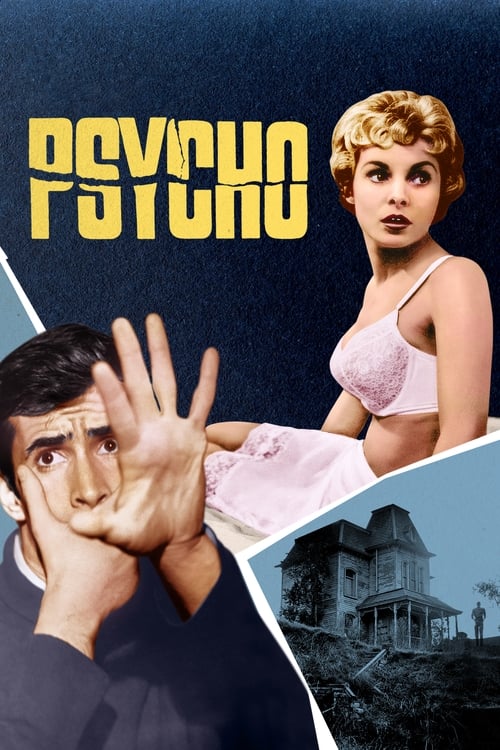
Psycho - Review
Psycho: A Shower of Genius Still Haunting After All These Years
Alfred Hitchcock's Psycho, released in 1960, isn't just a film; it's a cultural landmark. It's a masterclass in suspense, a psychological exploration of the human mind, and a chilling reminder of the darkness that can lurk beneath the surface of normalcy. More than six decades later, the film's impact remains palpable, influencing countless horror and thriller films that followed. But does it still hold up? Absolutely. Let's delve into the twisted world of Norman Bates and uncover why Psycho continues to terrify and captivate audiences.
Plot: A Deceptive Departure into Darkness
The film initially presents itself as a story about Marion Crane (Janet Leigh), a Phoenix real estate clerk who impulsively steals $40,000 in cash, hoping to escape her financial woes and marry her boyfriend, Sam Loomis (John Gavin). This first act, seemingly a straightforward crime drama, cleverly establishes Marion's character and motivations. We see her desperation, her longing for a better life, and her vulnerability. This extended introduction is crucial because it makes the shocking turn of events that follow all the more impactful.
Marion's journey takes her off the main highway and onto a desolate side road, leading her to the ominous Bates Motel. Seeking refuge from a downpour, she checks in, unaware of the horrors that await. The motel, run by the seemingly awkward and polite Norman Bates (Anthony Perkins), becomes the stage for one of cinema's most iconic and terrifying scenes. The infamous shower scene, a masterpiece of editing, music, and suspense, abruptly ends Marion's story and throws the narrative into a completely unexpected direction. This audacious move – killing off the apparent protagonist so early – was revolutionary for its time and remains a bold storytelling choice even today. It immediately raises the stakes and forces the audience to question everything they thought they knew about the film.
The second act focuses on Sam Loomis and Marion's sister, Lila (Vera Miles), as they search for her. Their investigation leads them to the Bates Motel, where they encounter Norman and begin to unravel the disturbing truth about his relationship with his mother. The suspense builds gradually, with subtle clues and unsettling encounters that hint at the darkness lurking beneath Norman's seemingly harmless exterior.
The film culminates in a chilling climax as Lila, driven by desperation, explores the Bates house and discovers the horrifying truth about Mrs. Bates. The final reveal, meticulously crafted and psychologically disturbing, solidifies Psycho's place as a landmark in horror cinema.
Characters: The Faces of Fear
Marion Crane (Janet Leigh): Marion is not simply a victim; she's a complex and flawed character. Her impulsive decision to steal the money stems from a deep-seated desire for a better life, a yearning for freedom and happiness. Janet Leigh's performance is nuanced, portraying Marion's vulnerability and desperation with remarkable authenticity. Her journey, though tragically cut short, makes her a relatable and sympathetic figure, making her sudden demise all the more shocking.
Norman Bates (Anthony Perkins): Norman Bates is, without a doubt, one of the most iconic and chilling villains in cinematic history. Anthony Perkins' portrayal is a masterclass in subtle creepiness. He perfectly captures Norman's awkwardness, his loneliness, and his deeply unsettling connection to his mother. Perkins' performance is so effective because he doesn't portray Norman as a monstrous figure from the outset. Instead, he presents him as a seemingly harmless, even pitiable, young man, making the eventual reveal of his true nature all the more horrifying. The subtle shifts in his demeanor, the nervous tics, and the unsettling glint in his eye all contribute to a truly unforgettable and terrifying character.
Lila Loomis (Vera Miles): Lila, Marion's sister, is the driving force behind the investigation. She is determined, resourceful, and unwavering in her pursuit of the truth. Vera Miles delivers a strong and compelling performance, portraying Lila's strength and resilience in the face of unimaginable horror. While perhaps not as immediately memorable as Marion or Norman, Lila is a crucial character who provides the audience with a sense of hope and determination amidst the darkness.
Sam Loomis (John Gavin): Sam, Marion's boyfriend, is a more understated character. He is portrayed as a decent and responsible man, but perhaps lacking the same level of emotional depth as Marion or Lila. However, his genuine concern for Marion and his willingness to help Lila in her search make him a sympathetic and likable figure.
Direction: Hitchcock's Masterful Hand
Alfred Hitchcock's direction in Psycho is nothing short of masterful. He expertly manipulates the audience's emotions, creating a constant sense of unease and suspense. Hitchcock's use of camera angles, editing, and music is meticulously crafted to maximize the film's impact. He understood the power of suggestion and used it to great effect, often implying violence rather than showing it explicitly, making the horror all the more terrifying.
The shower scene, in particular, is a testament to Hitchcock's genius. It's a sequence that has been analyzed and dissected countless times, and for good reason. The rapid editing, the jarring music, and the strategic use of camera angles create a sense of chaos and panic that is both terrifying and unforgettable. Hitchcock's decision to film the scene in black and white, despite color film being available, was a deliberate choice that added to the film's stark and unsettling atmosphere.
Hitchcock also masterfully uses the setting of the Bates Motel to create a sense of isolation and dread. The motel's remote location, its dilapidated condition, and its unsettling atmosphere all contribute to the film's overall sense of unease. The Bates house, looming over the motel, serves as a constant reminder of the darkness that lurks within.
Cinematography: Black and White Brilliance
The black and white cinematography in Psycho is a crucial element of its success. It not only adds to the film's overall sense of unease but also allows Hitchcock to play with shadows and light in a way that enhances the suspense. The stark contrast between light and dark creates a visually striking and unsettling atmosphere.
The use of shadows is particularly effective in creating a sense of mystery and dread. The shadows cast by the Bates house, the trees, and even Norman himself often obscure details, leaving the audience to fill in the blanks and imagine the horrors that lie hidden in the darkness. The black and white cinematography also contributes to the film's timeless quality. While color film was becoming increasingly popular at the time, Hitchcock's decision to shoot in black and white gives Psycho a classic and enduring feel.
Performances: A Symphony of Suspense
The performances in Psycho are uniformly excellent. As mentioned earlier, Anthony Perkins' portrayal of Norman Bates is a standout. He delivers a performance that is both chilling and sympathetic, creating a character that is both terrifying and strangely relatable. Janet Leigh's performance as Marion Crane is also excellent. She perfectly captures Marion's vulnerability and desperation, making her sudden demise all the more shocking. Vera Miles and John Gavin also deliver strong and compelling performances as Lila Loomis and Sam Loomis, respectively.
The supporting cast also contributes to the film's overall success. Martin Balsam, as Detective Milton Arbogast, delivers a memorable performance as the inquisitive and determined detective who gets too close to the truth. Patricia Hitchcock, Alfred Hitchcock's daughter, also makes a brief but memorable appearance as Caroline, Marion's colleague.
Themes and Messages: Peering into the Abyss
Psycho explores a number of complex and disturbing themes, including:
The Fragility of the Human Psyche: The film delves into the depths of the human mind, exploring the potential for darkness and madness that can exist within us all. Norman Bates is a prime example of a character whose psyche has been shattered by trauma, leading him to commit unspeakable acts. The film suggests that even seemingly normal individuals can be capable of great violence under the right circumstances.
The Dangers of Repression: Norman's repressed desires and emotions play a significant role in his descent into madness. His unhealthy relationship with his mother and his inability to form normal relationships with women lead to a build-up of frustration and anger that eventually explodes in a violent and destructive manner. The film suggests that repressing one's emotions can have devastating consequences.
The Illusion of Normalcy: Psycho challenges the audience's perception of normalcy. Norman Bates initially appears to be a harmless and even pitiable young man, but beneath the surface lies a deeply disturbed individual. The film suggests that appearances can be deceiving and that the most dangerous individuals are often those who appear to be the most normal.
The Power of the Unconscious: The film also explores the power of the unconscious mind. Norman's actions are often driven by forces that he is not fully aware of, suggesting that our unconscious desires and fears can have a profound impact on our behavior. The film's ending, with Norman's mind completely consumed by his mother's personality, is a chilling illustration of the power of the unconscious.
Comparison: A Precedent Setter
Psycho stands as a significant departure from Hitchcock's previous works, which often focused on suspenseful thrillers with a touch of glamour. While films like Rear Window and Vertigo were undoubtedly suspenseful, they lacked the raw, visceral horror of Psycho. The film's low budget, its black and white cinematography, and its focus on a seemingly ordinary motel all contributed to its unique and unsettling atmosphere.
In comparison to other horror films of the time, Psycho was groundbreaking. It broke with many of the genre's conventions, opting for a more realistic and psychological approach to horror. It paved the way for a new wave of horror films that focused on the darkness that can exist within the human mind, rather than relying solely on supernatural or monstrous elements. Films like The Texas Chain Saw Massacre and Halloween owe a debt to Psycho for its influence on the slasher subgenre and its willingness to push the boundaries of what was considered acceptable in horror cinema.
Positive Aspects and Constructive Criticism
Positive Aspects:
- Masterful Direction: Hitchcock's direction is impeccable, creating a constant sense of suspense and unease.
- Chilling Performances: Anthony Perkins' portrayal of Norman Bates is iconic and unforgettable.
- Innovative Cinematography: The black and white cinematography adds to the film's stark and unsettling atmosphere.
- Groundbreaking Storytelling: The film's plot twists and shocking moments were revolutionary for their time.
- Enduring Impact: Psycho continues to influence and inspire filmmakers and audiences to this day.
Constructive Criticism:
- Pacing in the Second Act: Some viewers may find the pacing in the second act, as Sam and Lila investigate, to be slightly slower than the first act. While necessary for building suspense, it could potentially lose some viewers who are expecting more immediate thrills.
- John Gavin's Performance: While not a bad performance, John Gavin's portrayal of Sam Loomis is perhaps the least memorable of the main cast. He doesn't quite capture the same level of emotional depth as Perkins, Leigh, or Miles.
- Dated Social Commentary: Some of the film's social commentary, particularly regarding gender roles and mental health, may feel somewhat dated to modern audiences. However, this is understandable given the film's historical context.
Conclusion: A Timeless Terror
Psycho remains a masterpiece of suspense and horror, a film that continues to terrify and captivate audiences more than six decades after its release. Alfred Hitchcock's masterful direction, Anthony Perkins' chilling performance, and the film's groundbreaking storytelling all contribute to its enduring legacy. While some aspects of the film may feel slightly dated to modern audiences, its overall impact and influence on the horror genre are undeniable. Psycho is a must-see for any serious film enthusiast and a chilling reminder of the darkness that can lurk beneath the surface of normalcy.
Rating: 9.5/10