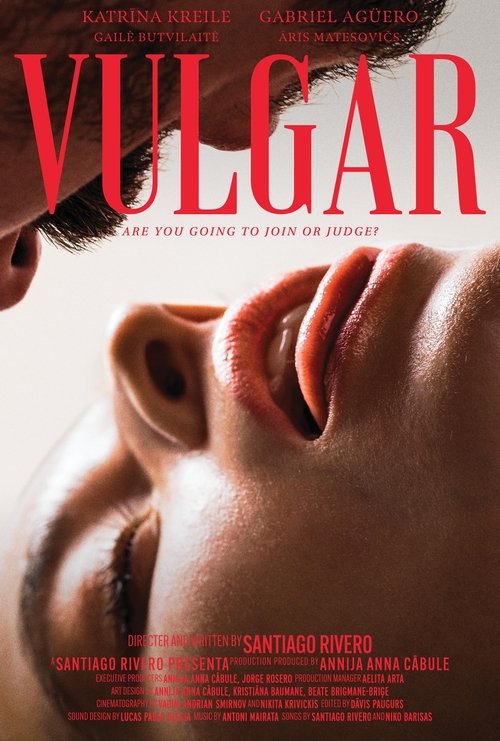
Vulgar - Review
"Vulgar" (2024): A Provocative Romp Through the Façade of Perfection
We've all been there, haven't we? Trapped in the gilded cage of our own making, meticulously constructing a life that looks impeccable from the outside, while inside, a quiet desperation festers. Director Anya Sharma's latest film, "Vulgar," doesn't just acknowledge this uncomfortable truth; it grabs it by the throat and shakes it until its sequins fall off. Released on December 13th, 2024, "Vulgar" is a sharp, often hilarious, and ultimately poignant exploration of societal expectations, personal fulfillment, and the liberating power of embracing our messy, imperfect selves. While marketed as a romantic comedy-drama, "Vulgar" transcends genre limitations, delivering a thought-provoking experience that lingers long after the credits roll.
Plot: A Calculated Life Disrupted
The film centers around Angelika (played with captivating nuance by rising star Clara Bellweather), a woman seemingly sculpted from perfection. She's successful in her career as a high-powered lawyer, impeccably dressed, and engaged to a man who embodies stability and predictability. Everything about Angelika's life screams "achievement," but beneath the polished surface lies a deep-seated dissatisfaction. She's going through the motions, ticking off boxes on a pre-determined life plan that feels increasingly suffocating.
The catalyst for change arrives in the form of Simon (charmingly portrayed by veteran actor Liam O'Connell), the younger brother of Angelika's best friend, Chloe (a delightful performance by Maya Rodriguez), whose wedding Angelika is meticulously planning. Simon is everything Angelika is not: spontaneous, artistic, unapologetically himself, and a vocal critic of the societal pressures that Angelika embodies. He's a talented musician, living a bohemian lifestyle, and possesses a contagious passion for life that slowly chips away at Angelika's carefully constructed walls.
The plot unfolds with a series of encounters between Angelika and Simon, initially fueled by friction and disapproval. Simon challenges Angelika's values, questioning her choices and prompting her to confront the hollowness she's been ignoring. Angelika, in turn, dismisses Simon as immature and irresponsible. However, as they spend more time together, a spark ignites, fueled by their contrasting personalities and a shared yearning for something more authentic. Their interactions are often laced with witty banter and subtle flirtation, creating a compelling dynamic that keeps the audience invested.
The narrative isn't without its predictable moments, particularly in the romantic subplot. The "opposites attract" trope is well-worn, and "Vulgar" doesn't entirely escape its clichés. However, the film elevates itself through its insightful exploration of Angelika's internal conflict and its willingness to delve into the complexities of female ambition and societal expectations.
Characters: More Than Just Archetypes
The strength of "Vulgar" lies in its well-developed characters, each grappling with their own insecurities and desires. Angelika is not simply a caricature of a successful woman; she's portrayed as a complex individual with vulnerabilities and a genuine desire for happiness, even if she's unsure how to achieve it. Bellweather's performance is particularly noteworthy, capturing Angelika's internal struggle with a subtle yet powerful intensity. She conveys the character's underlying sadness and fear with a nuanced performance that avoids melodrama.
Simon, too, transcends the "free-spirited artist" stereotype. O'Connell imbues him with a genuine warmth and intelligence, making him more than just a rebellious romantic interest. He's not simply trying to disrupt Angelika's life; he genuinely cares about her well-being and wants her to find true happiness, even if it means challenging her deeply held beliefs. His passion for music and his unwavering commitment to authenticity are infectious, making him a compelling and relatable character.
Chloe, Angelika's best friend, serves as a crucial supporting character. She embodies a more balanced approach to life, navigating the pressures of societal expectations while maintaining a sense of self. Rodriguez delivers a charming and grounded performance, providing a much-needed dose of levity and common sense to the narrative. Her character acts as a bridge between Angelika and Simon, understanding both their perspectives and offering valuable insights.
Even the supporting characters, such as Angelika's fiancé, David (played by the dependable Mark Henderson), are given depth and nuance. David is not portrayed as a villain, but rather as a well-meaning but ultimately incompatible partner for Angelika. He represents the safe and predictable path that Angelika has been following, highlighting the contrast between her expected life and the possibility of something more fulfilling.
Direction and Cinematography: A Feast for the Eyes
Anya Sharma's direction is confident and assured, demonstrating a clear understanding of the film's themes and characters. She skillfully balances the comedic and dramatic elements, creating a narrative that is both entertaining and thought-provoking. Sharma's use of visual storytelling is particularly effective, using subtle cues and symbolic imagery to convey Angelika's internal state. For example, the recurring motif of Angelika meticulously arranging objects in her apartment reflects her need for control and order in her life.
The cinematography, masterfully handled by veteran DP Ben Carter, is a visual treat. The film is shot in a vibrant and dynamic style, capturing the energy and excitement of the city setting. The use of color is particularly effective, with bright and saturated hues used to depict the moments of joy and liberation, while muted tones are used to convey Angelika's underlying sadness and dissatisfaction. The camera work is fluid and engaging, drawing the viewer into the characters' emotional journeys.
One standout scene involves a spontaneous late-night concert where Simon performs an original song that directly addresses Angelika's struggles. The lighting is soft and intimate, creating a sense of vulnerability and connection between the two characters. The camera focuses on Angelika's face as she listens to the lyrics, capturing her emotional transformation with remarkable clarity. This scene is a perfect example of how Sharma and Carter work together to create a powerful and visually stunning moment.
Performances: A Stellar Ensemble Cast
The success of "Vulgar" hinges on the strength of its performances, and the cast delivers in spades. Clara Bellweather shines as Angelika, delivering a nuanced and captivating portrayal of a woman grappling with her identity. She seamlessly transitions between moments of vulnerability and strength, making Angelika a relatable and sympathetic character. Bellweather's ability to convey complex emotions with subtle gestures and facial expressions is truly remarkable.
Liam O'Connell is equally impressive as Simon, bringing a charismatic energy and genuine warmth to the role. He effortlessly embodies the character's free-spirited nature, while also conveying his underlying intelligence and sensitivity. O'Connell's chemistry with Bellweather is undeniable, creating a believable and engaging romantic dynamic.
Maya Rodriguez provides a welcome dose of levity and common sense as Chloe, while Mark Henderson delivers a nuanced performance as Angelika's fiancé, David. The entire ensemble cast works together seamlessly, creating a believable and engaging world that draws the viewer into the story.
Themes and Messages: Beyond the Rom-Com Facade
While "Vulgar" is undoubtedly entertaining, it also tackles several important themes and messages. The film explores the societal pressures faced by women, particularly the expectation to achieve success and maintain a perfect image. It challenges the notion that happiness can be found in external validation and material possessions, arguing that true fulfillment comes from embracing one's authentic self.
The film also explores the theme of personal liberation, highlighting the importance of breaking free from societal expectations and pursuing one's own passions. Angelika's journey is a testament to the transformative power of embracing vulnerability and taking risks. The film encourages viewers to question their own beliefs and values, and to consider whether they are truly living a life that is aligned with their authentic selves.
Furthermore, "Vulgar" touches upon the importance of human connection and the power of love to heal and transform. The relationship between Angelika and Simon is not simply a romantic entanglement; it's a catalyst for personal growth and self-discovery. They challenge each other to be better versions of themselves, ultimately finding happiness and fulfillment in their connection.
Comparisons: Echoes of the Past, A Fresh Perspective
"Vulgar" shares thematic similarities with films like "Eat Pray Love" and "Under the Tuscan Sun," which also explore the theme of self-discovery and personal liberation. However, "Vulgar" distinguishes itself through its sharper wit, more nuanced characters, and its focus on the specific pressures faced by modern women. It also feels more grounded and relatable than some of its predecessors, avoiding the overly romanticized and escapist tendencies that can sometimes plague films of this genre.
Anya Sharma's previous work, the indie darling "Paper Cranes," also explored themes of identity and self-acceptance. However, "Vulgar" represents a significant step forward in her directorial style, demonstrating a greater confidence and mastery of visual storytelling. The film's pacing is more dynamic, the characters are more fully realized, and the overall production value is significantly higher.
Liam O'Connell's performance in "Vulgar" is reminiscent of his earlier role in the critically acclaimed "The Lighthouse Keeper," where he also played a free-spirited and unconventional character. However, his portrayal of Simon is more nuanced and complex, showcasing his range as an actor.
Positive Aspects: A Winning Combination
"Vulgar" excels in several key areas. The performances are uniformly excellent, the direction is confident and assured, and the cinematography is visually stunning. The film's script is sharp and witty, with dialogue that feels both natural and insightful. The themes and messages are thought-provoking and relevant, making "Vulgar" more than just a superficial romantic comedy-drama.
The film's pacing is also well-managed, keeping the audience engaged throughout its runtime. The balance between comedic and dramatic elements is skillfully handled, creating a narrative that is both entertaining and emotionally resonant. The soundtrack is also noteworthy, featuring a mix of original songs and carefully curated tracks that perfectly complement the film's mood and themes.
Constructive Criticism: Areas for Improvement
While "Vulgar" is a largely successful film, it's not without its flaws. As mentioned earlier, the romantic subplot occasionally falls into predictable territory, relying on familiar tropes and clichés. The ending, while satisfying, feels slightly rushed and could have benefited from a more nuanced resolution. The conflict between Angelika and her fiancé, David, could have been explored in greater depth, adding more weight to Angelika's decision to break off the engagement.
Additionally, the film occasionally veers into overly didactic territory, with characters explicitly stating themes and messages that could have been conveyed more subtly through visual storytelling and character interactions. A more restrained approach to these moments would have allowed the audience to draw their own conclusions and engage with the film on a deeper level.
Conclusion: A Must-See for the Modern Romantic
Despite its minor flaws, "Vulgar" is a compelling and thought-provoking film that deserves to be seen. Anya Sharma has crafted a sharp, witty, and ultimately poignant exploration of societal expectations, personal fulfillment, and the liberating power of embracing our messy, imperfect selves. The performances are excellent, the direction is confident, and the cinematography is visually stunning. "Vulgar" is more than just a romantic comedy-drama; it's a film that will stay with you long after the credits roll, prompting you to question your own choices and consider whether you are truly living a life that is aligned with your authentic self.
Rating: 8.5/10